



















Svbony SV535 APO Astro Lens: Almost Fits in Your Pocket
Feb 7, 2026
Soumyadeep Mukherjee
Soumyadeep Mukherjee is an award-winning astrophotographer from India. He has a doctorate degree in Linguistics. His work extends to the sub-genres of nightscape, deep sky, solar, lunar and optical phenomenon photography. He is also a photography educator and has conducted numerous workshops. His works have appeared in over 40 books & magazines including Astronomy, BBC Sky at Night, Sky & Telescope among others, and in various websites including National Geographic, NASA, Forbes. He was the first Indian to win “Astronomy Photographer of the Year” award in a major category.
Share:

Wide-field astrophotography places strict demands on optical systems. The lens must deliver consistent star shapes across a large image circle. It must control chromatic aberration under high contrast conditions. It must also remain mechanically stable during long imaging sessions. In recent years, astrophotographers have increasingly looked beyond traditional refractors to meet these demands. Compact astro lenses now play a central role in modern imaging workflows.
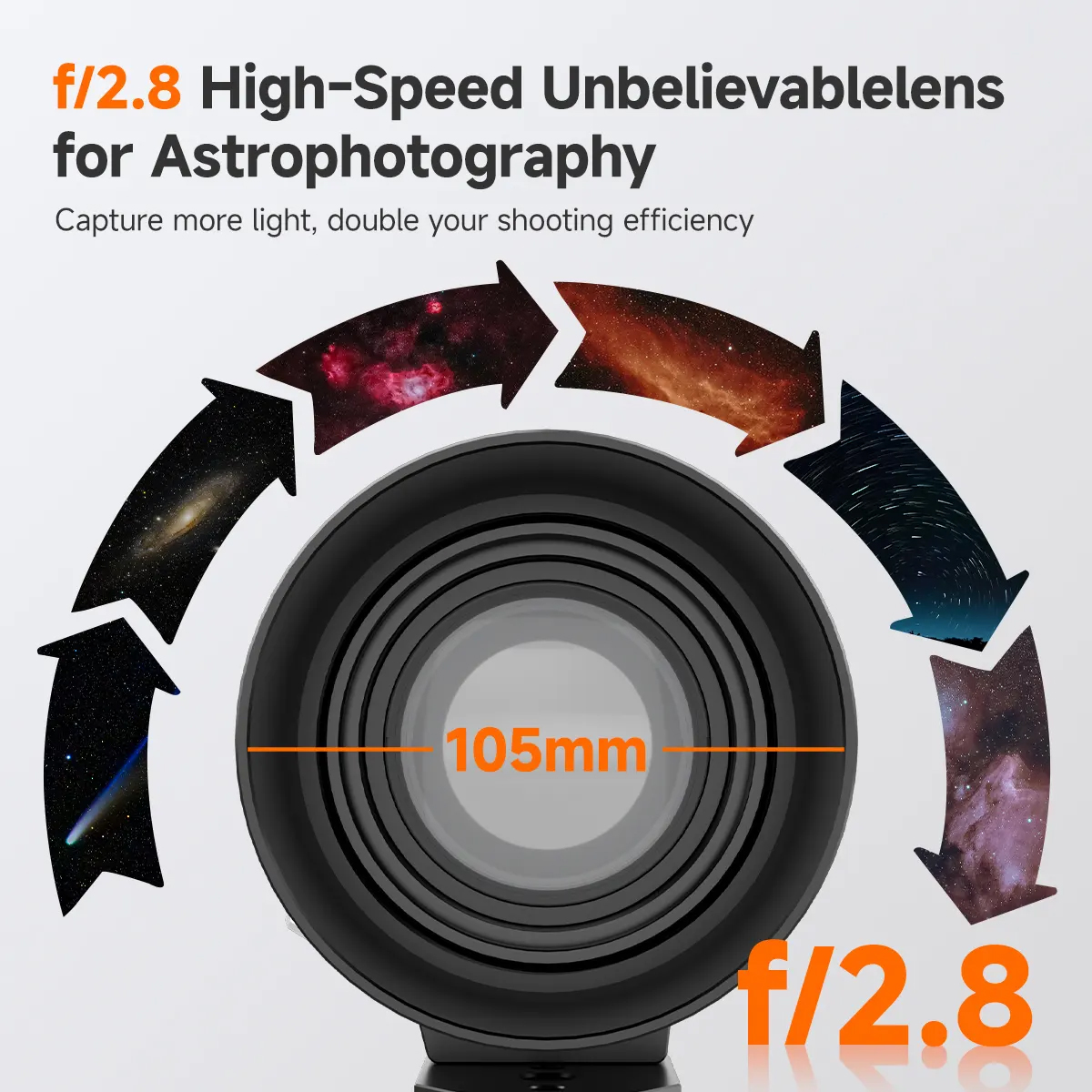
The Svbony SV535 APO astro lens enters this space with an intent. It is designed as a dedicated imaging optic, not as a visual telescope, and not as a general photographic lens. With a focal length of 105 mm and a fixed f/2.8 aperture, the SV535 is designed for wide-field deep-sky imaging with mirrorless and astronomy cameras. Its design reflects current astrophotography practices, where portability, optical control, and system integration matter as much as raw aperture.
Optical design and apochromatic correction
At the core of the SV535 lies its optical architecture. The lens uses a seven-element design arranged in five groups. This configuration includes an Extra-Low Dispersion element, which plays a critical role in chromatic correction. In astrophotography, even minor color errors can become obvious when imaging stars against a dark background. Svbony addresses this directly through apochromatic correction.
The APO design brings multiple wavelengths of light to a common focal plane. This improves color accuracy and reduces halos around bright stars. It also helps maintain fine detail within nebulae and star fields. These characteristics are especially important when using modern high-resolution sensors, where optical flaws become easier to detect.
Svbony applies fully multi-coated surfaces to all optical elements. These coatings improve light transmission and suppress internal reflections. In practice, this helps preserve contrast and reduce flare when imaging near bright stars or the Moon. It also improves signal quality during long exposures.
The aperture remains fixed at f/2.8. This decision prioritizes optical consistency and simplicity. A fixed aperture removes mechanical variability and ensures that the lens always operates at its designed performance level. For astrophotography, this approach often produces more predictable results than variable aperture systems.
Mechanical construction and design
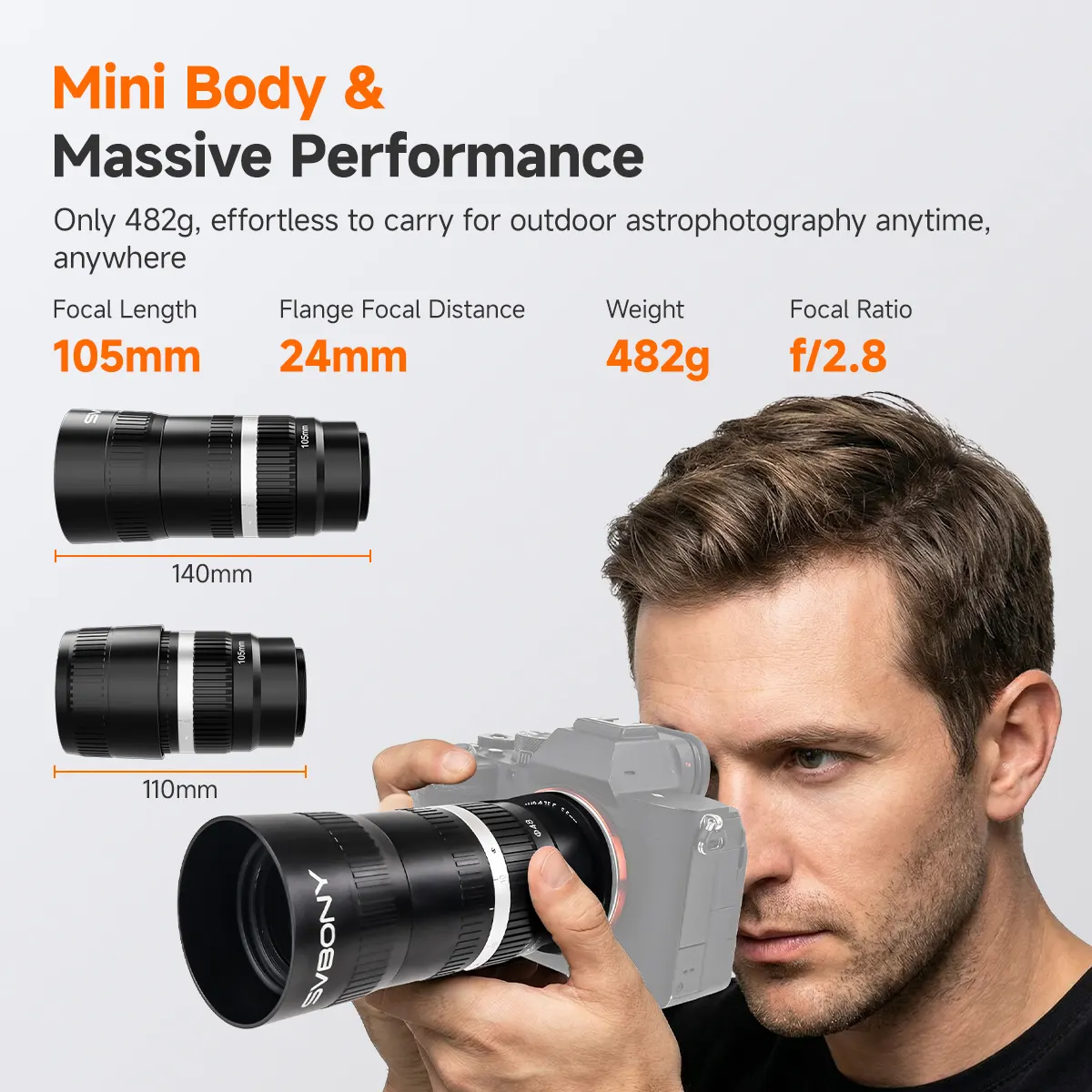
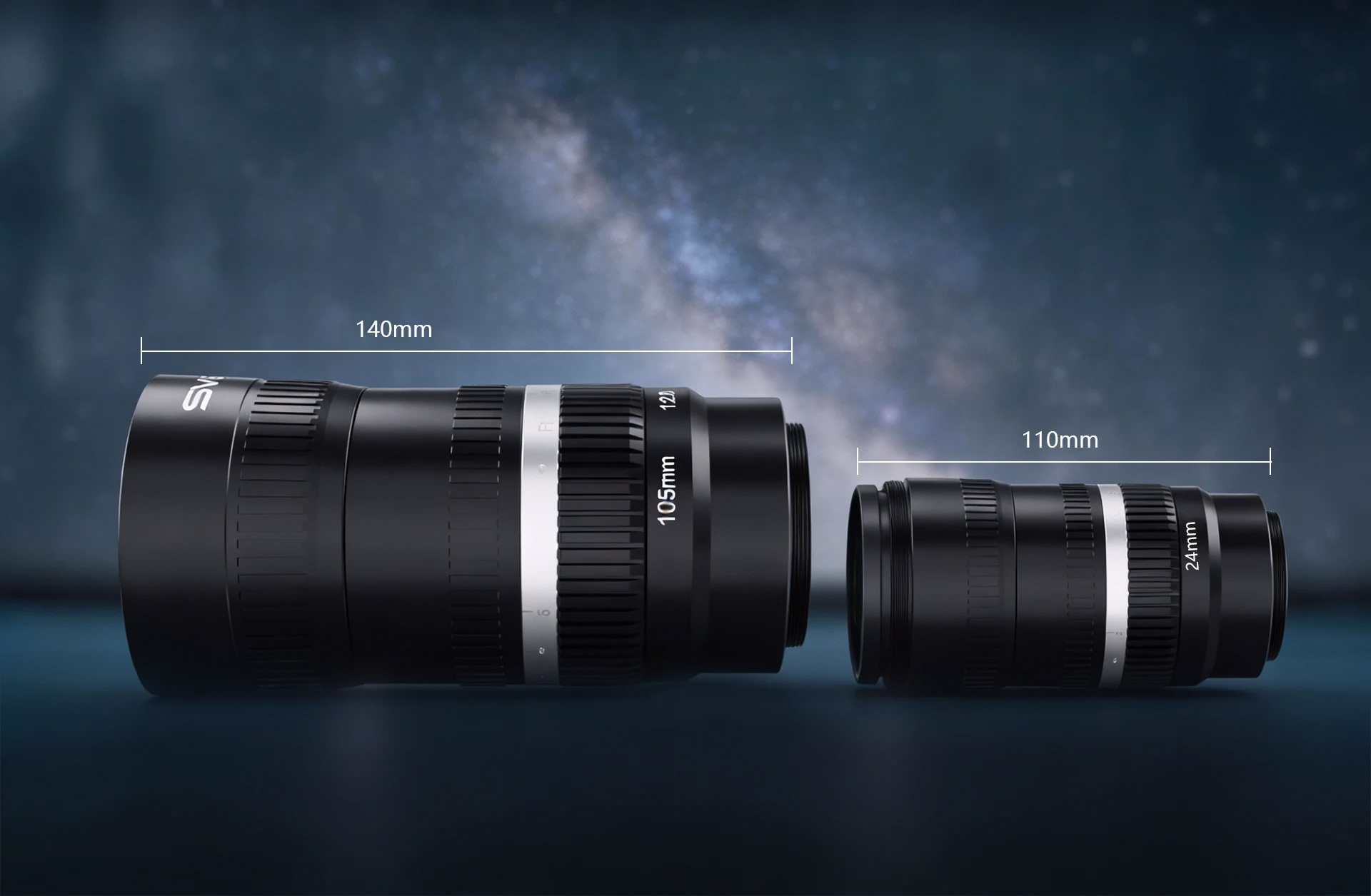
Mechanical stability is always important in astrophotography. Even small shifts can affect focus or star shape during long exposures. The SV535 addresses this through a solid metal construction and a compact form factor. Weighing approximately 482 grams, the lens remains light enough for travel setups and star trackers. At the same time, it feels robust enough for repeated field use. The balance between weight and rigidity allows it to perform well on lightweight equatorial mounts.
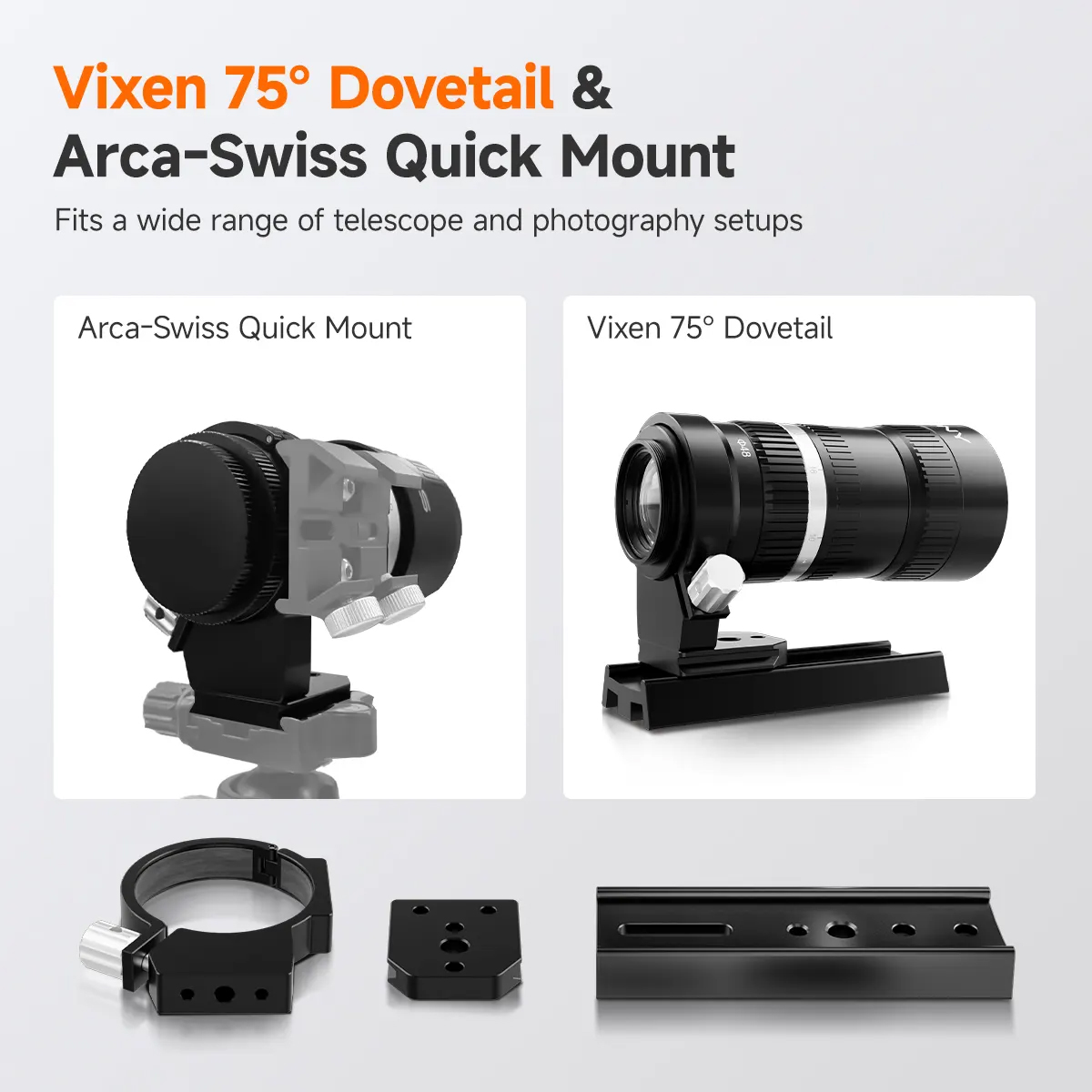
Svbony integrates a dual mounting system directly into the lens body. It supports both Vixen-style dovetails and Arca-Swiss plates. This choice reflects the mixed setups used by astrophotographers today. Some rely on dedicated mounts. Others prefer photographic tripods or compact trackers. The SV535 adapts easily to both.
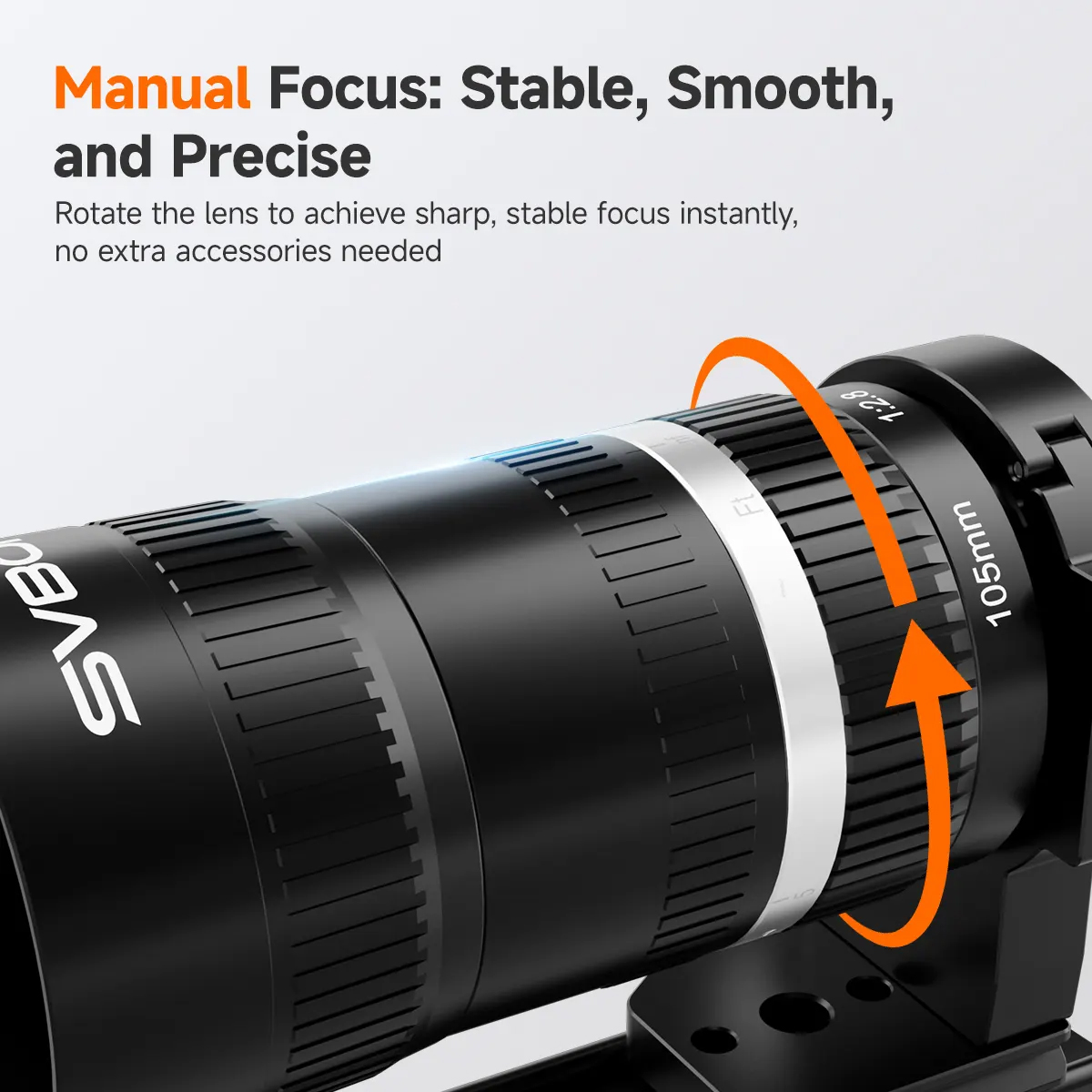
Manual focusing uses a smooth helical mechanism. This approach suits astrophotography, where autofocus systems struggle under low-light conditions. Precise manual focus remains essential, and the SV535’s design supports careful adjustments during setup.
At the front, the lens accepts standard 2-inch filters via an M48 thread. This allows photographers to integrate narrowband filters, light pollution filters, or UV and IR cut filters without additional hardware. This flexibility expands the lens’s usefulness across different imaging conditions.
Camera compatibility and imaging integration
The SV535 is optimized for mirrorless cameras and dedicated astronomy cameras. It does not support DSLR systems. This limitation stems from flange distance requirements rather than design oversight. Mirrorless and astro cameras allow the lens to achieve proper back focus without optical compromise.
The rear connection uses a standard M42 x 0.75 thread. This interface is widely used in astrophotography. It allows straightforward integration with spacers, filter drawers, and camera adapters. The optical back focus remains consistent across supported systems.
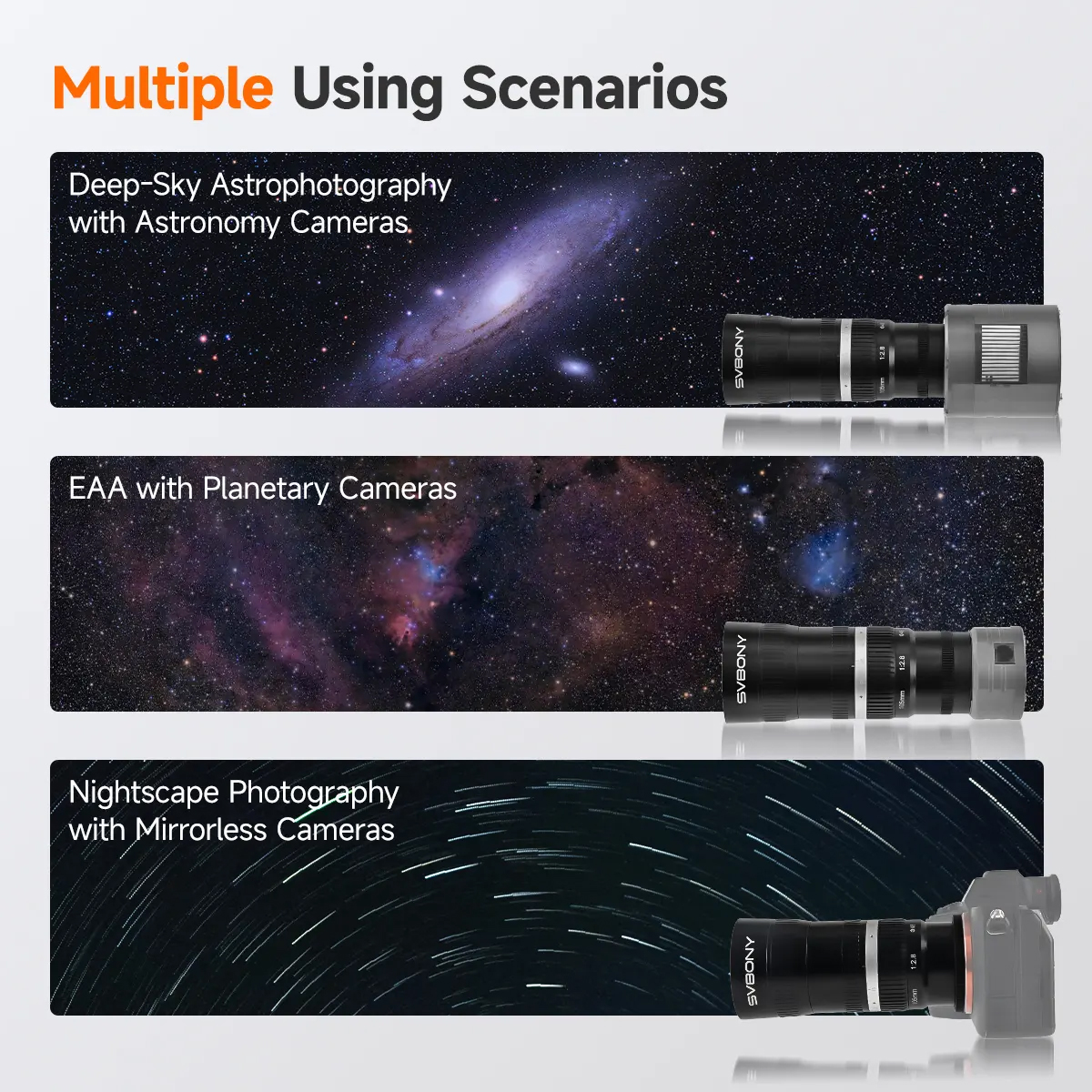
Svbony supplies adapters for selected mirrorless mounts, including the Sony E mount, Canon RF mount, and Nikon Z mount. This modular approach allows users to configure the lens according to their camera choice while maintaining optical alignment. The SV535 works equally well with cooled astronomy cameras. This makes it suitable for deep-sky imaging workflows that involve stacking, calibration frames, and narrowband data. It also supports electronically assisted astronomy setups, where fast optics help reveal faint objects in real time.
The lens provides full-frame sensor coverage. This matters for astrophotographers using modern high-resolution cameras. A wide image circle ensures even illumination and usable star shapes across the entire frame. It also allows more flexible framing during post-processing.
Field of view and imaging applications
A 105 mm focal length occupies a versatile range in astrophotography. It sits between ultra-wide lenses and longer refractors. This position allows it to capture large celestial structures while maintaining a sense of scale. Wide nebulae benefit from this focal length. Emission regions, molecular clouds, and hydrogen complexes fit comfortably within the frame. The lens also works well for open clusters and dense star fields.
Milky Way imaging represents another strong application. The SV535 allows photographers to frame star-rich regions with structure and depth. When paired with a full-frame sensor, it captures sweeping views without excessive distortion.
The fast f/2.8 aperture supports shorter exposure times. This reduces demands on tracking accuracy and improves efficiency during limited imaging windows. Under dark skies, this speed becomes especially valuable. The lens also lends itself to nightscape and deepscape photography. When combined with foreground elements, it allows photographers to balance terrestrial and celestial features within a single composition.
Key specifications, price, and availability
Here are some of the key specifications of Svbony SV535:
| Objective Type | 7-Elements in 5 Groups |
| Focal Length | 105mm |
| Focal Ratio | f/2.8 |
| Optic Coating | FMC |
| Focuser | Helical |
| Mount Type | Dovetail Plate and Arca Swiss |
| Back-end connection | M42x0.75 male thread |
| Net weight | 482g |
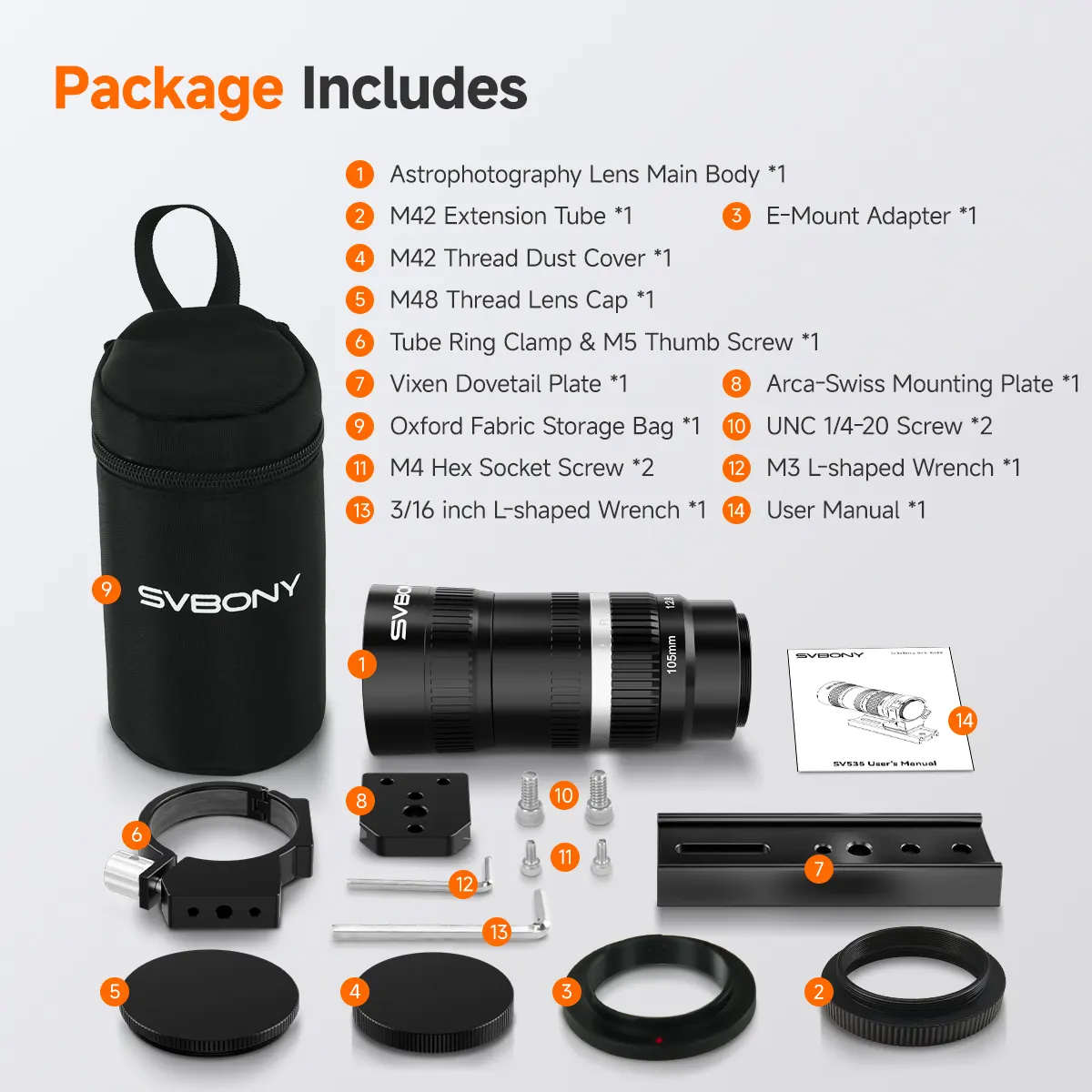
The Svbony SV535 is priced at $299.99. It is available in four mounting options: T-Mount, Z-Mount, RF-Mount, and E-Mount. This astro lens is available for ordering via Svbony’s official website.
Ease of use defines much of the SV535’s appeal. The lens requires minimal preparation. It mounts quickly and balances easily. It does not require collimation or complex alignment. This simplicity suits traveling astrophotographers. Many now images from remote locations or temporary sites. Carrying lighter gear reduces fatigue and setup time. The lens pairs well with compact star trackers and lightweight equatorial mounts. Its low mass reduces strain on tracking systems. This can improve guiding performance and overall reliability.
For astrophotographers seeking a portable, fast, and technically sound wide-field solution, the SV535 fits naturally into imaging systems. Its design reflects how astrophotography continues to evolve toward lighter, more efficient, and more specialized equipment.
Clear skies!
See more from DIYPhotography.net on Google
Add DIYPhotography.net as a trusted source. This makes
our stories more likely to appear in your Google Search results.
 Add as a preferred source on Google

Soumyadeep Mukherjee
Soumyadeep Mukherjee is an award-winning astrophotographer from India. He has a doctorate degree in Linguistics. His work extends to the sub-genres of nightscape, deep sky, solar, lunar and optical phenomenon photography. He is also a photography educator and has conducted numerous workshops. His works have appeared in over 40 books & magazines including Astronomy, BBC Sky at Night, Sky & Telescope among others, and in various websites including National Geographic, NASA, Forbes. He was the first Indian to win “Astronomy Photographer of the Year” award in a major category.
Related Posts
 Svbony SV550 122mm APO Refractor: Large Aperture on a Budget
 The DJI Mavic Air is here – the new $799 foldable drone that fits in your pocket
 Datacolor’s 48-swatch camera profiling colour chart now finally fits in your pocket with the Spyder Checkr Photo
 This phone-attached polarizing microscope fits in your pocket… And your budget
Join the Discussion
DIYP Comment Policy
Be nice, be on-topic, no personal information or flames.