



















Power and Precision: SVBONY SV241 Astronomy Powerbox
Jul 25, 2025
Soumyadeep Mukherjee
Soumyadeep Mukherjee is an award-winning astrophotographer from India. He has a doctorate degree in Linguistics. His work extends to the sub-genres of nightscape, deep sky, solar, lunar and optical phenomenon photography. He is also a photography educator and has conducted numerous workshops. His works have appeared in over 40 books & magazines including Astronomy, BBC Sky at Night, Sky & Telescope among others, and in various websites including National Geographic, NASA, Forbes. He was the first Indian to win “Astronomy Photographer of the Year” award in a major category.
Share:
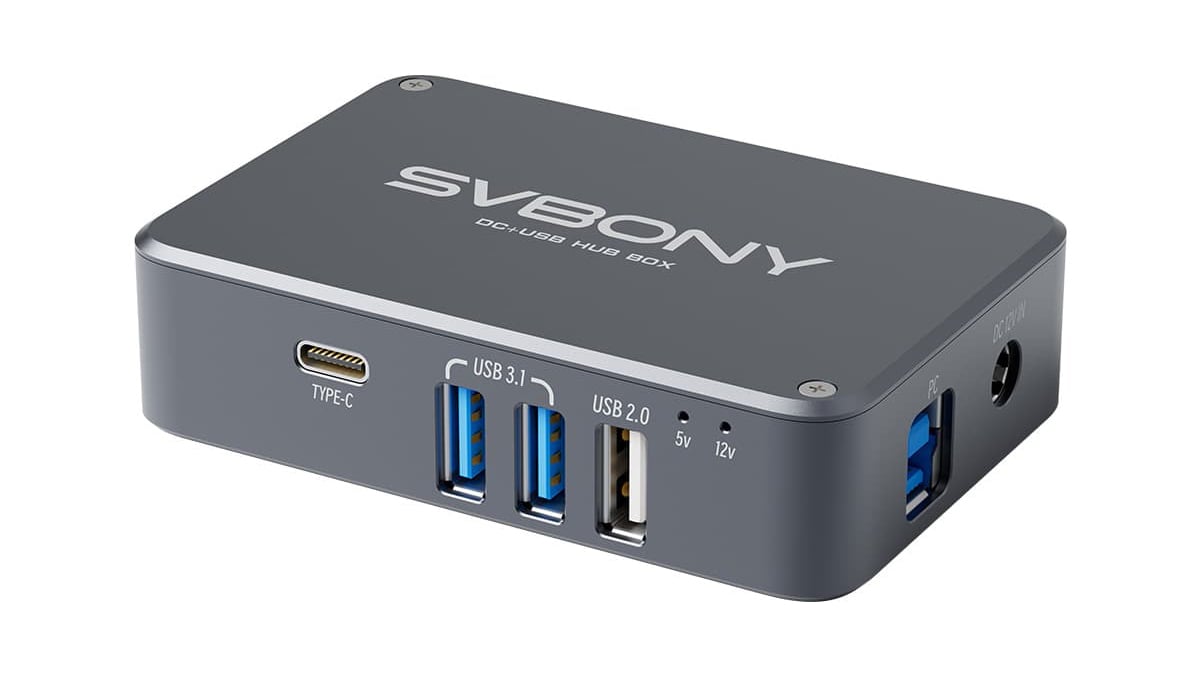
Astrophotography often demands more than just a camera and a telescope. It needs cables, power sources, data connections, and a lot of patience. Managing all this equipment in the dark can become overwhelming. That’s where the Svbony SV241 Astronomy Powerbox comes in. It promises to make astrophotography setups simpler, neater, and more reliable.
SV241 astronomy powerbox
The SV241 is a compact power and data management hub. It’s designed specifically for astronomers and astrophotographers. It offers multiple 12V and 5V outputs along with high-speed USB ports. The goal is to provide stable power and data connections for all the key devices in your imaging rig. Whether you use a DSLR, cooled camera, equatorial mount, mini PC, dew heater, or filter wheel, this box supports them all from a single power input.
Design and Build
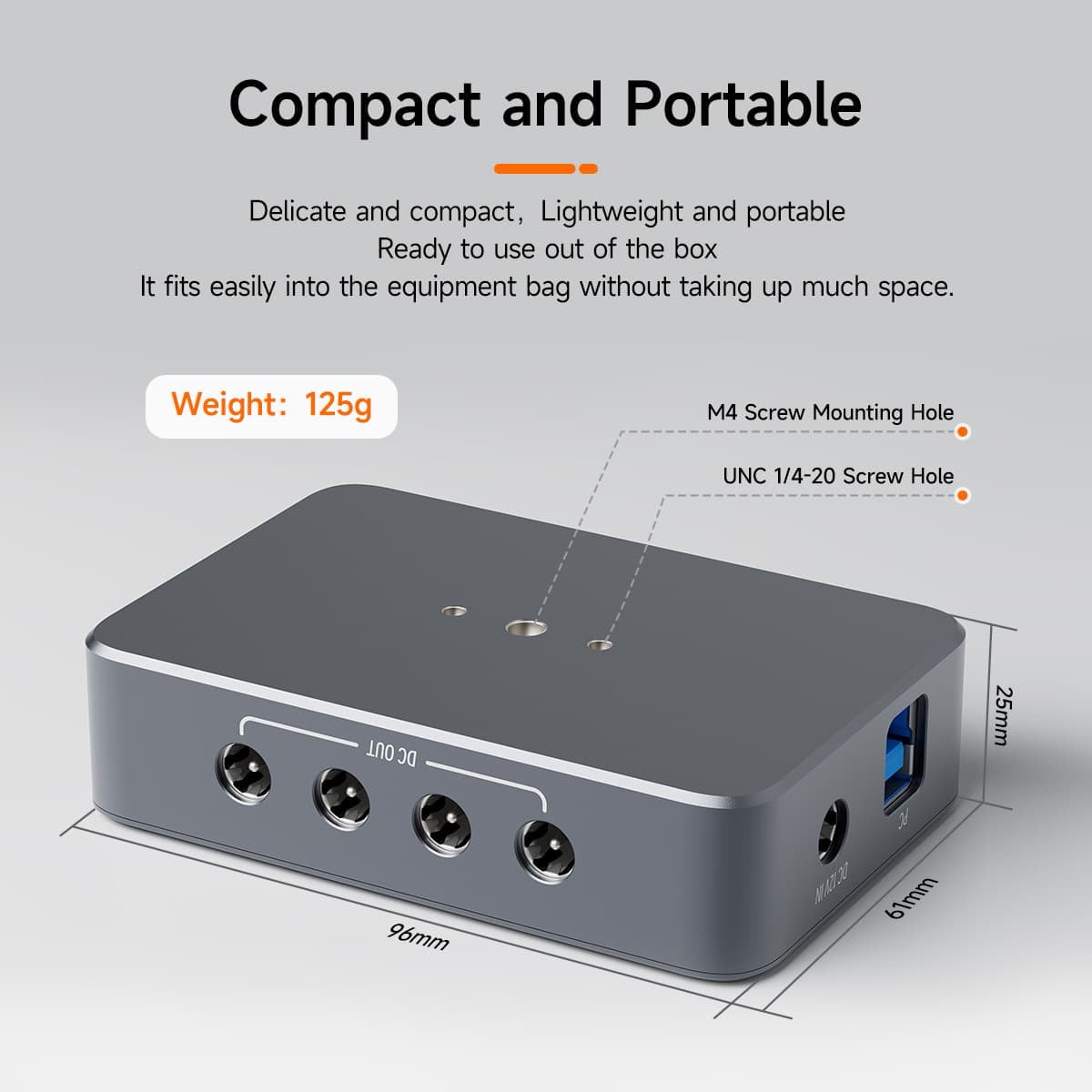
The SV241 features a rugged aluminum body. It’s lightweight but durable. It weighs just 125 grams, making it ideal for portable setups. Its dimensions are 96 x 61 x 25 mm. That’s smaller than most modern smartphones. The design includes multiple mounting options. You get M4 threads and a UNC 1/4-20 thread on the bottom. This lets you attach it securely to a dovetail plate, tripod, or telescope mount. SVBONY doesn’t include a mounting bracket, but the threads work with most third-party adapters. The top panel holds all ports and indicator lights. A neat layout helps with easy cable management in the dark.
Power distribution
Power is the heart of this device. The SV241 accepts a single 12V DC input via a 5.5mm x 2.1mm center-positive barrel port. From this input, it distributes power across multiple outputs.
Here’s the breakdown:
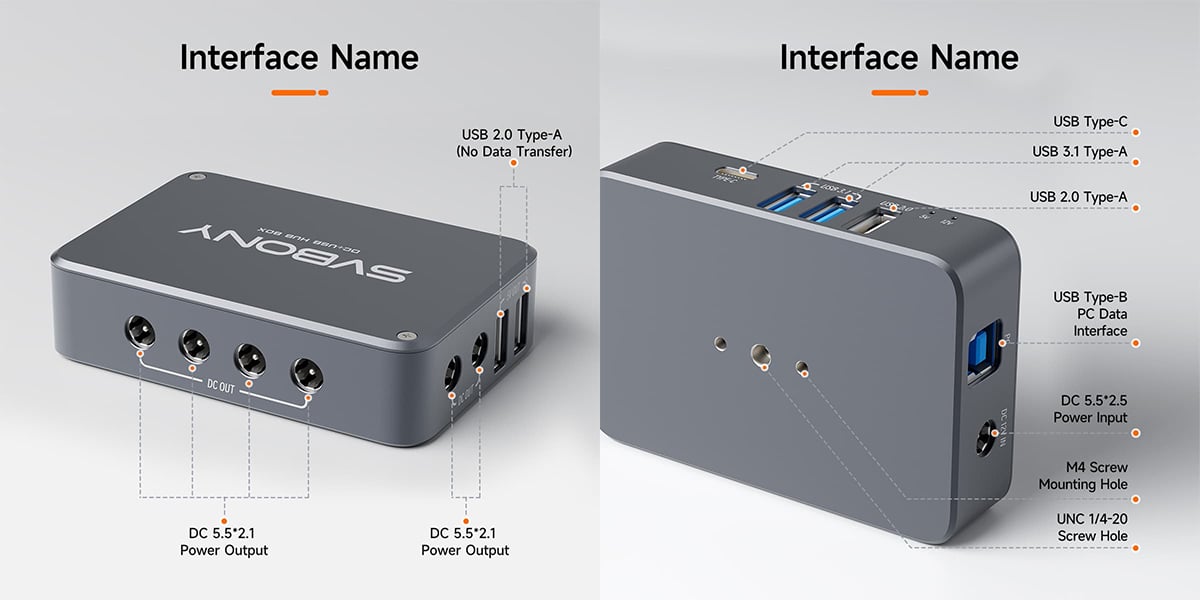
- 6 × 12V DC outputs: Each output delivers up to 10A max (shared). These are ideal for powering mounts, cooling fans, cooled astro cameras, dew heaters, and mini PCs.
- 2 × 5V USB-A ports (data only): These are used for connecting accessories like a guide camera or electronic focuser.
- 2 × 5V USB-A power-only ports: These provide clean 5V power. Each port supports up to 8A total (shared). These are best for charging devices or powering dew heaters, or Raspberry Pi systems.
- 1 × USB Type-B port: High-speed port. Best for connecting your primary astro camera or storage device.
- 1 × USB 3.1 Type-C port: Useful for connecting mounts or mini PCs that support USB-C data input.
- 1 × USB 2.0 Type-A port: Perfect for slower devices like filter wheels or hand controllers.
The SV241 includes LED indicators for both 12V and 5V outputs. These lights help you confirm power delivery at a glance. If a port fails or gets overloaded, the LED will turn off, warning you of the issue. This feature becomes really handy during field work at night.
Smart protection features
SVBONY has added multiple protection circuits to make sure your gear stays safe:
- Reverse polarity protection: If you connect power the wrong way, the device won’t get damaged.
- Short-circuit protection: The power will shut off if it detects a short. This keeps your setup from frying.
- Electrostatic discharge (ESD) protection: Prevents damage from sudden static shocks.
- Over-current protection: If your devices draw more power than is safe, the system cuts off the supply.
Limitations
While the SV241 is extremely useful, it has a few limitations:
- No software control: Unlike Pegasus Astro or ZWO powerboxes, there’s no ASCOM support or software interface. You can’t monitor power use remotely.
- No built-in Wi-Fi or remote access: It’s a physical-only device.
- No mounting accessories included: You must use your own bracket or Velcro/tie mounts.
- No individual port control: All ports stay powered when the box is active. You can’t switch off individual devices.
Still, considering its price and features, these are minor trade-offs.
Price and availability
Svbony SV241 is available for pre-sale via the official website. It is priced at $53.99.

Final thoughts
The SV241 Astronomy Powerbox is a powerful addition to any astrophotographer’s toolkit. It combines power distribution and USB connectivity in a compact, affordable box. It’s simple, reliable, and designed for field use. For beginners, it reduces cable mess and improves safety. For experienced astrophotographers, it provides a solid foundation for portable or remote rigs. At under $54, it offers tremendous value. It won’t replace high-end smart hubs, but it gives you 90% of the functionality at a fraction of the cost. If you’re looking to clean up your rig and run everything from a single hub, the SV241 is well worth considering.
Clear skies!
See more from DIYPhotography.net on Google
Add DIYPhotography.net as a trusted source. This makes
our stories more likely to appear in your Google Search results.
 Add as a preferred source on Google

Soumyadeep Mukherjee
Soumyadeep Mukherjee is an award-winning astrophotographer from India. He has a doctorate degree in Linguistics. His work extends to the sub-genres of nightscape, deep sky, solar, lunar and optical phenomenon photography. He is also a photography educator and has conducted numerous workshops. His works have appeared in over 40 books & magazines including Astronomy, BBC Sky at Night, Sky & Telescope among others, and in various websites including National Geographic, NASA, Forbes. He was the first Indian to win “Astronomy Photographer of the Year” award in a major category.


Join the Discussion
DIYP Comment Policy
Be nice, be on-topic, no personal information or flames.