






















A High-end Window to the Sun: Daystar SR127QT Solar Telescope
Jul 24, 2025
Soumyadeep Mukherjee
Soumyadeep Mukherjee is an award-winning astrophotographer from India. He has a doctorate degree in Linguistics. His work extends to the sub-genres of nightscape, deep sky, solar, lunar and optical phenomenon photography. He is also a photography educator and has conducted numerous workshops. His works have appeared in over 40 books & magazines including Astronomy, BBC Sky at Night, Sky & Telescope among others, and in various websites including National Geographic, NASA, Forbes. He was the first Indian to win “Astronomy Photographer of the Year” award in a major category.
Share:
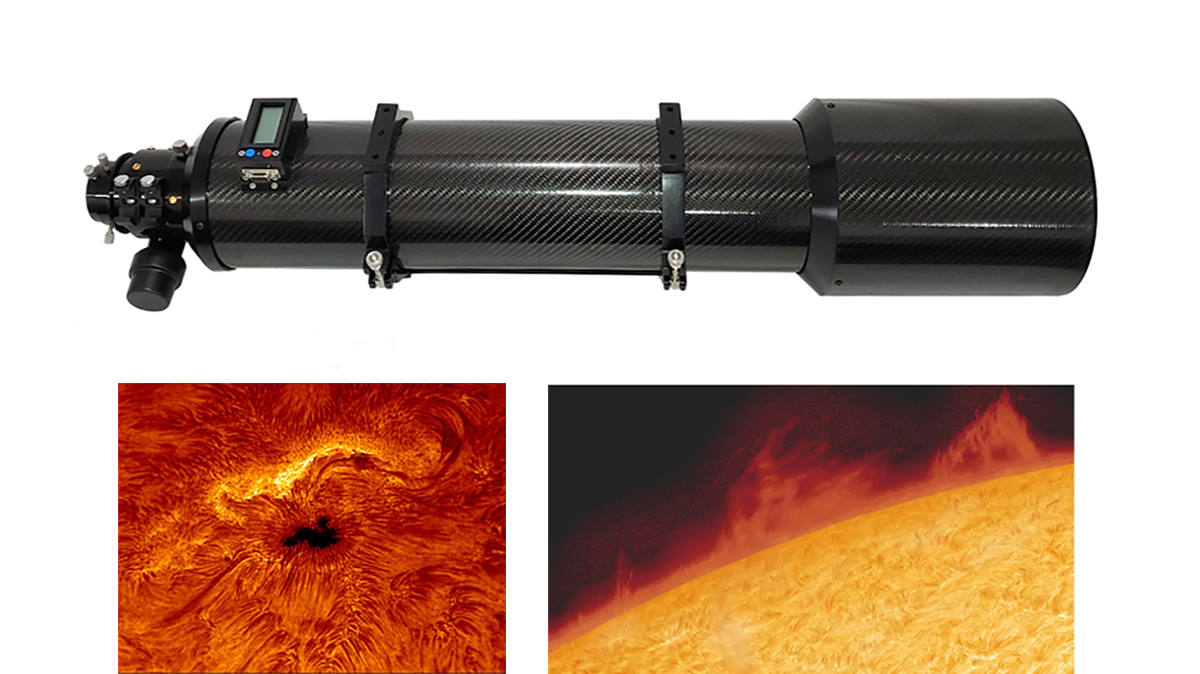
The Sun is our nearest star. It’s a seething ball of plasma, radiating energy and fury. Viewing and photographing it safely and in detail requires precision tools. One such tool is the Daystar SR127QT solar telescope. This is no ordinary scope. It’s a professional-grade, dedicated hydrogen-alpha (H-alpha) telescope designed for serious solar observers and imagers.
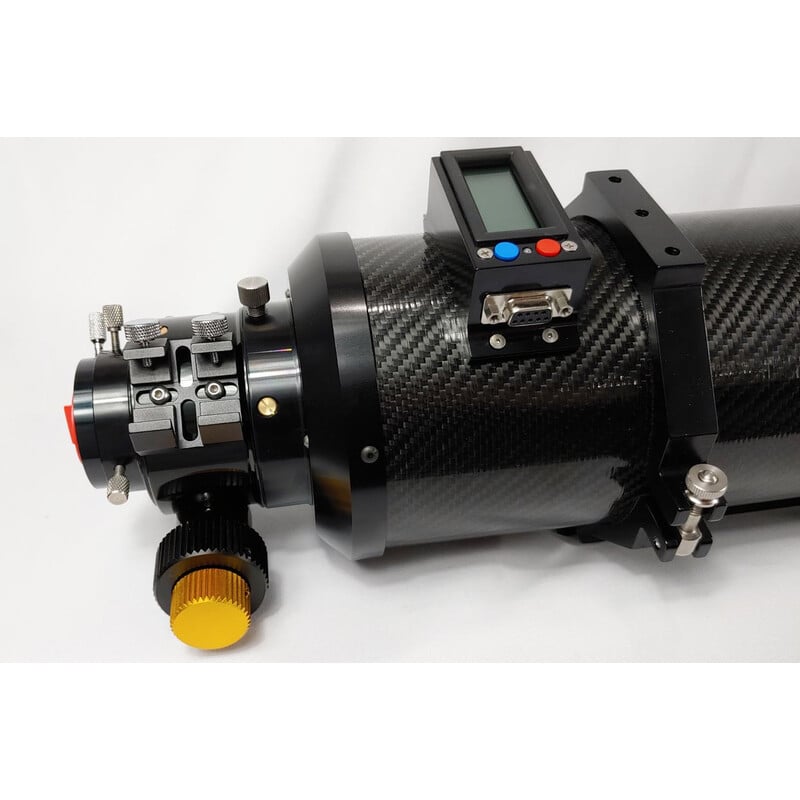
Daystar SR127QT
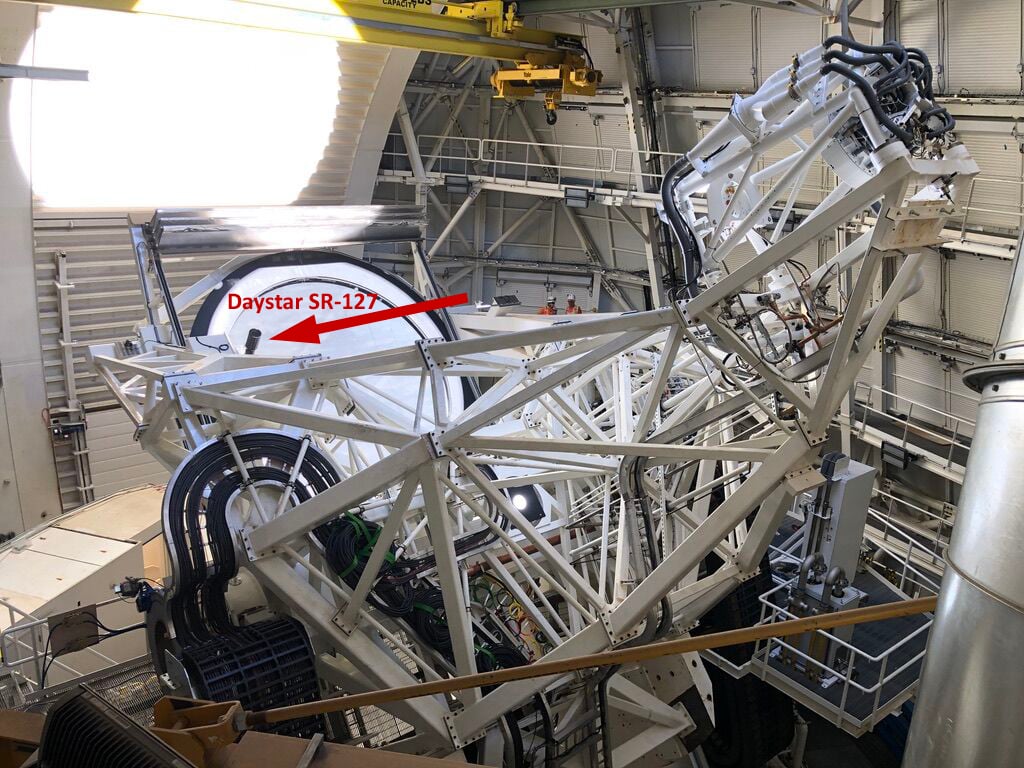
The SR127QT is a 127 mm refracting solar telescope. It is built specifically for H-alpha solar viewing, not for nighttime use. It captures features on the Sun like prominences, filaments, and active regions. This telescope is built and sold by Daystar Filters, a company known for its high-end solar imaging products. This is a fully integrated telescope. You do not need to attach a separate H-alpha filter. Everything is built in. Most telescopes are general-purpose. They can observe the Moon, planets, galaxies, and nebulae. But solar telescopes are special. They are designed to observe the Sun’s surface and atmosphere without damaging your eyes or equipment.
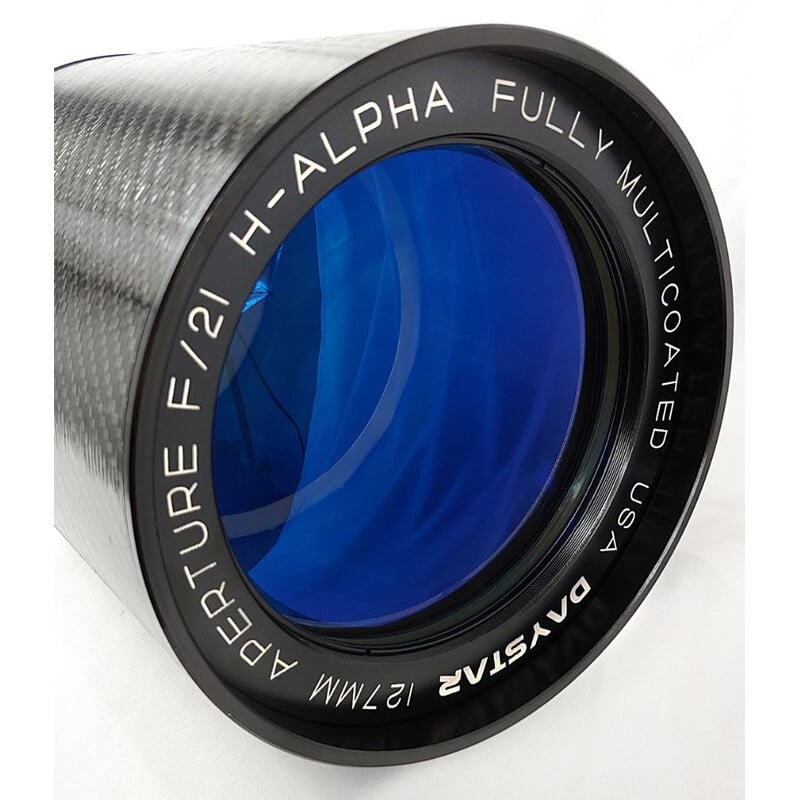
The SR127QT uses an achromatic doublet lens optimized for H-alpha light. Its aperture is 127 mm (5 inches), providing good resolution. The telescope’s focal length is 2667 mm, giving it a native f/21 focal ratio. This long focal length helps in capturing fine solar details. But Daystar also offers a 0.7× reducer to bring the focal length down to about 1355 mm (f/10.7). This makes imaging easier with modern cameras.
The heart: Quantum H-alpha filter
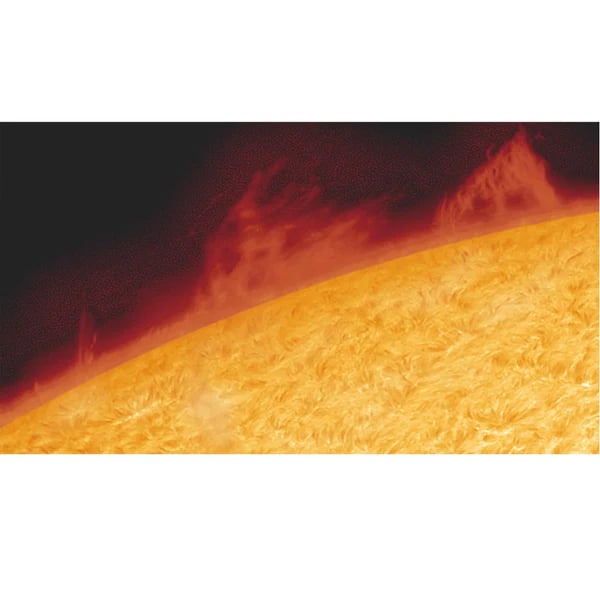
At the core of the SR127QT lies the Daystar Quantum filter. This is a precision hydrogen-alpha filter. It has digital tuning and active temperature control. You can tune it with ±1.0 Å range in 0.01 Å steps. Hydrogen-alpha light is a very narrow band of red light at 6562.8 Ångströms. It shows the Sun’s chromosphere, its active, stormy layer above the photosphere. Tiny changes in filter tuning reveal different features: prominences, filaments, or flares.
The Quantum filter is powered by 12 VDC at 120 mA. It comes with an AC adapter, but also works with battery packs in the field. You can choose from three H-alpha options:
- Prominence Model (~0.8 Å bandpass): Best for limb features like prominences.
- Chromosphere Model (~0.5 Å bandpass): Shows surface detail and active regions.
- PE (Photo Enhanced) Grade (~0.4 Å bandpass): Custom-tuned, higher contrast, made for imaging.
Each model reveals different solar layers and features. Visual observers usually prefer the Chromosphere model. Imaging professionals often choose the PE grade.
Set up and transport
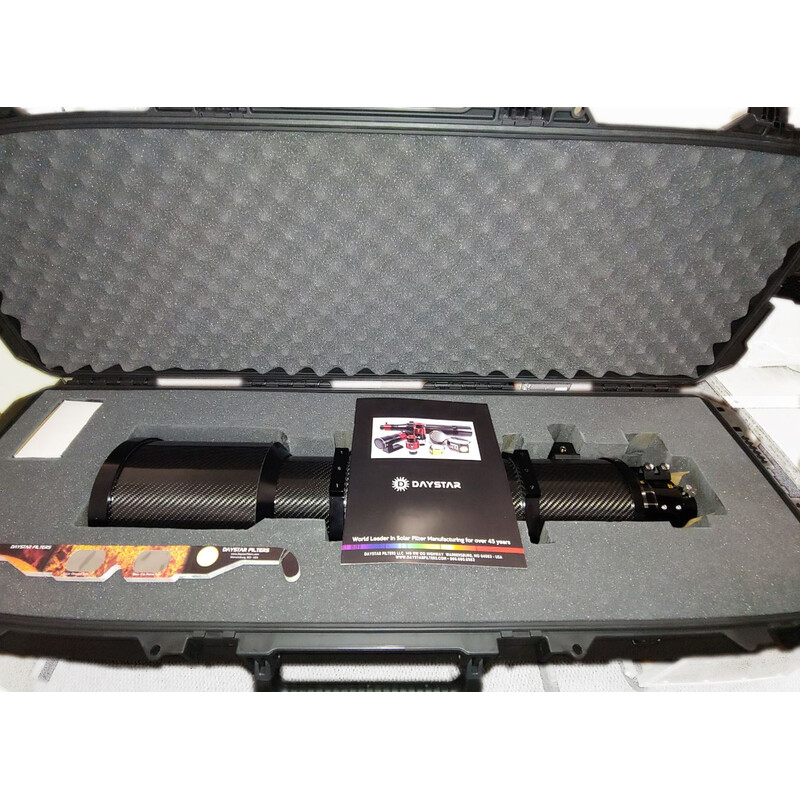
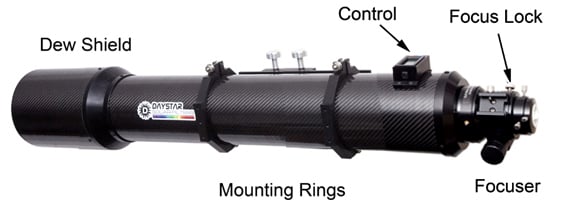
Despite its large aperture, the SR127QT is comparatively lightweight and compact. It measures about 31 inches in length and weighs only 13 pounds (5.9 kg). That’s very portable for a high-end solar telescope. The telescope comes with:
- 2″ rack and pinion focuser with brass compression rings
- Vixen-style dovetail bar for mounting
- Mounting rings
- Custom Pelican Storm hard case
This makes transport and setup quick. It fits on many standard equatorial or alt-az mounts with no problem.
Imaging the sun with the SR127QT
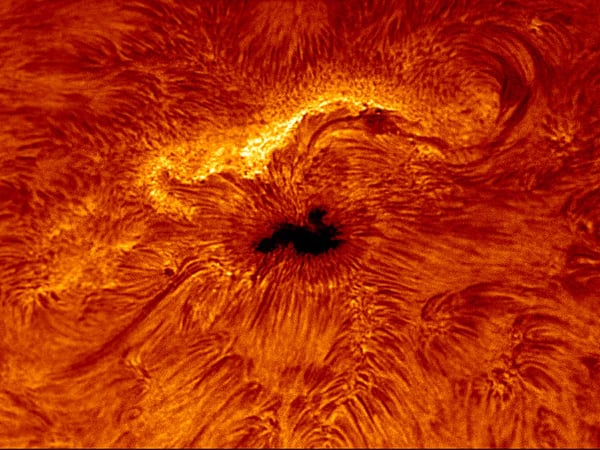
The SR127QT is popular among solar astrophotographers. Its long focal length captures high-resolution solar images. With the 0.7× reducer, it supports many planetary cameras like those from ZWO and Player One. With a good tracking mount and seeing conditions, imagers can capture:
- Sunspots
- Filaments
- Prominences
Key specifications
| Clear Aperture | 127mm |
| Focal Length | 2667mm |
| With focal reducer | 1355mm |
| Distortion | < 0.6% |
| OTA Material | Carbon fiber |
| Telescope Length | 31.1″ with dew shield retracted |
| Telescope weight | 13.6 lbs |
| Operating Temperature | 20-100° F |
| Power supply | DC 12V, maximum 120mA |
| AC Adapter included | 120-240VAC |
| Power consumption | 1.5 watts |
| Wavelength Shift range | +/-1Å |
Price and availability
The SR127QT is available directly from the official website:
- SR127QT Prominence model: $7,995
- SR127QT Chromosphere model: $9,995
- PE Grade model: Available on request
Final thoughts
The Daystar SR127QT is a powerful instrument. It opens a clear and detailed window into the Sun’s dynamic atmosphere. You can watch solar storms, plasma arches, and sunspots in real-time. With its high aperture, narrow bandpass, and precision electronics, it delivers top-tier performance. It’s not cheap. But for those serious about solar astronomy, it offers professional-level results in a portable, integrated package. Before purchasing, research thoroughly. Consider your observing goals. And when ready, prepare to be amazed, because the Sun, through the SR127QT, is alive with motion, energy, and beauty.
Clear skies!
See more from DIYPhotography.net on Google
Add DIYPhotography.net as a trusted source. This makes
our stories more likely to appear in your Google Search results.
 Add as a preferred source on Google

Soumyadeep Mukherjee
Soumyadeep Mukherjee is an award-winning astrophotographer from India. He has a doctorate degree in Linguistics. His work extends to the sub-genres of nightscape, deep sky, solar, lunar and optical phenomenon photography. He is also a photography educator and has conducted numerous workshops. His works have appeared in over 40 books & magazines including Astronomy, BBC Sky at Night, Sky & Telescope among others, and in various websites including National Geographic, NASA, Forbes. He was the first Indian to win “Astronomy Photographer of the Year” award in a major category.


Join the Discussion
DIYP Comment Policy
Be nice, be on-topic, no personal information or flames.