



















Building a DIY Chase Camera Rover Is the Kind of Project Every Camera Nerd Dreams About
Jul 9, 2026
Alysa Gavilan
Alysa Gavilan has spent years exploring photography through photojournalism and street scenes. She enjoys working with both film and mirrorless cameras, and her fascination with the craft has grown over the decades. Inspired by Vivian Maier, she is drawn to capturing everyday moments that often go unnoticed.
Share:
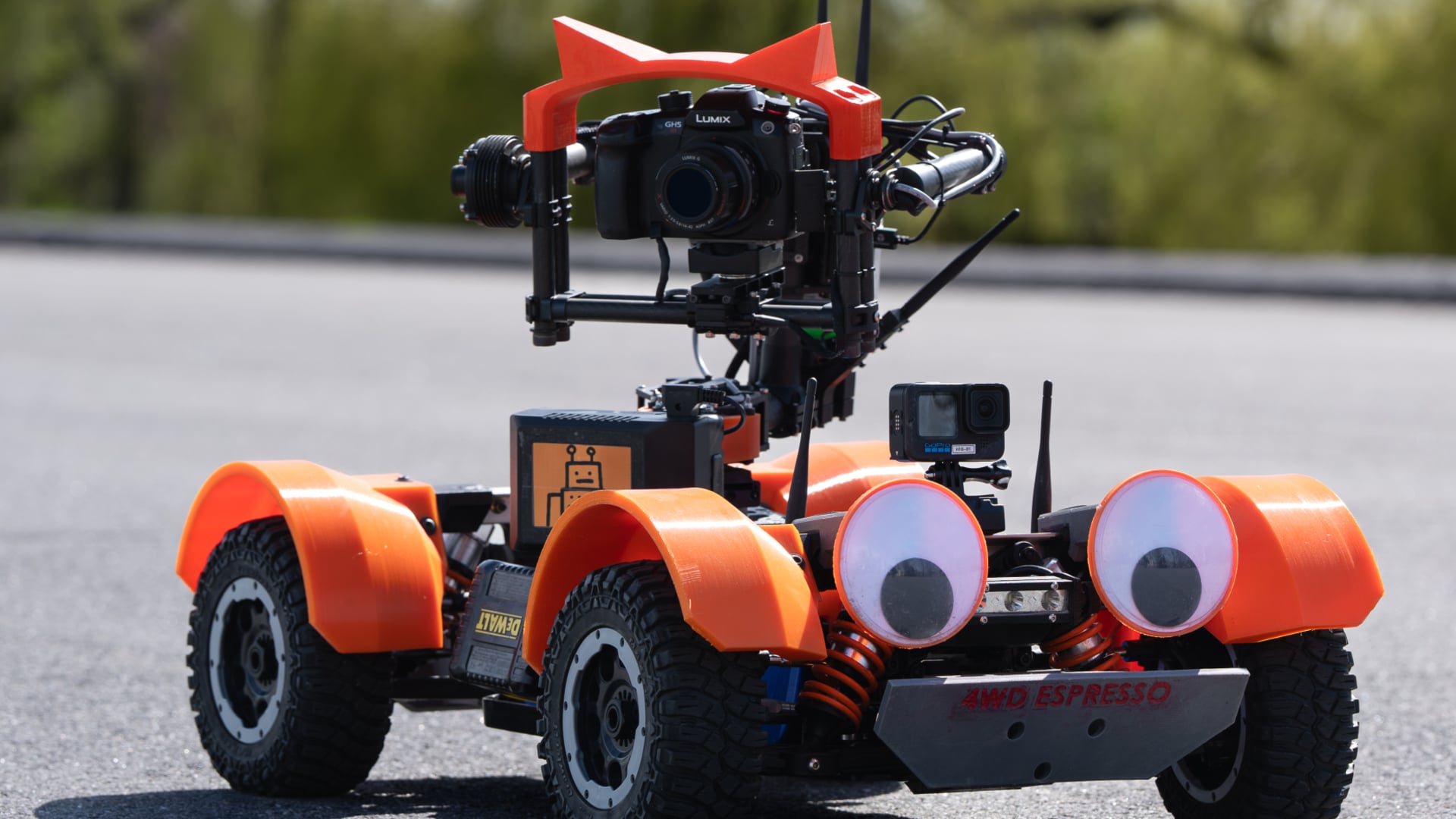
Every photographer has looked at a fast moving scene and thought, “I wish I could get the camera just a little lower.” Some buy sliders. Others reach for drones.
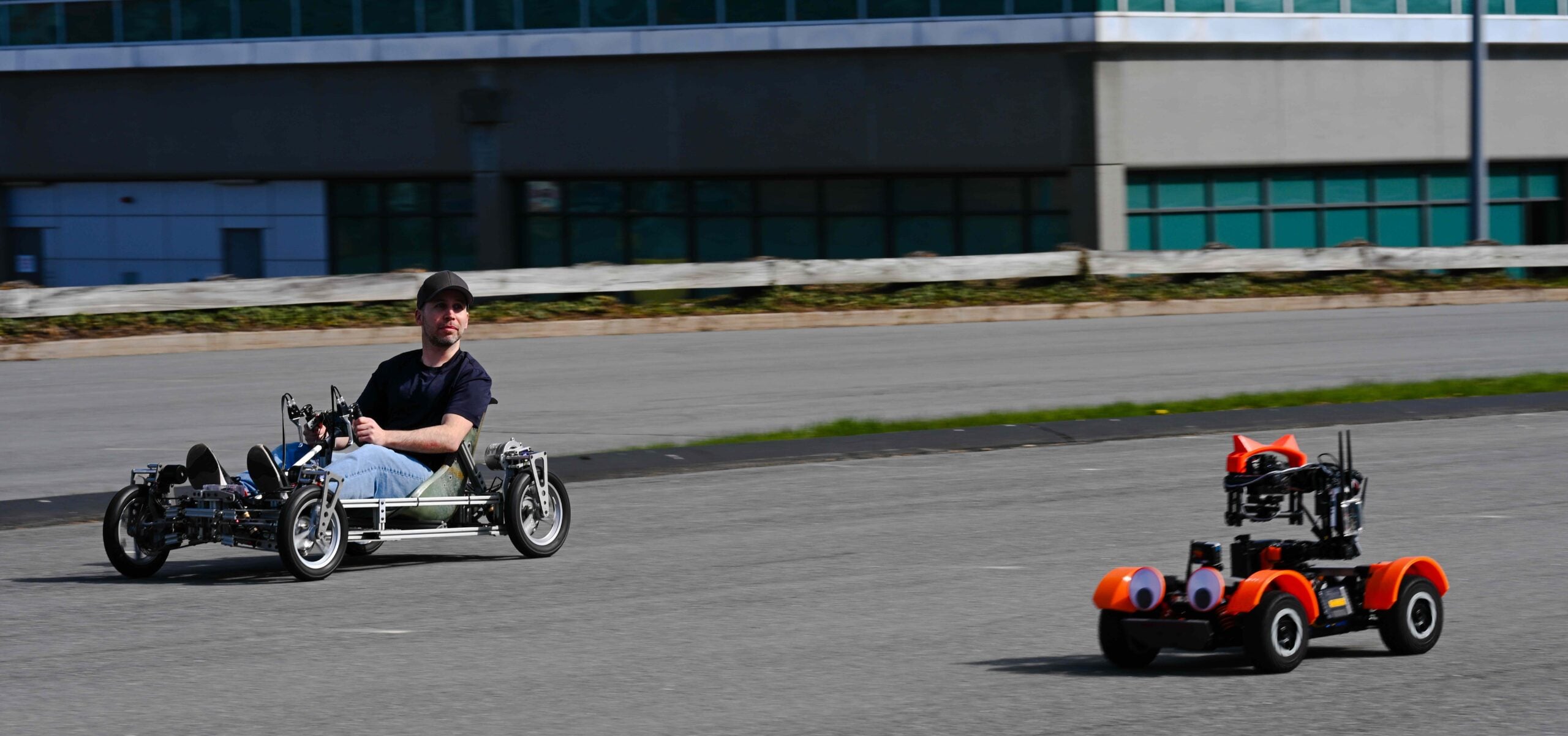
Then there are people like maker and engineer Dane Kouttron, who spotted a strange industrial RC headed for the scrapyard and immediately imagined it chasing race karts with a stabilized cinema camera attached to the top.
That wonderfully ambitious idea became one of the most detailed DIY camera builds we have seen in a long time. Published on Transistor-Man.com, Kouttron’s project documents the creation of a custom remote controlled chase camera rover capable of capturing cinematic tracking shots from just inches above the ground.
A mystery RC gets a second life
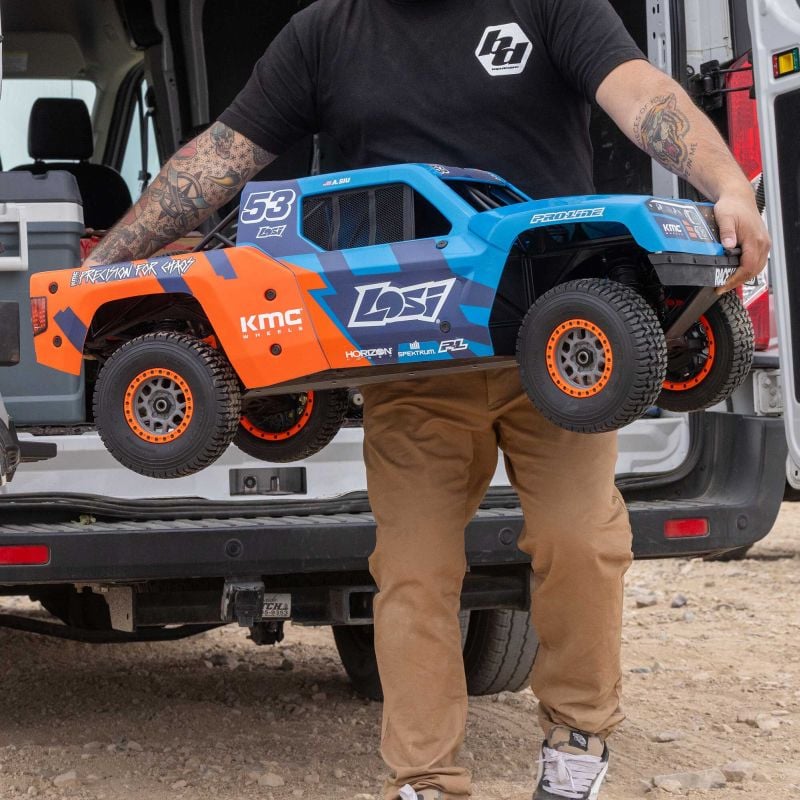
The project began with an unusual find at an industrial surplus warehouse in Massachusetts. Kouttron came across what looked like an oversized RC vehicle fitted with a strange lifting mechanism. Nobody seemed to know its original purpose, but instead of leaving it behind, he brought it home for around $50.
Rather than restoring the machine, he stripped away the unnecessary hardware and started transforming it into a purpose built filmmaking platform. His inspiration came from the famous low angle chase vehicles used in action videos, particularly the Freefly Tero that appeared in early RocketJump productions.
The goal was simple. Build a rugged rover capable of carrying a real camera on a professional gimbal while driving fast enough to follow moving subjects.
It is equal parts camera rig and engineering puzzle
This is not the kind of weekend project that involves tightening a few screws and calling it done.
Kouttron carefully explains every stage of the build, from designing stronger aluminum mounting plates to machining custom parts and creating large 3D printed components that tie the entire system together. Every improvement came after testing something that failed, bent, cracked, or simply did not work as expected.
One of the funniest parts of the project is how often the builder admits that “future Dane” will have to solve the next problem. This actually makes you feel like you’re sitting beside a friend who keeps finding new excuses to spend time in the workshop.
A professional gimbal rides on top
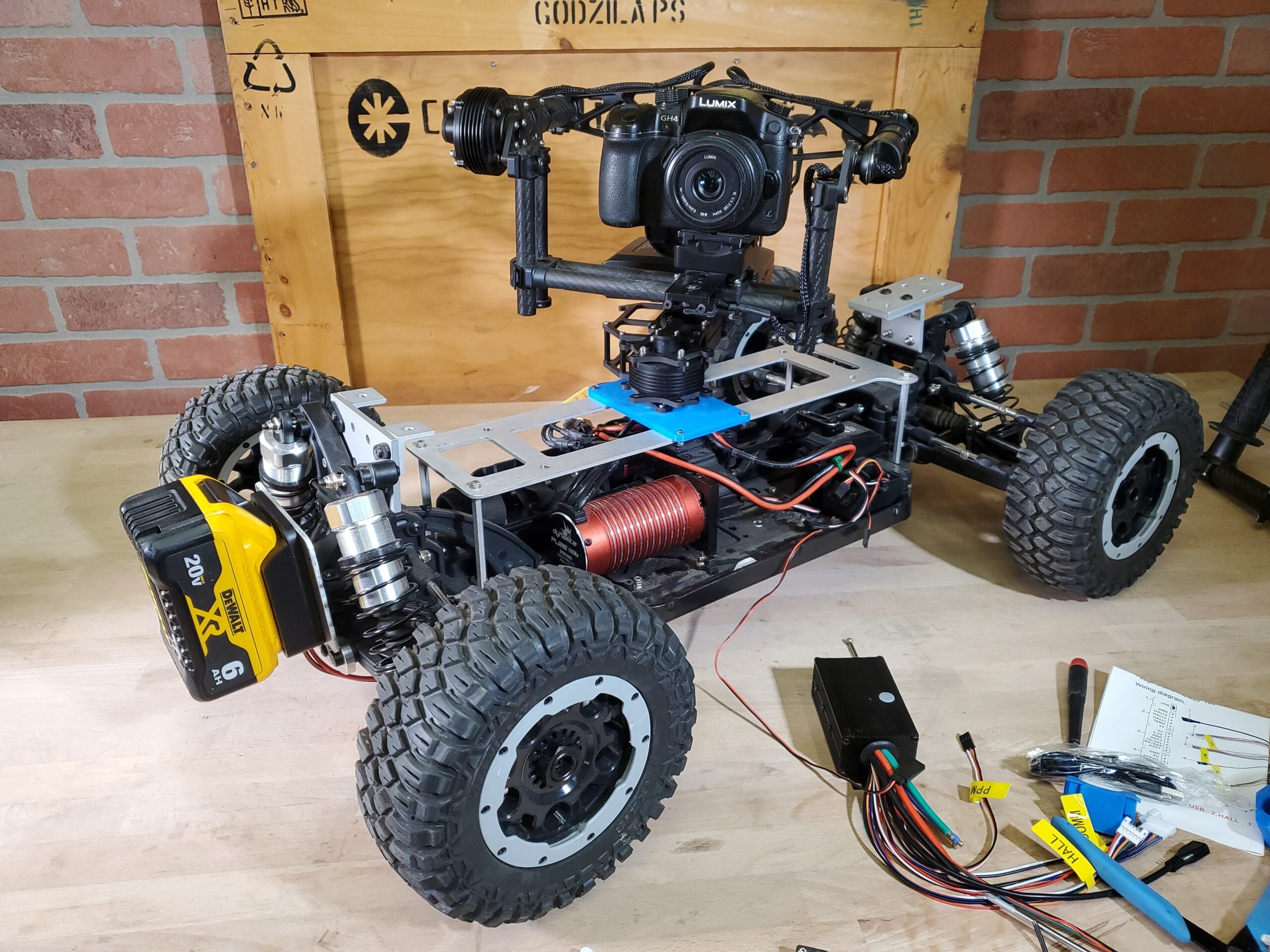
Instead of relying on electronic image stabilization alone, the rover carries a used Freefly Movi M10 three axis gimbal purchased for an astonishing bargain.
Mounting a cinema gimbal onto a speeding RC platform created a new set of challenges. The camera had to remain perfectly balanced while keeping the vehicle’s center of gravity as low as possible. Battery placement, mounting hardware, and even cable routing affected stability.
To improve durability, many of the printed parts were later redesigned using flexible TPU filament after early versions cracked during testing.
The result is a camera platform capable of delivering remarkably smooth footage while racing across rough terrain.
Old gear still has plenty of life
Photography projects often prove that expensive new equipment is not always necessary, and this build embraces that philosophy from start to finish.
A used Panasonic GH4 handled the first rounds of testing before later being upgraded to a Panasonic GH5S for improved image quality. The wireless video system came from a discontinued Amimon CONNEX link purchased second hand after DJI alternatives proved far more expensive.
One of the most entertaining sections follows Kouttron as he wrestles with outdated firmware, discovers hidden offline update tools, and finally convinces decade old hardware to cooperate. It is a reminder that older filmmaking equipment often has plenty of life left for people willing to tinker.
Testing means driving fast and crashing occasionally
No engineering project is complete without breaking something.
The rover endured frozen lakes, muddy terrain, curb impacts, and surprisingly violent tumbles. Parts cracked. Steering components failed. Battery mounts snapped. Each problem inspired another redesign that made the vehicle stronger than before.
Somehow the camera and gimbal survived remarkably well, even after crashes that looked dramatic enough to end the project entirely.
Watching the footage alongside the engineering notes makes it clear that careful design can accomplish far more than expensive hardware alone.
More than a build guide
Although the article contains downloadable CAD files and detailed construction notes, it is also an excellent lesson in creative problem solving.
Photographers will appreciate the discussions about balancing cameras, choosing lenses, controlling vibration, and protecting expensive gear. Makers will enjoy the machining, electronics, firmware troubleshooting, and 3D printing. Anyone curious about filmmaking technology will probably end up reading far longer than planned.
Perhaps the biggest takeaway is that impressive camera movement does not always require a Hollywood budget. Sometimes it starts with a forgotten RC, a second hand gimbal, and the confidence to ask, “What happens if I bolt a camera onto this?”
If you would like to follow the entire journey and see how the chase camera evolved from a mysterious surplus RC into a capable filmmaking platform, the full blog post on Transistor-Man.com is well worth the read.
[Photos via Transistor-Man.com]
See more from DIYPhotography.net on Google
Add DIYPhotography.net as a trusted source. This makes
our stories more likely to appear in your Google Search results.
 Add as a preferred source on Google

Alysa Gavilan
Alysa Gavilan has spent years exploring photography through photojournalism and street scenes. She enjoys working with both film and mirrorless cameras, and her fascination with the craft has grown over the decades. Inspired by Vivian Maier, she is drawn to capturing everyday moments that often go unnoticed.


Join the Discussion
DIYP Comment Policy
Be nice, be on-topic, no personal information or flames.