



















Askar SQA60 Pro Launches with a Sextuplet Optical Design
May 21, 2026
Soumyadeep Mukherjee
Soumyadeep Mukherjee is an award-winning astrophotographer from India. He has a doctorate degree in Linguistics. His work extends to the sub-genres of nightscape, deep sky, solar, lunar and optical phenomenon photography. He is also a photography educator and has conducted numerous workshops. His works have appeared in over 40 books & magazines including Astronomy, BBC Sky at Night, Sky & Telescope among others, and in various websites including National Geographic, NASA, Forbes. He was the first Indian to win “Astronomy Photographer of the Year” award in a major category.
Share:
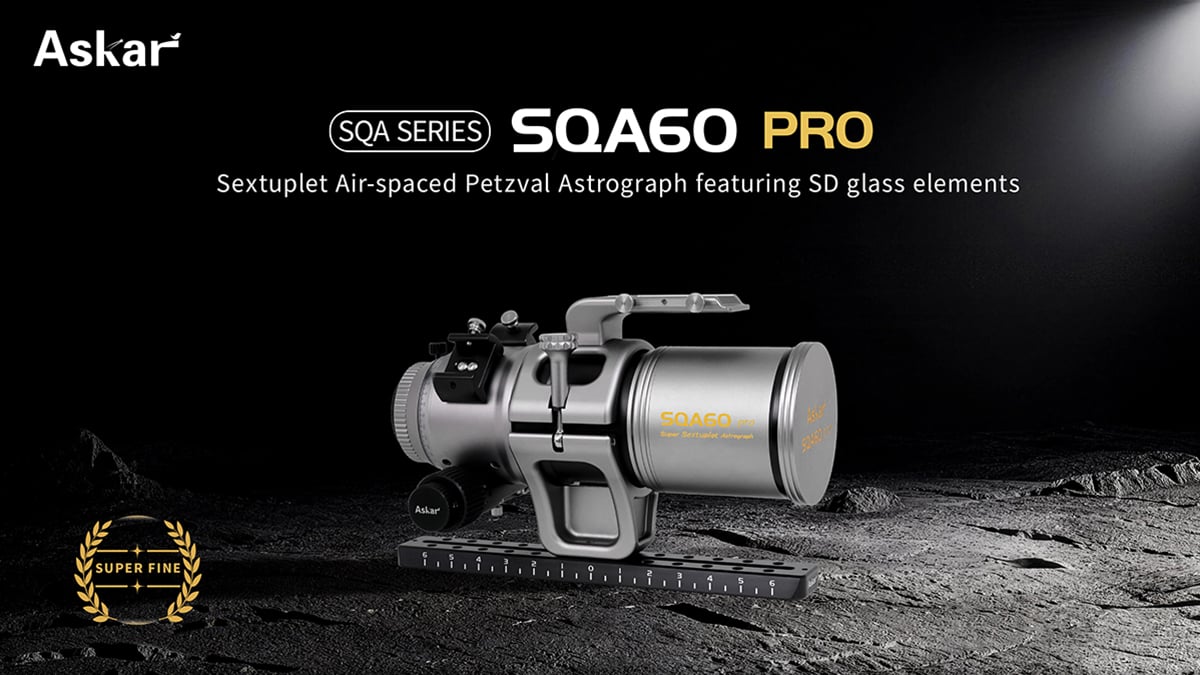
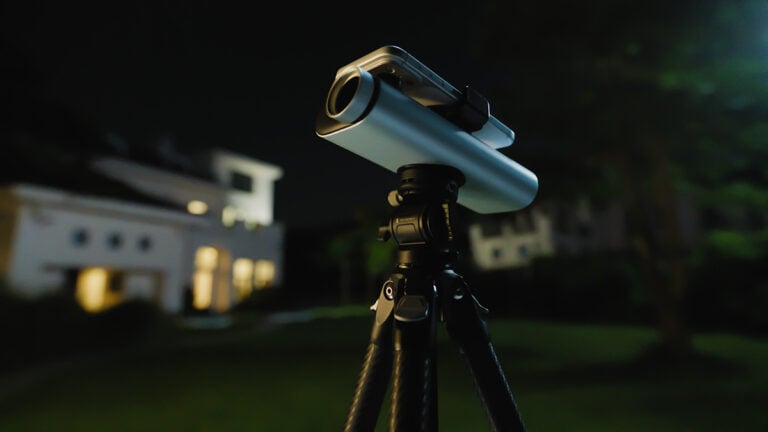
Askar has expanded its Super Quality Astrograph (SQA) lineup with the introduction of the new SQA60 Pro. The telescope joins a growing category of compact astrographs designed for full-frame astronomy cameras. While small-aperture refractors have become increasingly common in astrophotography, manufacturers now face a different challenge.
The telescope combines a six-element Petzval optical design with a 60 mm aperture, a focal length of 276 mm, and a focal ratio of f/4.6. It also supports full-frame imaging through a 44 mm image circle. The telescope puts emphasis on field correction, imaging speed, portability, and compatibility.
A new member of the SQA family
The SQA series has become one of Askar’s most recognizable astrophotography product lines. Unlike traditional refractors that often require separate flatteners and reducers, SQA telescopes integrate optical correction into the telescope itself. This reduces the number of components in the imaging train and makes setup in the field easier.
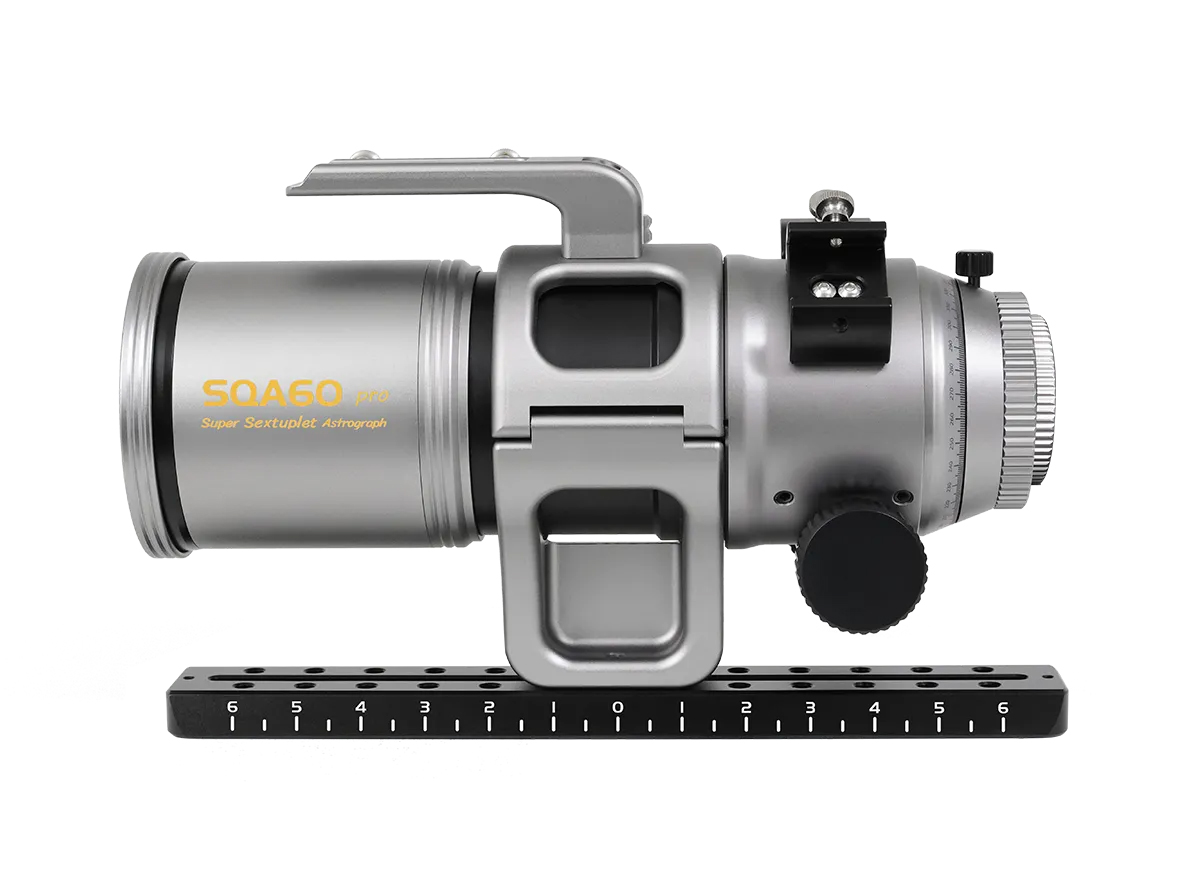
The new SQA60 Pro features a 60 mm aperture and a focal length of 276 mm. Those numbers may sound modest, but they place the telescope in a category that remains highly popular among deep-sky imagers. Wide-field instruments continue to attract photographers because they can capture large celestial structures in a single frame. They also place fewer demands on tracking accuracy than longer focal length telescopes.
Many astrophotographers begin with wide-field imaging as it offers a forgiving learning curve. At the same time, experienced imagers continue to rely on compact astrographs for projects involving large emission nebulae and extensive star fields. The SQA60 Pro appears to be designed with both groups in mind.
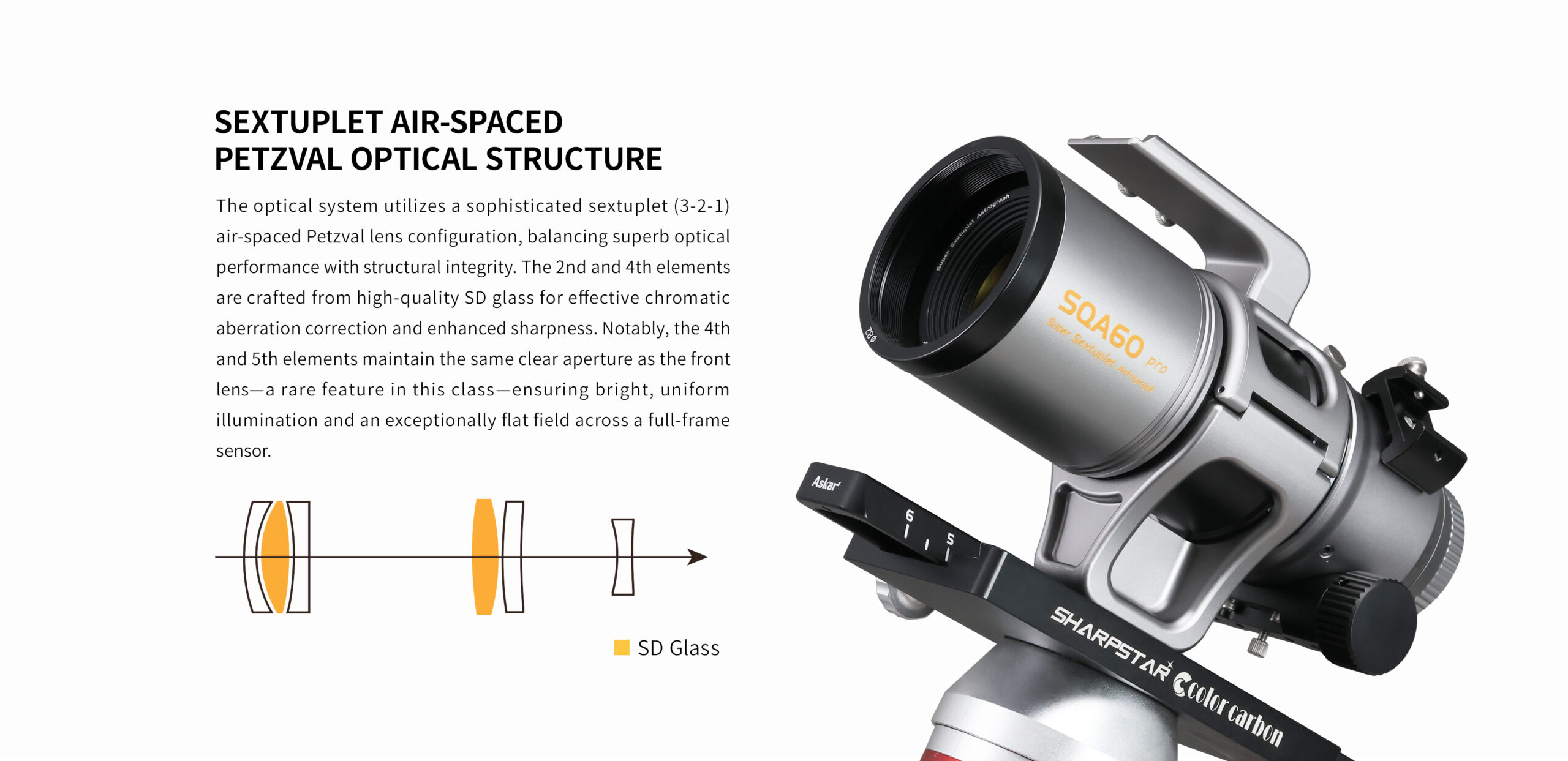
A sextuplet optical design
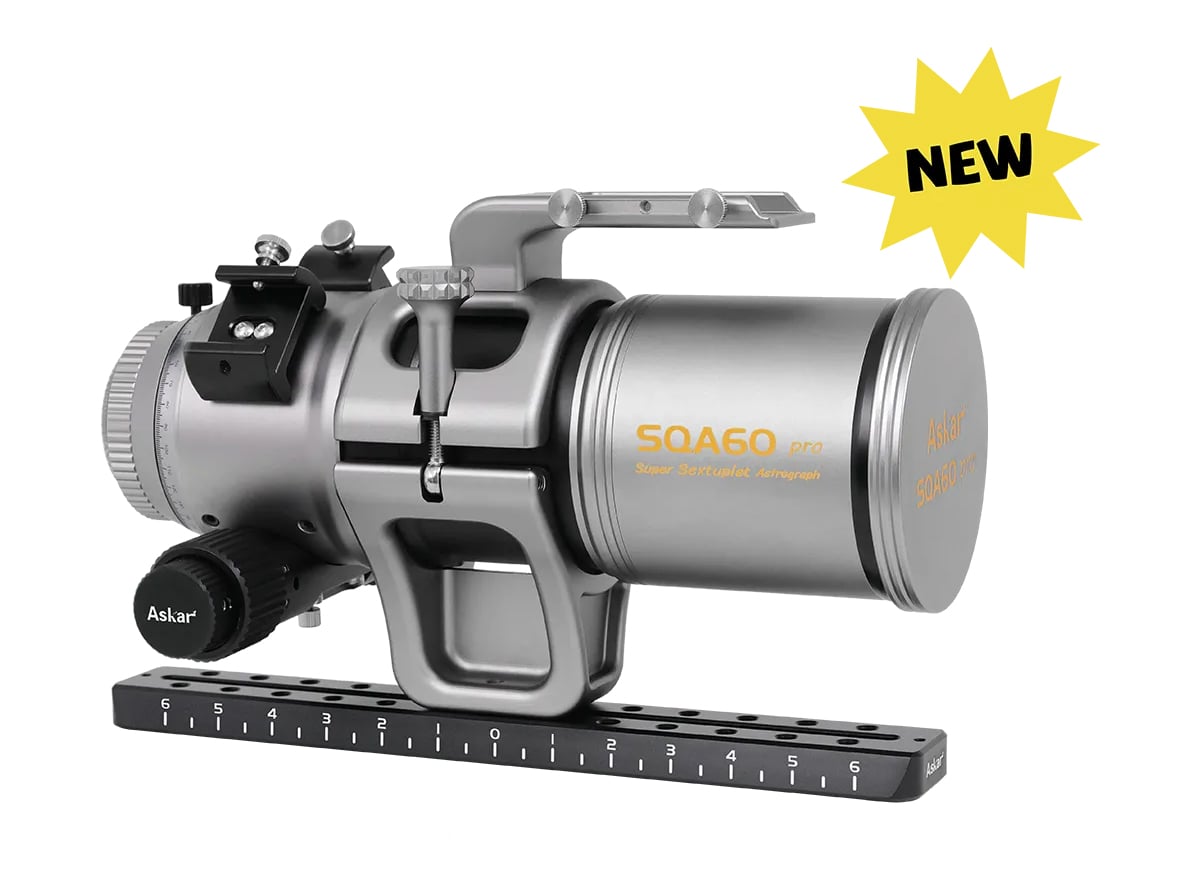
The SQA60 Pro has a sextuplet Petzval optical system. Askar uses six lens elements and incorporates two SD glass elements within the design. This configuration serves two important functions. First, it improves color correction. Astrophotographers often encounter chromatic aberration when imaging bright stars. Unwanted color fringing can reduce image quality and complicate post-processing. The inclusion of SD glass helps control these optical errors and improve color fidelity across the image.
The second function is field correction. Refractors naturally produce field curvature. As camera sensors become larger, this curvature becomes more visible toward the edges of the frame. Stars that appear sharp in the center may become distorted near the corners.
Focal length and focal ratio
At 276 mm focal length, the SQA60 Pro falls into the wide-field category. This focal length captures large areas of sky while still preserving enough image scale to reveal substantial detail. It occupies a useful position between extremely short focal length camera lenses and longer refractors that focus on smaller targets.
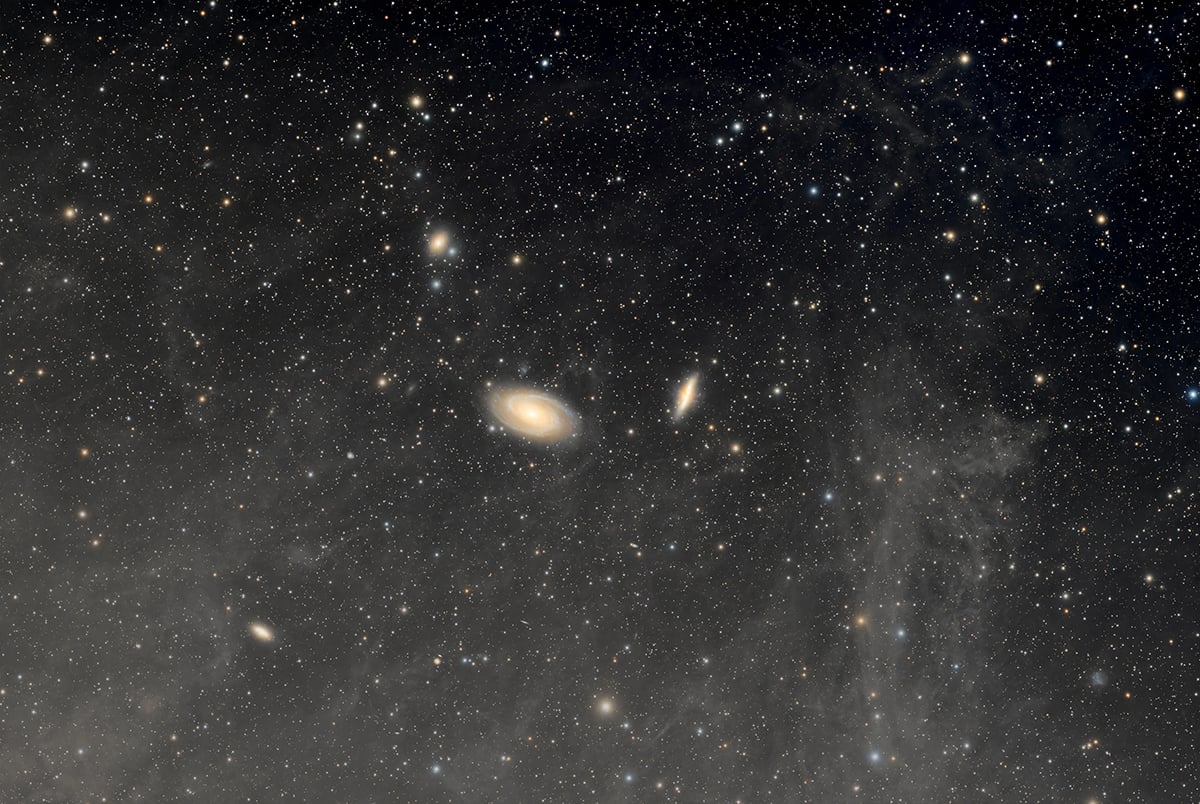
Many of the sky’s most photographed deep-sky objects benefit from this type of framing. The North America Nebula and the Rosette Nebula are some of the many large targets requiring a wider field of view. The Orion Molecular Cloud Complex presents another example. Barnard’s Loop, the Horsehead Nebula, the Flame Nebula, the Orion Nebula, and surrounding hydrogen clouds occupy a vast region. A telescope with a focal length of around 276 mm can record this within a single composition.
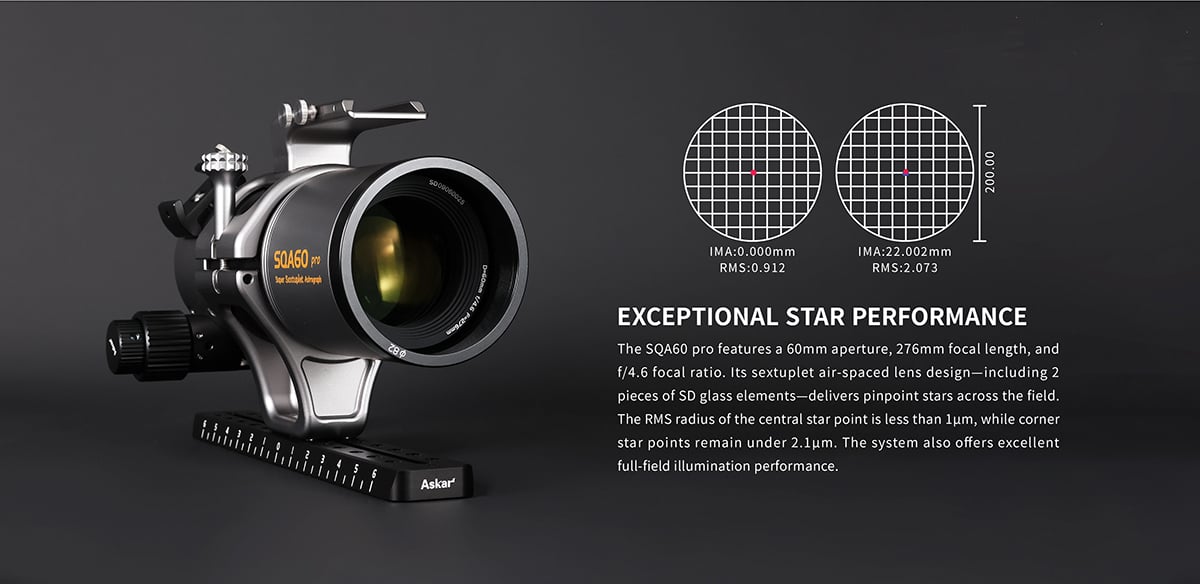
The SQA60 Pro operates at f/4.6, placing it among the faster refractors currently available in this aperture class. A faster focal ratio allows the sensor to collect more light during a given exposure. This increased efficiency reduces the amount of total integration time required to achieve a particular signal level. Although exposure strategy depends on many factors, faster optics generally allow photographers to build usable datasets more quickly.
This advantage becomes evident for faint nebulae. Faster optical systems help reveal the details more efficiently. Narrowband imaging benefits as well. Filters that isolate specific wavelengths inevitably reduce incoming light. Faster optics partially compensate for this reduction and improve data collection efficiency.
This flexibility helps users integrate cameras, filter wheels, off-axis guiders, and other accessories without relying on complex spacer combinations. Different imaging systems often require different optical distances. Adjustable backfocus makes adaptation easier.
Compact dimensions and full-frame support
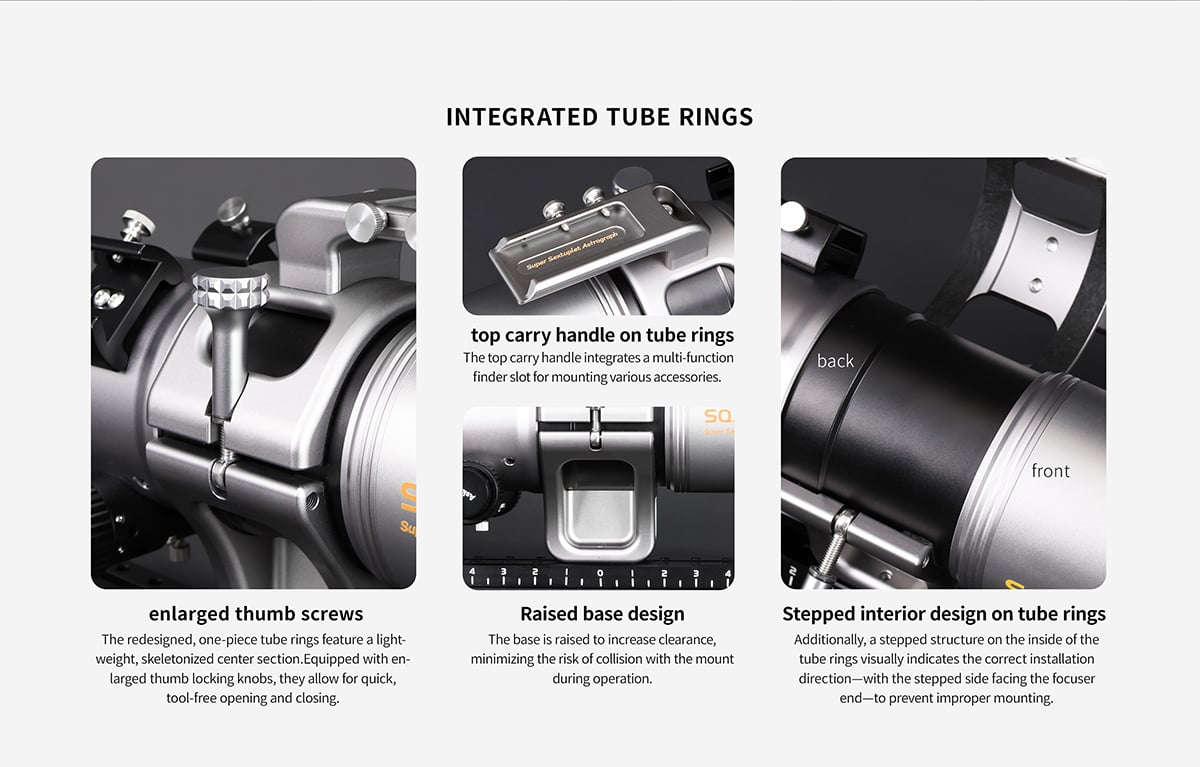
Portable imaging equipment remains a priority for many astrophotographers. The world’s best dark-sky locations are often far from major cities. The SQA60 Pro measures 283 mm in length and weighs approximately 2.79 kg. These dimensions make it a part of the portable astrograph category.
Its compact size allows the telescope to fit comfortably in travel cases and airline-friendly equipment bags. Astrophotographers who regularly visit dark-sky destinations will appreciate the small footprint. The short optical tube also pairs well with compact equatorial mounts and harmonic drive systems. This portability opens opportunities beyond traditional observatory use. Photographers can transport the telescope to remote deserts, mountain sites, and rural observing locations without carrying excessive weight.
Wide-field astrophotography benefits greatly from full-frame imaging. Larger sensors capture more sky in a single exposure. They also allow photographers to preserve wide compositions without stitching multiple panels together. The SQA60 Pro supports this trend by offering a field designed for full-frame cameras.
Askar has also incorporated an adjustable backfocus system. The telescope offers adjustable backfocus from 41 mm to 66 mm, with 55 mm recommended as the standard working distance.
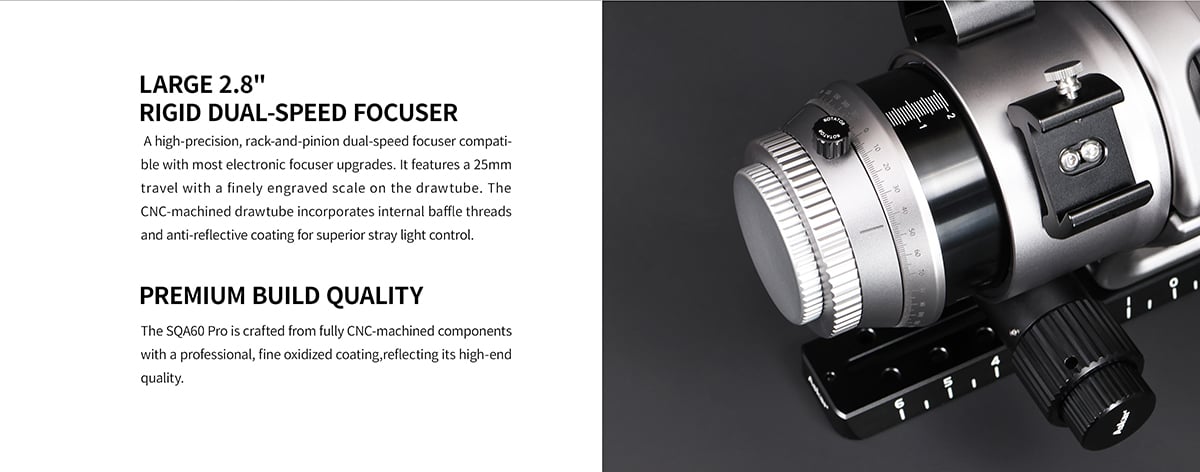
Key specifications, price, and availability
Here are some of the key specifications of Askar SQA60 Pro:
| Aperture size | 60mm |
| Focal length | 276mm |
| Focal ratio | f/4.6 |
| Objective lens | Sextuplet petzval APO (includes 2 pieces of SD glass ) |
| Total length | 283mm |
| Format specifications | Full frame(44mm) |
| OTA weight | 2.79kg |
| Gross weight | 3.54kg |
| Rear-end thread type | M48 adapter (with M48×0.75 filter thread) |
| Rear-end connection distance | Support 41-66mm range |
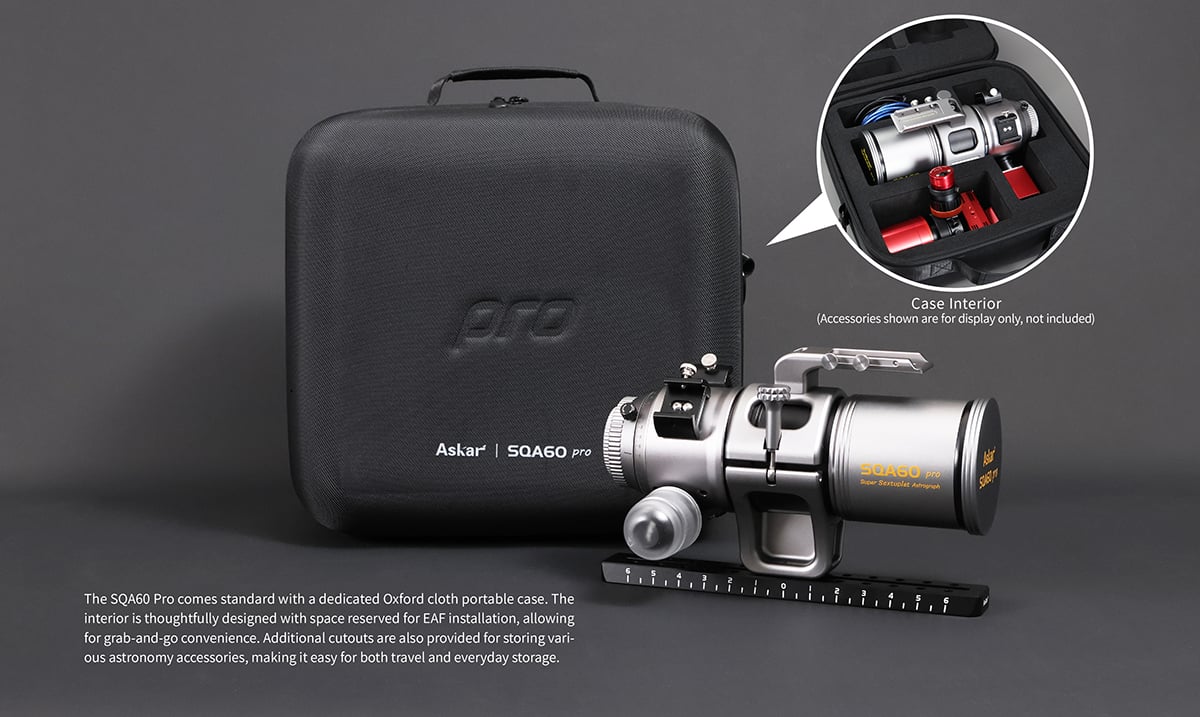
Askar is yet to reveal the price and availability for the SQA60 Pro telescope.
Clear skies!
See more from DIYPhotography.net on Google
Add DIYPhotography.net as a trusted source. This makes
our stories more likely to appear in your Google Search results.
 Add as a preferred source on Google

Soumyadeep Mukherjee
Soumyadeep Mukherjee is an award-winning astrophotographer from India. He has a doctorate degree in Linguistics. His work extends to the sub-genres of nightscape, deep sky, solar, lunar and optical phenomenon photography. He is also a photography educator and has conducted numerous workshops. His works have appeared in over 40 books & magazines including Astronomy, BBC Sky at Night, Sky & Telescope among others, and in various websites including National Geographic, NASA, Forbes. He was the first Indian to win “Astronomy Photographer of the Year” award in a major category.




Join the Discussion
DIYP Comment Policy
Be nice, be on-topic, no personal information or flames.