



















The Composition Mistakes That Are Ruining Your Wildlife Photography
May 28, 2026
Alex Baker
Alex Baker is a portrait and lifestyle driven photographer based in Valencia, Spain. She works on a range of projects from commercial to fine art and has had work featured in publications such as The Daily Mail, Conde Nast Traveller and El Mundo, and has exhibited work across Europe
Share:
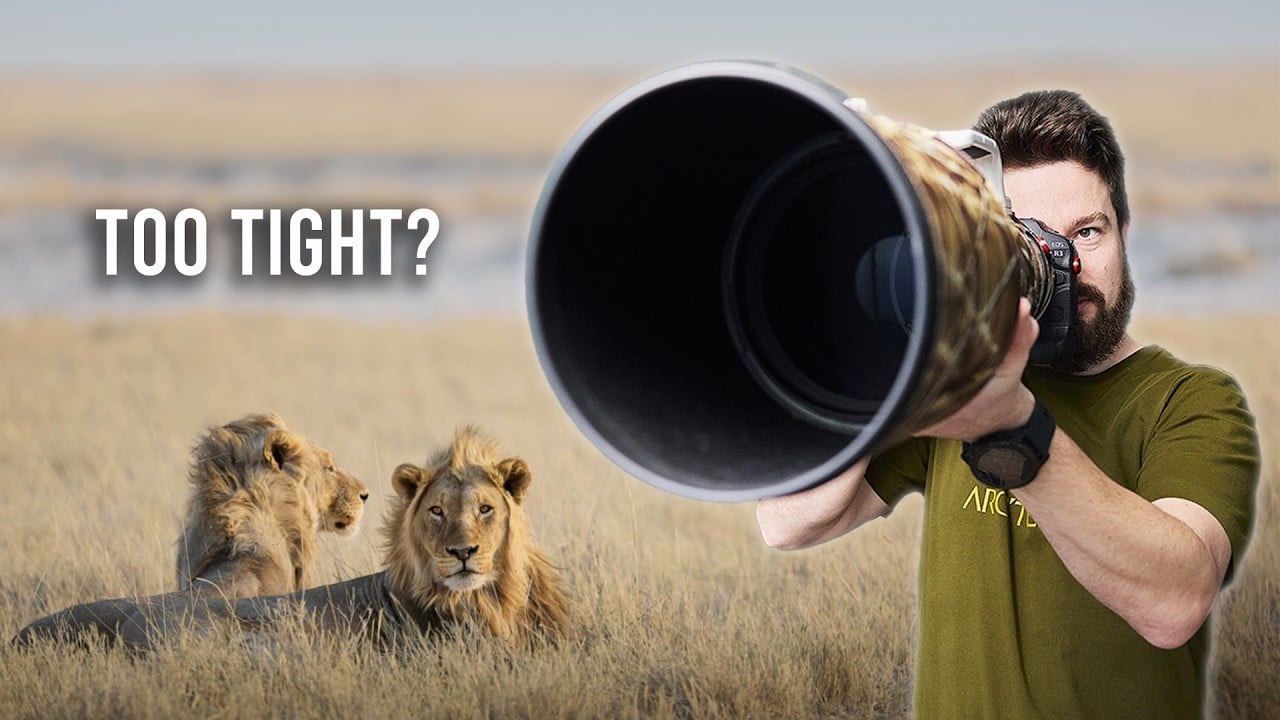
Imagine the scene: you’re on the safari trip of a lifetime, sitting in front of an incredible wildlife scene, your gear is dialled in, and the light is doing exactly what it should, and yet, you still end up with images that feel a bit disappointing. The images might be sharp, exposed correctly, or perfectly “acceptable”, but they look just like everyone else’s shot from the same safari vehicle, same lens, with the same instinct to zoom in and fill the frame.
Wildlife photographer Paolo Sartori has some tips in this video about how to improve your wildlife photos. Paolo says that he realised that he was treating wildlife photography like documentation rather than decision-making. The subject was never the problem, the composition was. And more importantly, the lack of intention behind it before the shutter was even pressed.
Two types of wildlife photographers
So what exactly does Paolo mean by ‘documenter’? Paolo says that this type of photographer typically sees an animal, raises the camera, zooms in, takes the shot, and moves on. It’s not always a bad approach, depending on what you’re trying to achieve. The result is a set of records or proof that the encounter happened. Sharp, well-exposed, technically fine, but not elevated to fine art.
The second type is the photographer who pauses, even if only for a few seconds longer than feels natural. Before lifting the camera, they ask a different question: what is this moment actually about? What story is unfolding here? That shift may sound small, but it changes everything.
Paolo admits this mindset didn’t come quickly. On early trips, especially after travelling far and investing heavily in getting to a location, the instinct was always to shoot immediately. It took him years to learn that sometimes the most important creative decision is not pressing the shutter straight away.
The telephoto trap
One of the most common composition habits Paolo sees in the field is almost automatic. An animal appears, the lens zooms in, and the subject gets centred. That’s the photo, and every photographer in the vehicle ends up making the same image from the same angle.
This is where equipment can subtly mislead photographers. A long lens like a 400mm, 500mm, or 600mm encourages isolation. It makes it easy to remove the environment entirely and focus only on the subject. And while that can work for portraits, it also removes context, scale, and story.
Paolo often reminds himself that the question isn’t “do I have enough reach?” but “do I actually need to fill the frame?” Sometimes the stronger image comes from stepping back (not literally if you can’t leave the vehicle!), using a wider focal length, and showing the animal existing inside its environment rather than floating against a blurred background.
A 70–200mm or even a 24–105mm, used creatively, can produce far more interesting storytelling than maximum zoom ever will.
The real problem isn’t rules, it’s placement
Photographers often fall back on rules like the rule of thirds or centre composition, but Paolo has found the real issue sits deeper. He thinks we shouldn’t be blindly obeying the rules but instead consciously deciding where the subject belongs in the frame, and why.
A wildlife image isn’t just about the animal, it’s also about what the viewer is being asked to understand. Where does this animal live? What space does it occupy? What context helps tell that story? An isolated portrait of a lion, for example, takes away all the storytelling aspects.
This is where lens choice and positioning work together. Even moving half a metre left or right can completely change how branches, light, or negative space interact with the subject. Paolo has lost count of the times a “bad background” was fixed simply by shifting position slightly rather than changing gear, which admittedly isn’t easy from inside a vehicle.
Backgrounds
If there is one thing that consistently separates average wildlife images from more compelling ones, it is the background directly behind the subject. A clean background makes the subject instantly stand out. A cluttered one, even in the most dramatic location, can completely dissolve the impact.
Paolo remembers photographing a leopard partially hidden in the brush. From one angle, it was almost invisible, lost in tangled branches, but a small shift to the side revealed clean space behind it, and suddenly the animal separated from the environment and became readable at a glance.
This is where aperture choice also plays a role. Shooting wide open, like f/2.8 or f/4, can help soften distractions, but it doesn’t replace good placement. Depth of field is not a fix for poor background selection. If you’re careful with the backgrounds, you can still get compelling shots at f/8 where more of the scene is in focus.
Timing matters more than speed
Wildlife photography is all about patience, and most of the time you’ll be waiting for something to happen. Then, when it finally does, there’s the temptation to rush through things just to make sure you’ve got the shot, and then moving on too quickly when you think you’ve got it.
Paolo says waiting even ten minutes longer can make a real difference. Animal behaviour unfolds, light shifts, backgrounds clear, or the subject relaxes or becomes more expressive. The “perfect moment” usually isn’t immediate, it is revealed gradually. Paolo recalls many of his strongest images being the result of simply staying still and letting the scene evolve.
This is also where shutter speed decisions become more intentional. Instead of defaulting to something ultra-fast “just in case”, slowing down slightly when the moment allows can introduce more atmosphere, especially in lower light conditions. A hint of motion in grass or wings can add life to an otherwise static frame.
Eye level is a guideline, not a rule
“Get low” is one of the most repeated pieces of wildlife advice, and for good reason. Shooting at eye level often improves perspective, reduces harsh foreground intrusion, and creates more immersive images, but Paolo warns not to treat it as a default setting. Sometimes a slightly elevated angle reveals patterns in behaviour or interaction that would otherwise be hidden. As with any rule, it should be a guideline, not something to stick to doggedly.
Composition starts before the camera comes out
Perhaps the biggest shift in Paolo’s approach came from understanding that composition doesn’t begin at the moment of capture, it begins before the camera is raised. Scouting a location changes everything. Light direction, background possibilities, movement paths of animals, and likely behavioural moments all become part of a mental map.
When Paolo arrives in a new area, especially during workshops or safaris, he spends time observing first. Where is the light falling? How will it change in an hour? Where are subjects likely to move? Which positions will give clean backgrounds? This preparation removes hesitation later. When something happens, he is not reacting blindly, he’s already positioned mentally and physically for the shot.
Of course, a lot of these things aren’t so easy when you’re in a safari van with a bunch of other people. But you can still take away some things, and maybe even ask the guides and drivers to help. They may not be pro photographers themselves, but they will possess a profound knowledge of the landscape and animals, and are possibly your best allies in helping you to take better photos. Watch the video below:
See more from DIYPhotography.net on Google
Add DIYPhotography.net as a trusted source. This makes
our stories more likely to appear in your Google Search results.
 Add as a preferred source on Google
Alex Baker
Alex Baker is a portrait and lifestyle driven photographer based in Valencia, Spain. She works on a range of projects from commercial to fine art and has had work featured in publications such as The Daily Mail, Conde Nast Traveller and El Mundo, and has exhibited work across Europe


Join the Discussion
DIYP Comment Policy
Be nice, be on-topic, no personal information or flames.