

























Hubble Photographs Stars Flaring to Life in Orion Molecular Cloud
Jan 14, 2026
Soumyadeep Mukherjee
Soumyadeep Mukherjee is an award-winning astrophotographer from India. He has a doctorate degree in Linguistics. His work extends to the sub-genres of nightscape, deep sky, solar, lunar and optical phenomenon photography. He is also a photography educator and has conducted numerous workshops. His works have appeared in over 40 books & magazines including Astronomy, BBC Sky at Night, Sky & Telescope among others, and in various websites including National Geographic, NASA, Forbes. He was the first Indian to win “Astronomy Photographer of the Year” award in a major category.
Share:

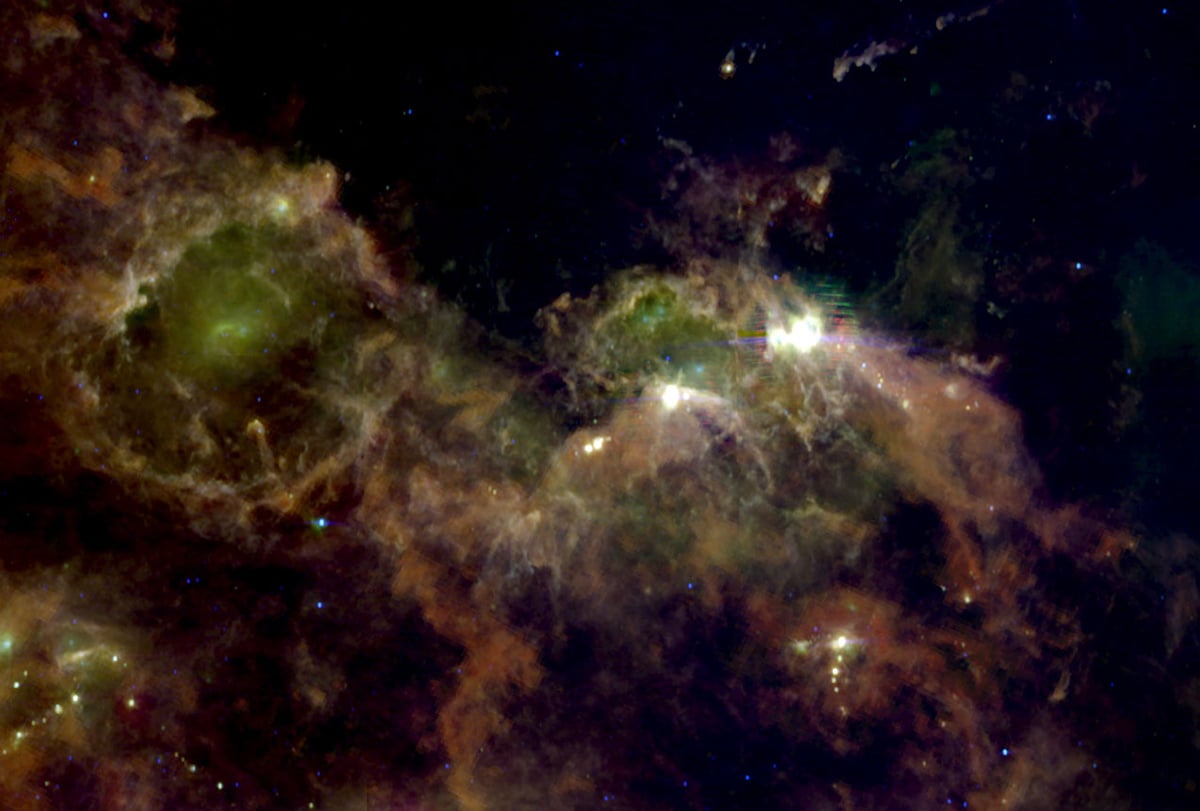
Star formation is a dynamic and violent process, governed by gravity, radiation, and magnetic fields. Although astronomers have studied stellar nurseries for decades, the earliest stages of star birth remain difficult to observe directly. Dense gas and dust obscure forming stars and hide the physical processes shaping them. Utilizing its high spatial resolution and sensitivity to scattered light, the Hubble Space Telescope has now captured new observations of young stars forming within the Orion Molecular Cloud. These images reveal protostars actively interacting with their surroundings, offering fresh insight into how stars grow and how their environments respond.
NASA’s latest release shows these young objects “flaring to life” as they drive energetic outflows into the surrounding cloud. Rather than passive points of light, these forming stars reshape their birth material through jets and winds. The observations form part of a larger effort to understand how protostellar envelopes evolve and why accretion onto young stars slows over time. Together, the images and analysis refine long-standing models of early stellar evolution.
The Orion Molecular Cloud: A laboratory for star formation
The Orion Molecular Cloud complex lies approximately 1,300 light-years from Earth and spans hundreds of light-years across the Orion constellation. It is one of the nearest regions where massive and low-mass stars form in large numbers. Because of its proximity, astronomers can resolve fine structures that remain inaccessible in more distant star-forming regions.
The cloud consists primarily of cold molecular hydrogen mixed with interstellar dust. Within this material, gravity creates dense condensations that collapse into protostars. Orion contains objects at every stage of early stellar evolution. Some stars remain deeply embedded in thick envelopes, while others have already dispersed much of their natal material.
Hubble has played a central role in mapping this region. Earlier observations revealed thousands of young stars and protoplanetary disks. These findings established Orion as a benchmark for studies of star formation. The new observations extend that work by focusing on the interaction between protostars and their immediate environments.
Protostars emerging from dense envelopes
The stars highlighted in this study are protostars, objects that have not yet reached the main sequence. At this stage, a protostar gains mass through accretion from a surrounding envelope and disk. As material spirals inward, gravitational energy converts into heat and radiation.
However, accretion does not occur quietly. Strong magnetic fields and rapid rotation channel some material away from the star. This process produces outflows that eject gas along the protostar’s rotation axis. These outflows play a critical role in regulating stellar growth.
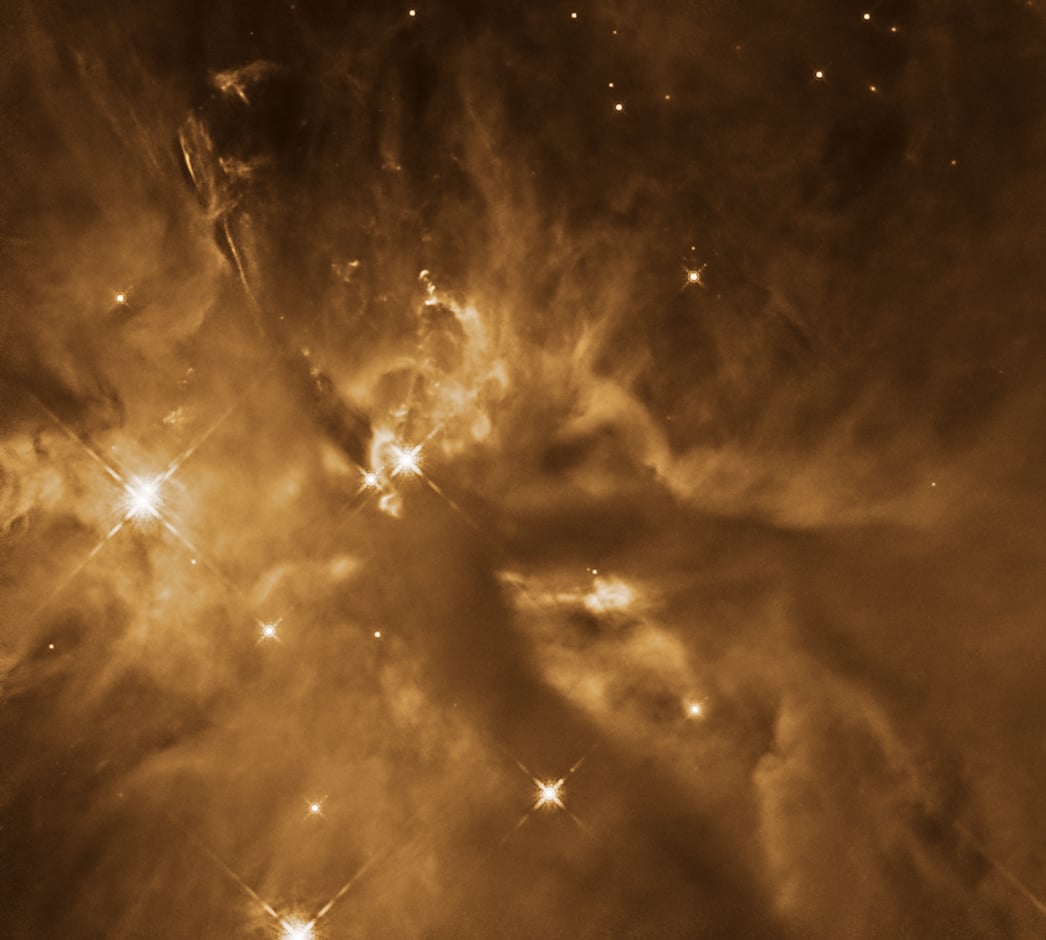
One prominent example in the Hubble images is HOPS 181, a deeply embedded protostar within the Orion cloud. Thick dust blocks direct optical views of the star itself. Instead, Hubble captures light scattered by dust along the walls of a cavity carved by the protostar’s outflow. The resulting structure traces the geometry of the jet and reveals how the protostar interacts with its surroundings.
Similar features appear throughout the region. Each cavity records a history of energetic feedback between a young star and its environment. Together, they illustrate that star formation is an active process that alters the structure of the parent cloud.
Jets and outflows reshaping the birth cloud
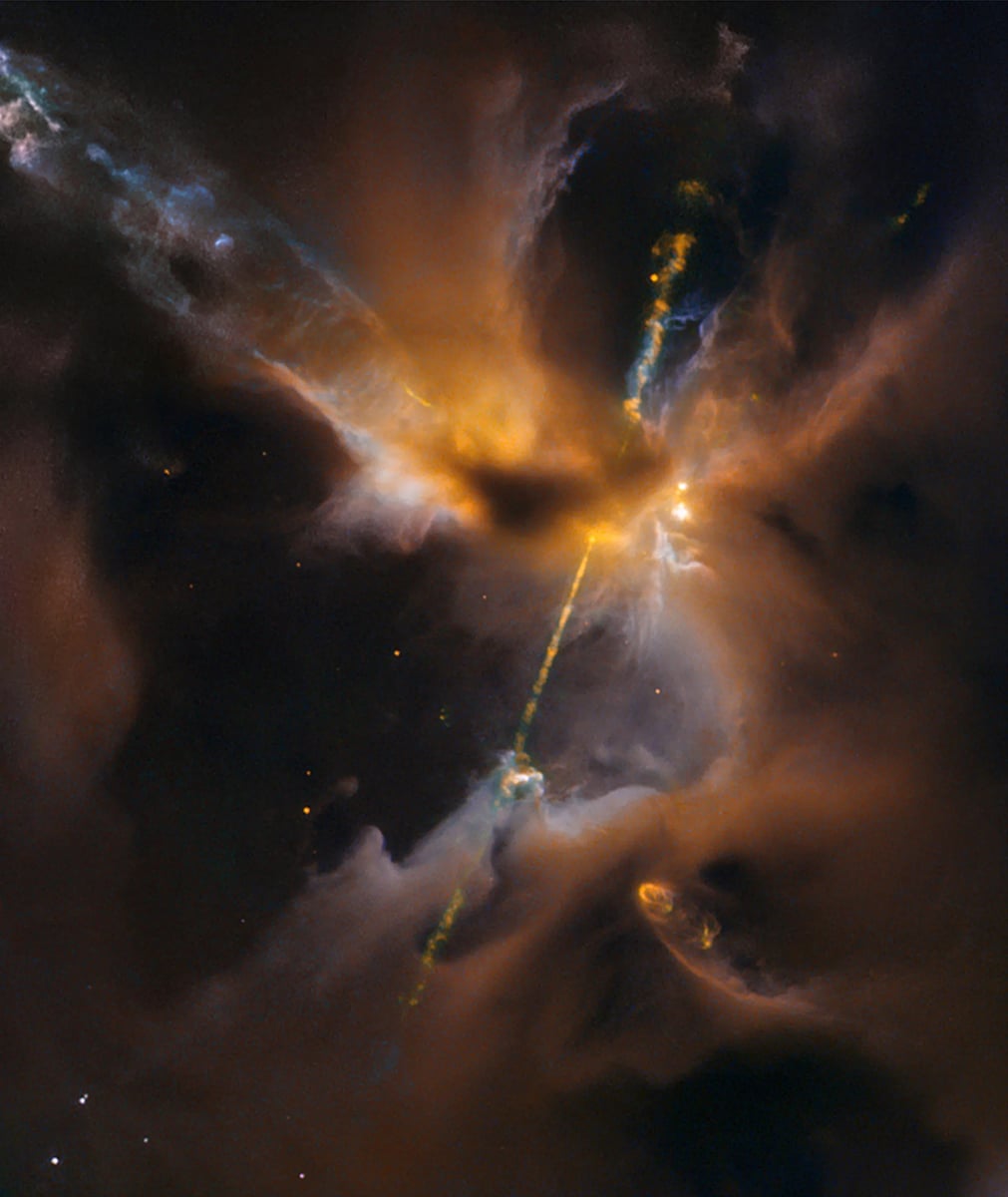
Protostellar jets travel at hundreds of kilometers per second. When they collide with the surrounding molecular cloud, they generate shocks and compress the gas. Over time, this interaction excavates cavities that extend outward from the protostar.
Hubble’s observations show these cavities with remarkable clarity. Curved arcs, illuminated dust lanes, and elongated structures reveal the direction and intensity of the outflows. The images demonstrate that even low-mass protostars can significantly disturb their local environments.
One key result from this study challenges previous assumptions. The data show that the size of outflow cavities does not increase substantially as protostars evolve. Scientists expected older protostars to clear progressively larger regions of the cloud. Instead, the cavity dimensions remain relatively constant.
This finding implies that declining accretion rates cannot be explained solely by envelope clearing through outflows. Other processes must contribute. These may include changes in envelope structure, magnetic field evolution, or instabilities within the accretion disk. The result adds an important constraint to theoretical models of star formation.
What Hubble reveals in the new images
Hubble’s strength lies in its ability to resolve small-scale structures within complex environments. In Orion, many features overlap along the line of sight. Separating jets, envelopes, and background stars requires high spatial resolution.
By observing scattered visible and near-infrared light, Hubble traces the geometry of dust and gas around protostars. These wavelengths reveal structures that complement infrared and radio observations from other facilities. When combined, the data provide a more complete picture of the physical processes at work.
The observations belong to a broader survey aimed at characterizing protostellar envelopes. By examining many objects at different evolutionary stages, astronomers can identify trends and test theoretical predictions. Hubble’s images supply the structural detail needed to interpret these trends correctly.
Orion’s role in stellar evolution studies
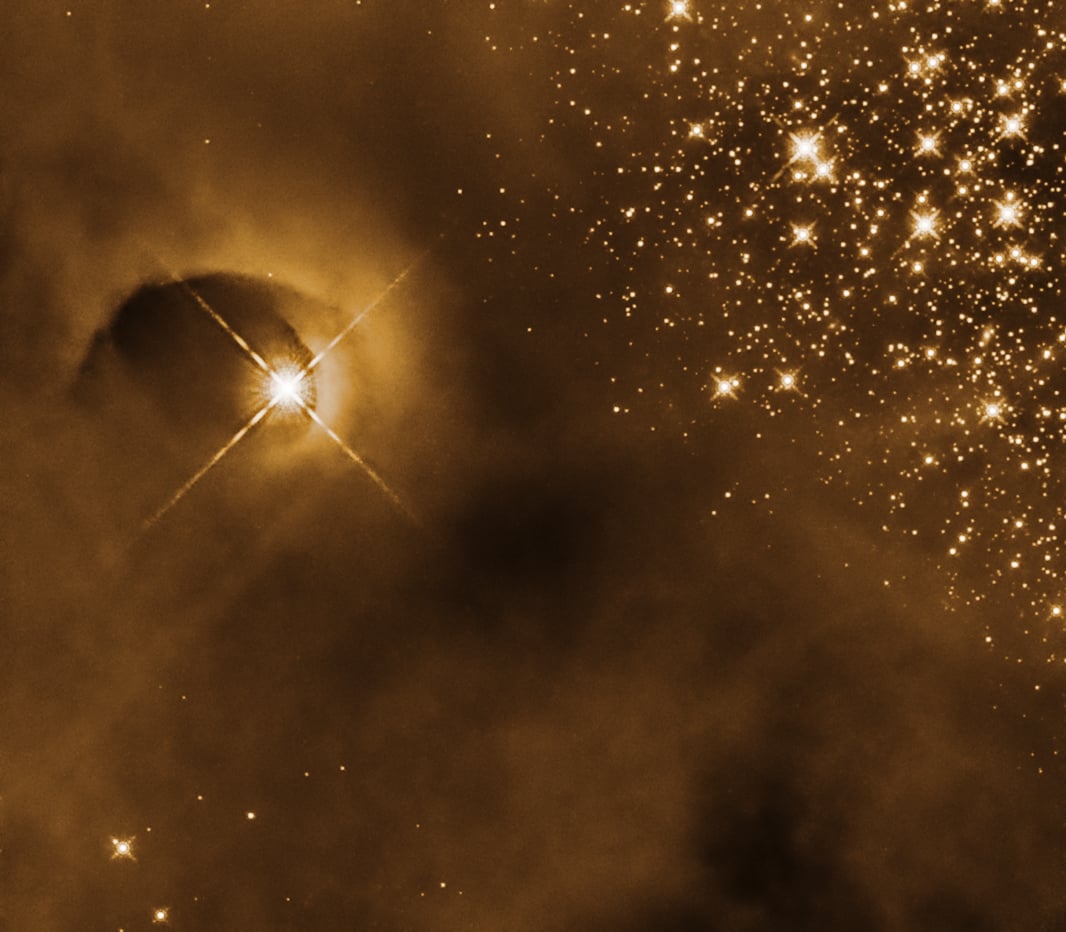
Orion remains one of the most important regions for studying star formation in the Milky Way. Its diverse environments allow astronomers to compare different modes of star birth under similar large-scale conditions.
Some parts of Orion host massive stars that dominate their surroundings with intense radiation. Other regions, including those highlighted in this study, form lower-mass stars in relative isolation. This variety makes Orion an ideal testing ground for theories of stellar feedback and cloud evolution.
The region also provides context for understanding the Sun’s origins. Many researchers believe the Sun formed in a similar clustered environment. By studying Orion, astronomers gain insight into the processes that shaped our own solar system billions of years ago.

Hubble’s new observations of the Orion Molecular Cloud present star formation as a dynamic and evolving process. Young stars actively shape their environments through jets and winds. At the same time, their growth depends on complex interactions that extend beyond simple gas clearing. Even after decades of study, Orion continues to reveal new details about how stars form. These latest images reinforce the importance of high-resolution observations in understanding the earliest stages of stellar evolution.
Clear skies!
See more from DIYPhotography.net on Google
Add DIYPhotography.net as a trusted source. This makes
our stories more likely to appear in your Google Search results.
 Add as a preferred source on Google

Soumyadeep Mukherjee
Soumyadeep Mukherjee is an award-winning astrophotographer from India. He has a doctorate degree in Linguistics. His work extends to the sub-genres of nightscape, deep sky, solar, lunar and optical phenomenon photography. He is also a photography educator and has conducted numerous workshops. His works have appeared in over 40 books & magazines including Astronomy, BBC Sky at Night, Sky & Telescope among others, and in various websites including National Geographic, NASA, Forbes. He was the first Indian to win “Astronomy Photographer of the Year” award in a major category.
Join the Discussion
DIYP Comment Policy
Be nice, be on-topic, no personal information or flames.