



















Euclid Captures Orion’s Dark Cloud, Revealing a Hidden Stellar Nursery
Dec 1, 2025
Soumyadeep Mukherjee
Soumyadeep Mukherjee is an award-winning astrophotographer from India. He has a doctorate degree in Linguistics. His work extends to the sub-genres of nightscape, deep sky, solar, lunar and optical phenomenon photography. He is also a photography educator and has conducted numerous workshops. His works have appeared in over 40 books & magazines including Astronomy, BBC Sky at Night, Sky & Telescope among others, and in various websites including National Geographic, NASA, Forbes. He was the first Indian to win “Astronomy Photographer of the Year” award in a major category.
Share:
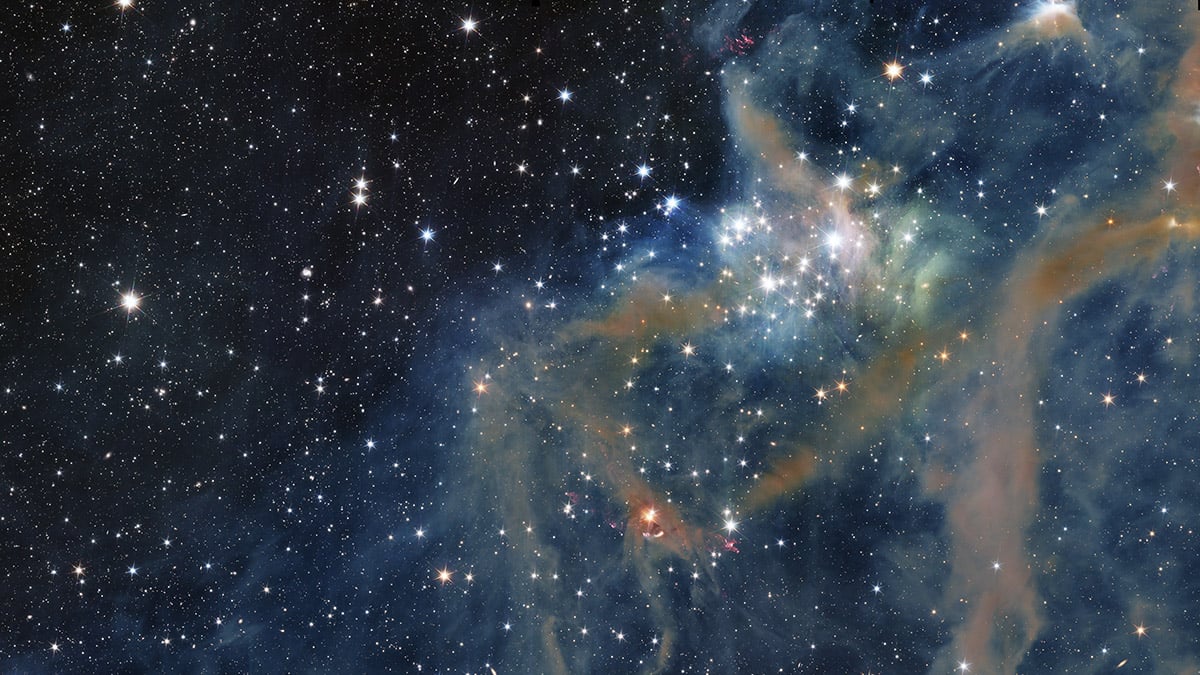
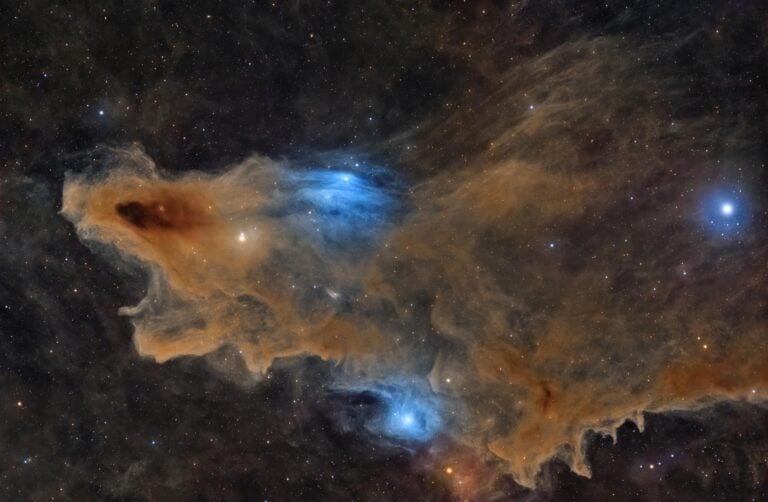
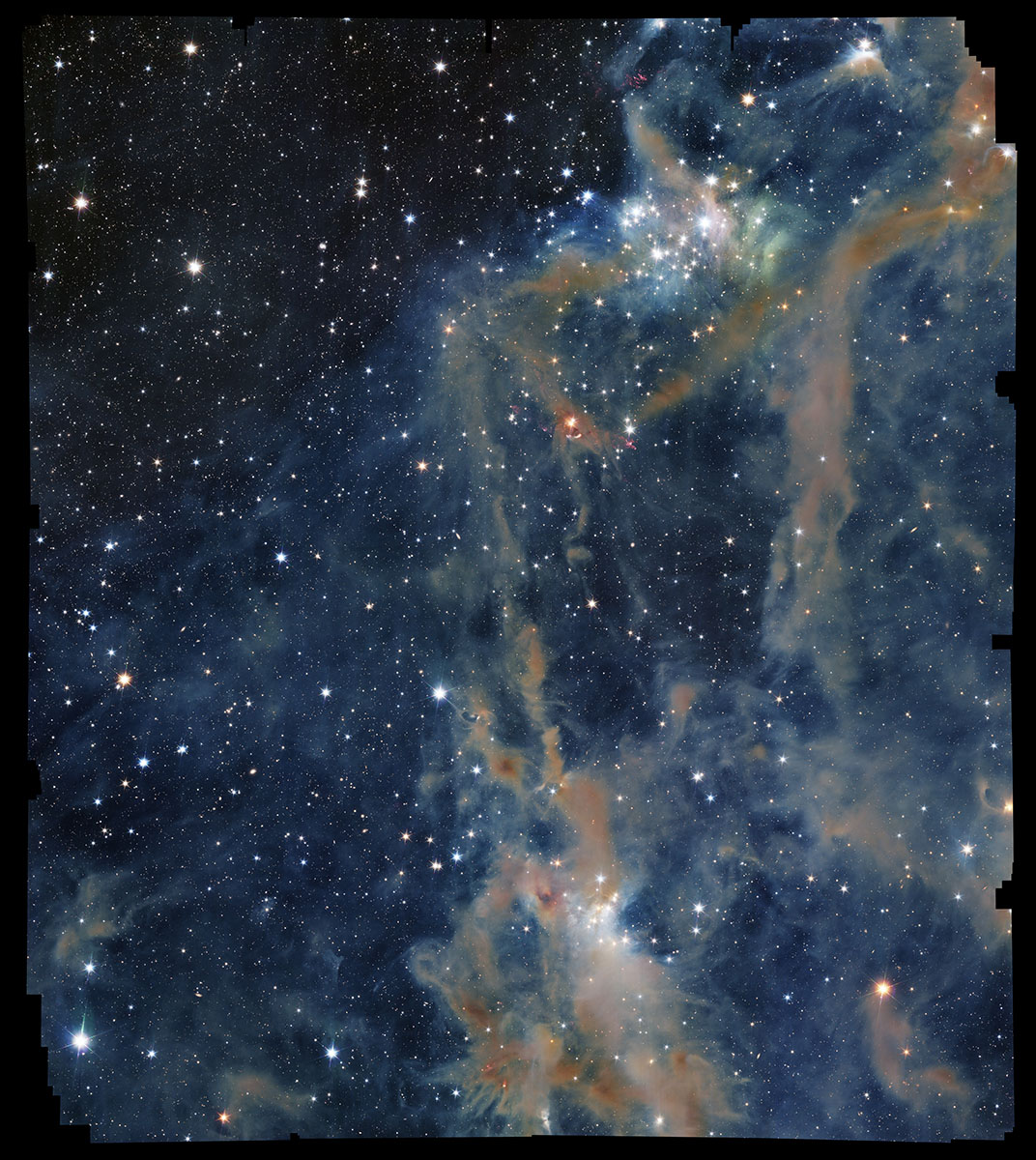
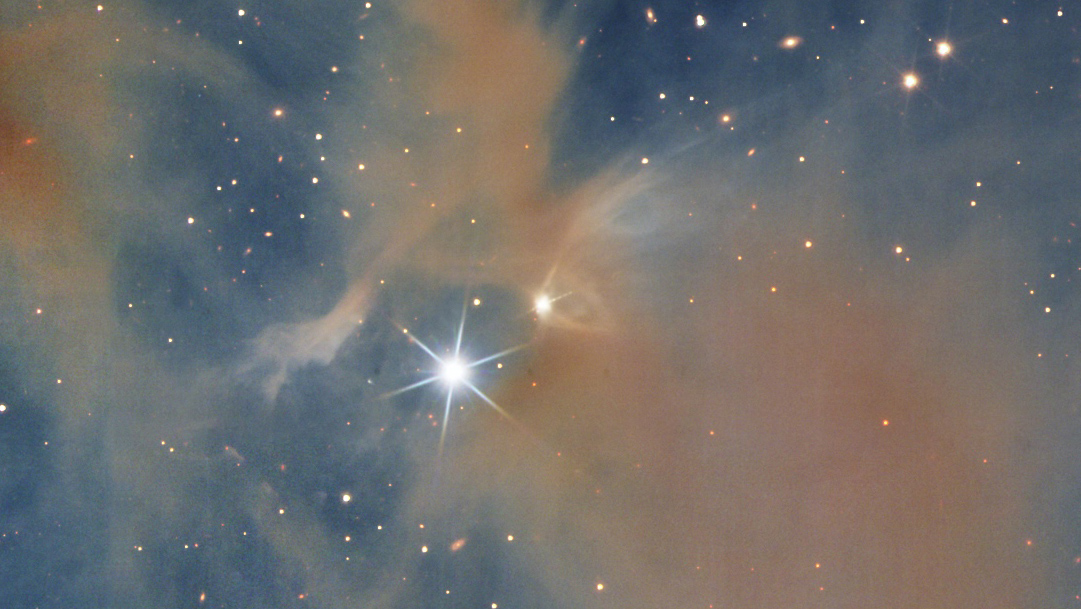
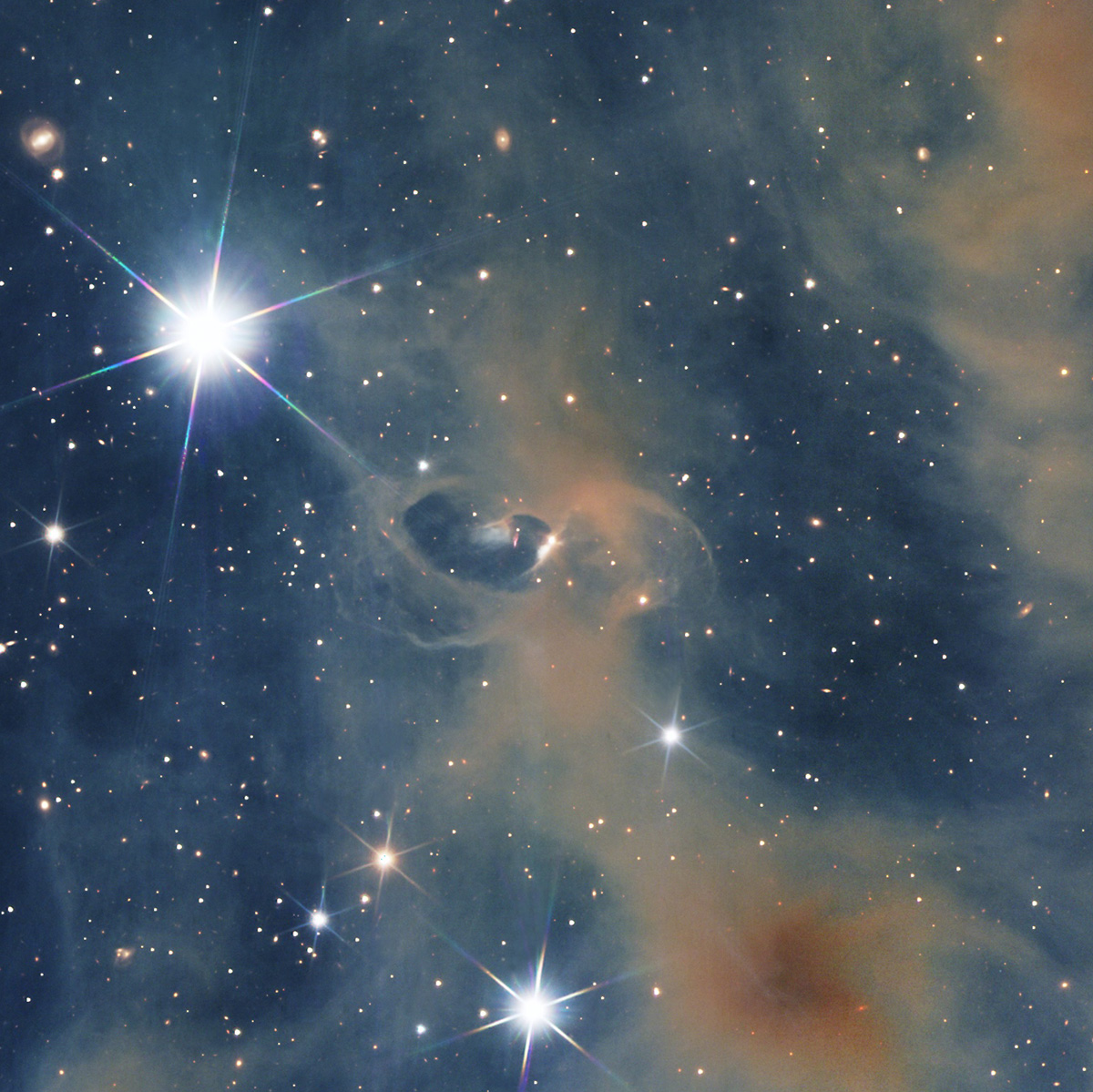
The European Space Agency’s Euclid mission has revealed a new view of a dark and dusty region in Orion. The telescope captured an infrared image of LDN 1641, a star-forming cloud that lies about 1,300 light-years away. The cloud normally appears opaque in visible light. Dust blocks most of the light passing through it. Euclid, however, sees in near-infrared wavelengths. That ability allowed the mission to reveal a rich field of young stars and distant galaxies behind the dust.
Scientists released the image as part of Euclid’s ongoing observation and instrument-testing work. The mission’s main goal is cosmology. It aims to study the large-scale structure of the universe and investigate dark matter and dark energy. However, the new image also reveals how Euclid can aid researchers in examining star-forming regions within our own galaxy.
An infrared view into a dense cloud
LDN 1641 is part of the Orion A molecular cloud. This is one of the closest and largest star-forming complexes to Earth. In ordinary visible images, the region looks like a dark band. Dust blocks the light from the stars inside it. Near-infrared wavelengths behave differently. They pass through the dust more easily. Euclid’s Near-Infrared Spectrometer and Photometer, known as NISP, takes advantage of that property. It can look deeper into dense clouds and reveal structures that visible telescopes cannot detect.
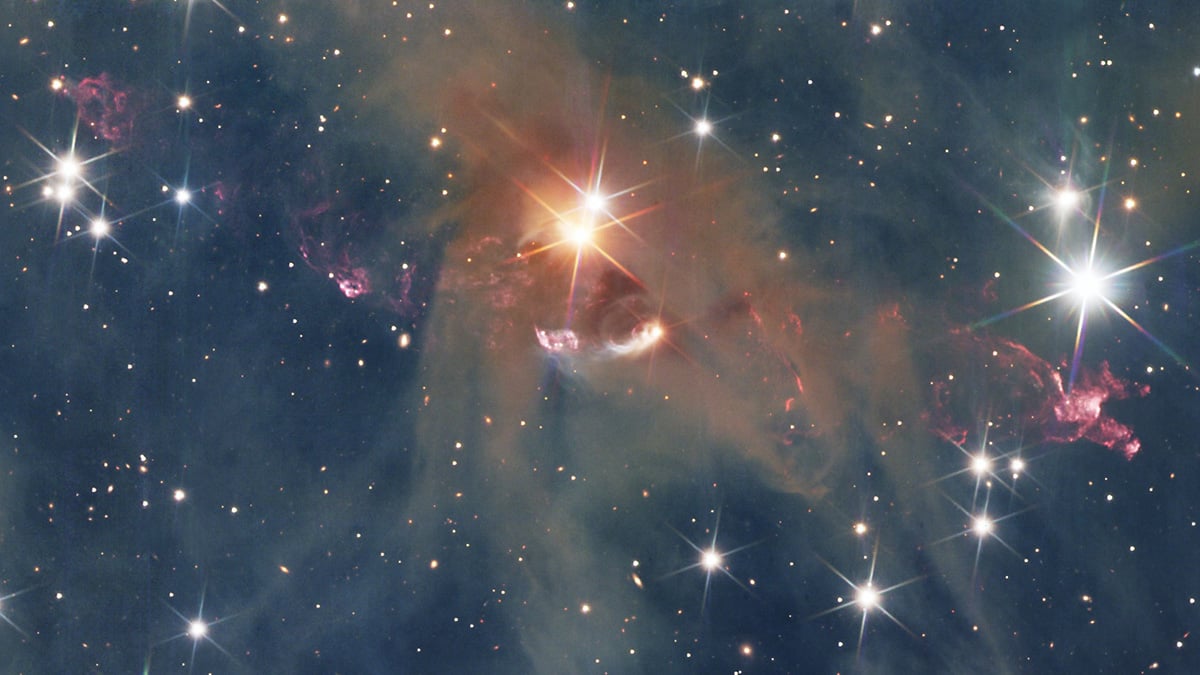
The released image shows several types of objects. Many bright points are young stars. These stars are in the early stages of development. Some are still surrounded by disks of gas and dust. The image also shows thin filaments inside the cloud. These filaments control how gas collapses and forms new stars. A large number of background galaxies appear as well. They sit far beyond Orion but become visible thanks to the transparency of near-infrared light. The mix of local and distant objects gives the image scientific value on many fronts.
Why did Euclid capture this region
The image came from a pointing and instrument test performed in September 2023. Engineers use these tests to check how the telescope behaves under real observing conditions. LDN 1641 served as a useful target because the region contains both bright areas and dark structures. It helps confirm that the telescope maintains sharpness across the field. At the same time, the test delivered valuable scientific data. This dual use makes early images very helpful to both engineers and researchers.
Although Euclid’s purpose is cosmology, the mission will continue to collect images that apply to nearby astrophysics. Many technical checks will involve diverse fields, including star clusters, dust clouds, and nearby galaxies. Each image offers insights that astronomers can use. That makes Euclid a more flexible observatory than many expected when the mission launched.
Technical capabilities of Euclid
Euclid carries two main instruments. The VIS instrument captures high-resolution visible-light images. It helps measure the shapes of galaxies for weak-lensing studies. NISP, on the other hand, focuses on near-infrared light. It performs photometry and spectroscopy. NISP produced the LDN 1641 image.
The telescope uses a 1.2-metre primary mirror. That mirror collects enough light to detect faint galaxies billions of light-years away. It also delivers wide-field views with uniform quality. Researchers depend on that stability for cosmology work. But these same traits benefit studies of dusty regions in the Milky Way. Infrared data require stable imaging to accurately identify faint stars inside a bright or complex background. Euclid achieves that stability through careful thermal control and precise pointing systems.
The infrared image of LDN 1641 shows exactly how NISP performs. It shows sharp stars across the entire field. It also records faint background galaxies without distortion. This combination is unusual for a wide-field infrared telescope. Many missions either go deep or go wide. Euclid manages both.

What this image reveals about star formation
Star-forming regions like LDN 1641 contain dense gas and fine dust grains. These materials collapse under gravity to form new stars. But studying these early stages is hard. Dust hides the process from visible-light instruments. Near-infrared data solves this problem. They show protostars and young stars that are invisible in optical wavelengths.
The Euclid image shows a large population of such young stars. Many appear scattered across the cloud. Others cluster along the filaments. These patterns reveal how the cloud breaks into smaller pockets where star formation becomes active. Researchers use such details to understand how gas density, turbulence, and magnetic fields shape the birth of stars.
The background galaxies also play an important role. They act as markers for dust thickness. When dust becomes dense, fewer galaxies appear. When dust thins out, more galaxies become visible. This helps astronomers map the structure of the cloud. Euclid’s wide field improves these maps because it records many galaxies at once.
How Euclid adds to other missions
Euclid’s image sits between the extremely high-resolution views of the James Webb Space Telescope and the wide survey views of ground-based instruments. JWST can zoom into small regions with fine detail. But it cannot cover wide areas quickly. Large ground surveys can do that, but lack Euclid’s infrared depth and sharpness in space. Euclid fills this gap. It surveys wide regions with clear infrared imaging. That gives researchers a consistent dataset for comparing many star-forming regions.
Scientists plan to combine Euclid’s infrared maps with data from other telescopes. JWST can follow up on interesting clumps or young stars. Gaia provides precise distances and motions for visible stars around the cloud. Ground-based surveys contribute optical and millimetre-wave data. Together, these datasets allow a full picture of star formation, from cloud structure to individual star growth.
Euclid will continue its wide cosmic survey over the coming years. The mission plans to map more than a third of the sky. It will capture billions of galaxies and produce precise measurements of cosmic structure. Along the way, it will gather many additional images of star-forming regions, galaxy clusters, and nearby galaxies. These extra datasets will help astronomers study many fields that extend beyond dark energy.
Clear skies!
See more from DIYPhotography.net on Google
Add DIYPhotography.net as a trusted source. This makes
our stories more likely to appear in your Google Search results.
 Add as a preferred source on Google

Soumyadeep Mukherjee
Soumyadeep Mukherjee is an award-winning astrophotographer from India. He has a doctorate degree in Linguistics. His work extends to the sub-genres of nightscape, deep sky, solar, lunar and optical phenomenon photography. He is also a photography educator and has conducted numerous workshops. His works have appeared in over 40 books & magazines including Astronomy, BBC Sky at Night, Sky & Telescope among others, and in various websites including National Geographic, NASA, Forbes. He was the first Indian to win “Astronomy Photographer of the Year” award in a major category.

Join the Discussion
DIYP Comment Policy
Be nice, be on-topic, no personal information or flames.