








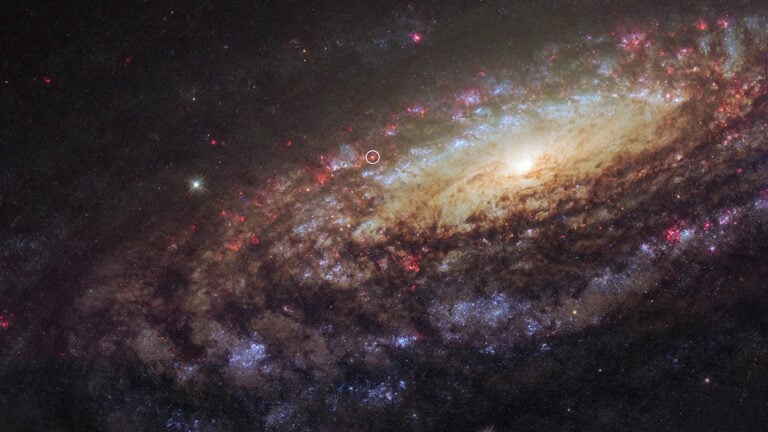















ALMA Captures Exceptional Einstein Cross Revealing Hidden Dark Matter
Sep 19, 2025
Soumyadeep Mukherjee
Soumyadeep Mukherjee is an award-winning astrophotographer from India. He has a doctorate degree in Linguistics. His work extends to the sub-genres of nightscape, deep sky, solar, lunar and optical phenomenon photography. He is also a photography educator and has conducted numerous workshops. His works have appeared in over 40 books & magazines including Astronomy, BBC Sky at Night, Sky & Telescope among others, and in various websites including National Geographic, NASA, Forbes. He was the first Indian to win “Astronomy Photographer of the Year” award in a major category.
Share:

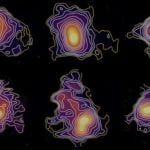
Astronomy often produces images that speak louder than technical data. One of the most striking recent examples comes from the Atacama Large Millimeter/submillimeter Array (ALMA) in northern Chile. Astronomers using ALMA have captured an extraordinary view of an Einstein Cross, a rare celestial phenomenon where light from a distant galaxy is bent into four distinct images around a central lensing galaxy.
This natural alignment creates an optical effect that resembles artistry. Yet, behind its beauty lies crucial scientific value. The Einstein Cross captured by ALMA not only demonstrates the extraordinary power of gravitational lensing but also opens a new way to study dark matter. What makes this discovery especially important is that the level of detail achieved in the images is unprecedented. For the first time, astronomers can examine small distortions in the lensing pattern to map the hidden distribution of matter inside the lensing galaxy.
Capturing the Einstein Cross
The actual process of imaging the Einstein Cross is as demanding as planning it. ALMA’s antennas must be positioned and tuned to collect signals at exactly the right frequencies. The atmosphere, thin at ALMA’s 5000-meter altitude, must remain stable to avoid distorting the incoming light. Even small fluctuations in water vapor can interfere with the data.
Once the observations are made, the real work begins. The raw signals from all 66 antennas are not immediately a photograph. They are streams of data that must be combined using a technique called interferometry. This process aligns the signals, removes noise, and reconstructs the true image of the sky.
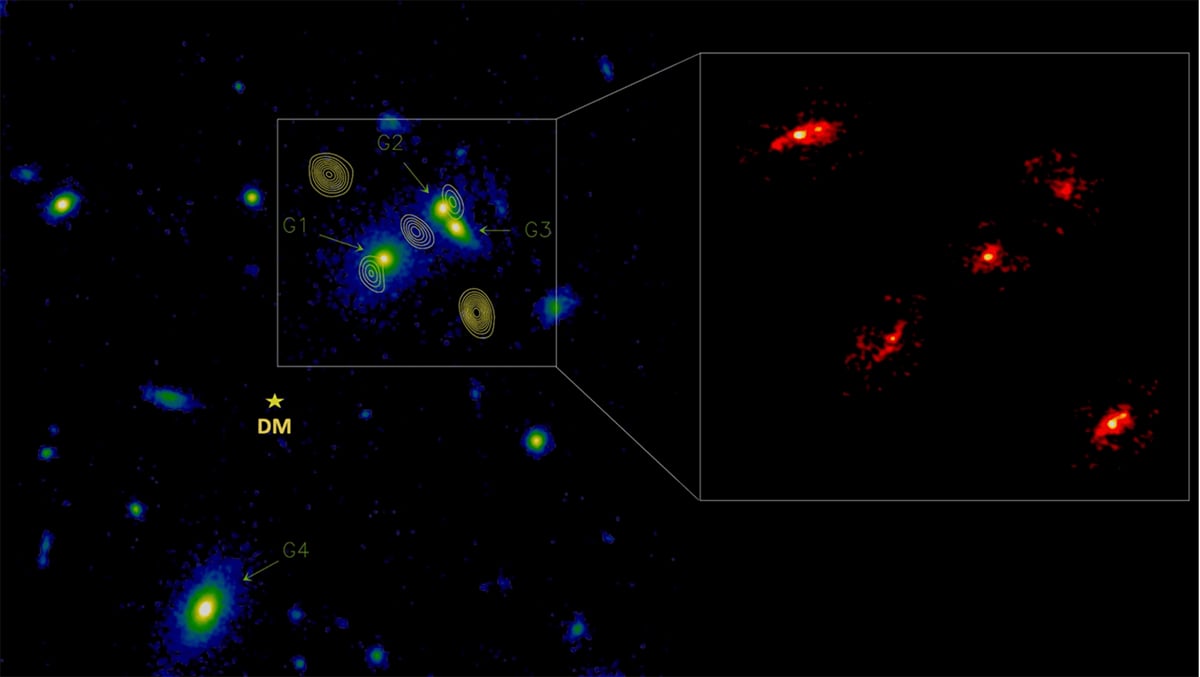
The challenge of imaging an Einstein Cross
Photographing an Einstein Cross is not the same as taking a standard photograph with a telescope. These phenomena occur only under very specific cosmic alignments. A massive foreground galaxy must sit directly along the line of sight to a much more distant background galaxy. The gravity of the nearer galaxy bends and magnifies the light of the background source. Seen from Earth, the result is a symmetrical cross-like structure.
ALMA’s role in capturing this Einstein Cross was vital. Unlike visible-light telescopes, ALMA observes in millimeter and submillimeter wavelengths, giving astronomers a unique window into cold dust and gas. Imaging at these wavelengths requires a different technique. Instead of a single large mirror, ALMA uses a network of 66 antennas spread across the high-altitude desert plateau. Together, they act like a single enormous telescope, achieving resolution sharp enough to separate the four lensed images with remarkable clarity.
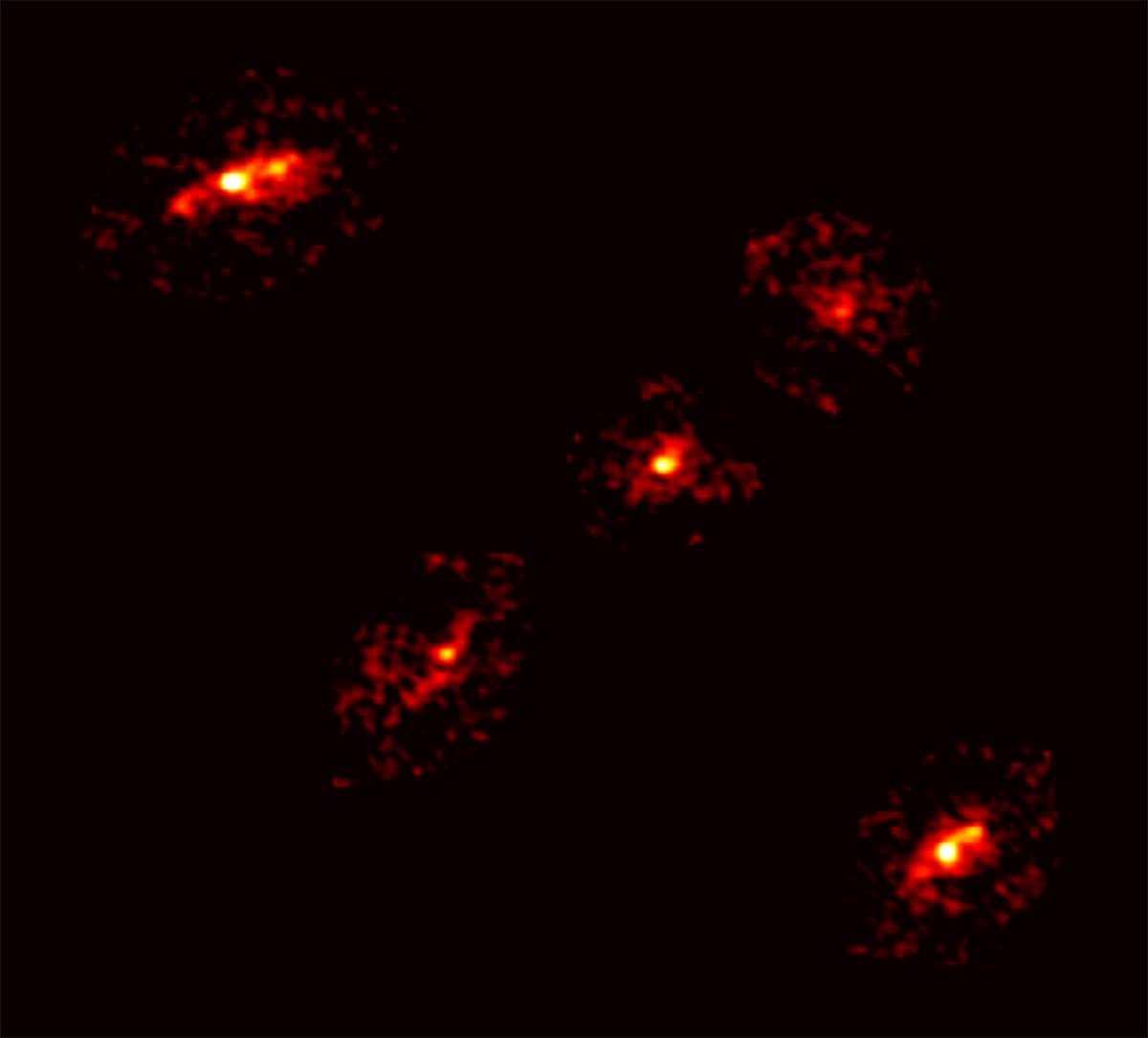
Hidden structures revealed in the image
At first glance, the Einstein Cross looks like a perfect pattern. Four bright points surrounding a darker central shape resemble a cosmic jewel. Yet, ALMA’s detailed imaging revealed subtle irregularities in this arrangement. These irregularities are not due to chance. They carry the imprint of dark matter clumps within the lensing galaxy.
Dark matter cannot be seen directly. It does not emit light and does not interact with electromagnetic radiation. However, it influences how light bends. By carefully analyzing the distortions in the Einstein Cross, astronomers identified evidence of invisible matter affecting the lensing. These observations provided a unique map of how dark matter is distributed on small scales inside the foreground galaxy.
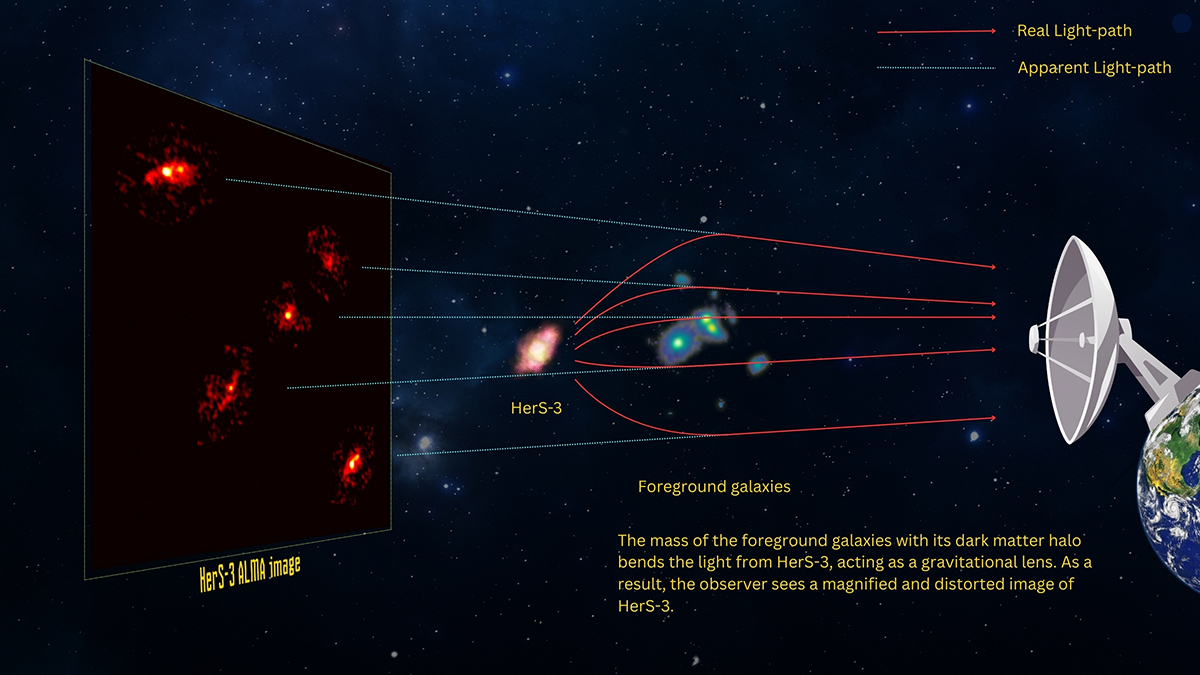
The success of this observation demonstrates the potential of ALMA and similar instruments for future work. Astronomers expect that more Einstein Crosses will be identified and imaged at high resolution. Each one will provide another opportunity to study dark matter in new environments. From a photographic perspective, these images will continue to push the boundaries of what is possible. They show that astronomy today is not just about observing stars and galaxies as points of light. It is about creating detailed, high-resolution portraits of the universe’s hidden structures.
Clear skies!
See more from DIYPhotography.net on Google
Add DIYPhotography.net as a trusted source. This makes
our stories more likely to appear in your Google Search results.
 Add as a preferred source on Google

Soumyadeep Mukherjee
Soumyadeep Mukherjee is an award-winning astrophotographer from India. He has a doctorate degree in Linguistics. His work extends to the sub-genres of nightscape, deep sky, solar, lunar and optical phenomenon photography. He is also a photography educator and has conducted numerous workshops. His works have appeared in over 40 books & magazines including Astronomy, BBC Sky at Night, Sky & Telescope among others, and in various websites including National Geographic, NASA, Forbes. He was the first Indian to win “Astronomy Photographer of the Year” award in a major category.


Join the Discussion
DIYP Comment Policy
Be nice, be on-topic, no personal information or flames.