






















Hubble Spots a Spiral Galaxy Reshaped by Its Cosmic Neighborhood
Jul 26, 2026
Soumyadeep Mukherjee
Soumyadeep Mukherjee is an award-winning astrophotographer from India. He has a doctorate degree in Linguistics. His work extends to the sub-genres of nightscape, deep sky, solar, lunar and optical phenomenon photography. He is also a photography educator and has conducted numerous workshops. His works have appeared in over 40 books & magazines including Astronomy, BBC Sky at Night, Sky & Telescope among others, and in various websites including National Geographic, NASA, Forbes. He was the first Indian to win “Astronomy Photographer of the Year” award in a major category.
Share:
Galaxy clusters are among the largest gravitationally bound structures in the universe. Between their member galaxies lies an immense reservoir of diffuse gas heated to millions of degrees. Although this gas is extraordinarily thin, galaxies moving through it at several hundred kilometers per second can experience forces strong enough to alter their structure and evolution.
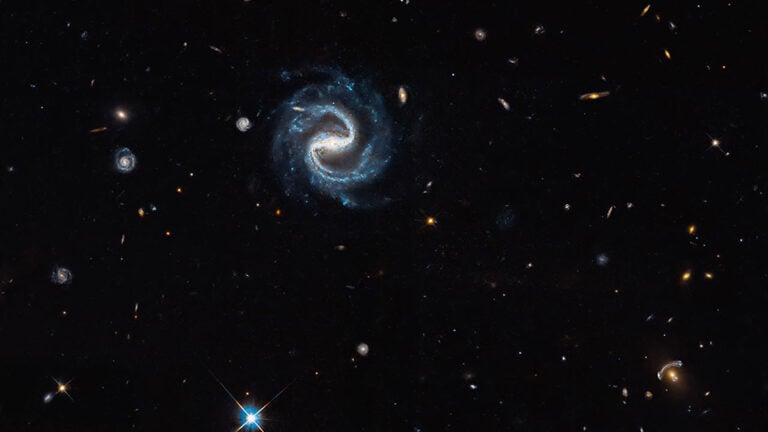
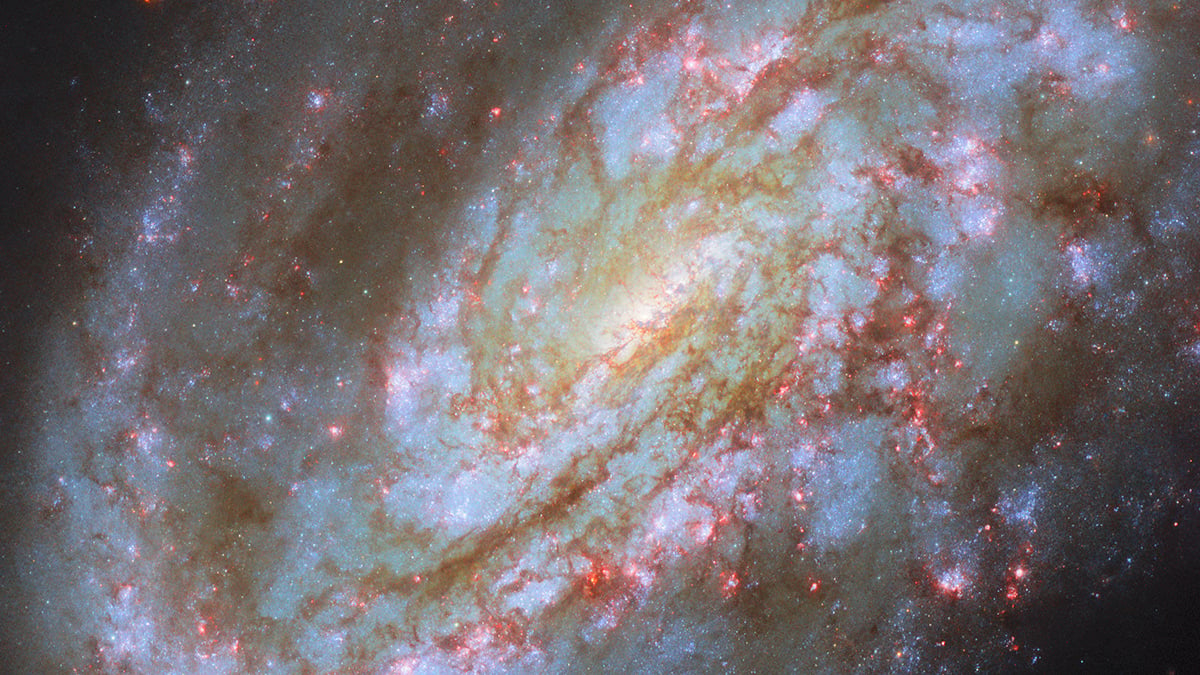
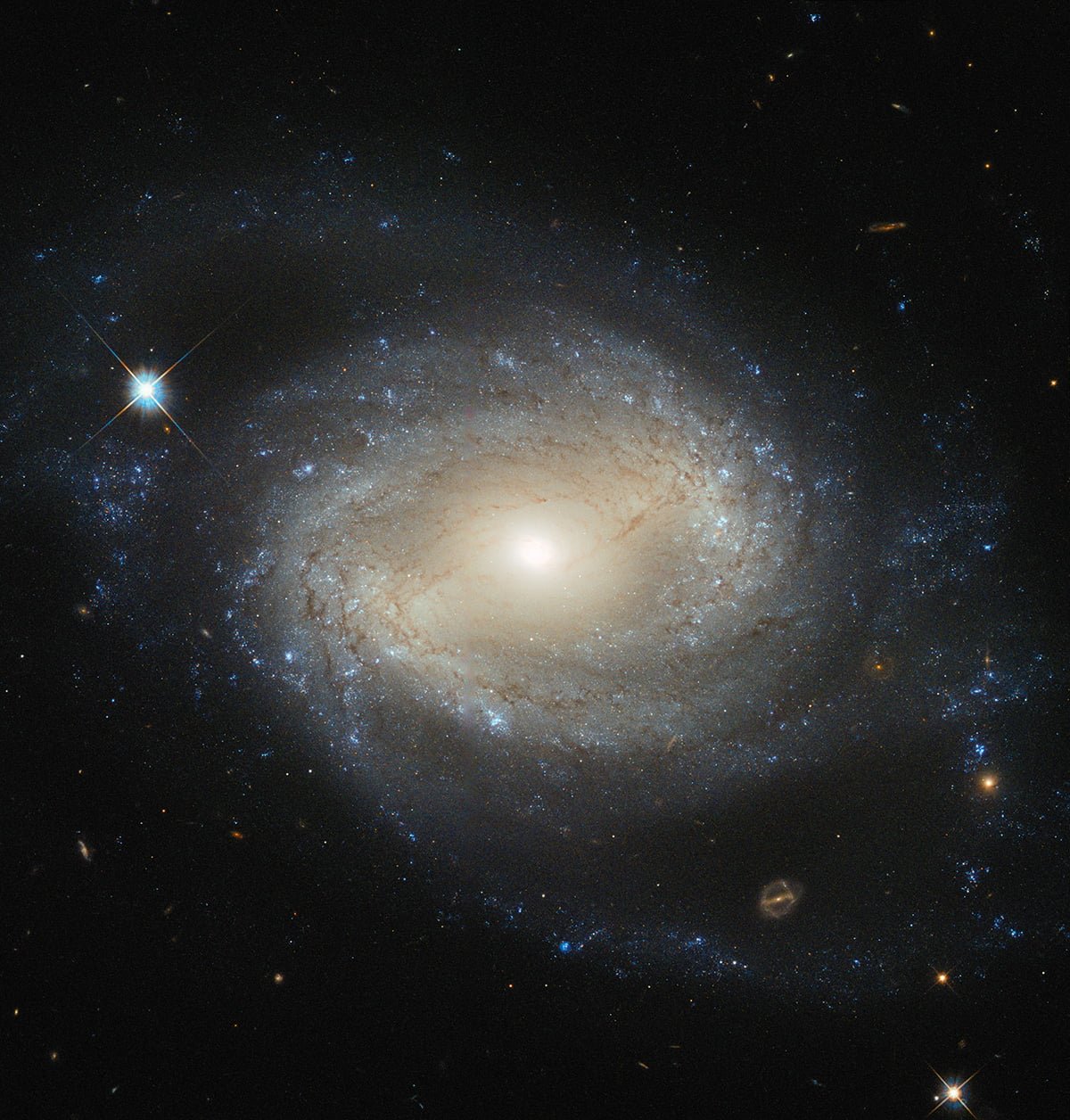
The Hubble Space Telescope captures such a transformation in its Picture of the Month for July 2026. Hubble’s image reveals a spiral galaxy, NGC 4654, whose distorted appearance records the effects of gravity and its harsh surroundings inside the Virgo Cluster. One side of NGC 4654 appears compressed, and the opposite side stretches outward in an uneven arc.
A spiral galaxy with a deeper story
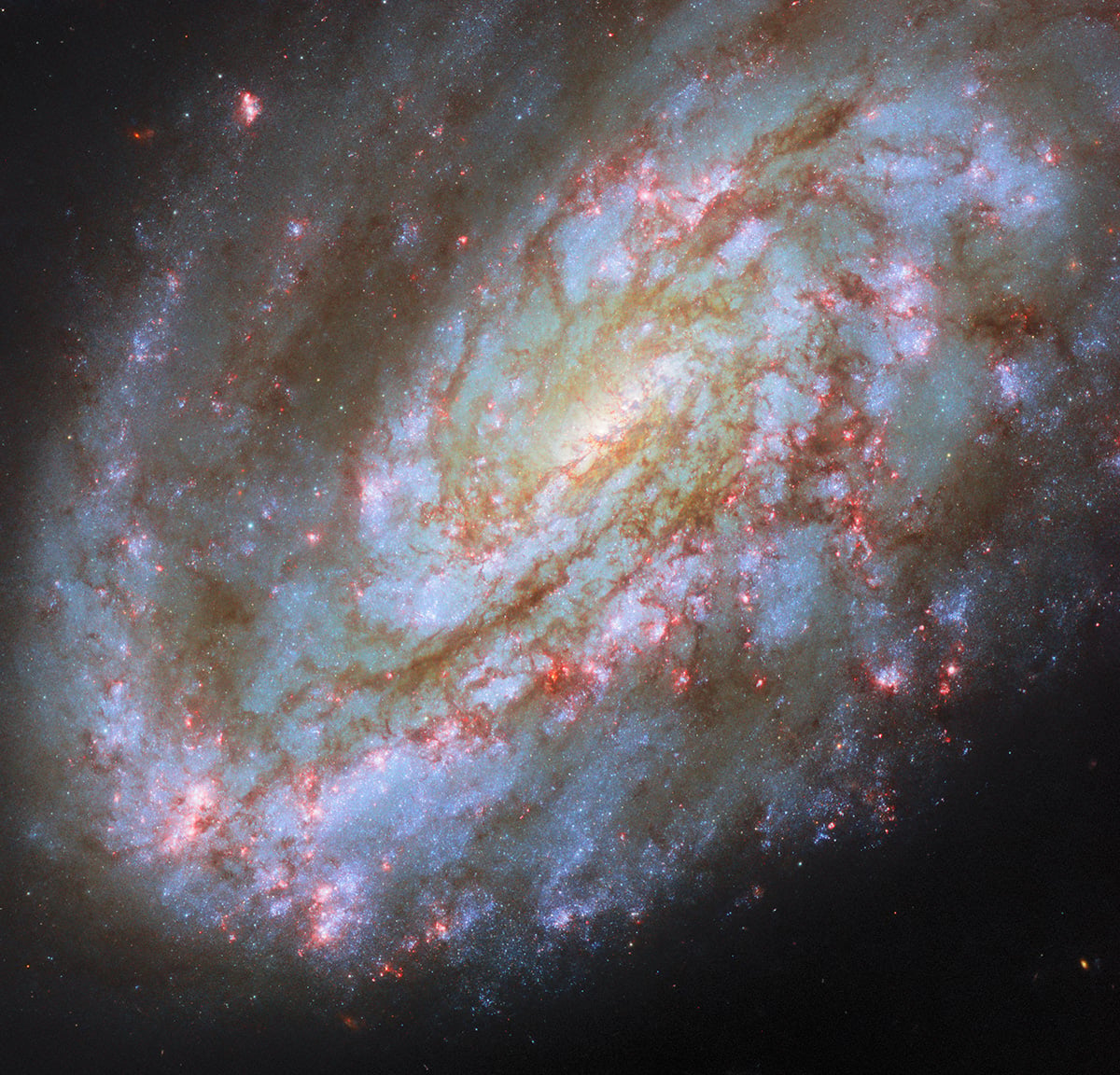
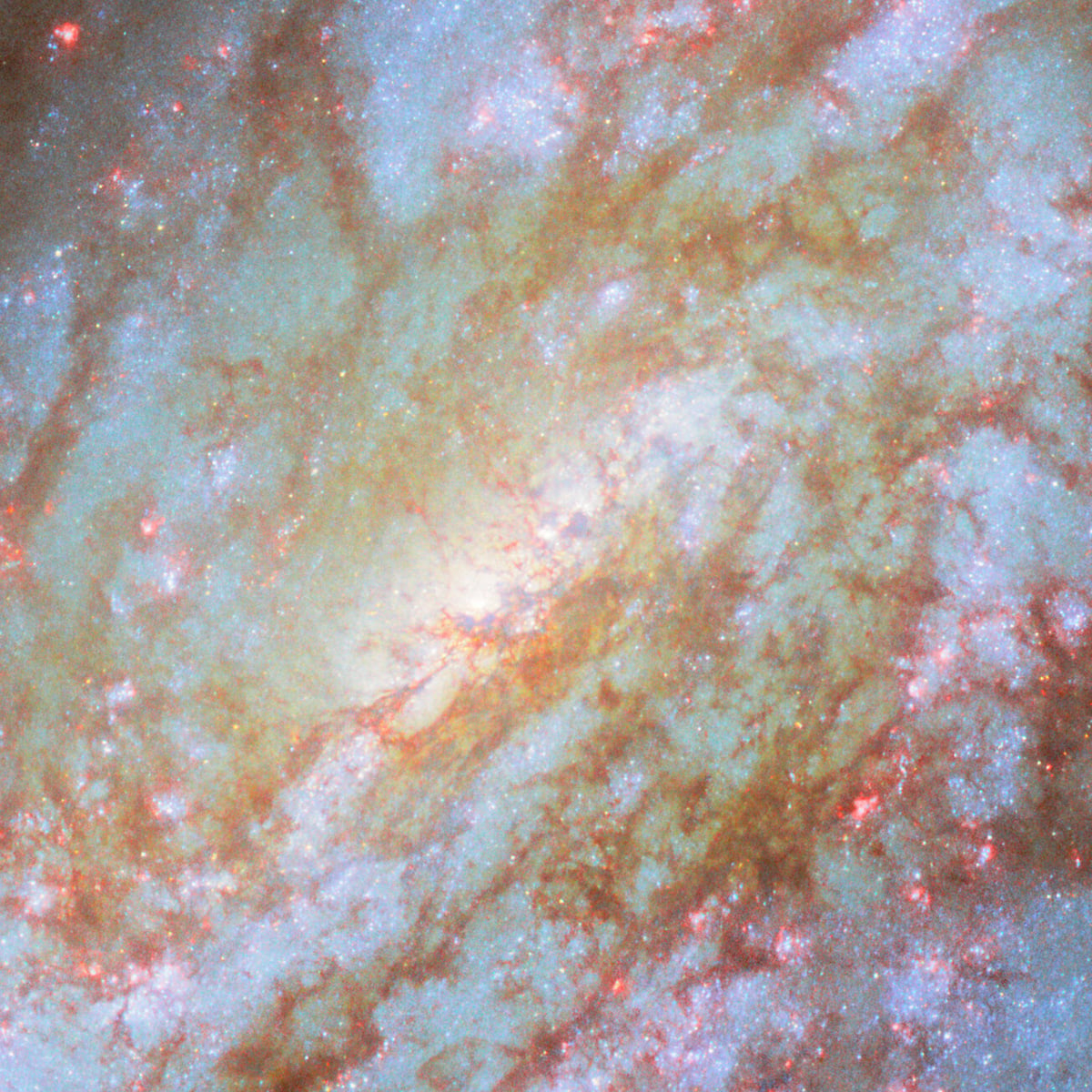
NGC 4654 somehow looks very similar to other spiral galaxies photographed by Hubble. Bright blue star clusters trace graceful spiral arms that wind around a luminous central bulge. Dark dust lanes thread through the galaxy, outlining dense clouds where future generations of stars may eventually emerge. Hubble’s exceptional resolution captures these features with great clarity.
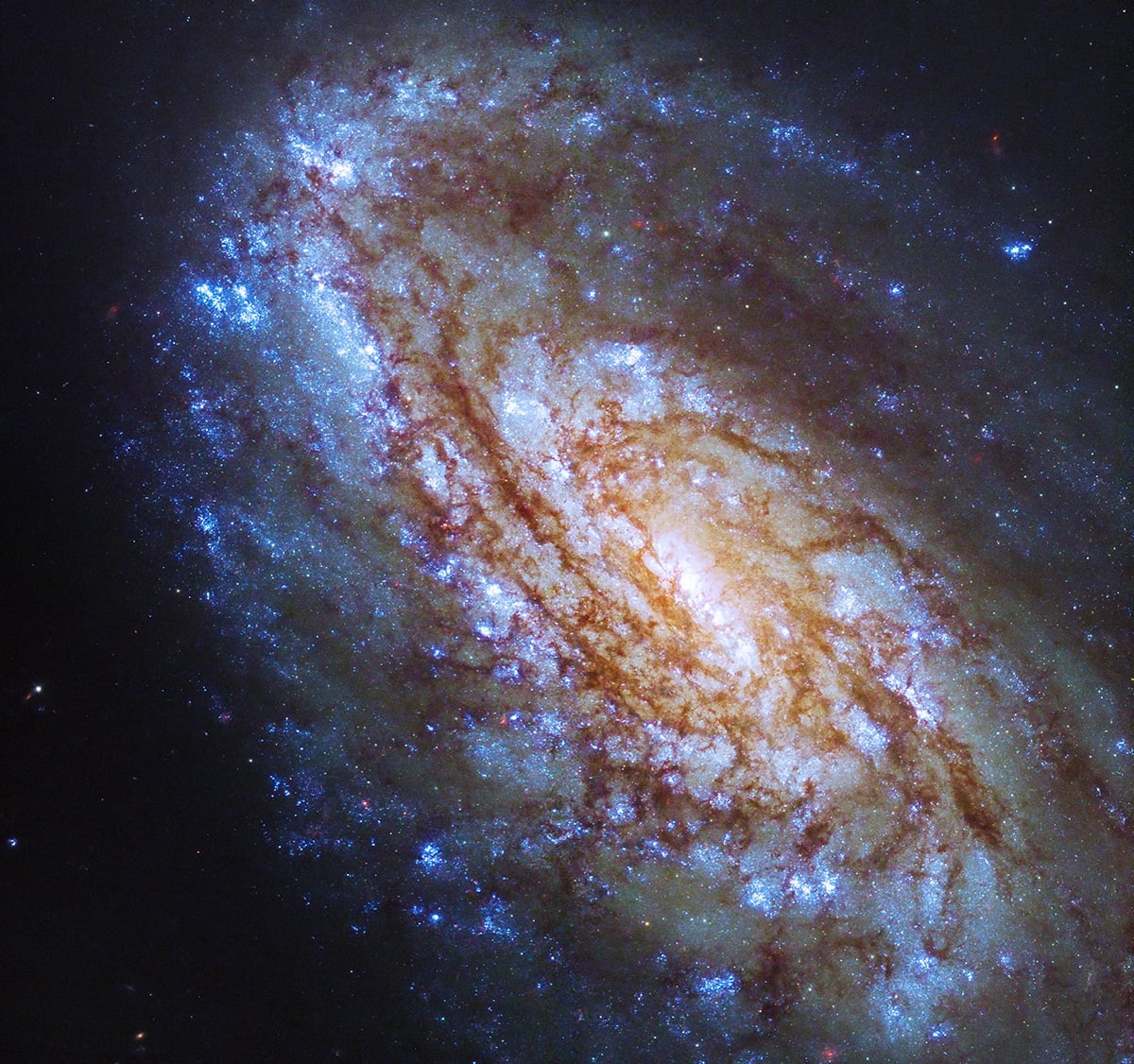
But we also notice something different. Its spiral pattern is noticeably uneven. One side appears rounded and compressed, while the opposite side extends farther into space. Spiral galaxies usually maintain a fairly balanced appearance because gravity organizes their stars into relatively stable disks. NGC 4654 breaks the usual pattern, suggesting that external forces have disturbed its structure.
NGC 4654 is classified as an intermediate barred spiral galaxy, meaning it possesses a relatively weak bar of stars crossing its central region. That bar channels gas toward the galaxy’s core, helping fuel episodes of star formation. The galaxy still contains rich reservoirs of dust and gas, allowing new stars to form throughout its spiral arms. Young, massive stars illuminate surrounding gas clouds with a brilliant blue glow, while countless older stars dominate the warmer yellow light of the central bulge.
Racing through a hostile environment
NGC 4654 resides within the Virgo Cluster, the nearest massive galaxy cluster to the Milky Way. Home to well over a thousand galaxies, Virgo is also filled with an enormous cloud of hot, ionized gas known as the intracluster medium. Invisible in visible light but detectable in X-rays, this gas forms a vast atmosphere that permeates the cluster.
As NGC 4654 speeds through this environment, it experiences a constant headwind. The gas is incredibly diffuse, yet the galaxy’s high velocity generates enough pressure to push against its own interstellar gas. Astronomers refer to this process as ram-pressure stripping. The effect is surprisingly powerful.
Gas along the galaxy’s leading edge becomes compressed, while clouds of hydrogen on the opposite side are gradually stripped away. Radio observations have detected an extended tail of hydrogen trailing behind NGC 4654, even though that structure remains invisible in Hubble‘s optical image.
Gravity shaped the galaxy before the cluster did
Evidence points to the fact that NGC 4654 underwent a past encounter with the nearby spiral galaxy NGC 4639. The two galaxies likely passed close enough for gravity to disturb their structures. Such tidal interactions are common inside galaxy clusters, where galaxies frequently pass one another over cosmic timescales.
Even a brief encounter can have some dramatic effects. Gravity can stretch spiral arms, redistribute gas, distort stellar orbits, and trigger bursts of star formation. Numerical simulations indicate that tidal forces probably disrupted NGC 4654 before ram-pressure stripping began removing its gas.
This sequence helps explain why the galaxy looks the way it does today. The gravitational encounter likely weakened the orderly distribution of gas across the galaxy’s disk. Once that gas became disturbed, the hot intracluster medium could remove it more efficiently. Neither process alone reproduces all the observed features, but together they match the galaxy remarkably well.
Clear skies!
See more from DIYPhotography.net on Google
Add DIYPhotography.net as a trusted source. This makes
our stories more likely to appear in your Google Search results.
 Add as a preferred source on Google

Soumyadeep Mukherjee
Soumyadeep Mukherjee is an award-winning astrophotographer from India. He has a doctorate degree in Linguistics. His work extends to the sub-genres of nightscape, deep sky, solar, lunar and optical phenomenon photography. He is also a photography educator and has conducted numerous workshops. His works have appeared in over 40 books & magazines including Astronomy, BBC Sky at Night, Sky & Telescope among others, and in various websites including National Geographic, NASA, Forbes. He was the first Indian to win “Astronomy Photographer of the Year” award in a major category.


Join the Discussion
DIYP Comment Policy
Be nice, be on-topic, no personal information or flames.