




















Hubble Space Telescope Photographs A Cosmic Chandelier
Jun 28, 2026
Soumyadeep Mukherjee
Soumyadeep Mukherjee is an award-winning astrophotographer from India. He has a doctorate degree in Linguistics. His work extends to the sub-genres of nightscape, deep sky, solar, lunar and optical phenomenon photography. He is also a photography educator and has conducted numerous workshops. His works have appeared in over 40 books & magazines including Astronomy, BBC Sky at Night, Sky & Telescope among others, and in various websites including National Geographic, NASA, Forbes. He was the first Indian to win “Astronomy Photographer of the Year” award in a major category.
Share:
Globular clusters occupy a special place in modern astrophysics as they preserve some of the oldest stellar populations in the Milky Way. Their stars formed during the Galaxy’s earliest stages, long before the Sun and the Solar System existed. Since these stars have remained gravitationally bound for billions of years, astronomers use globular clusters to investigate stellar evolution, chemical enrichment, and the formation history of our Galaxy.
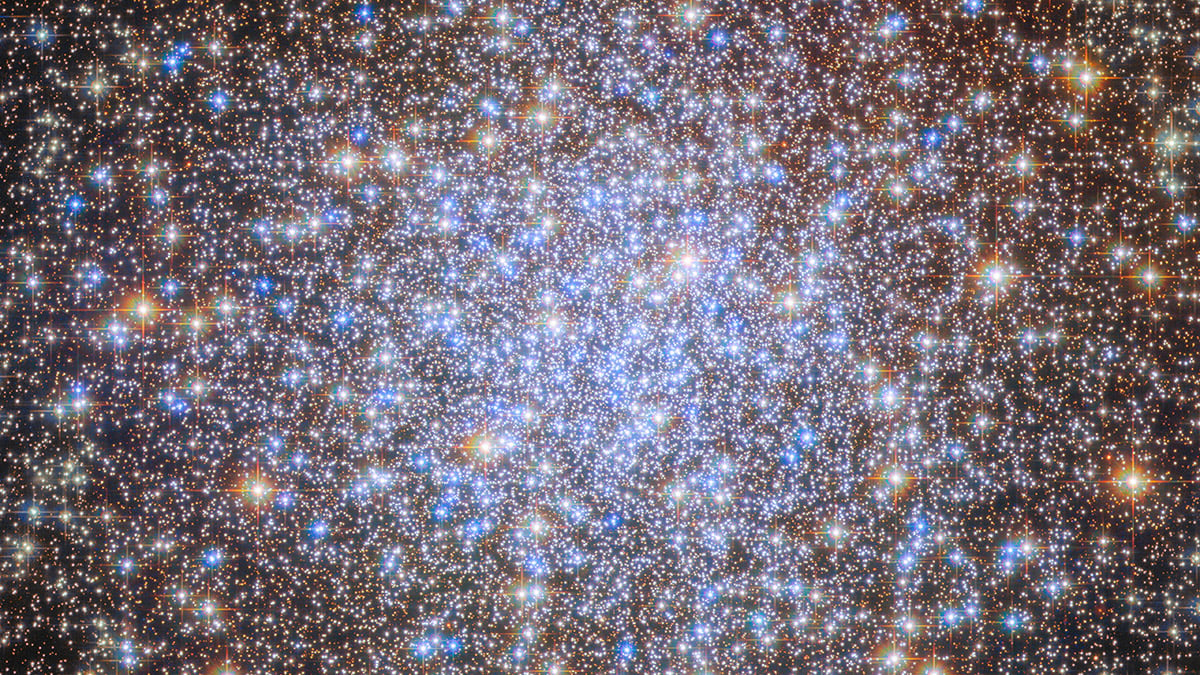
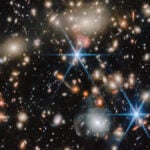
A new image released by the Hubble Space Telescope presents us with an example of such a globular cluster. Featured as Hubble‘s Picture of the Month for June 2026, the observation shows NGC 6723, better known as the Chandelier Cluster. Located in the constellation Sagittarius, this ancient stellar system lies about 28,000 light-years from Earth.
NGC 6723: An ancient globular cluster
NGC 6723 belongs to a family of stellar systems known as globular clusters. Unlike the loose open clusters scattered across the Milky Way‘s spiral arms, globular clusters are compact, massive, and remarkably old. Gravity binds hundreds of thousands of stars into a nearly spherical structure that can remain stable for billions of years.
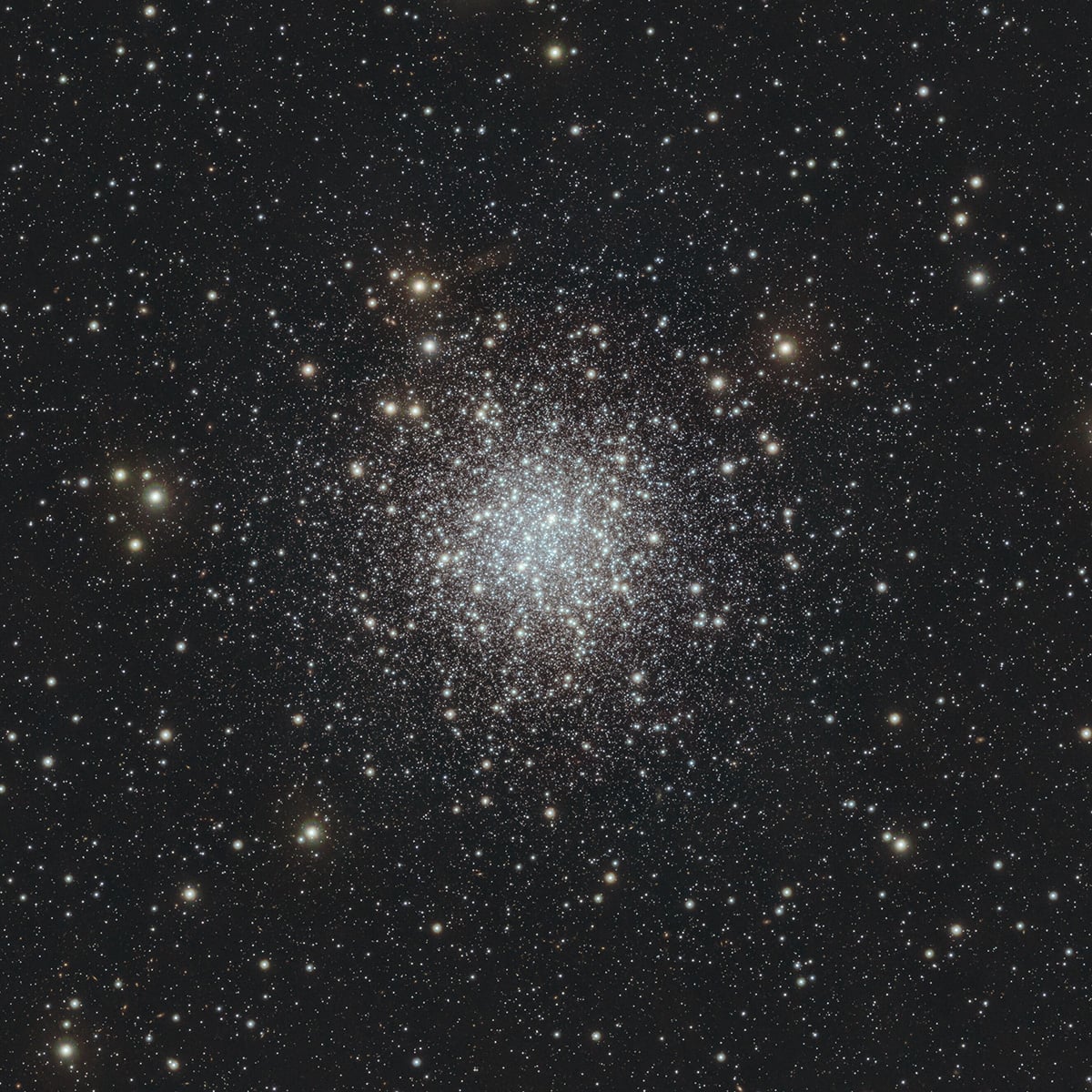
Astronomers estimate that NGC 6723 formed more than 10 billion years ago. That places its birth within the early history of the Milky Way. At that time, the Galaxy looked very different from the spiral system we see today. Clouds of gas were collapsing to form stars, smaller galaxies were merging, and the Galactic halo was still taking shape. NGC 6723 has witnessed all of those events while continuing to orbit the Milky Way.
The cluster spans roughly 100 light-years across, yet it contains an enormous number of stars within that relatively small volume. Conditions become especially crowded near the center. Stars are packed much more closely than they are in the Solar neighborhood. If our Sun occupied the cluster’s core, the night sky would contain countless brilliant stars that would outshine anything visible from Earth today.
Unlike young star clusters, globular clusters contain almost no gas or dust capable of forming new stars. Their period of active star formation ended billions of years ago. What remains is an ancient stellar population that has aged together ever since.
Hubble separates thousands of stars
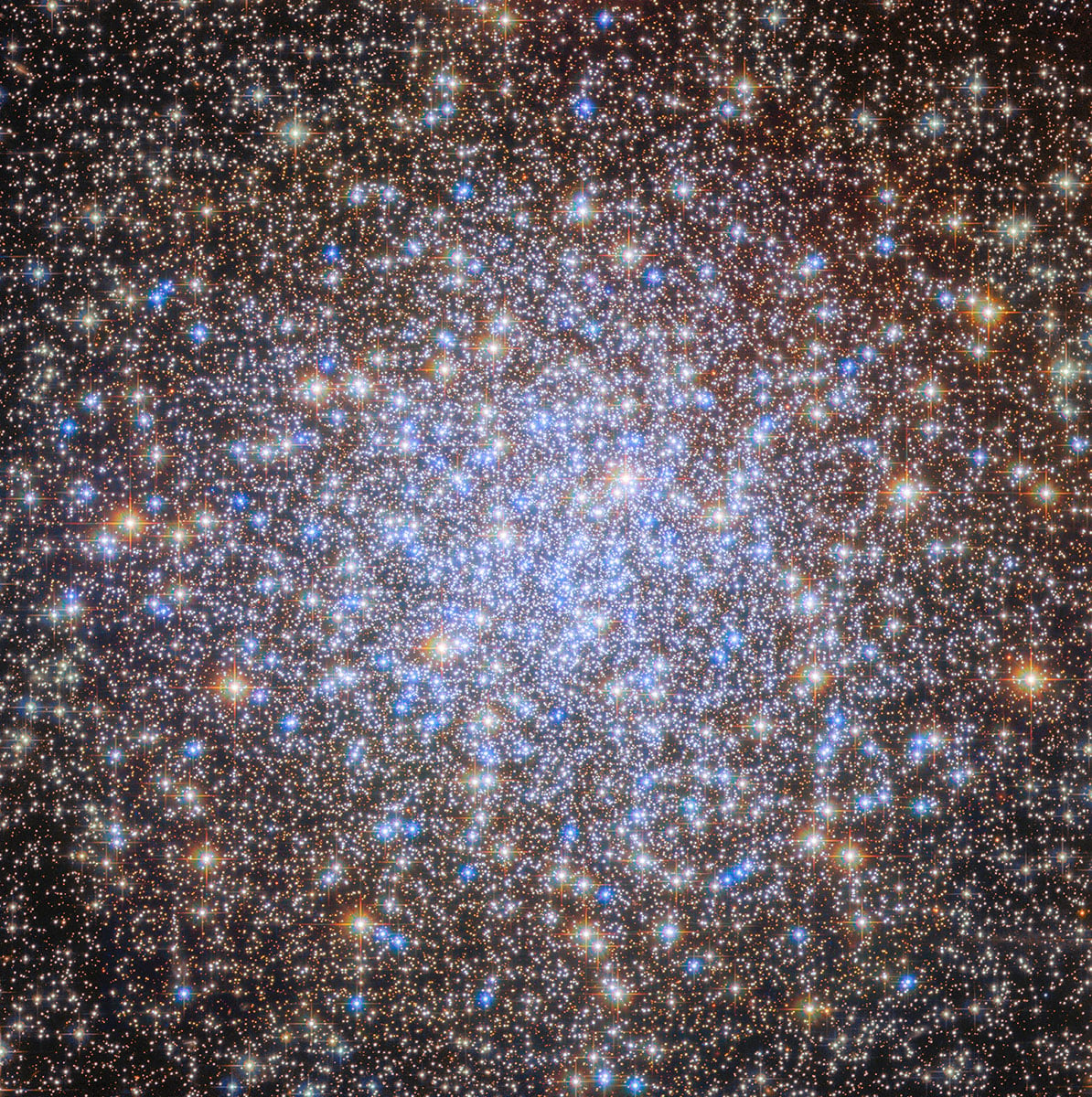
The strength of the new image lies in Hubble‘s ability to resolve individual stars inside an extremely crowded environment. Ground-based telescopes face a constant challenge because Earth’s atmosphere distorts incoming starlight. Even under excellent observing conditions, neighboring stars often blur together inside dense globular clusters.
Hubble avoids the limitation by operating above the atmosphere. Its stable location in space allows it to capture images with extraordinary sharpness. As a result, astronomers can measure stars that would otherwise remain hidden within the cluster’s bright central glow.
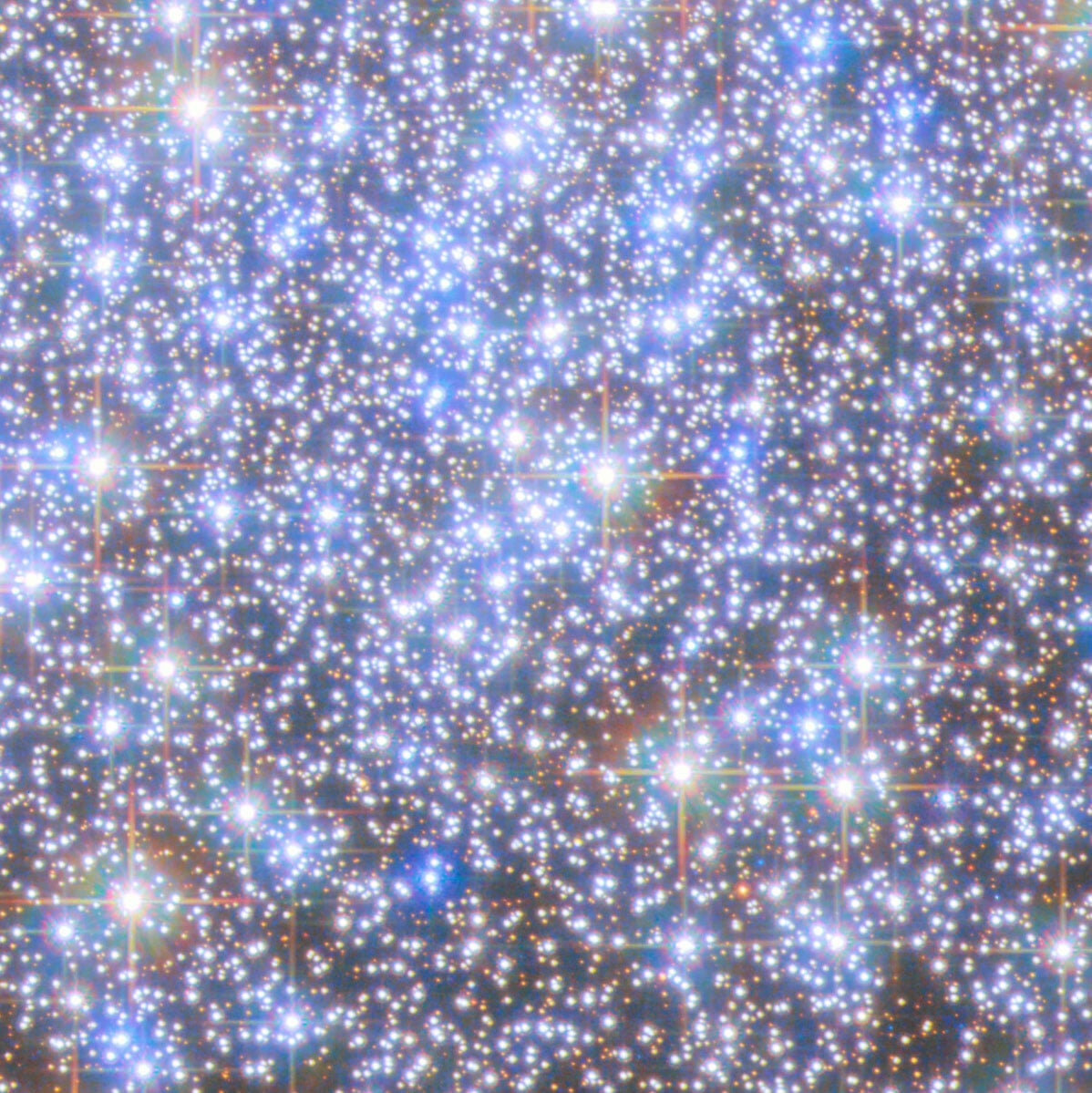
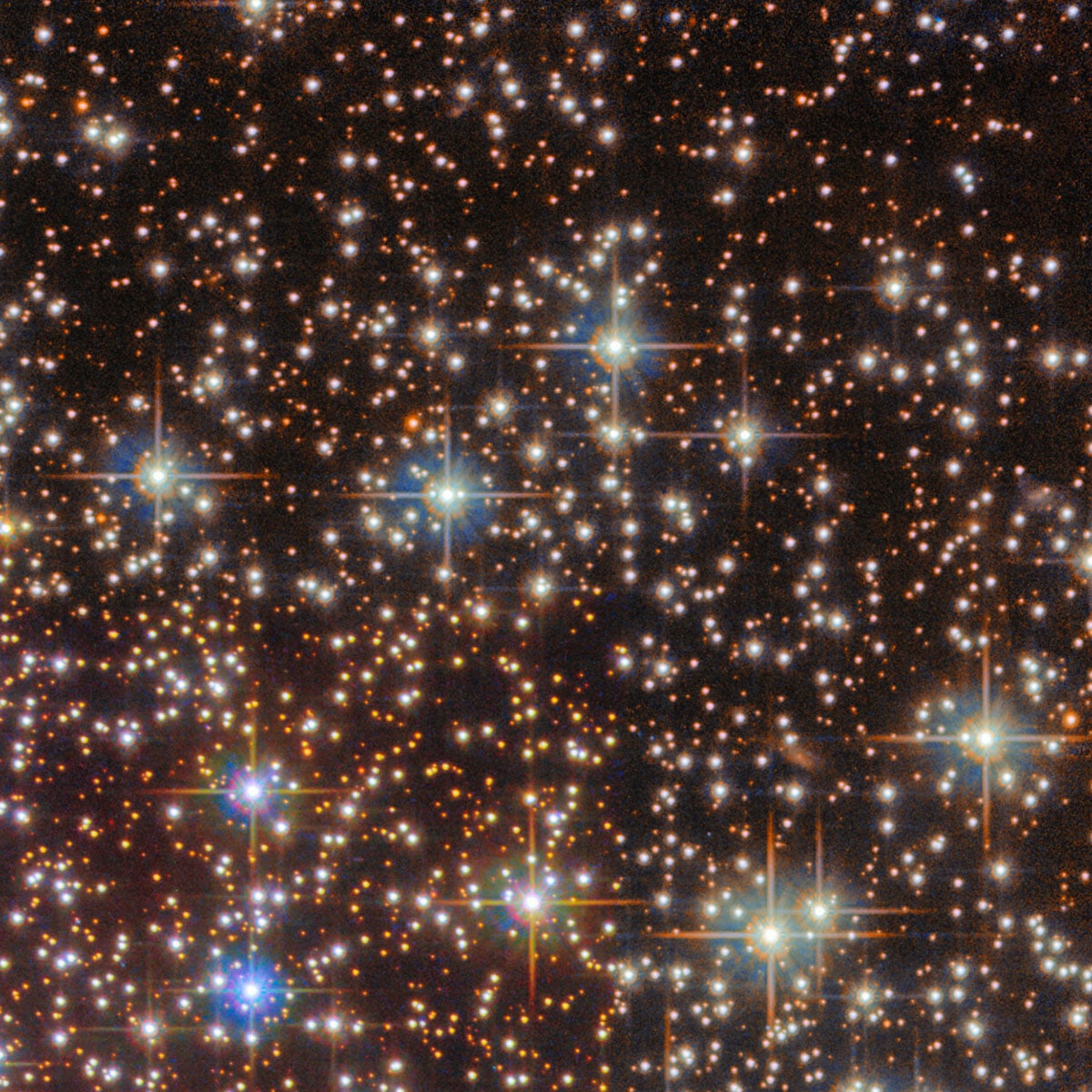
Many of the orange stars are red giants. These stars have exhausted hydrogen in their cores after spending billions of years on the main sequence. As their internal structure changes, they expand dramatically and their outer layers cool. Their increased size makes them far brighter than they were during most of their lives.
Other stars appear blue or white because they occupy different evolutionary stages. Many belong to the horizontal branch, where helium fusion powers the stellar core. The distribution of these stars provides important clues about the cluster’s age and chemical composition. Astronomers compare their positions with theoretical models to refine estimates of how the cluster has evolved.
A story of Milky Way’s earliest history
Globular clusters have become some of the most valuable objects in Galactic astronomy because they preserve a record of the Milky Way’s distant past. Unlike many regions of the Galaxy that have undergone repeated episodes of star formation, these ancient clusters have remained relatively stable for billions of years. Their stars still carry the chemical signatures of the environment in which they formed. By studying those signatures, astronomers can piece together the history of our Galaxy.
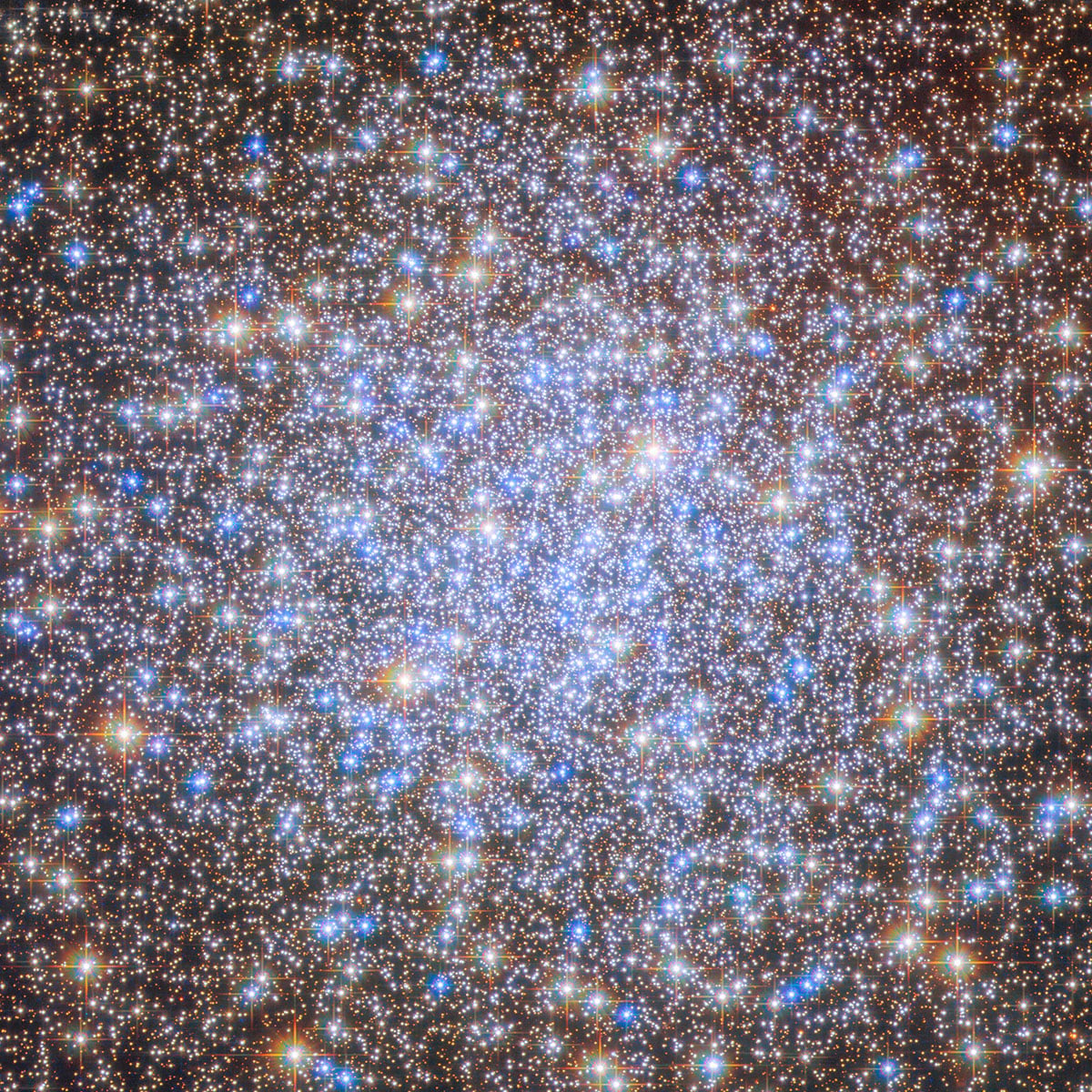
One of the first properties researchers measure is the abundance of elements heavier than hydrogen and helium. In astronomy, these elements are collectively known as metals. Stars that formed early in the Universe contain relatively few of them because earlier generations of massive stars had not yet produced large quantities of heavier elements through nuclear fusion and supernova explosions.
The stars in NGC 6723 belong to this ancient, metal-poor population. Their chemical composition tells astronomers that the cluster formed during the Milky Way’s youth, before the Galaxy became enriched with heavier elements. Every detailed measurement improves our understanding of how the Milky Way evolved from a collection of gas clouds into the large spiral galaxy we see today.
Clear skies!
See more from DIYPhotography.net on Google
Add DIYPhotography.net as a trusted source. This makes
our stories more likely to appear in your Google Search results.
 Add as a preferred source on Google

Soumyadeep Mukherjee
Soumyadeep Mukherjee is an award-winning astrophotographer from India. He has a doctorate degree in Linguistics. His work extends to the sub-genres of nightscape, deep sky, solar, lunar and optical phenomenon photography. He is also a photography educator and has conducted numerous workshops. His works have appeared in over 40 books & magazines including Astronomy, BBC Sky at Night, Sky & Telescope among others, and in various websites including National Geographic, NASA, Forbes. He was the first Indian to win “Astronomy Photographer of the Year” award in a major category.


Join the Discussion
DIYP Comment Policy
Be nice, be on-topic, no personal information or flames.