




















eROSITA Telescope Captures Our Solar System “Breathing”
Apr 27, 2026
Soumyadeep Mukherjee
Soumyadeep Mukherjee is an award-winning astrophotographer from India. He has a doctorate degree in Linguistics. His work extends to the sub-genres of nightscape, deep sky, solar, lunar and optical phenomenon photography. He is also a photography educator and has conducted numerous workshops. His works have appeared in over 40 books & magazines including Astronomy, BBC Sky at Night, Sky & Telescope among others, and in various websites including National Geographic, NASA, Forbes. He was the first Indian to win “Astronomy Photographer of the Year” award in a major category.
Share:
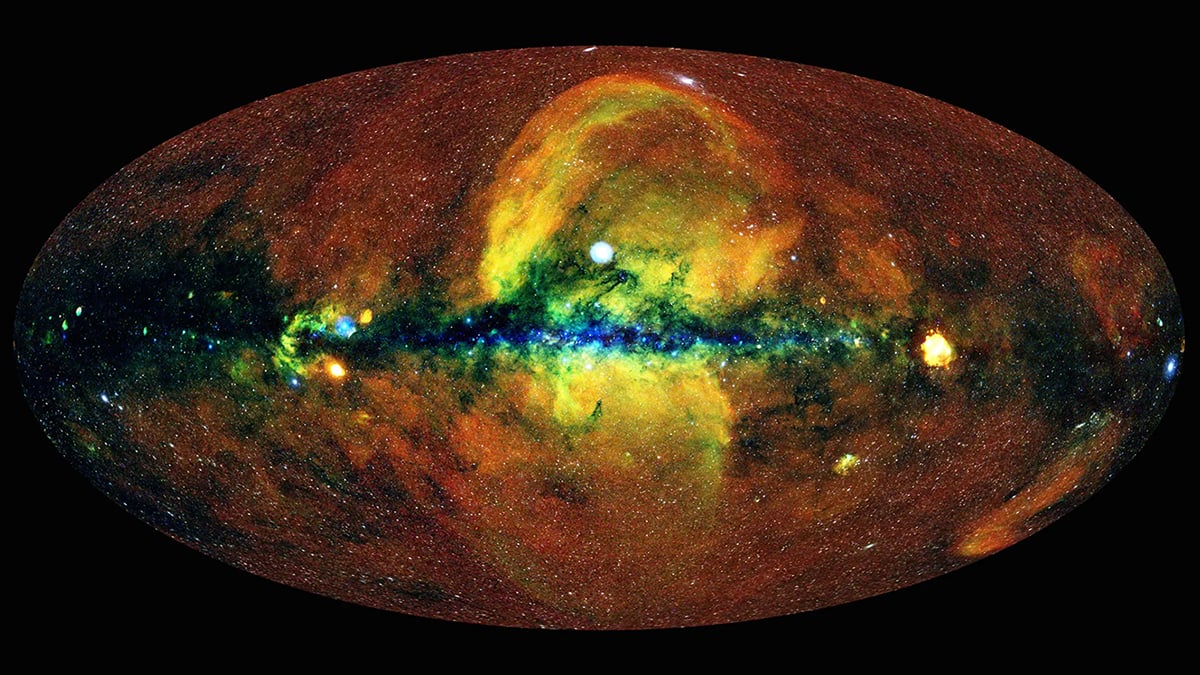
Recent X-ray observations have revealed a time-dependent diffuse emission associated with the solar system. This emission arises from interactions between the solar wind and neutral atoms within the heliosphere and near-Earth environment. When examined across multiple epochs, the signal shows systematic variation in intensity and spatial distribution. These variations track changes in solar activity and solar wind conditions.
Informally, this evolving emission pattern is described as the “breathing” of the solar system. Earlier studies often classified this emission as contamination. However, recent work has demonstrated that it carries structured information about heliospheric processes. The availability of repeated all-sky surveys has played a key role in isolating and characterizing this signal.
Temporal variability in the soft X-ray sky
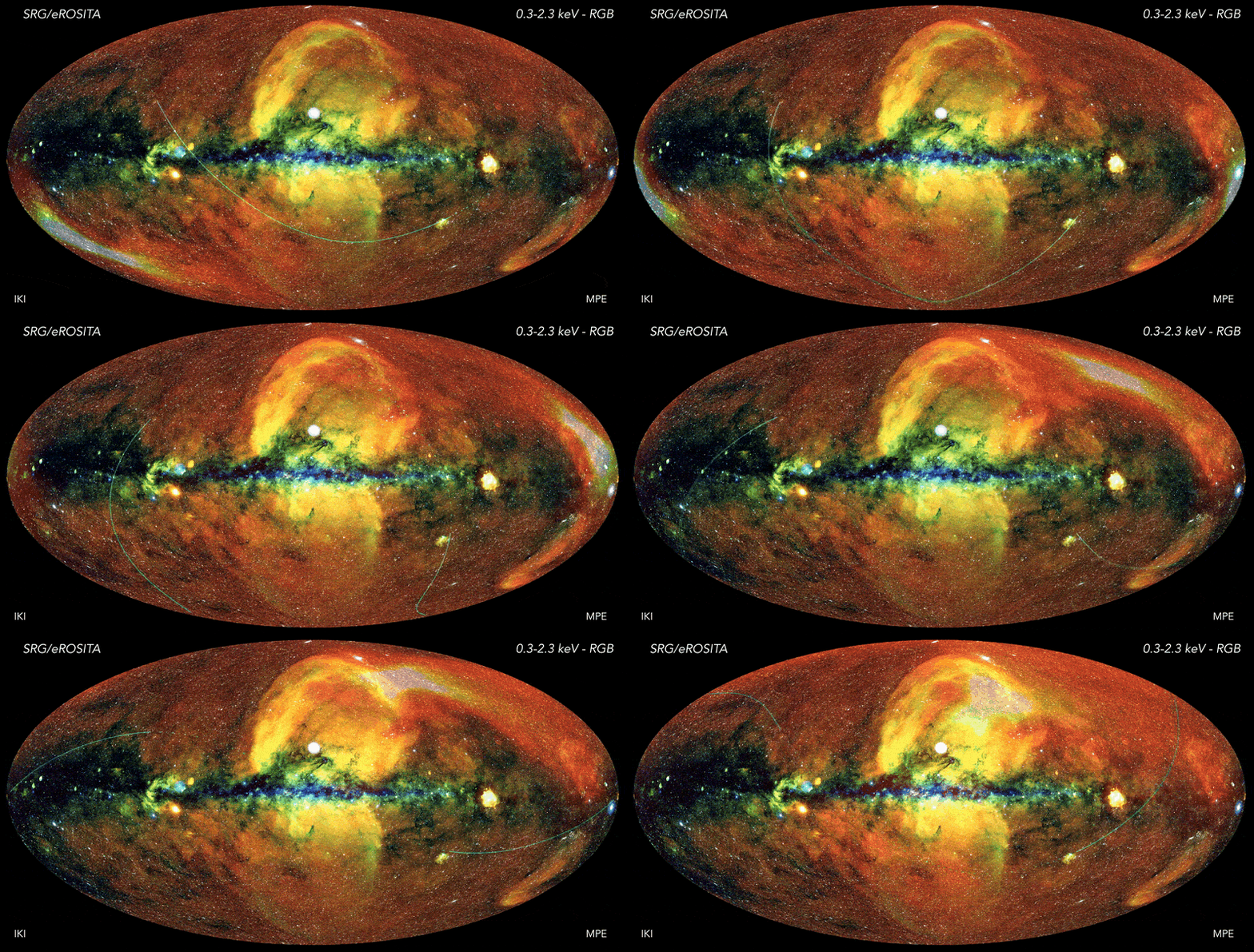
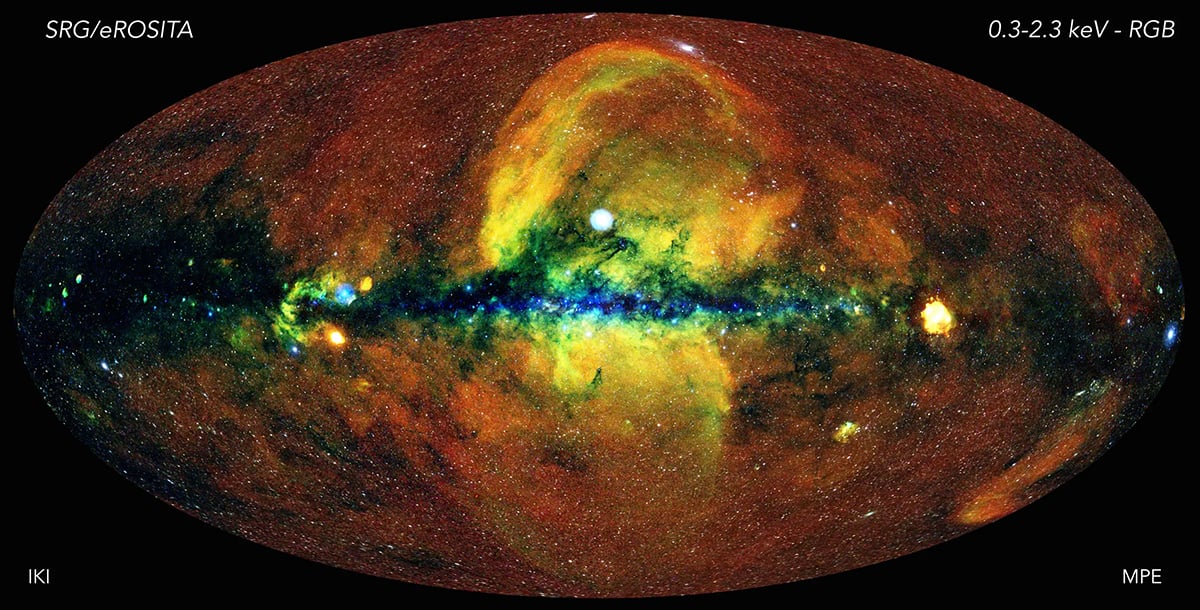
Repeated mapping of the soft X-ray sky has made it possible to identify subtle changes in diffuse emission. The eROSITA telescope performed several full-sky surveys over a span of nearly two years. Each survey produced a high-sensitivity map of X-ray intensity across the sky. When these maps were compared, astronomers detected clear differences in brightness across large angular scales.
These differences did not align with known astrophysical sources such as galaxy clusters or supernova remnants. Instead, they exhibited a smooth and extended structure. Moreover, the changes occurred on timescales consistent with variations in solar activity. This temporal correlation provided the first indication that the emission originates within the solar system.
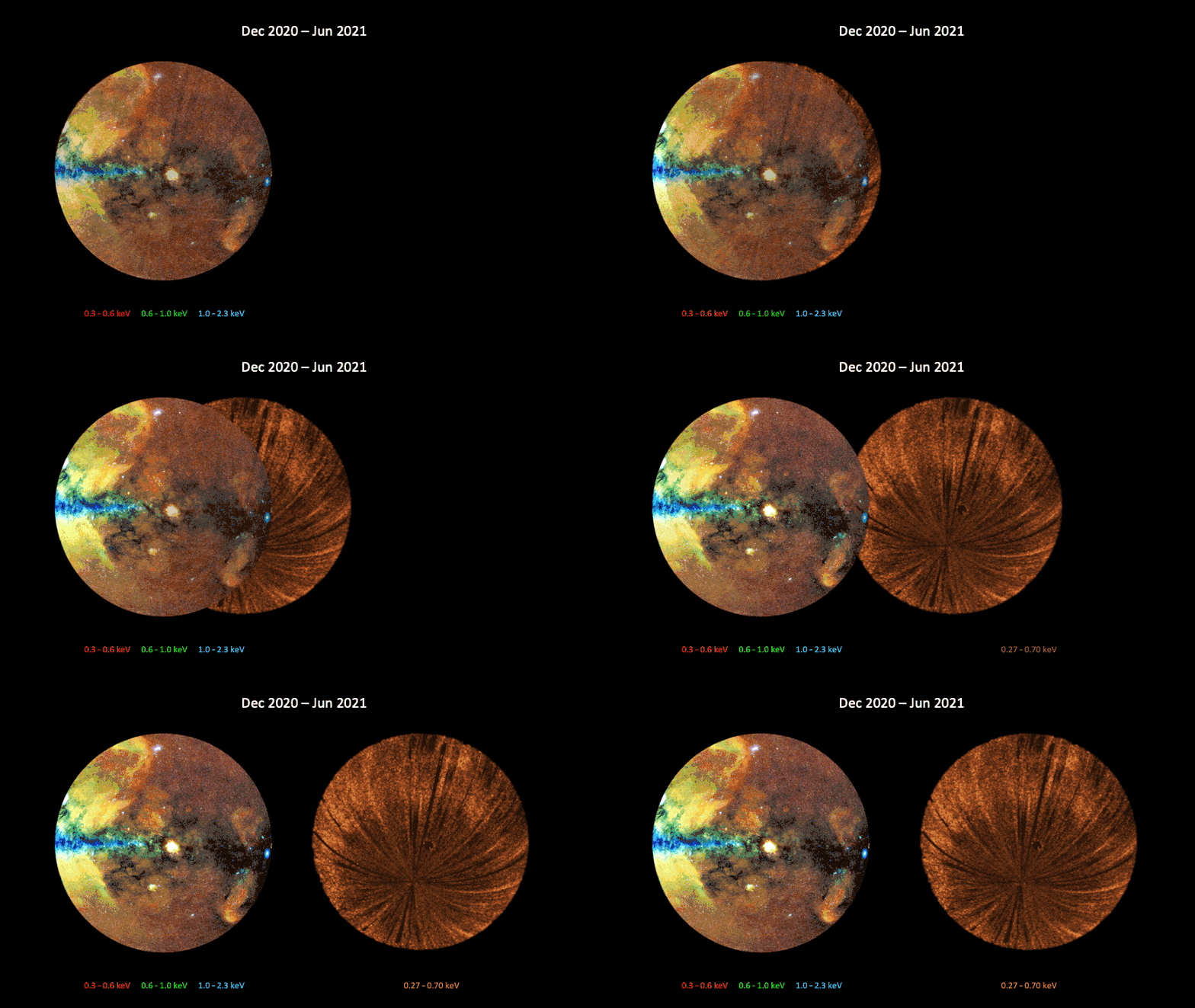
The amplitude of variation is modest, but it is measurable. In some regions, the intensity shifts by a noticeable fraction between successive scans. The spatial distribution also evolves, with certain regions becoming more prominent during periods of higher solar activity. These patterns indicate that the emission is dynamic rather than static.
Modulation by the solar activity cycle
The Sun undergoes a well-known cycle of magnetic activity with a period of about eleven years. During this cycle, the number of sunspots fluctuates. Solar flares and coronal mass ejections also exhibit varying frequencies. These changes affect the structure and strength of the solar wind.
During periods of high activity, the solar wind becomes more intense and more variable. It carries a higher flux of energetic ions. Consequently, the rate of charge exchange increases. This leads to a stronger X-ray emission across the heliosphere.
In contrast, during periods of low activity, the solar wind weakens. The density and energy of the ions decrease. As a result, the X-ray emission diminishes. This cyclical behavior introduces a time-dependent component to the observed signal.
When mapped over time, this modulation produces a pattern that resembles expansion and contraction. Regions of enhanced emission appear to grow and then recede. This behavior underlies the description of the solar system as “breathing” in X-rays.
Observational advantages of eROSITA
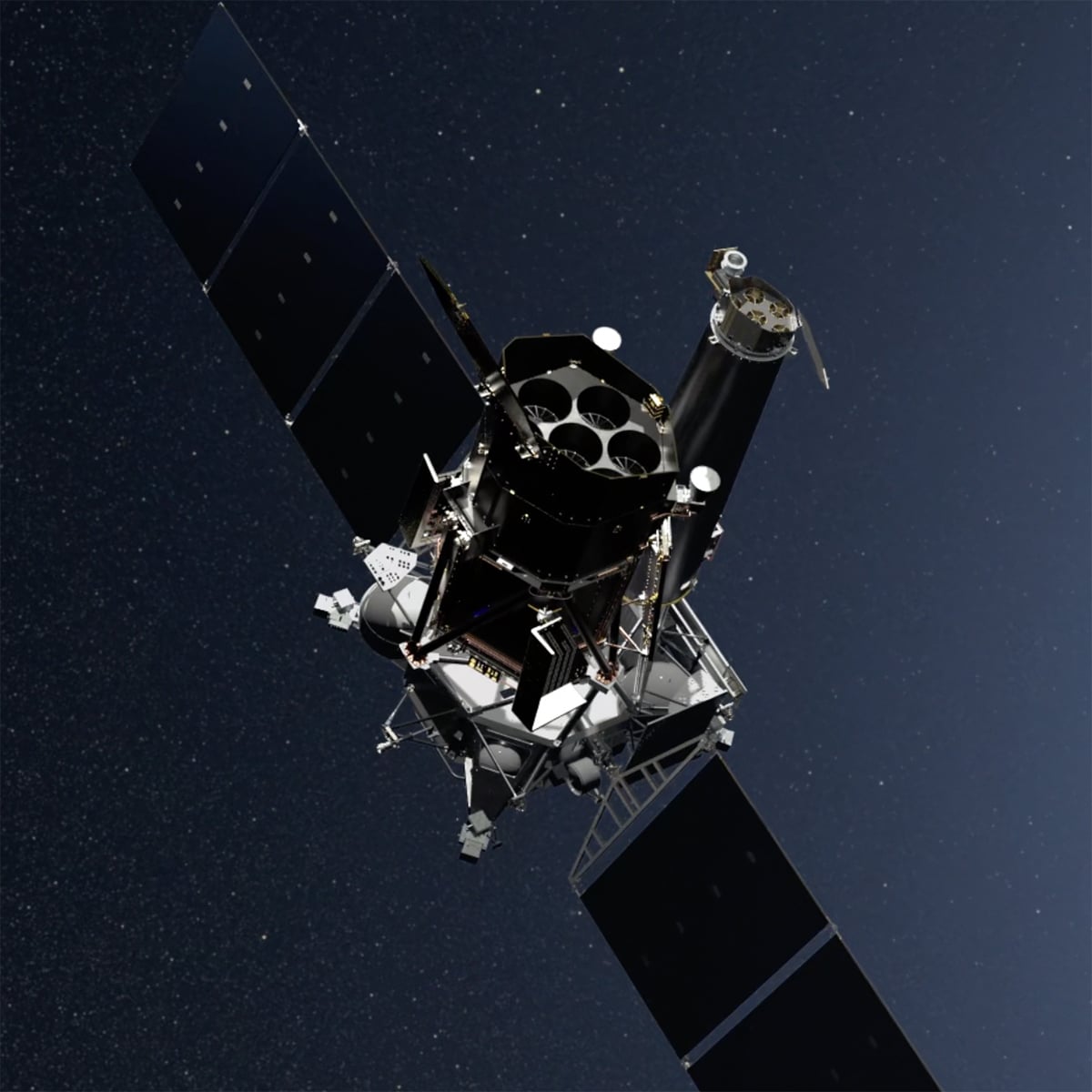
The detection of this phenomenon relies on the capabilities of the eROSITA telescope. Positioned near the second Lagrange point, the instrument operates in a stable thermal and radiation environment. This location minimizes interference from Earth’s immediate surroundings.
One of the key strengths of eROSITA is its survey strategy. The telescope performed multiple all-sky scans, each with comparable sensitivity. This repetition allows for direct comparison between different epochs. It also enables the identification of time-variable signals.
The instrument’s sensitivity to soft X-rays is particularly important. Charge exchange emission falls primarily in this energy range. Earlier missions lacked either the sensitivity or the temporal coverage required to detect the variability with confidence.
For data processing, astronomers developed methods to separate the heliospheric component from other contributions. These include emission from the Milky Way and extragalactic sources. By modeling each component, they isolated the variable signal associated with the solar system.
Reinterpreting the diffuse X-ray background
The identification of heliospheric emission as a variable component has important implications for X-ray astronomy. For many years, this emission complicated the analysis of faint cosmic sources. It introduced uncertainties in the measurement of diffuse backgrounds.
With a clearer understanding of its origin, astronomers can now account for this component more accurately. They can model its spatial and temporal behavior and subtract it from observational data. This leads to improved precision in studies of galaxy clusters, interstellar gas, and large-scale structures.
At the same time, the emission itself becomes a subject of study. It provides insight into the distribution of neutral atoms within the heliosphere. It also reveals the composition and dynamics of the solar wind. This dual role enhances the value of X-ray observations. The same data can be used to study both local and distant phenomena. This integration of heliophysics and astrophysics represents a significant advance.
Clear skies!
See more from DIYPhotography.net on Google
Add DIYPhotography.net as a trusted source. This makes
our stories more likely to appear in your Google Search results.
 Add as a preferred source on Google

Soumyadeep Mukherjee
Soumyadeep Mukherjee is an award-winning astrophotographer from India. He has a doctorate degree in Linguistics. His work extends to the sub-genres of nightscape, deep sky, solar, lunar and optical phenomenon photography. He is also a photography educator and has conducted numerous workshops. His works have appeared in over 40 books & magazines including Astronomy, BBC Sky at Night, Sky & Telescope among others, and in various websites including National Geographic, NASA, Forbes. He was the first Indian to win “Astronomy Photographer of the Year” award in a major category.


Join the Discussion
DIYP Comment Policy
Be nice, be on-topic, no personal information or flames.