





















ZWO ASI 676MM Launched: A Dedicated All-Sky Imaging Camera
Jan 19, 2026
Soumyadeep Mukherjee
Soumyadeep Mukherjee is an award-winning astrophotographer from India. He has a doctorate degree in Linguistics. His work extends to the sub-genres of nightscape, deep sky, solar, lunar and optical phenomenon photography. He is also a photography educator and has conducted numerous workshops. His works have appeared in over 40 books & magazines including Astronomy, BBC Sky at Night, Sky & Telescope among others, and in various websites including National Geographic, NASA, Forbes. He was the first Indian to win “Astronomy Photographer of the Year” award in a major category.
Share:

All-sky imaging has evolved from a niche activity into a critical observational method. Meteor science, transient detection, and long-term sky monitoring now rely heavily on automated wide-field imaging systems. These systems demand sensors that operate reliably through the night, handle extreme dynamic ranges, and preserve faint signals across thousands of exposures. Within this context, ZWO has introduced the ASI 676MM, a monochrome camera designed explicitly to meet the technical and operational demands of full-sky monitoring.
Rather than adapting a planetary or deep-sky camera for wide-field use, ZWO has taken a sensor-first approach. The ASI 676MM is built around Sony’s IMX676 CMOS sensor, whose square geometry and low-light optimization align closely with the needs of all-sky astronomy. This camera does not prioritize aesthetic imaging. Instead, it focuses on detection efficiency, geometric consistency, and long-term stability. These characteristics define its role as a modern all-sky imaging platform.
Table of contents
- All-sky imaging: An introduction
- Sensor architecture and the square geometry
- Monochrome imaging as a detection strategy
- Noise characteristics and long-duration stability
- Exposure control and temporal flexibility
- Meteor detection and transient monitoring
- Designed for permanent all-sky installations
- Software ecosystem and operational integration
- Price and availability
All-sky imaging: An introduction
All-sky imaging plays a central role in contemporary observational astronomy. Unlike targeted imaging, it does not focus on a single object or region. Instead, it records the entire visible sky continuously over long periods. This approach allows astronomers to study transient and unpredictable phenomena that traditional telescopes often miss. Modern all-sky systems operate autonomously. They capture repeated short exposures throughout the night. These exposures build a time-resolved record of sky activity. As a result, all-sky imaging has become essential for meteor science, atmospheric studies, and space situational awareness. It also supports long-term monitoring of sky brightness and cloud cover.
The technical demands of all-sky imaging differ from those of deep-sky astrophotography. Wide-angle lenses introduce strong geometric distortion. Sensors must therefore deliver a consistent response across the entire field. At the same time, exposure times must remain short to preserve temporal resolution. Sensitivity becomes more important than cosmetic image quality.
Monochrome sensors dominate this field. They record higher signal levels than color sensors under identical conditions. This advantage improves the detection of faint meteors and short-lived optical flashes. Low read noise further enhances reliability, especially when thousands of frames accumulate during a single night. Sensor geometry also plays a critical role. Square sensors align naturally with circular fisheye projections. They reduce wasted sky coverage and simplify calibration. This geometric efficiency improves positional accuracy when correlating data between multiple stations.
Sensor architecture and the square geometry
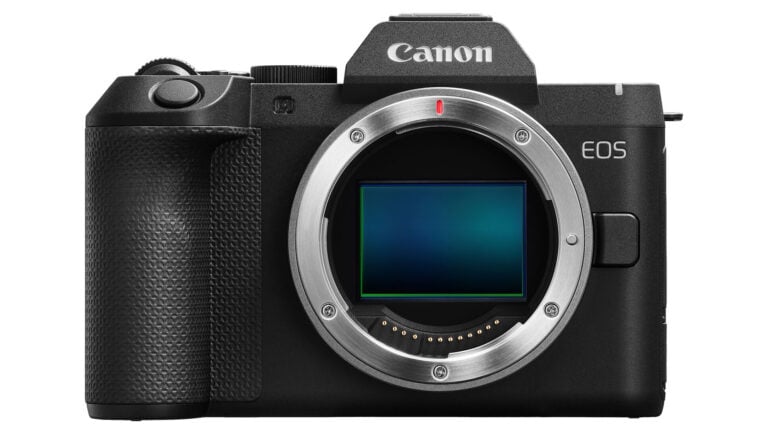
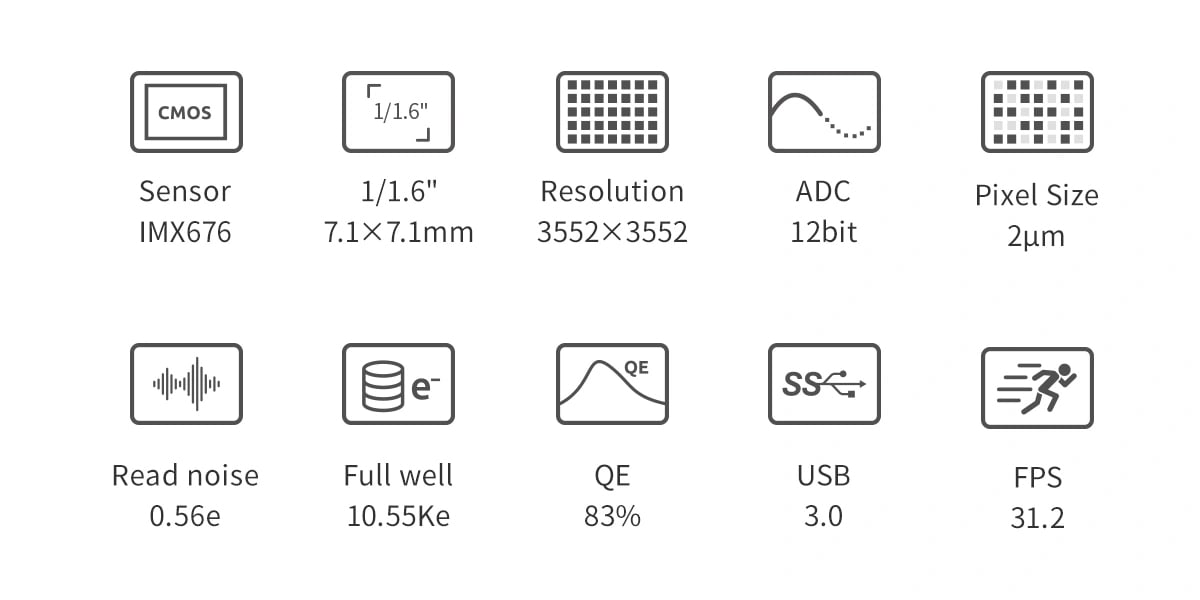
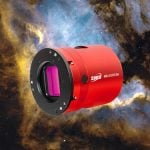
At the center of the ASI 676MM lies the Sony IMX676 monochrome CMOS sensor. Sony developed this sensor using its STARVIS 2 back-illuminated architecture, which enhances photon collection by relocating metal wiring beneath the photodiodes. As a result, more incoming light reaches the active pixel area. This improvement directly benefits low-light imaging, especially under moonless skies.
The sensor uses a 1/1.6-inch optical format and produces a resolution of 3552 × 3552 pixels, totaling 12.6 megapixels. Unlike conventional rectangular sensors, the IMX676 employs a perfectly square layout. This design choice has practical consequences for all-sky imaging. When paired with fisheye lenses, a square sensor captures a more uniform sky projection. It reduces unused regions near the corners and simplifies horizon alignment.
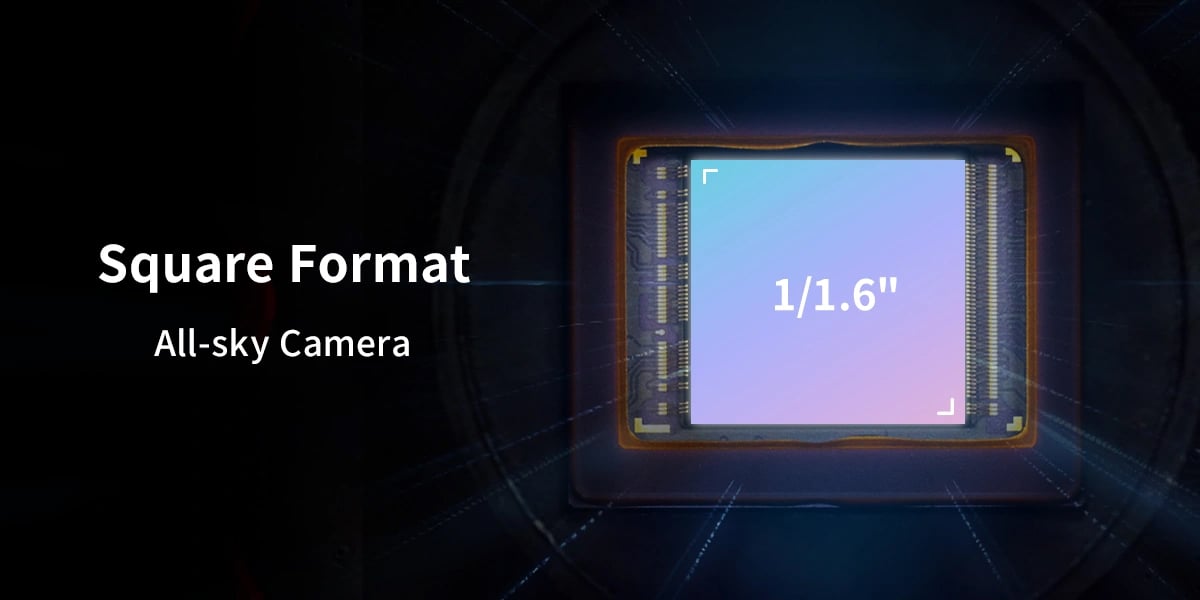
Moreover, square geometry improves computational handling. Calibration frames align more predictably. Plate-solving and sky-mapping algorithms benefit from symmetrical pixel distribution. For meteor triangulation networks, this consistency improves positional accuracy across stations. In this sense, the sensor’s geometry is not cosmetic. It is functional.
Each pixel measures 2.0 microns, which balances resolution with sensitivity. This pixel size supports fast lenses commonly used in all-sky systems. It also maintains sufficient spatial sampling to resolve faint streaks and transient structures across the sky.
Monochrome imaging as a detection strategy
ZWO offers the ASI 676MM as a monochrome camera. This decision reflects the functional priorities of all-sky imaging. Detection systems benefit more from luminance sensitivity than color information. By removing the Bayer color filter array, the sensor allows every pixel to record full-spectrum intensity data.
This design increases effective sensitivity. It also improves signal-to-noise ratio, especially for short exposures. Faint meteors, airglow variations, and transient flashes often produce marginal signals. In such cases, monochrome sensors detect events that color sensors may fail to register reliably.
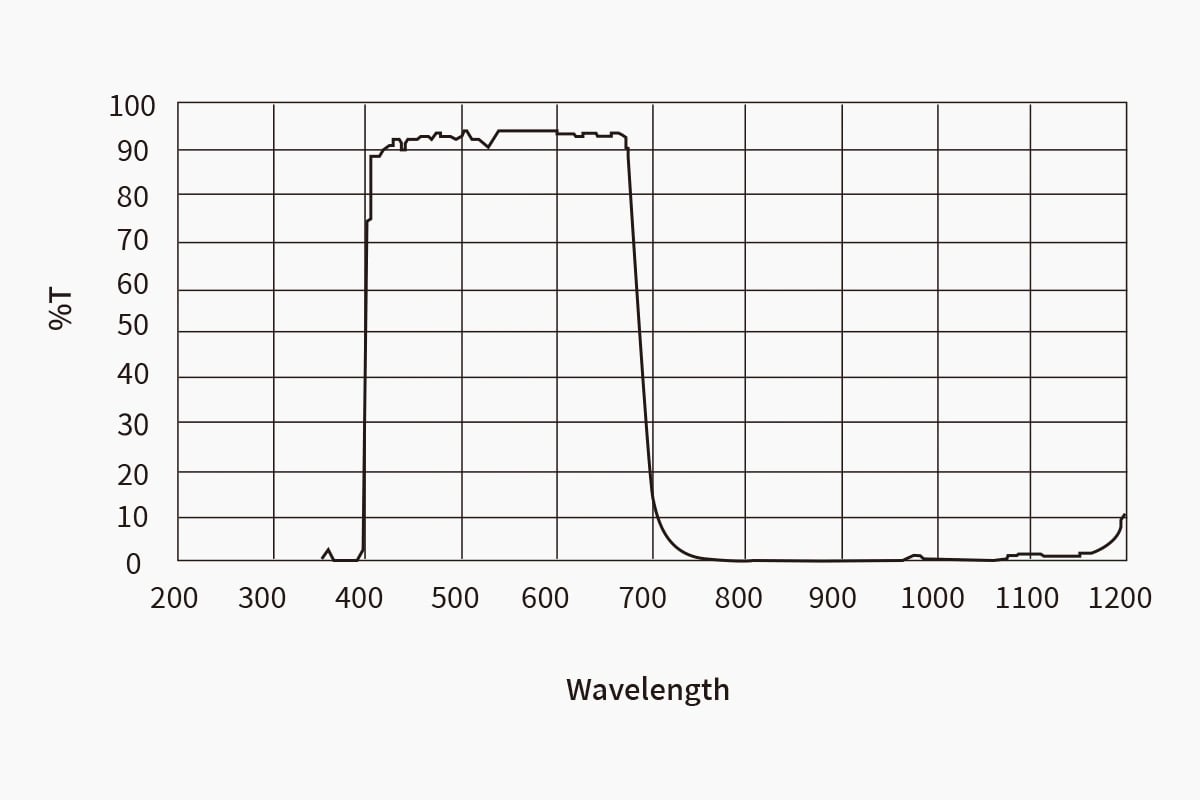
The camera includes an anti-reflection-coated protective window positioned above the sensor. This window protects the sensor from dust and moisture while maintaining high transmission across visible and near-infrared wavelengths. Notably, ZWO does not include a UV/IR cut filter. This allows users to tailor spectral response through external filters or operate unfiltered for maximum photon throughput.
For most all-sky installations, unrestricted spectral sensitivity improves detection efficiency. The ASI 676MM supports this operational philosophy by default.
Noise characteristics and long-duration stability
Noise performance determines the effectiveness of continuous sky monitoring. All-sky systems often collect tens of thousands of frames per night. Even modest noise sources accumulate over time. ZWO addressed this challenge through both sensor selection and electronic design.
The ASI 676MM achieves very low read noise, reaching approximately 0.56 electrons in high conversion gain mode. This low read noise allows short exposures to preserve faint signals without aggressive stacking. It also improves detection confidence for transient events lasting only fractions of a second.
At the same time, the sensor delivers high quantum efficiency, exceeding 80 percent at peak response. High quantum efficiency ensures that a large fraction of incoming photons contributes to a usable signal. This characteristic is essential for detecting faint meteors under dark skies.
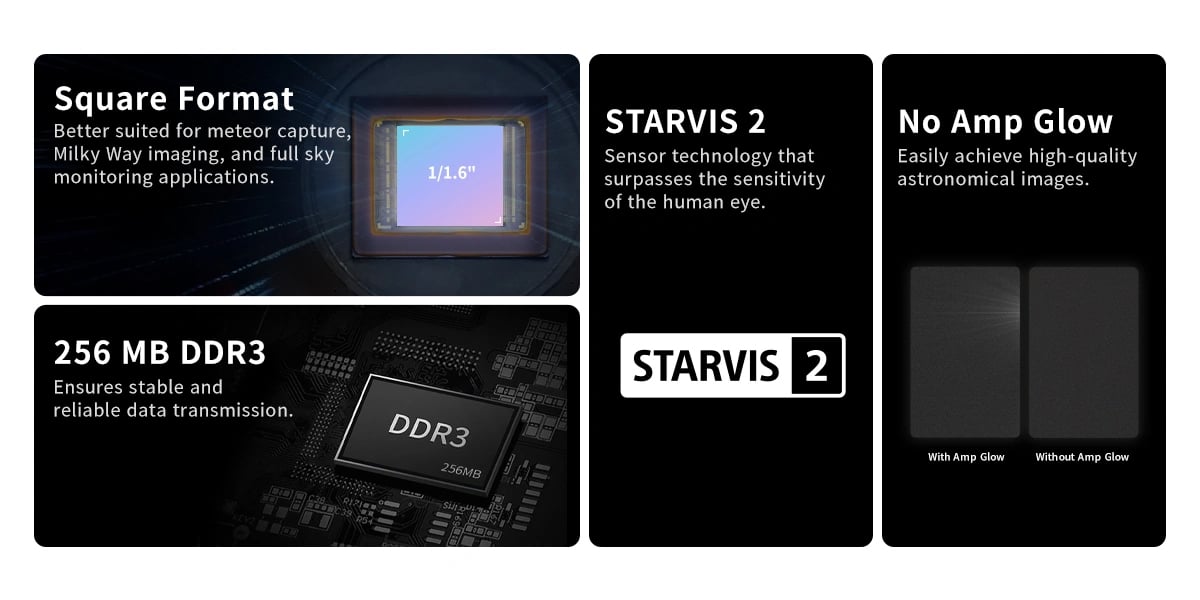
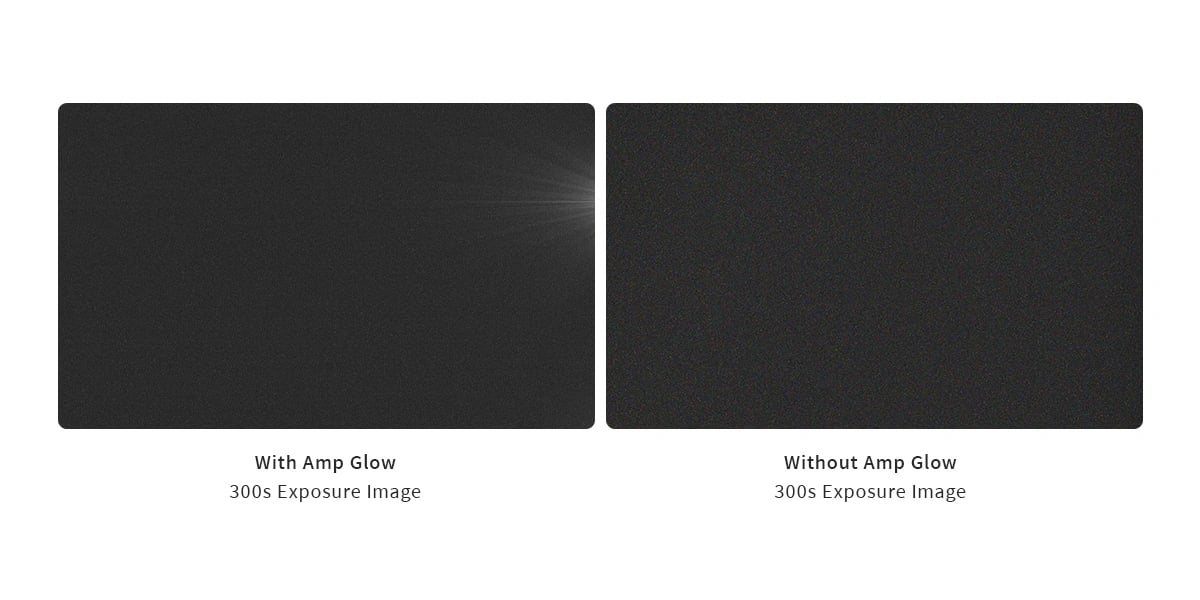
ZWO also implemented hardware-level amp glow suppression. Amp glow often appears in CMOS sensors during long exposures or continuous operation. Its absence in the ASI 676MM simplifies calibration workflows and improves long-term data consistency. This feature is particularly valuable for unattended installations operating night after night.
Exposure control and temporal flexibility
All-sky imaging requires flexible exposure control. Sky brightness changes throughout the night. Moon phase, atmospheric transparency, and artificial light influence optimal settings. The ASI 676MM supports exposure times ranging from 32 microseconds to 2000 seconds. This wide range allows users to adapt exposure strategies dynamically.
In practice, all-sky systems typically operate with short exposures repeated at regular intervals. These short exposures reduce motion blur and preserve temporal resolution. The ASI 676MM supports this approach while maintaining signal integrity.
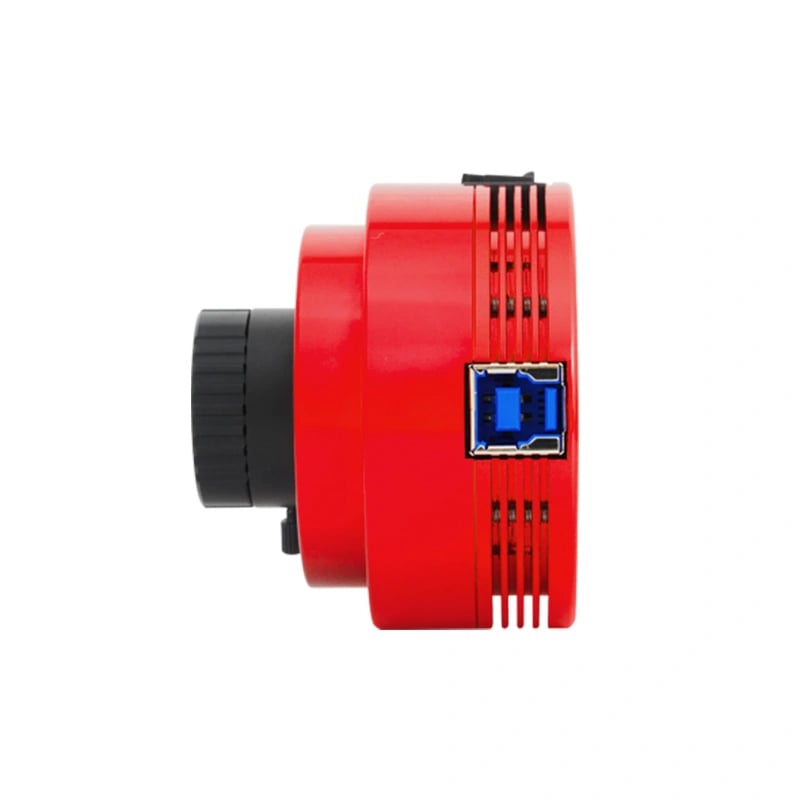
At full resolution, the camera reaches frame rates of approximately 31 frames per second. While continuous monitoring rarely uses maximum frame rates, this capability allows high-cadence experiments and fast transient detection. It also supports region-of-interest operation when higher temporal resolution is required.
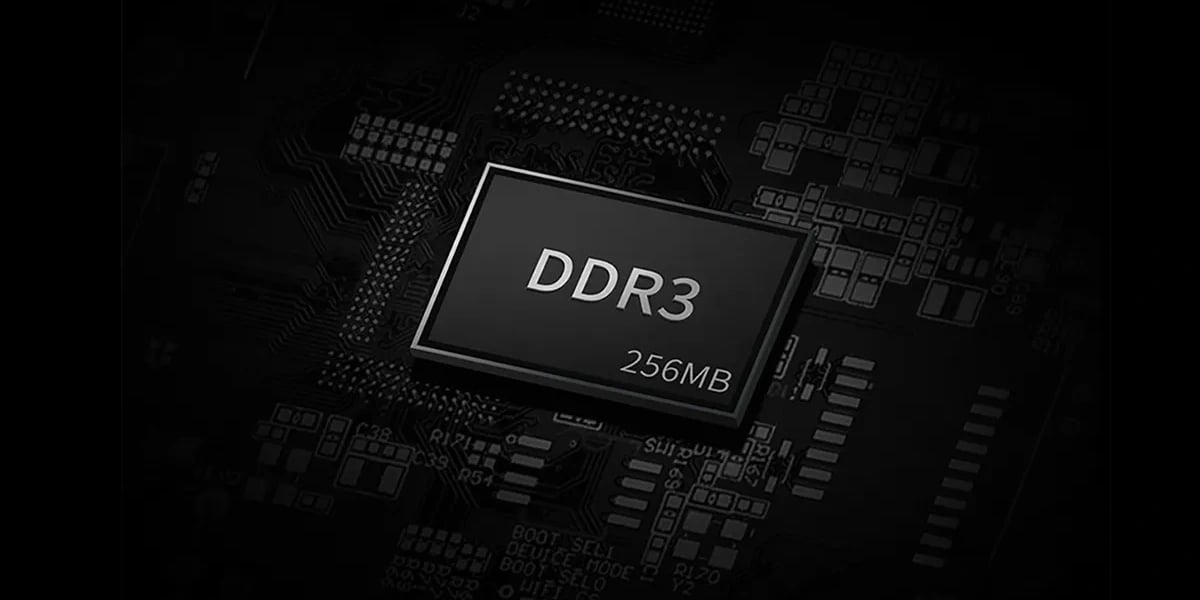
To ensure stable data transfer, ZWO includes a 256 MB DDR3 image buffer. This buffer smooths data flow during continuous capture. It reduces the risk of dropped frames when systems run unattended. Combined with the USB 3.0 interface, this design supports reliable overnight recording.
Meteor detection and transient monitoring
Meteor science represents one of the primary applications for all-sky cameras. The ASI 676MM aligns closely with this use case. Its sensitivity allows the detection of faint meteors. The square sensor geometry improves sky coverage efficiency, and its low noise characteristics preserve weak signals.
Short exposures reduce trail smearing. High quantum efficiency enhances detection, informing automated software. Stable frame timing improves event correlation across multiple stations. These factors contribute directly to meteor trajectory reconstruction and velocity estimation.
Beyond meteors, the ASI 676MM supports the detection of other transient phenomena. These include fireballs, sprites, lightning, satellite flares, and atmospheric flashes. With appropriate software, the camera functions as a general sky surveillance instrument.
Its monochrome output simplifies detection algorithms. Consistent luminance response reduces false positives. This reliability is critical for automated systems that operate without human supervision.
Designed for permanent all-sky installations
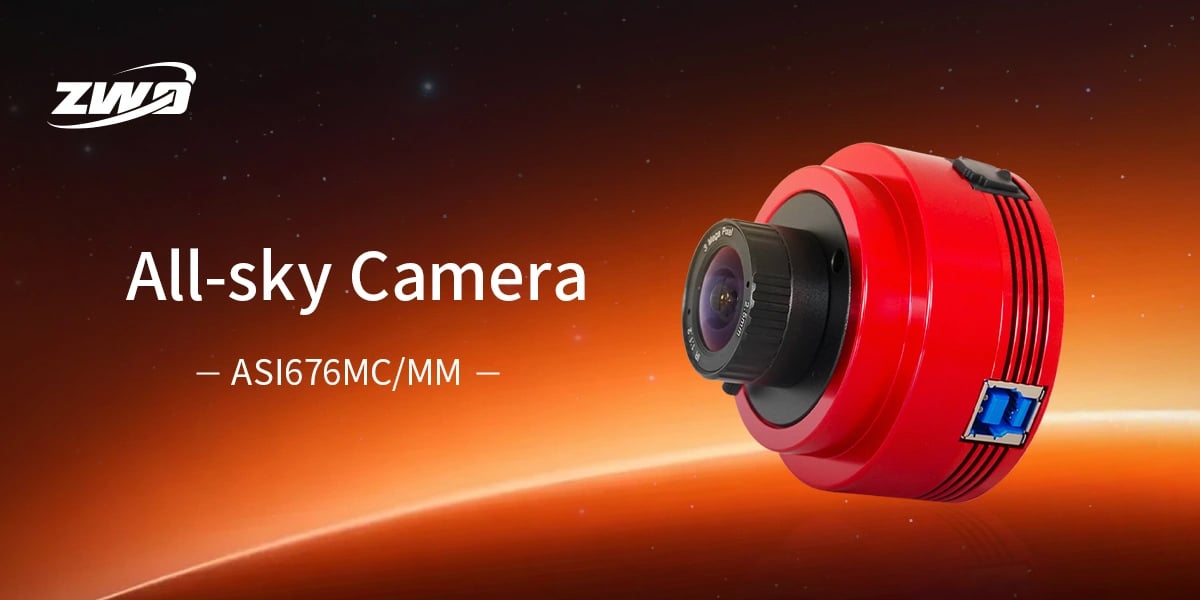
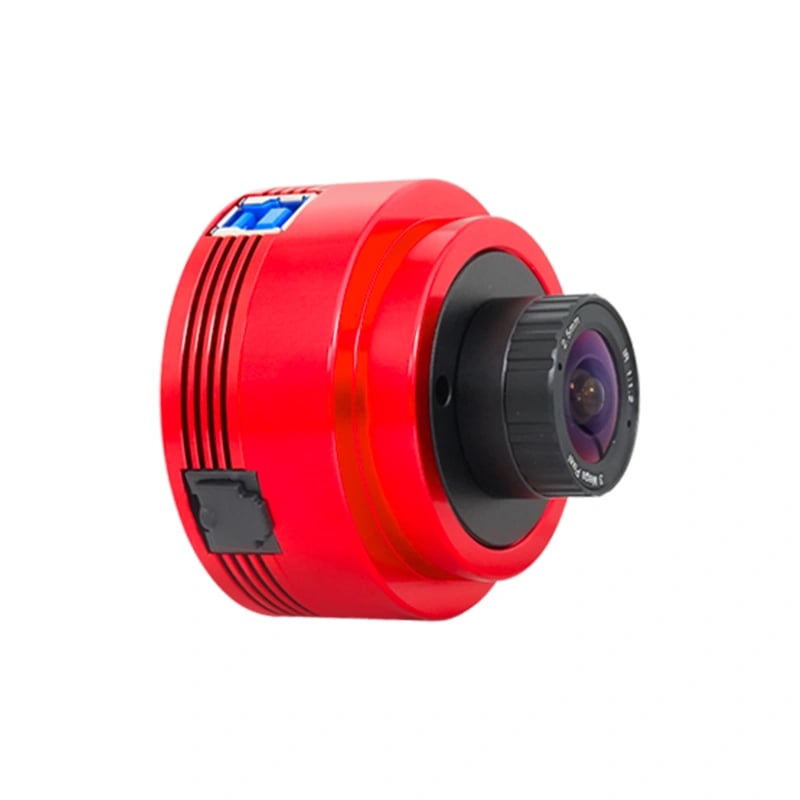
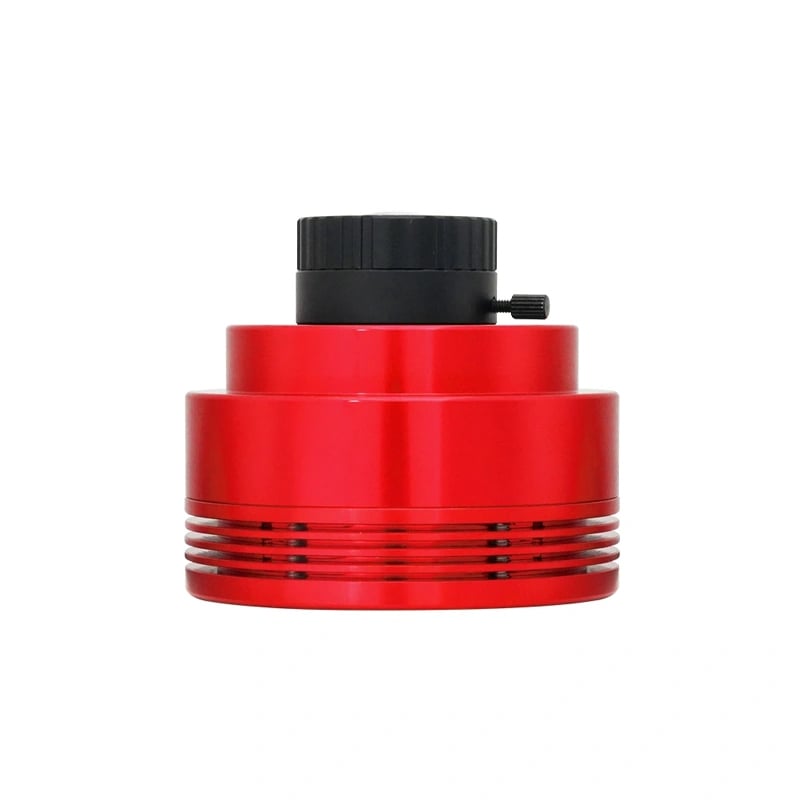
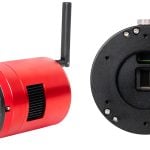
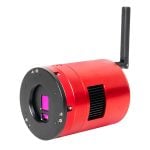
All-sky cameras often remain mounted for extended periods. They operate in outdoor enclosures under varying environmental conditions. ZWO designed the ASI 676MM with a compact and lightweight cylindrical housing. This simplifies integration into protective domes and weatherproof enclosures.
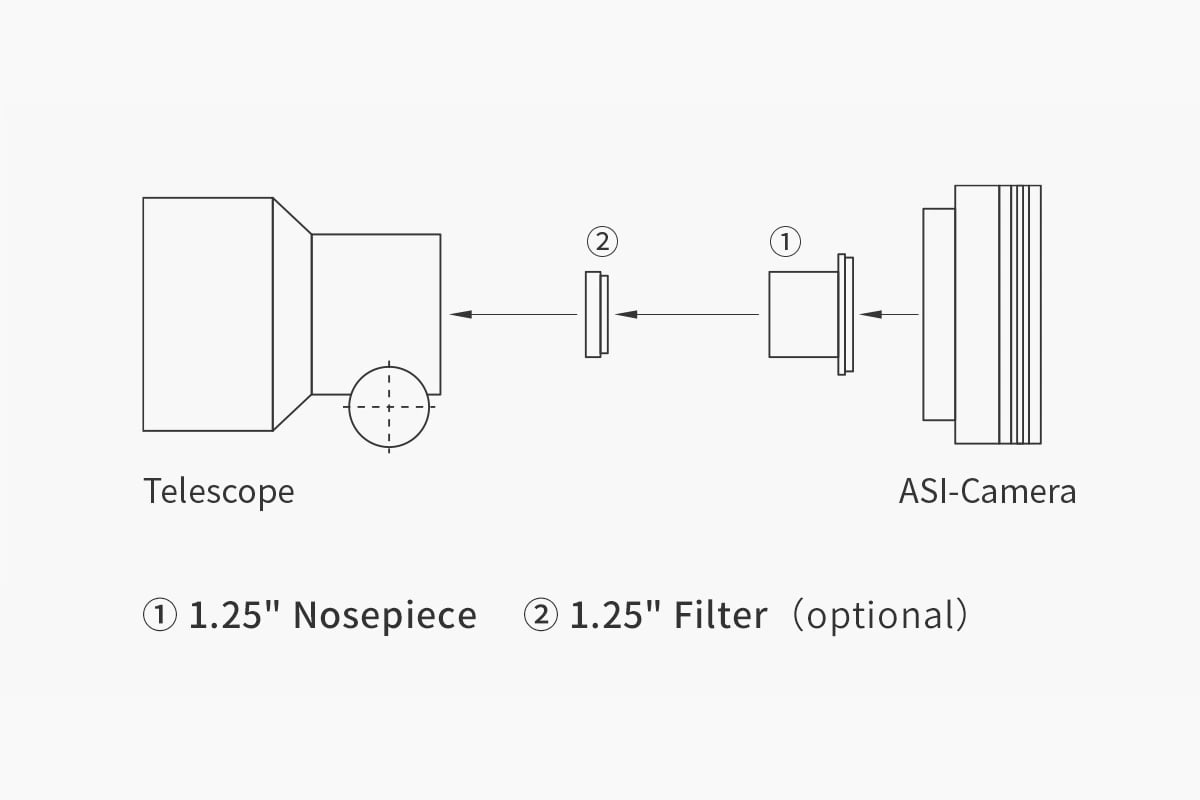
The camera features M42 × 0.75 front threads, as well as support for 1.25-inch and 2-inch adapters. This compatibility allows direct attachment to fisheye lenses and optical assemblies commonly used in all-sky systems.
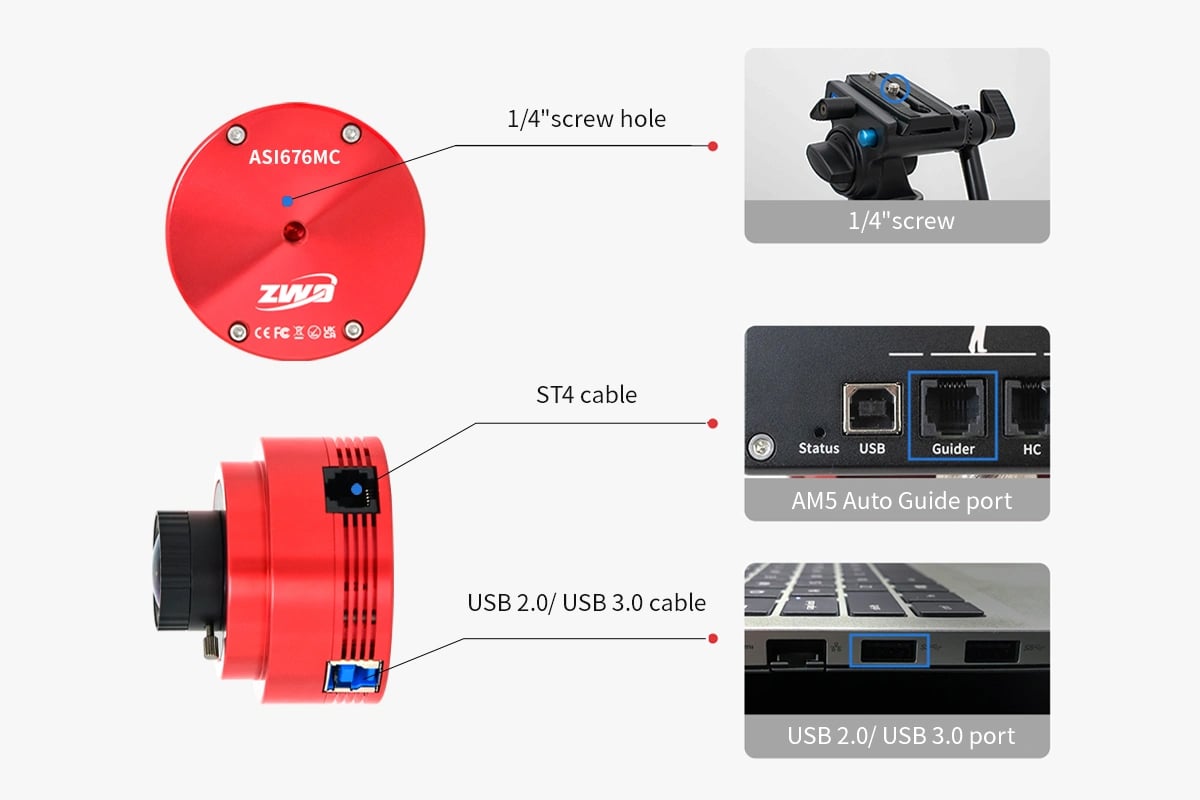
The camera draws power directly through the USB connection. This reduces cabling complexity and improves reliability in remote installations. The rear panel also includes an ST-4 port, although guiding is rarely required for all-sky imaging.
Overall, the mechanical design favors simplicity and robustness. These qualities matter more than aesthetic refinement in long-term monitoring applications.
Software ecosystem and operational integration
ZWO supports the ASI 676MM through its established driver and software ecosystem. ASIStudio provides basic capture and preview functions. However, most all-sky users rely on specialized third-party software.
The camera integrates smoothly with common meteor detection and sky monitoring platforms. ZWO provides a stable SDK with long-term driver support across major operating systems. This stability matters for systems designed to operate unattended.
Reliable drivers reduce system downtime. They also simplify maintenance across multi-station networks. In this respect, the ASI 676MM benefits from ZWO’s mature software infrastructure.
Price and availability
The ZWO ASI 676MM is priced at $399. The camera is available for ordering via ZWO’s official website.
The ZWO ASI 676MM occupies a specific niche within the company’s lineup. It is not intended as a planetary imaging replacement. It is also not a cooled deep-sky camera. Instead, it functions as an all-sky imaging platform. Its square sensor differentiates it from existing rectangular alternatives. The camera’s sensitivity aligns with scientific detection needs. Its uncooled design simplifies deployment and reduces power requirements. This positioning makes the ASI 676MM attractive to meteor networks, academic observatories, and advanced amateur projects. It also appeals to users building permanent sky monitoring stations for long-term data collection.
The new ZWO ASI 676MM shows a deliberate shift toward application-specific astronomy hardware. Every aspect of its design supports continuous, wide-field sky monitoring. The square monochrome sensor improves geometric efficiency. The low noise performance enhances detection reliability. The compact form factor supports permanent installations.
For astronomers focused on observing the entire sky, night after night, the ZWO ASI 676MM offers a tool designed with that exact purpose in mind.
Clear skies!
See more from DIYPhotography.net on Google
Add DIYPhotography.net as a trusted source. This makes
our stories more likely to appear in your Google Search results.
 Add as a preferred source on Google

Soumyadeep Mukherjee
Soumyadeep Mukherjee is an award-winning astrophotographer from India. He has a doctorate degree in Linguistics. His work extends to the sub-genres of nightscape, deep sky, solar, lunar and optical phenomenon photography. He is also a photography educator and has conducted numerous workshops. His works have appeared in over 40 books & magazines including Astronomy, BBC Sky at Night, Sky & Telescope among others, and in various websites including National Geographic, NASA, Forbes. He was the first Indian to win “Astronomy Photographer of the Year” award in a major category.
Join the Discussion
DIYP Comment Policy
Be nice, be on-topic, no personal information or flames.