
















Platypod Bracket & Bounce is the Most Versatile Flash Bracket I’ve Ever Used
Apr 24, 2026
DeeJay Neilson
DeeJay Neilson is a Glasgow-based photographer with nearly a decade of professional experience shooting portrait, event and commercial photography and video. When not photographing people or helping to build a brand, you’ll usually find him wandering the wilderness, doing some lightpainting.
Share:
Using on-camera flash is one of those things that can either work really well or completely fall apart depending on the location – and the gear. In the right environment, it’s quick, efficient, and gets the job done. But the problem is consistency.
As soon as you’re in a space that doesn’t work for bouncing light, everything becomes a bit of a compromise. You end up constantly adjusting, trying to soften the light, and working around whatever the room throws at you. That’s where the Platypod Bracket & Bounce steps in.
Straight-on flash, in particular, is something I try to avoid. It creates a harsh light, unflattering shadows, and a look that just doesn’t feel natural. That’s why I’ve always relied on bouncing light wherever possible. But that only works if the environment allows it.
Weddings are probably where this becomes most obvious. You’ve got people moving, fast moments happening, and you don’t get second chances. I’ve been in many situations where I’ve had to shoot in large venues with high, domed ceilings and chandeliers everywhere, so there was nowhere to bounce the light.
In those cases, you’re forced to use direct flash even with attachments like bounce cards and domes. You can still get usable photos, but they lack that polished, elegant look you’re aiming for.
That’s where something like the Platypod Bracket & Bounce starts to make sense.
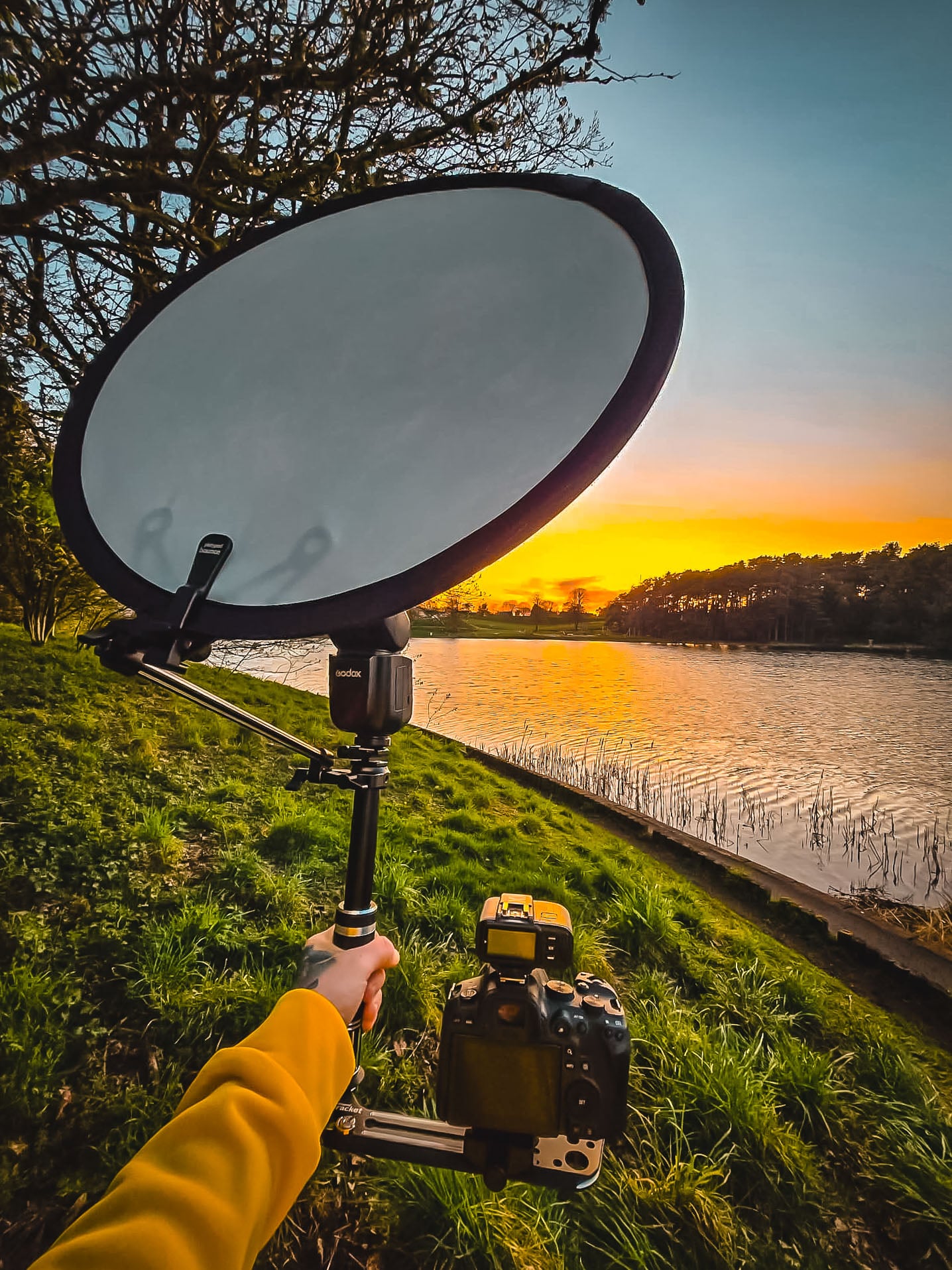
I managed to get my hands on a prototype of the Platypod Bracket and Bounce system to try out (so there may be some small differences in the final version, which I’ll note later on). But even from the first use, it’s pretty easy to set up, and it’s very sturdy.
What I first noticed was just how modular the kit actually was. It’s not just a bounce bracket. It’s a system that can be adapted into multiple setups, whether that’s for photography or even video. The fact that everything uses standard 1/4″-20 and 3/8″-16 mounts and works with existing gear makes it even more useful than just as a light bracket.
So what is it?
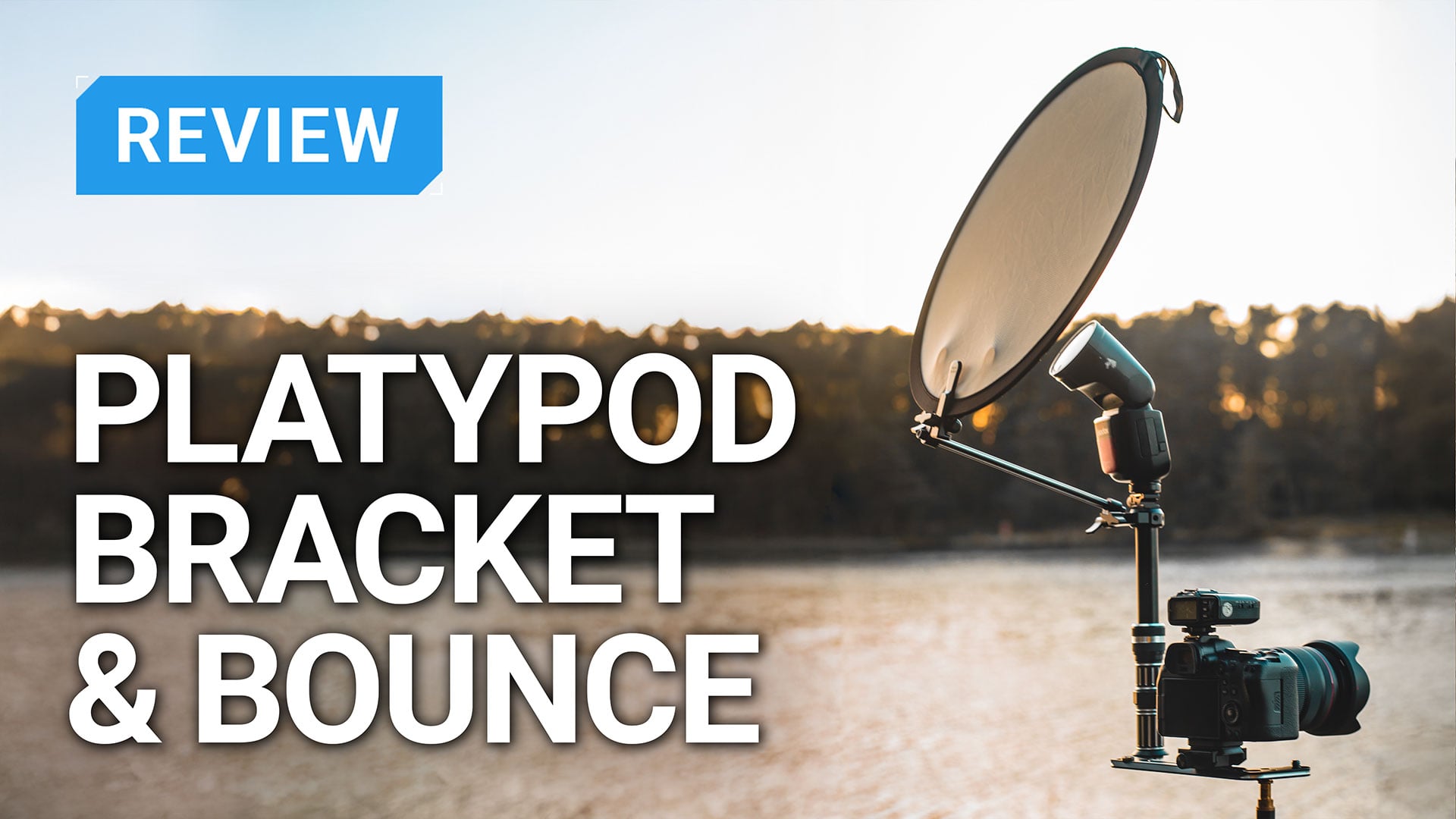
If I had to explain it simply, it’s kinda like a mini handheld studio setup that can easily fit in your bag. Think of the old press photographer flash brackets, but modernised, more thought-through, and much more versatile.
At its core, it’s a lighting system that lets you create consistent, directional light wherever you are, without relying on walls or ceilings. You’ve got the bracket, the handle, the bounce arm, and the reflector all working together to give you control over your light in a way that traditional flash setups can’t.
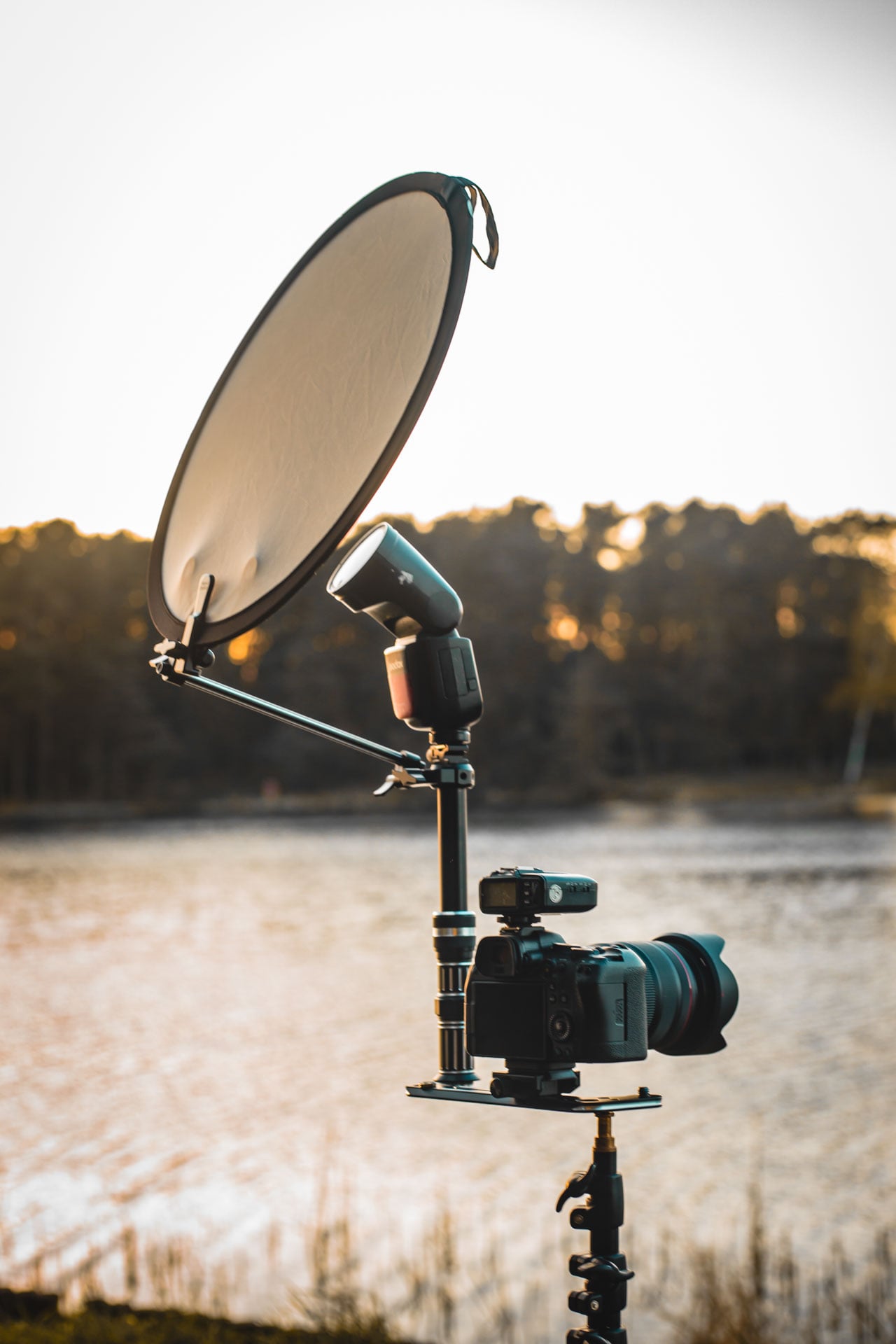
Compared to a normal flash bracket, it’s on a completely different level. Most brackets are just a bar to reposition your flash off to the side. This goes further by giving you a dedicated bounce system that works independently of your environment. Whilst having a cage-like mounting system to add any other accessories you want. It can even be mounted on a light stand if you want an easy off-camera flash setup or even have an assistant holding the extendable handle.
That’s the key difference. Whether you’re indoors, outdoors, dealing with high ceilings, or awkward lighting conditions, you can still get consistent results. You’re no longer dependent on finding the right surface to bounce off.
Setting up and first impressions
The setup is pretty straightforward. There’s nothing complicated about putting it together, and it doesn’t take long to get everything ready. Within a few minutes, you can go from packed away to fully set up and ready to shoot.
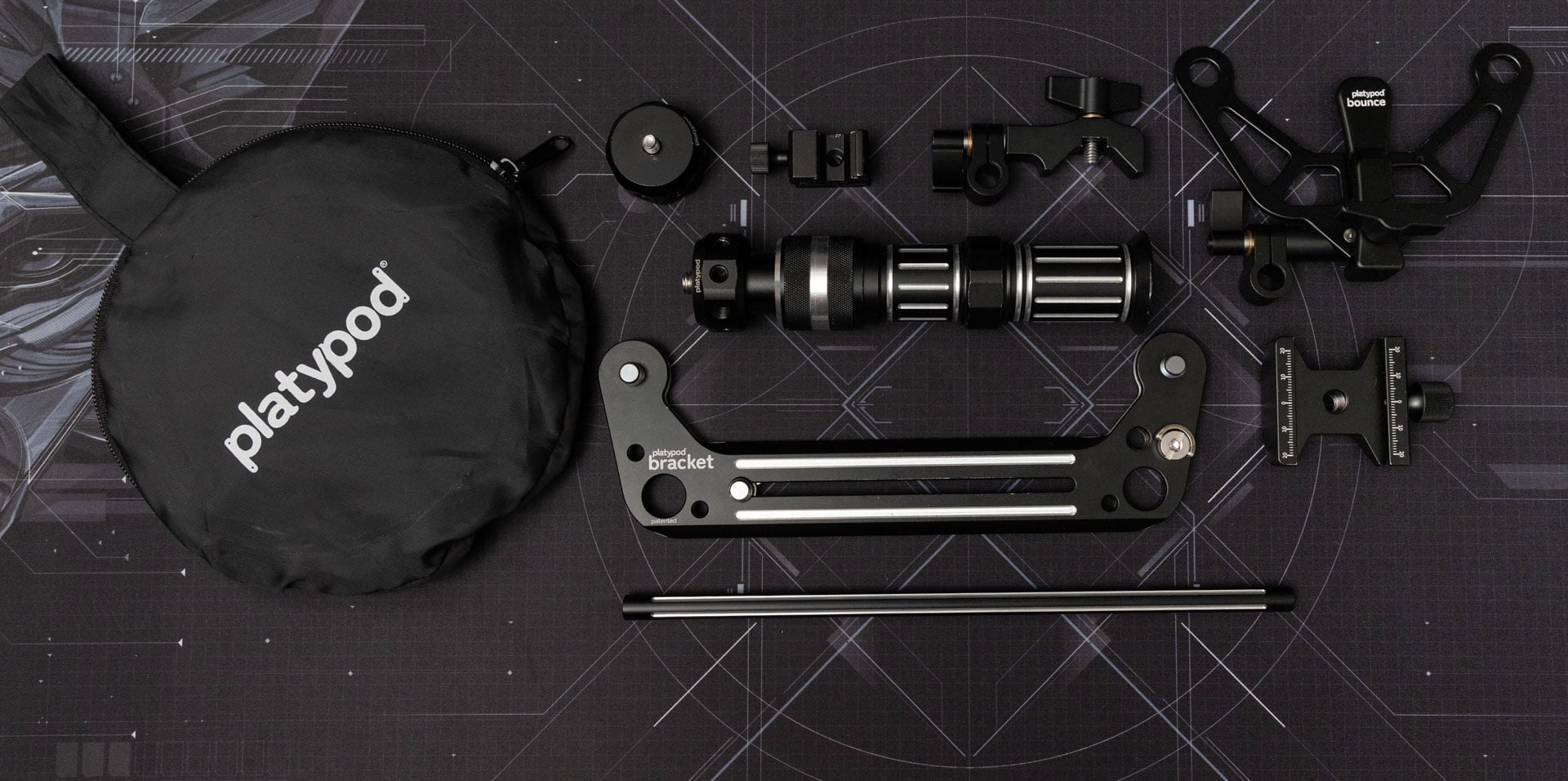
Out of the bag, you’re immediately struck by how compact it is. Everything fits together neatly, and it doesn’t feel like you’re carrying around a bulky piece of gear. The kit includes:
- The Bag (I don’t have an image to share of that)
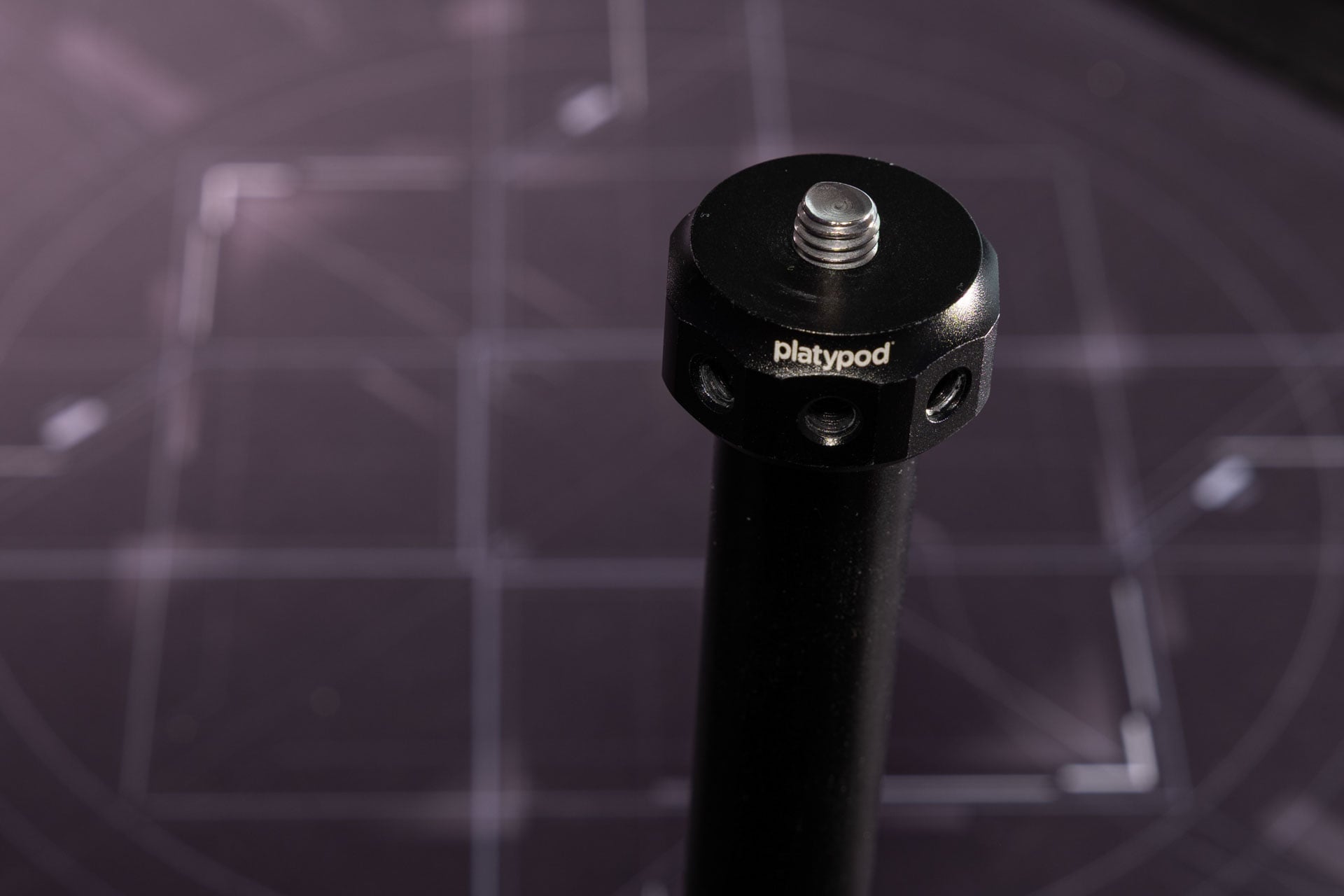
- The Platypod extendable Handle (can be extended from 6 to 10.5 inches)
- An extra handle cap (with a ¼ inch cap to accompany the handles ⅜ cap, each with 8 ¼ inch mounting points)
- A metal cold shoe adapterbi
- Arca-Swiss quick-release clamp.
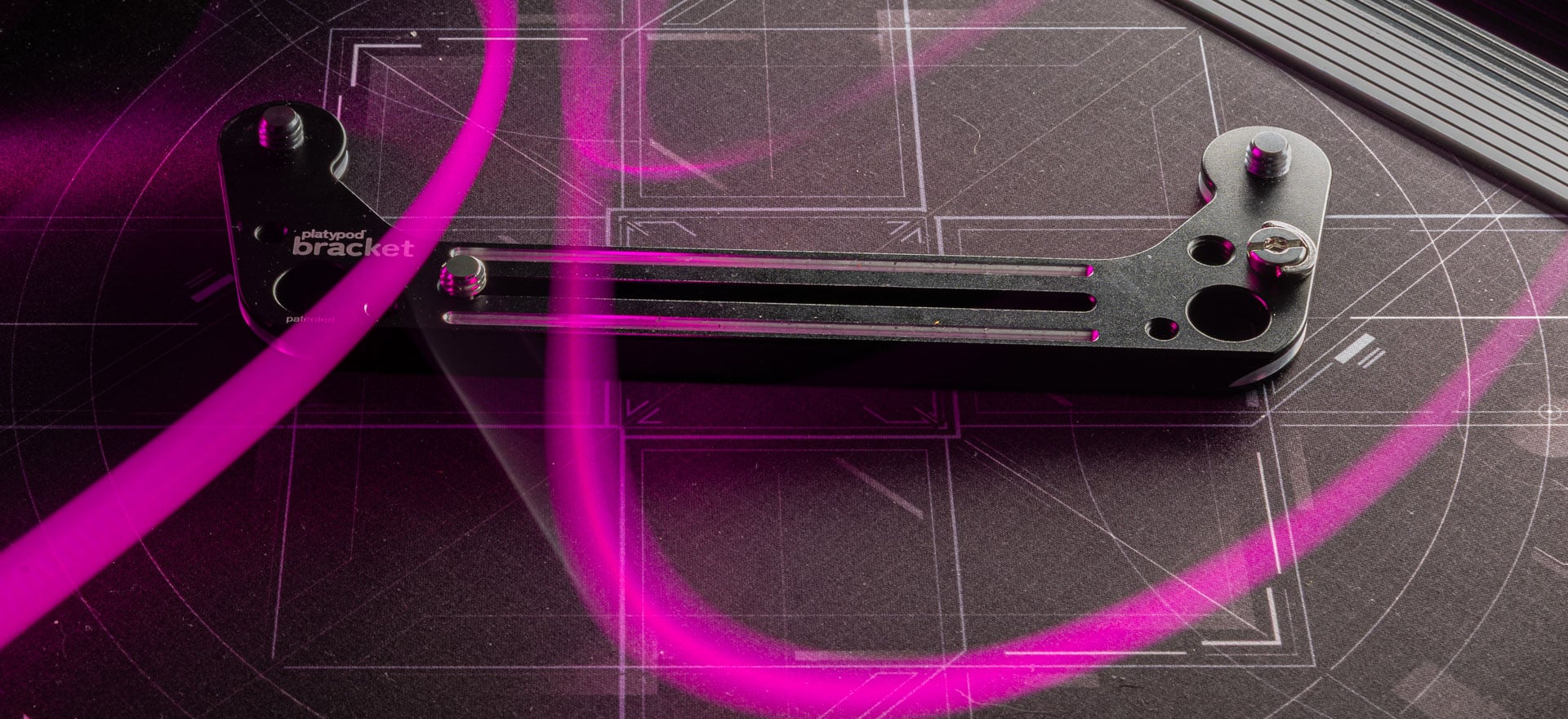
- Main bracket (9.5 inches long and has 7 mounting points, plus a 5-inch slot for mounting even more)
- Bounce Assembly (upper and lower sections, with the upper able to hold up to a 17-inch reflector)
- Threaded rod (rod is 44 long and is solid with 2 ¼ inch thread at either side)
- 17-inch Reflector (white and silver, spring-loaded, superb bounce results)
- Handy Allan key (tucks into the bracket for safekeeping)
Even with multiple components, the kit never feels overwhelming. The way everything connects is intuitive, and once you’ve set it up once, it becomes second nature.
It’s one of those systems where the initial setup is quick, and the payoff once it’s ready is immediately noticeable.
Build quality and design
Everything feels very solid. The materials are strong, durable, and clearly built to last. At the same time, it’s surprisingly lightweight for what it is. You’re not dealing with something that feels fragile or cheap, and it’s still lightweight.
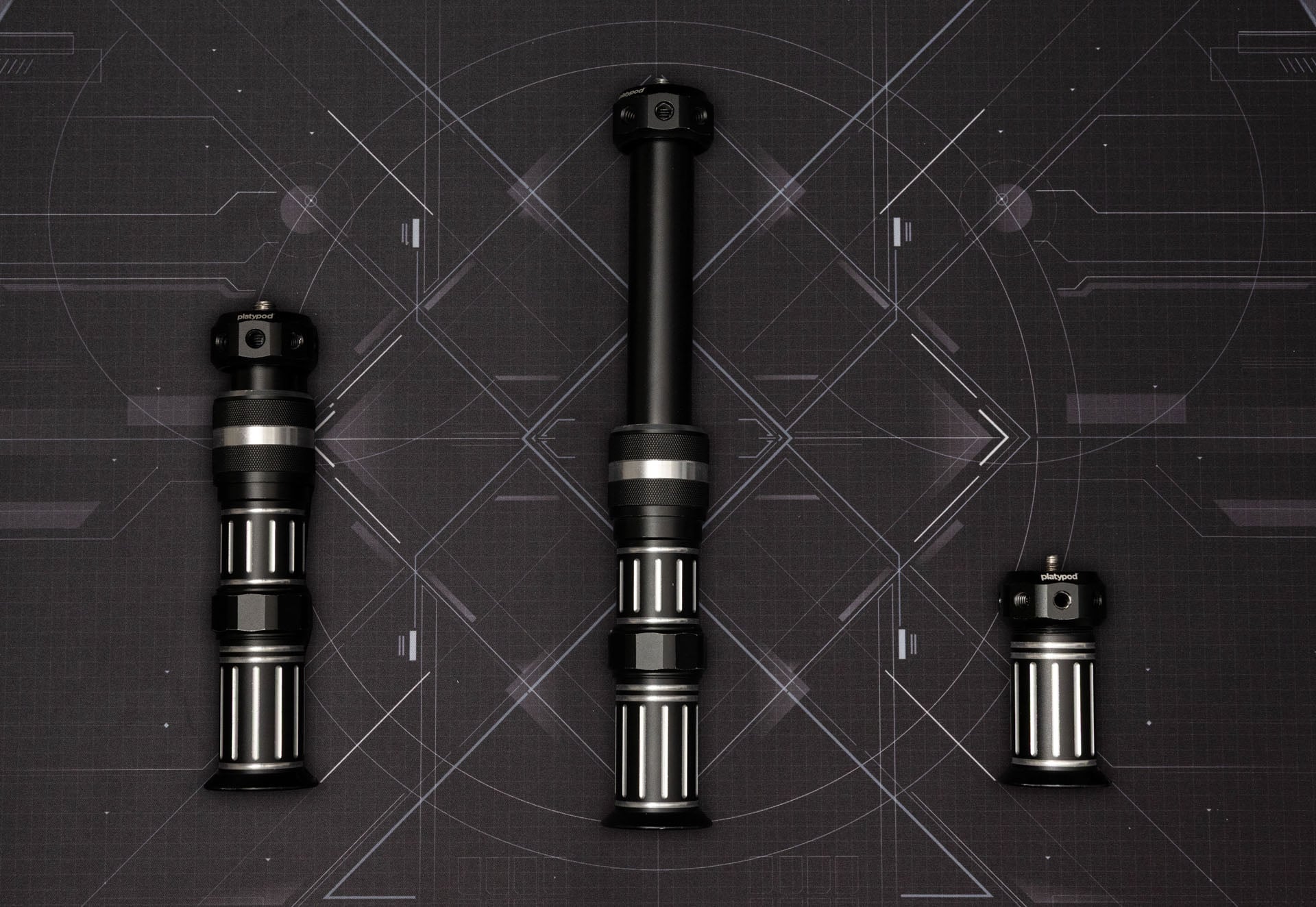
The lightsaber-style handle in particular stands out. It’s comfortable to hold and gives you a really solid grip when shooting (even with sweaty hands). It’s also modular itself with it extending and being able to convert into a 3” riser. Easily detach the handle with the light and bounce, and an assistant can hold it anywhere for you. This can already be purchased as a standalone item, but it’s great to see they have added it to this kit!
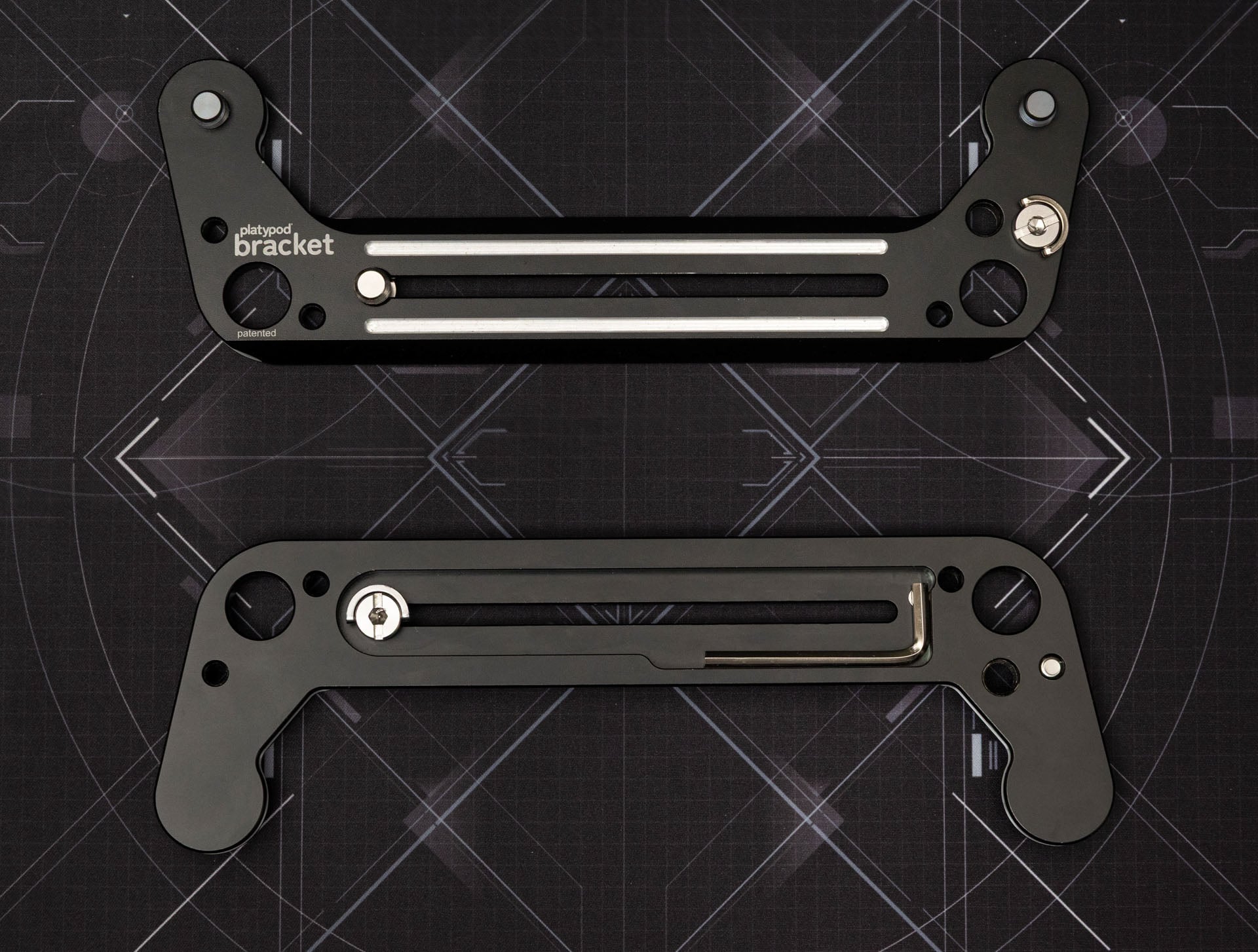
Even the small details haven’t gone amiss. The bracket, for example, has been made so it can be placed on an Arca-style mount. Also, the Allan key, which helps with most of the components, fits neatly underneath. It’s held in place with a few magnets (note that this prototype has 2 magnets; the final release will have 3 to keep it extra secure) and has a small notch to push it out easily.
The rest of the components feel just as well-made. Nothing feels like it’s going to bend or fail under pressure. It’s the kind of gear you can throw into your bag without worrying about it getting damaged.
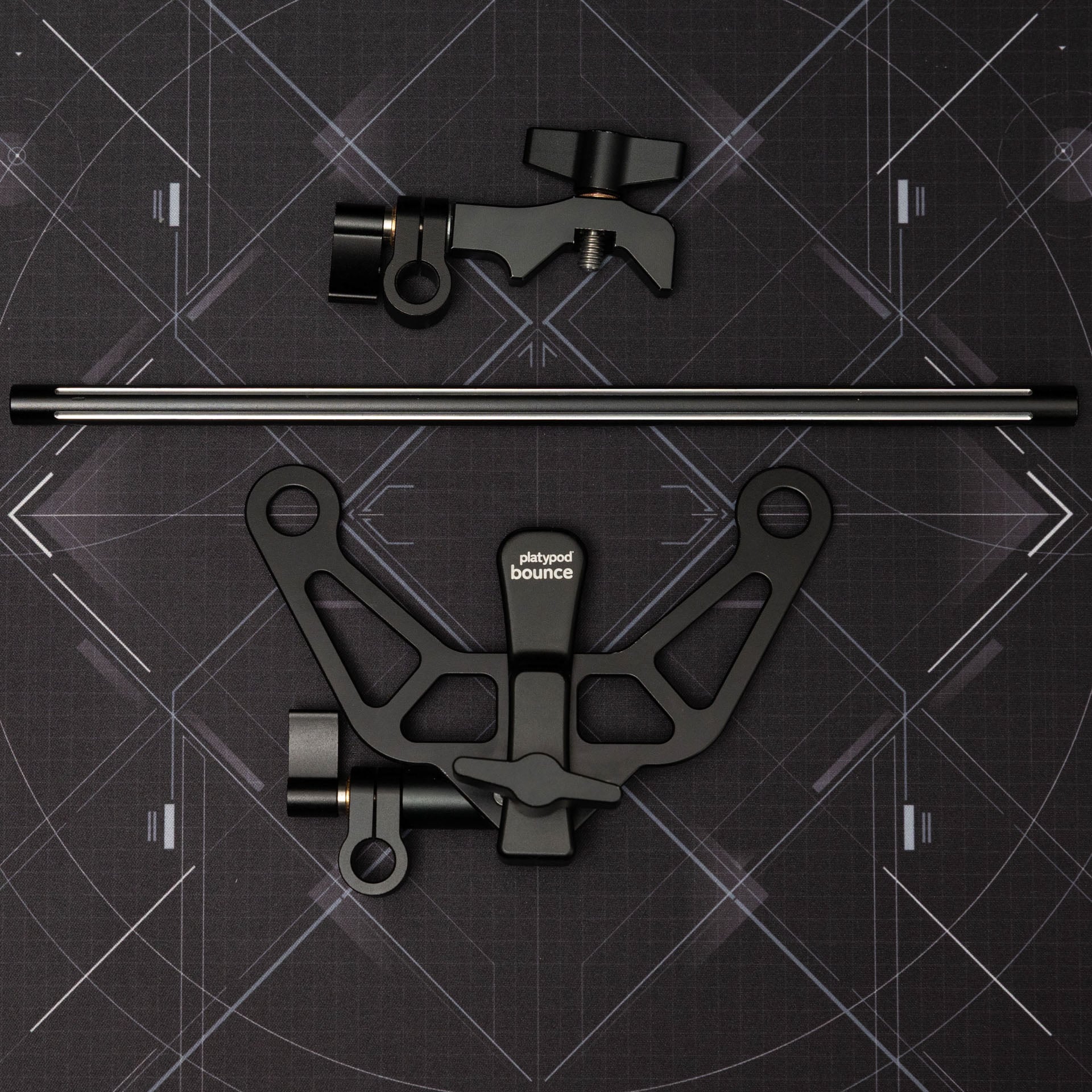
Design-wise, it’s been very well thought out. Every part serves a purpose, and nothing feels unnecessary. The fact that everything uses standard mounting threads means it integrates easily with other gear you already have.
Visually, it could look a bit unusual, especially with a larger reflector attached. It’s not exactly the most discreet if you want to be a fly on the wall. But if your priority is getting consistent, high-quality light, that quickly becomes less of a concern.
Handling and performance on camera
Once mounted on the camera, it feels surprisingly balanced. You’ve got the handle and flash on one side and your camera on the other, which creates a stable setup. It doesn’t feel awkward or difficult to manage, even when shooting for longer periods.
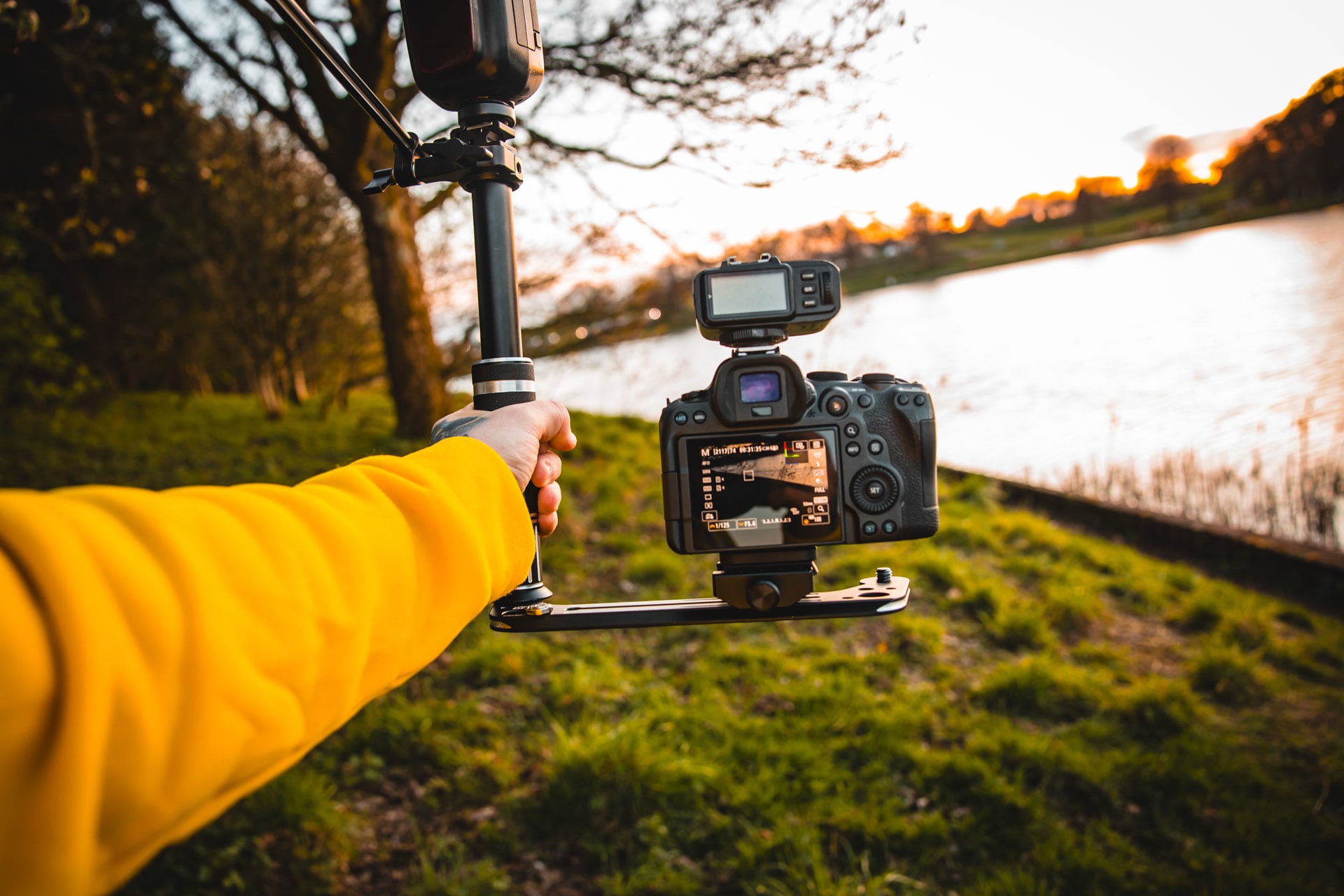
In terms of comfort, it holds up well. It’s not something that becomes tiring quickly, and the handle makes a big difference in how it feels to use.
One of the biggest advantages is how it improves your workflow.
Instead of constantly looking around for somewhere to bounce your light, you can focus entirely on your subject. That alone makes a noticeable difference when you’re working in fast-paced environments. You can get more shots and actually focus on guiding your subjects rather than guiding the light.
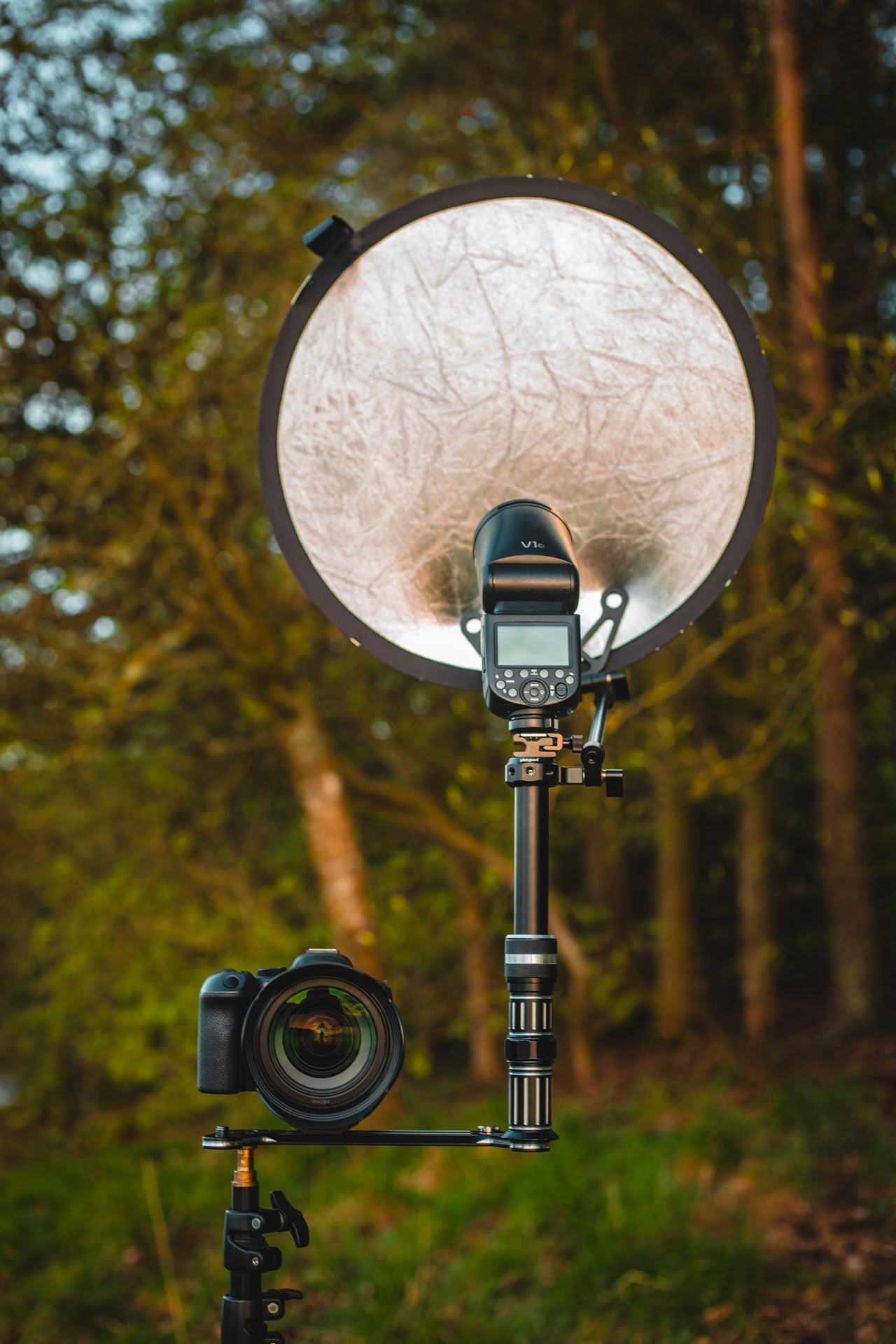
The only thing you do need to be aware of is your surroundings. With a larger bounce card, you need to be a bit more conscious of space if your on say a dancefloor for example. That said, you can always adjust the reflector size depending on the situation, or even place a piece of white card as a reflector to get similar results.
Overall, it feels like a system that’s designed to work with you rather than something you have to constantly adjust. But it has that adjustability if you need it.
Light Quality
This is where the system really proves its value. The first thing you notice is how much softer the light is compared to direct flash. It’s more natural, more flattering, and gives your images a much more professional look.
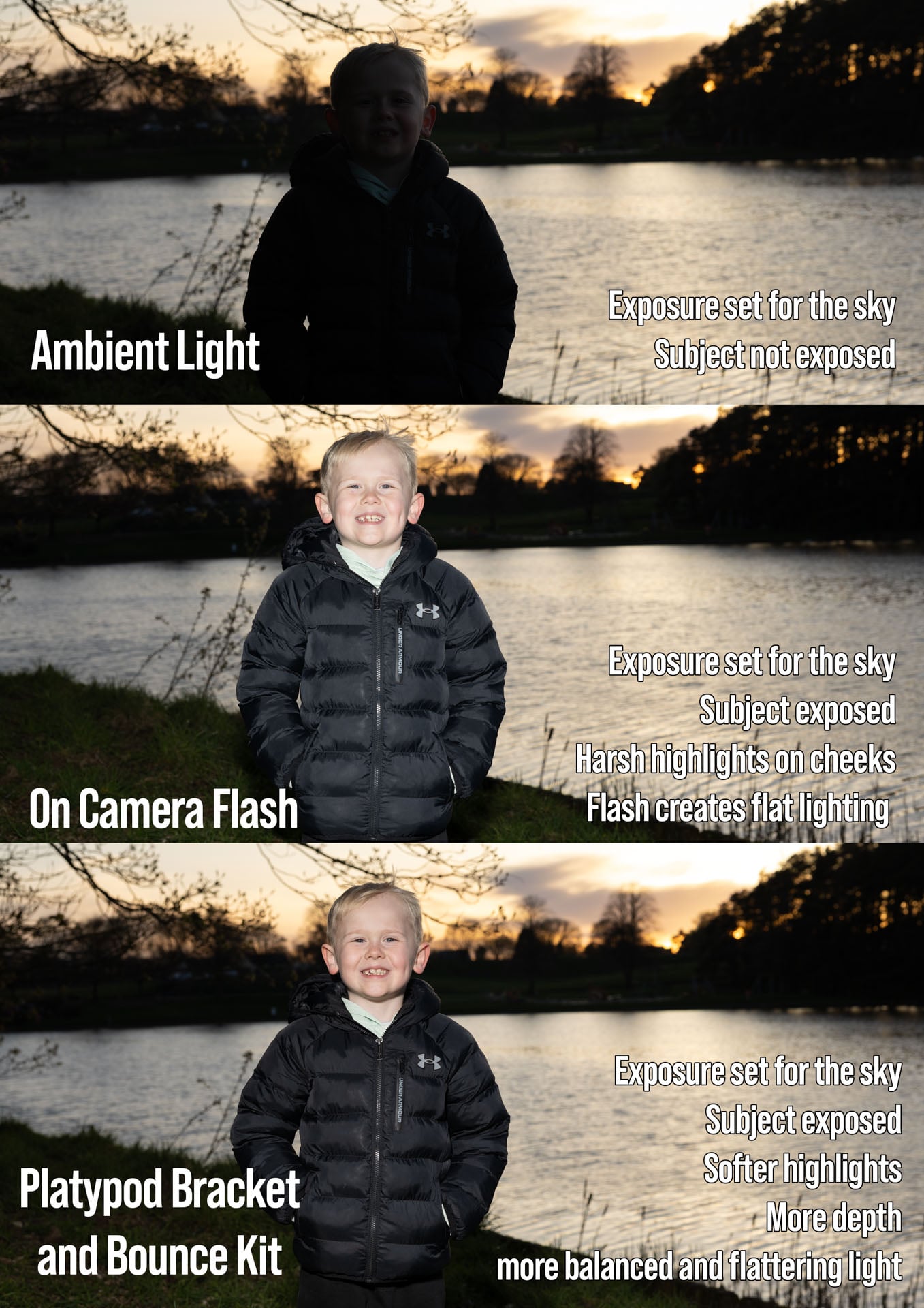
Instead of harsh shadows and flat lighting, you get more depth and dimension. Faces look better, highlights are controlled, and the overall image just feels more polished.
It’s obviously not going to replace a full studio setup, but that’s not what it’s trying to do. What it does offer is a consistent, reliable way to improve your lighting in situations where you wouldn’t normally have that level of control. No matter where you are, you can achieve a similar look across your shots. That’s something that’s very difficult to do with traditional bounce techniques alone.
Who’s it for?
I think this is aimed more at photographers who regularly shoot in unpredictable environments. Event and wedding photographers are the obvious fit. If you’re constantly moving around while shooting or regularly deal with random, unknown venues and need reliable results, this makes a lot of sense.
It’s also useful for hybrid shooters who want a flexible system that can be adapted for video setups as well. Having something like the DJI Osmo Pocket mounted alongside your camera, as well as a continuous light, is also possible. Again, your imagination is your limitation.
For beginners, it might be a bit much. Not because it’s difficult to use, but because it’s designed to solve problems that you really start to notice once you’ve been shooting for a while.
For casual users, it’s probably more of a nice-to-have than a necessity. But for professionals, it can easily become a regular part of your kit.
Pros and cons
Pros
- Excellent build quality
- Compact and easy to transport
- Highly modular and adaptable
- Works with standard mounts and existing gear
- Produces noticeably softer, more consistent light
Cons
- Slightly niche, depending on how often you use flash
- Tightening knobs can feel stiff at times (I believe this is fixed in the consumer version)
- Price (although understandable given the quality of material, patented and being a Kickstarter project), it can be pretty steep for the amateur/hobbyist demographic market.
Final verdict
After using the Platypod Bracket &Bounce for the last few weeks, this feels like a tool that solves a very specific problem, very, very well. But also doubles up as a “Swiss Army Photographer Knife”, to help you get that bit of a more perfected look anywhere without multiple bags.
For event and wedding photographers, it has the potential to become a regular part of your workflow. The ability to get consistent, flattering light without relying on your environment is a big advantage.
For others, it’s more situational. It’s not something you’ll need all the time, but when you do need it, it makes a noticeable difference. It’s not essential for everyone, but it’s definitely useful.
Considering how compact it is for what it offers, it’s one of those pieces of gear that’s easy to justify having in your bag, just in case you need it. I will most definitely continue to use it in the future.
What are your thoughts, would you like to see one of these in your bag?
Price and Availability
The Platypod Bracket and Bounce kit is currently running on Kickstarter where you can back your own kit, starting at $179. The first early bird backers will begin to ship in May with the later shipments going out in July. Once it hits the shelves, it will retail for $249.
See more from DIYPhotography.net on Google
Add DIYPhotography.net as a trusted source. This makes
our stories more likely to appear in your Google Search results.
 Add as a preferred source on Google
DeeJay Neilson
DeeJay Neilson is a Glasgow-based photographer with nearly a decade of professional experience shooting portrait, event and commercial photography and video. When not photographing people or helping to build a brand, you’ll usually find him wandering the wilderness, doing some lightpainting.

Join the Discussion
DIYP Comment Policy
Be nice, be on-topic, no personal information or flames.
2 responses to “Platypod Bracket & Bounce is the Most Versatile Flash Bracket I’ve Ever Used”
Hi DJ. Thank you so much for this thorough review of our product. One minor correction. The retail price with availability in July 2026 will be US$249.
Larry Tiefenbrunn
CEO, Platypod Pro LLC
Hey Larry, thanks for that. The article has been updated.:)