




















These Drone Images Capture World’s Largest Optical Telescope
Apr 23, 2026
Soumyadeep Mukherjee
Soumyadeep Mukherjee is an award-winning astrophotographer from India. He has a doctorate degree in Linguistics. His work extends to the sub-genres of nightscape, deep sky, solar, lunar and optical phenomenon photography. He is also a photography educator and has conducted numerous workshops. His works have appeared in over 40 books & magazines including Astronomy, BBC Sky at Night, Sky & Telescope among others, and in various websites including National Geographic, NASA, Forbes. He was the first Indian to win “Astronomy Photographer of the Year” award in a major category.
Share:
Observational astronomy is entering a phase where progress depends on collecting area and angular resolution. Many of the key problems today, detecting Earth-like exoplanets, measuring stellar motions near supermassive black holes, and resolving structure in the earliest galaxies, require instruments far more powerful than current facilities.
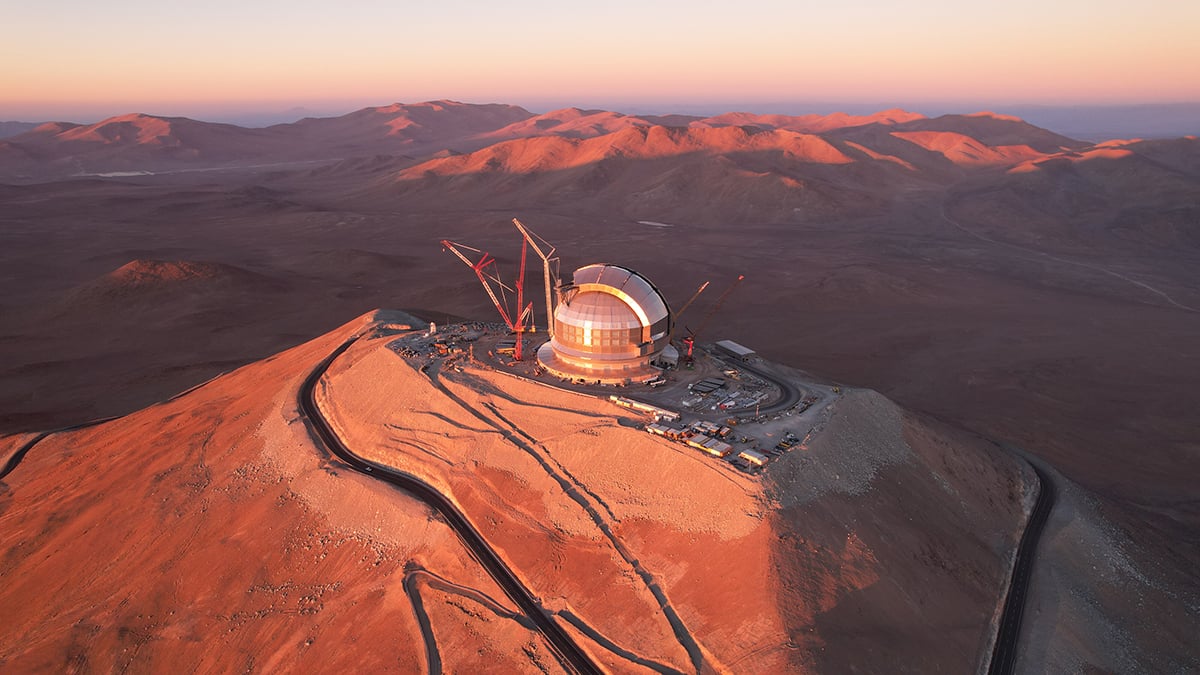
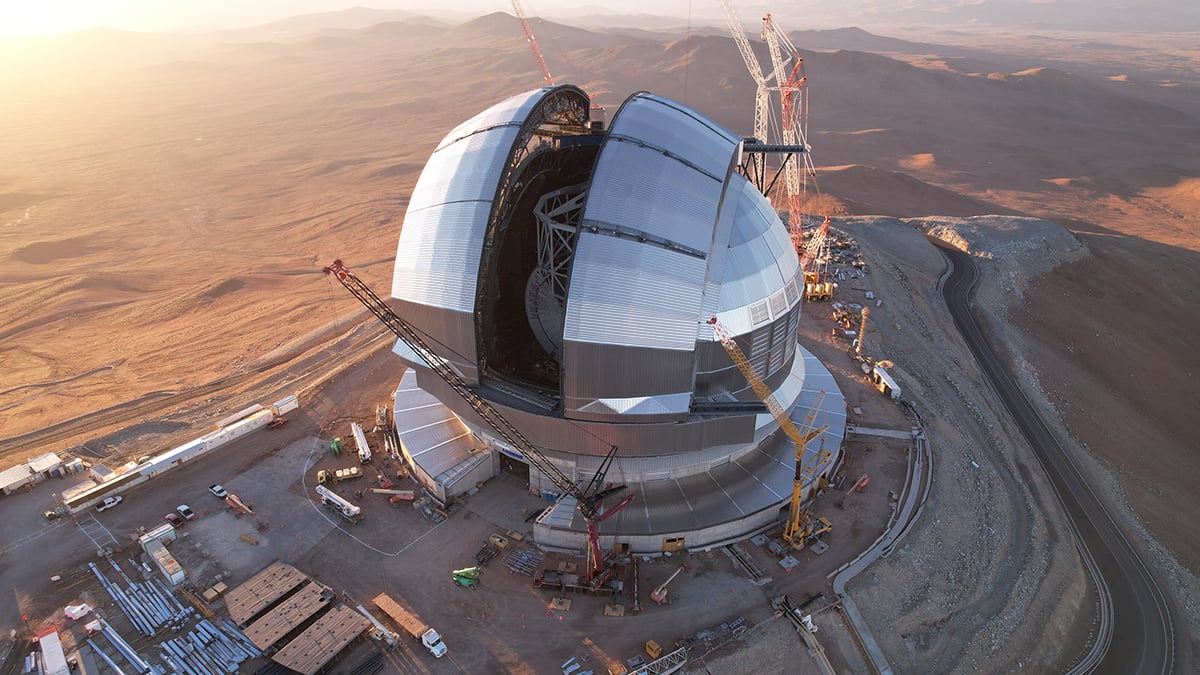
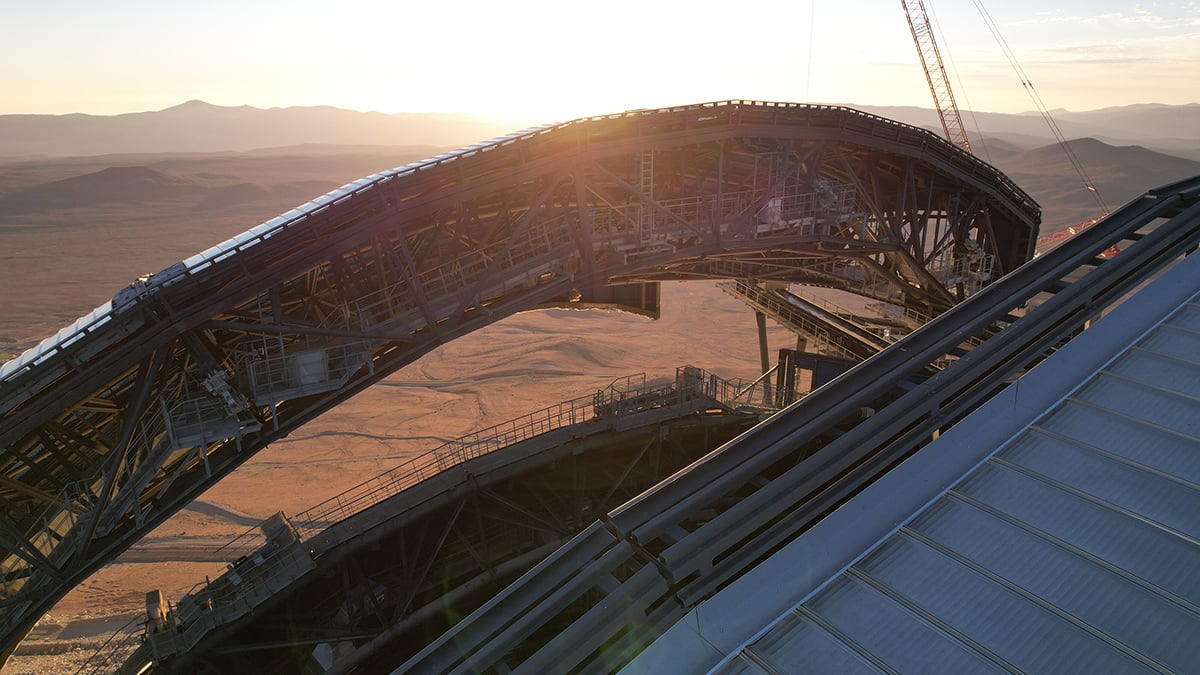
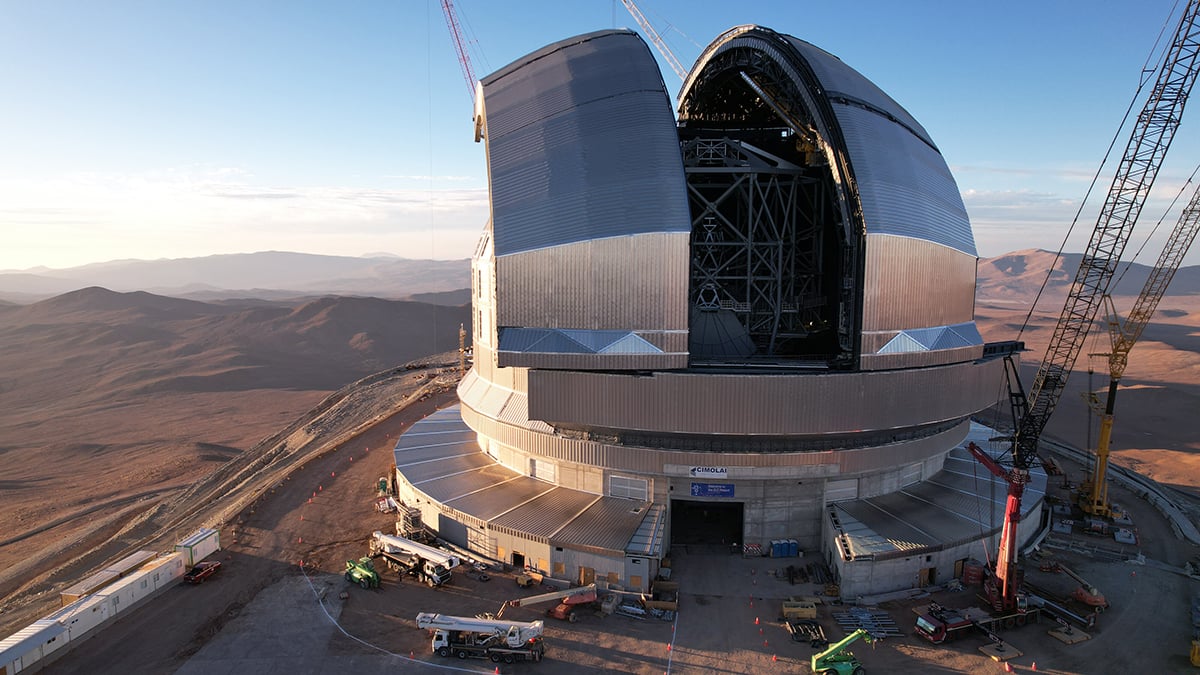
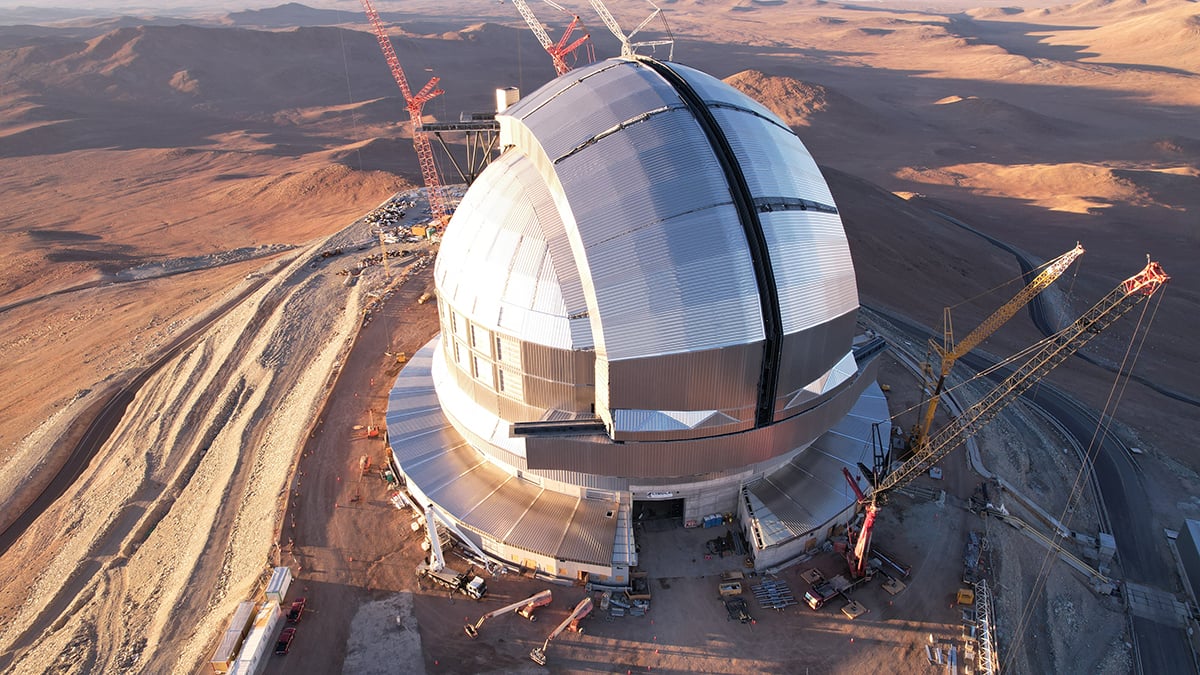
The Extremely Large Telescope, now under construction by the European Southern Observatory on Cerro Armazones in northern Chile, was designed to address exactly these challenges. With a segmented primary mirror 39 metres across and a fully integrated adaptive optics architecture, the telescope will extend the reach of ground-based optical and infrared astronomy well beyond what is possible today. When operations begin later in this decade, the ELT will become the largest optical telescope ever built.
The gigantic mirror of ELT
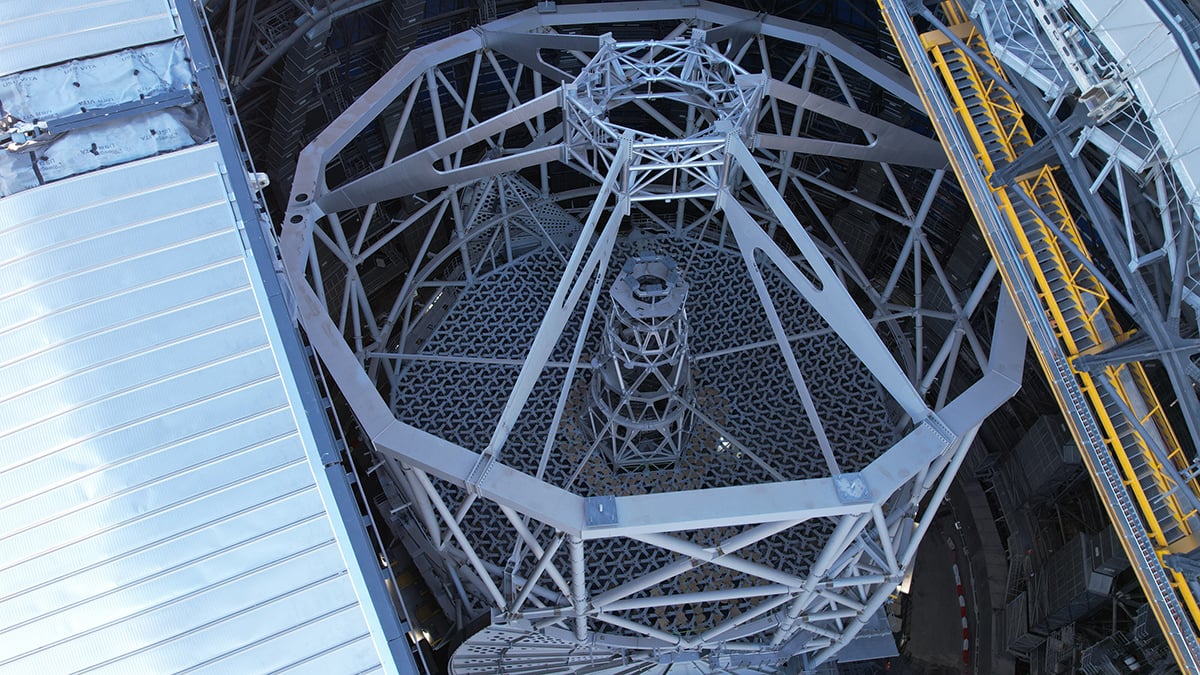
The defining feature of the ELT is its primary mirror. At 39 metres in diameter, it represents a step beyond the 8-metre class telescopes that dominate present-day optical astronomy. That increase in aperture brings a dramatic improvement in sensitivity. Astronomers will be able to detect fainter sources and obtain spectra from objects that currently remain beyond reach.
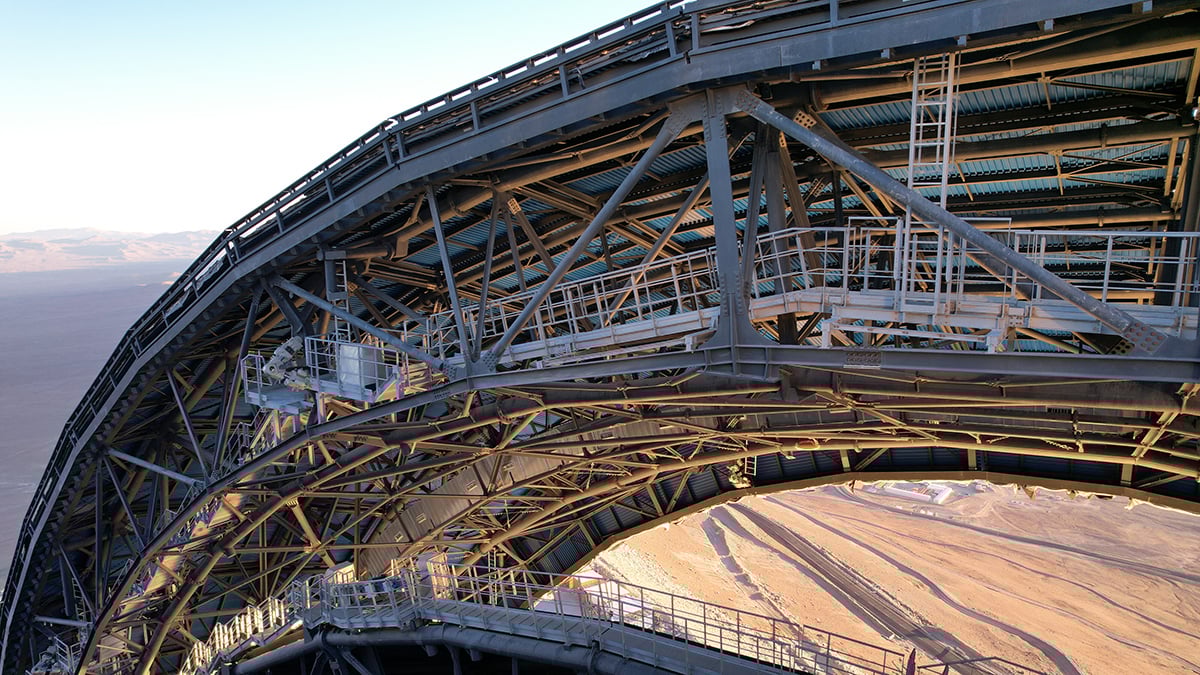
Such a mirror is difficult to exist as a single piece. Engineers designed a segmented surface made from 798 hexagonal elements. Each segment must remain aligned with extreme accuracy during observations. Even small deviations would affect image quality. For that reason, the telescope includes an active control system that constantly measures segment positions and corrects them in real time.
The optical layout also differs from earlier large telescopes. The ELT uses five mirrors rather than the more common two-mirror arrangement. This configuration supports high-precision adaptive optics correction while maintaining image stability across a wide field of view. One of these mirrors adjusts its shape rapidly to compensate for atmospheric turbulence. As a result, the telescope will approach its theoretical resolution limit during many observations.
Location of Extremely Large Telescope
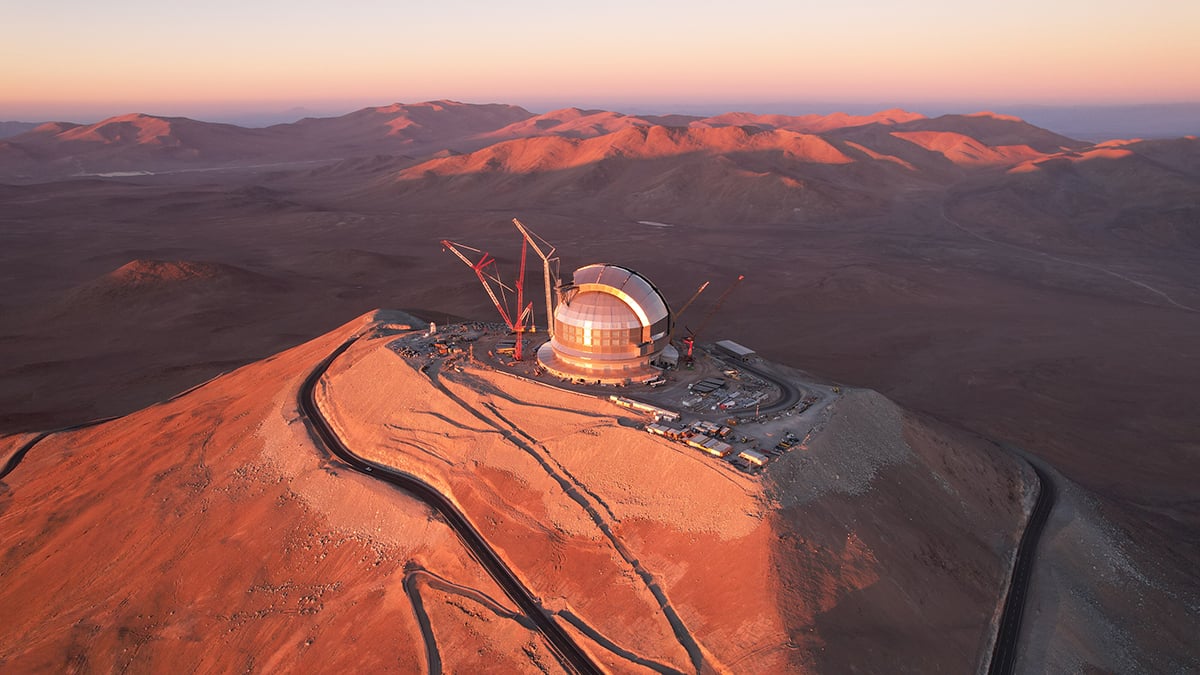
Large telescopes require stable atmospheric conditions. ESO selected Cerro Armazones after many years of site testing across northern Chile. The mountain stands in the Atacama Desert, one of the driest regions on Earth. Low humidity improves transparency at infrared wavelengths. Cloud cover remains limited through most of the year. Observers expect more than 300 useful nights annually. That level of sky access supports long observing campaigns and repeated measurements of faint targets.
Altitude also improves image quality. At more than 3000 metres above sea level, the atmosphere above the telescope is thinner and more stable than at lower elevations. Turbulence decreases, and stellar images become sharper. The site also benefits from low light pollution. Major population centres lie far away. Artificial sky brightness remains minimal even near the horizon.
ESO already operates the nearby Very Large Telescope on Cerro Paranal. Decades of successful observations have confirmed the region’s strength as an observing site. Cerro Armazones offers similar advantages at a slightly higher elevation, further enhancing performance.
The instruments that will define ELT Science
The telescope itself forms only one part of the observatory. Its scientific value depends strongly on the instruments mounted behind the mirrors. ESO selected several first-generation instruments to support a broad research programme from the beginning of operations.
HARMONI will serve as one of the main early spectroscopic tools. It combines imaging with spatially resolved spectroscopy. Astronomers will use it to measure the structure and motion of distant galaxies as well as stellar populations in nearby systems. These measurements will help reconstruct how galaxies formed and evolved across cosmic time.
MICADO will provide very high angular resolution imaging in the near-infrared. This capability allows astronomers to resolve individual stars in nearby galaxies and measure their proper motions. Such observations will improve our understanding of stellar populations and galactic structure, especially in dense environments.
METIS will extend observations into the mid-infrared region. Many important physical processes appear strongly at these wavelengths. Warm dust clouds, forming planetary systems, and embedded star-forming regions all become easier to study in the mid-infrared. METIS will play an important role in both stellar and planetary research.
Study of exoplanets and early galaxies
One of the strongest motivations behind the ELT is the study of planets orbiting nearby stars. Over the past few decades, astronomers have identified thousands of exoplanets using indirect detection techniques. However, detailed measurements of planetary atmospheres remain difficult.
Astronomers expect to examine the atmospheres of nearby rocky planets using high-resolution spectroscopy. These observations may reveal molecules such as water vapour, methane, and oxygen. Detecting such gases provides important clues about planetary environments.
Another major objective of the ELT involves the study of the earliest galaxies. These systems formed when the Universe was still young. Their light travelled for billions of years before reaching Earth.
Because they are both distant and faint, such galaxies remain difficult to study with current telescopes. The ELT’s large collecting area will allow astronomers to obtain detailed spectra from many of these objects for the first time.
Clear skies!
See more from DIYPhotography.net on Google
Add DIYPhotography.net as a trusted source. This makes
our stories more likely to appear in your Google Search results.
 Add as a preferred source on Google

Soumyadeep Mukherjee
Soumyadeep Mukherjee is an award-winning astrophotographer from India. He has a doctorate degree in Linguistics. His work extends to the sub-genres of nightscape, deep sky, solar, lunar and optical phenomenon photography. He is also a photography educator and has conducted numerous workshops. His works have appeared in over 40 books & magazines including Astronomy, BBC Sky at Night, Sky & Telescope among others, and in various websites including National Geographic, NASA, Forbes. He was the first Indian to win “Astronomy Photographer of the Year” award in a major category.
Related Posts
 Huawei P30 Pro boasts four cameras, 5x optical zoom and optical image stabilization
 World’s Largest Camera Finally Set to Capture 3200-Megapixel Universe Photos
 Huawei P40 series announced: Leica cameras, 10x optical zoom and the largest sensor to date
 First set of Images from the World’s Largest Digital Camera are here
Join the Discussion
DIYP Comment Policy
Be nice, be on-topic, no personal information or flames.