

























ESO’s Very Large Telescope photographs a planet being born
Jun 12, 2025
Soumyadeep Mukherjee
Soumyadeep Mukherjee is an award-winning astrophotographer from India. He has a doctorate degree in Linguistics. His work extends to the sub-genres of nightscape, deep sky, solar, lunar and optical phenomenon photography. He is also a photography educator and has conducted numerous workshops. His works have appeared in over 40 books & magazines including Astronomy, BBC Sky at Night, Sky & Telescope among others, and in various websites including National Geographic, NASA, Forbes. He was the first Indian to win “Astronomy Photographer of the Year” award in a major category.
Share:

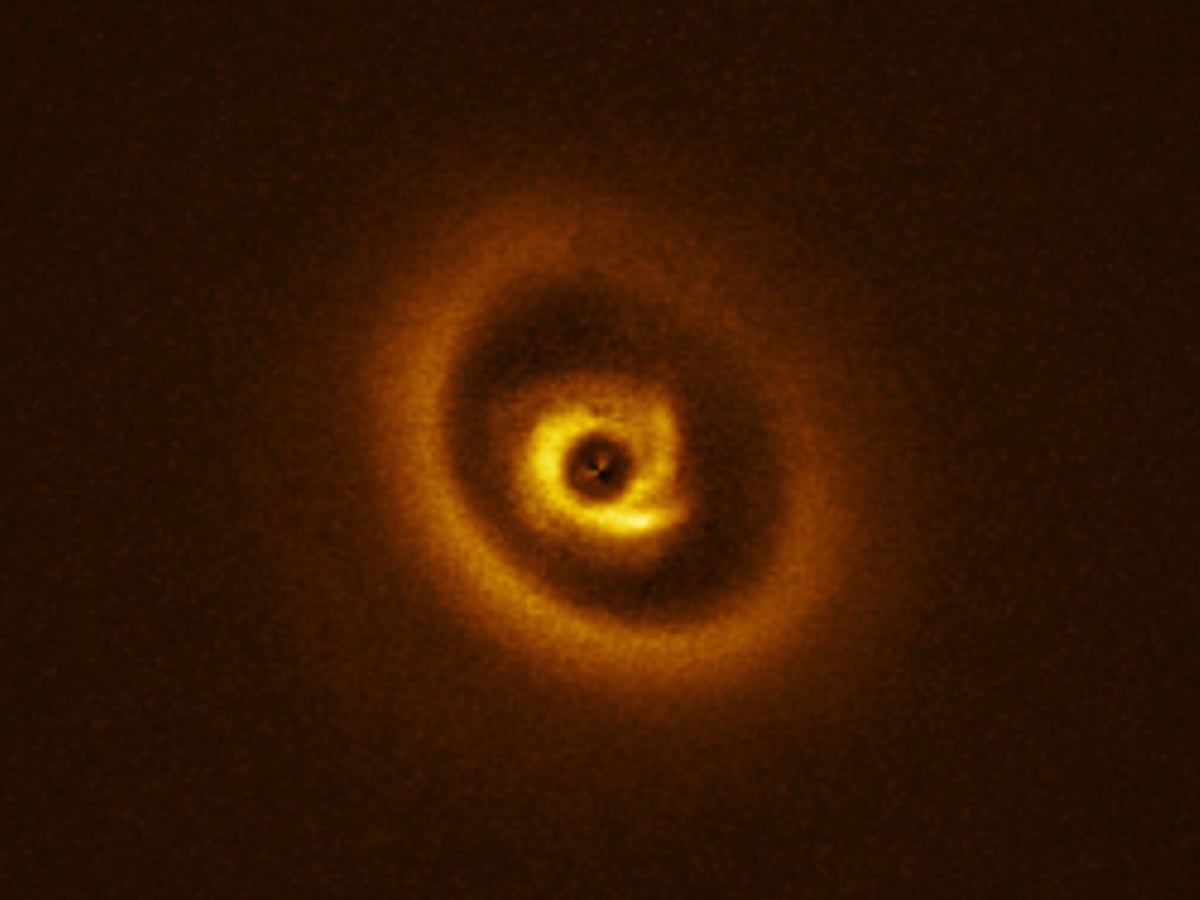
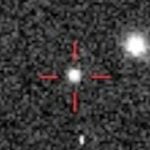
A young star is making cosmic headlines. Astronomers have captured an image of a planet being born. The star, named RIK 113, sits in the Scorpius constellation, about 431 light-years away from Earth. Using the Very Large Telescope (VLT) in Chile, researchers saw dramatic rings and gaps in the star’s surrounding dust disk. These are signs of a planet forming. It’s one of the clearest views of planetary birth ever taken.
The star: RIK 113
RIK 113 is a young, low-mass star. It is also called 2MASS J16120668–3010270. It belongs to a group of stars known as the Upper Scorpius Association. This region is full of young stars. Many are still surrounded by gas and dust. RIK 113 is only about 5 to 10 million years old. That’s very young by cosmic standards. At this early stage, stars often host protoplanetary disks. These disks are made of gas and dust left over from the star’s formation. They are the birthplace of planets.
The instruments: VLT and ALMA
To see the disk, astronomers used the SPHERE instrument on the European Southern Observatory’s (ESO) Very Large Telescope. SPHERE stands for Spectro-Polarimetric High-contrast Exoplanet REsearch. It helps block out the star’s light and brings faint structures into view.
Before SPHERE, astronomers had already studied RIK 113 with ALMA. ALMA is the Atacama Large Millimeter/submillimeter Array, a network of 66 radio dishes in Chile. It sees cold dust and gas in space. ALMA had revealed large-scale rings and gaps in the RIK 113 disk. That hinted at planet formation. However, the SPHERE images provided a close-up view, revealing fine details never seen before.

The image: A cosmic masterpiece
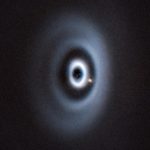
The VLT image is stunning. It shows a wide, dusty disk with several bright rings and dark gaps. These are telltale signs of a forming planet. In the inner region, astronomers saw spiral arms. These spiral arms twist around the star like a galactic pinwheel. Spiral arms in such disks are rare and significant. They often appear when a massive planet orbits inside the disk. The planet’s gravity pulls on the dust and creates these patterns.
The discovery: A planet in progress
The presence of spirals, gaps, and rings tells a clear story. A new planet is being born. Or possibly more than one. The likely location of the Earth is about 50 astronomical units (AU) from the star. That’s roughly 1.5 times the distance between the Sun and Neptune. The forming planet is likely a gas giant, several times the mass of Jupiter. It orbits within the spiral region and is shaping the disk as it moves through it. This is exactly what planet-formation models predict.
Scientific significance
This discovery is more than just a pretty picture. It is a major breakthrough in the study of planetary birth. For decades, astronomers have created computer models of how planets form. These models predict rings, gaps, and spirals. But now, scientists can see those structures directly. The image of RIK 113 matches the theory almost perfectly. This helps confirm that giant planets do form by core accretion in dusty disks. It also shows how early in a star’s life this can happen.

The image of RIK 113 is more than a scientific result. It’s a cosmic portrait of creation. For the first time, astronomers can watch a planet being born around another star. They can see the swirls and spirals of dust. They can track how gravity shapes matter into a world. It’s a reminder of how dynamic our universe is. It also proves that our tools, telescopes like ALMA, VLT, and JWST, are powerful enough to witness planetary genesis. We are no longer just theorizing. We are watching. A planet is being born. And we are here to see it.
Clear skies!
See more from DIYPhotography.net on Google
Add DIYPhotography.net as a trusted source. This makes
our stories more likely to appear in your Google Search results.
 Add as a preferred source on Google

Soumyadeep Mukherjee
Soumyadeep Mukherjee is an award-winning astrophotographer from India. He has a doctorate degree in Linguistics. His work extends to the sub-genres of nightscape, deep sky, solar, lunar and optical phenomenon photography. He is also a photography educator and has conducted numerous workshops. His works have appeared in over 40 books & magazines including Astronomy, BBC Sky at Night, Sky & Telescope among others, and in various websites including National Geographic, NASA, Forbes. He was the first Indian to win “Astronomy Photographer of the Year” award in a major category.


Join the Discussion
DIYP Comment Policy
Be nice, be on-topic, no personal information or flames.