


















The 16–35mm Lens Is Harder Than It Looks. Here’s How to Get It Right
Apr 22, 2026
Alex Baker
Alex Baker is a portrait and lifestyle driven photographer based in Valencia, Spain. She works on a range of projects from commercial to fine art and has had work featured in publications such as The Daily Mail, Conde Nast Traveller and El Mundo, and has exhibited work across Europe
Share:
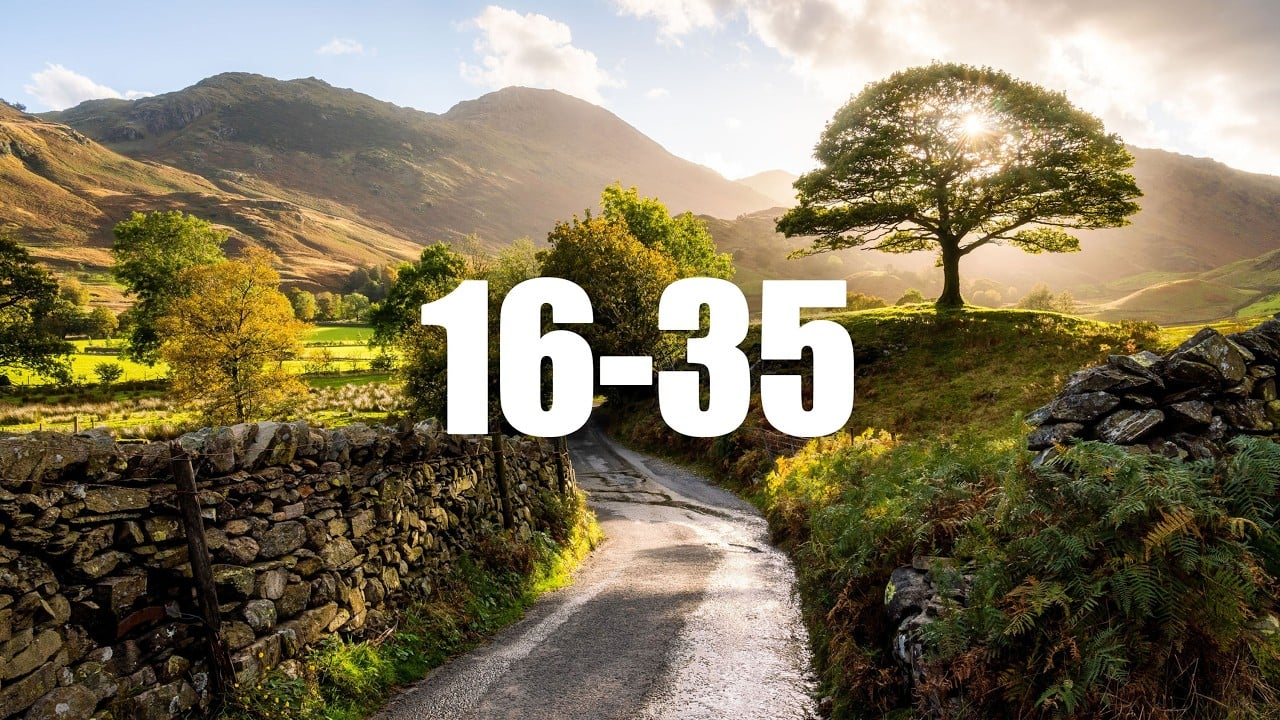
The first time you stick a 16-35mm lens on your camera, you think you’ve finally unlocked the secret to great landscape photos. Unfortunately, it’s common to get home, download the images, and then realise those perfect images aren’t quite as great as you thought they’d be. It turns out that sticking an ultra-wide zoom lens on your camera isn’t in fact the panacea we all thought it would be.
But don’t worry, with a few tweaks to your approach, you can make that lens work for you, rather than against you. Landscape photographer Mads Peter Iversen has honed his wide-angle photography over time and shares his secrets to getting those jaw-dropping shots the first time around. Here’s his advice.
It’s Not About Fitting Everything In
One of the biggest mindset shifts Mads had was realising that wide-angle photography isn’t about capturing more, it’s about emphasising relationships within a scene. At 16mm, the field of view is huge. The camera simply includes more of the visual world around him. But that also means everything shrinks, especially anything not close to the lens. Step back and try to capture an entire landscape, and suddenly nothing stands out.
Mads’ advice is simple: stop stepping back and move closer. He often finds himself crouching low, sometimes just centimetres above the ground, pushing the camera right into the foreground. Rocks, plants, ice, or flowing water become dominant elements, while the background stretches dramatically behind them. That’s where wide-angle lenses come alive.
Foreground Is Everything
If there’s one habit that consistently improves wide-angle shots, it’s prioritising the foreground. Mads treats the foreground as the anchor of the image. Without it, the frame feels empty, but with it, the viewer has an entry point into the scene.
He’ll often get so close that the lens hood is nearly touching the subject. It feels extreme at first, but the results speak for themselves. The foreground grows in importance, the midground shrinks, and the background gains scale and drama.
It also solves the other common issue of having too much “dead” midground. If that empty space in the middle of the frame that doesn’t add anything, then getting closer naturally removes it.
Watch the Edges
Wide-angle lenses see a lot more than you think. Mads says that he learned this the hard way while shooting on black sand beaches in Iceland. He’d carefully compose a shot, only to realise later that one of his tripod legs was creeping into the frame. Sure, it’s easy to remove in post, but that does sort of miss the point (and delight) of getting the shot in camera.
At 16mm, even a slight tilt downward can reveal things right next to the camera. His fix is now second nature, and he always checks the edges and corners before taking the shot. A practical trick he uses is repositioning the tripod so that two legs sit in front of the camera, spread wide to either side. That way, there’s less chance of one sneaking into the frame.
Be Careful With Filters
Filters can be incredibly useful, but wide-angle lenses don’t always play nicely with them. Thick screw-on filters or stacking multiple filters can cause dark corners, known as vignetting. Mads sticks to slim-profile filters to avoid this. He also prefers simpler setups, especially on long hikes where bulky filter systems quickly become a burden.
Polarising filters bring another challenge. Because a wide-angle lens captures such a large portion of the sky, the polarisation effect can appear uneven. You might end up with a dark patch in one area and a bright sky elsewhere. Sometimes he zooms in slightly to minimise this effect, other times, he fixes it in post by balancing tones and saturation.
Keep Your Camera Level (Unless You Don’t Want To)
Wide-angle lenses exaggerate perspective, so even a slight tilt can cause vertical lines to lean dramatically, an effect known as keystoning. It’s especially noticeable if there are any buildings in the scene. However, in landscapes, this isn’t always a problem. In fact, Mads sometimes leans into it. Tilting the camera downward can stretch mountains and make them feel more imposing, but when there are clear verticals, like buildings or sea stacks, it can quickly look unnatural.
His general rule is to keep the camera level when accuracy matters, and only introduce distortion deliberately. If needed, he’ll correct the perspective later in editing using tools in Lightroom or Photoshop.
Choose the Right Landscape
Mads notices a clear difference depending on where he’s shooting, not every scene benefits from a wide-angle lens. In dramatic locations like Iceland or the Faroe Islands, the wide field of view makes sense. There’s so much visual interest, waterfalls, cliffs, textures, that filling the frame is easy.
In flatter landscapes, like his home in Denmark, it’s a different story. There simply isn’t enough happening across the scene to justify going ultra-wide. In those cases, he either switches to a longer focal length or builds the composition around the sky, especially if there’s something interesting happening above, like storm clouds, auroras, or the Milky Way.
Go Wider Without a Wider Lens
Sometimes even 16mm isn’t wide enough. Instead of buying another lens, Mads often shoots panoramas. It’s a simple technique where he takes multiple overlapping images and stitches them together later.
He usually shoots handheld and ensures around 30% overlap between frames. Modern software handles the stitching with ease, and the final image can feel far more expansive than a single frame.
Don’t Rely on Depth of Field Alone
Wide-angle lenses naturally have a deep depth of field, but that doesn’t mean everything will be sharp. If the foreground is very close, even smaller apertures like f/11 or f/16 won’t keep both foreground and background in focus. That’s where focus stacking comes in.
Mads will take multiple shots, focusing at different distances, from the immediate foreground to the background. These are then blended in post-processing to create a fully sharp image. Many modern cameras can automate this with focus bracketing, making the process much easier in the field.
In the end, Mads explains that the 16-35mm lens became a deliberate choice, not just something he grabbed out of default. It’s about crafting a scene with depth, intention, and impact. Getting close, simplifying compositions, and being mindful of the lens’s quirks make all the difference. Take a look at the video below!
See more from DIYPhotography.net on Google
Add DIYPhotography.net as a trusted source. This makes
our stories more likely to appear in your Google Search results.
 Add as a preferred source on Google
Alex Baker
Alex Baker is a portrait and lifestyle driven photographer based in Valencia, Spain. She works on a range of projects from commercial to fine art and has had work featured in publications such as The Daily Mail, Conde Nast Traveller and El Mundo, and has exhibited work across Europe



Join the Discussion
DIYP Comment Policy
Be nice, be on-topic, no personal information or flames.