

























NASA Satellite Captures a Full Moon “Art” during Calibration
Jun 2, 2026
Soumyadeep Mukherjee
Soumyadeep Mukherjee is an award-winning astrophotographer from India. He has a doctorate degree in Linguistics. His work extends to the sub-genres of nightscape, deep sky, solar, lunar and optical phenomenon photography. He is also a photography educator and has conducted numerous workshops. His works have appeared in over 40 books & magazines including Astronomy, BBC Sky at Night, Sky & Telescope among others, and in various websites including National Geographic, NASA, Forbes. He was the first Indian to win “Astronomy Photographer of the Year” award in a major category.
Share:
Satellite images have become one of the most important tools for studying Earth. Scientists use them to measure glacier retreat, track deforestation, monitor drought, estimate crop health, and map urban growth. However, these studies depend on measurement accuracy. A satellite launched today must produce data that remain scientifically consistent years later.
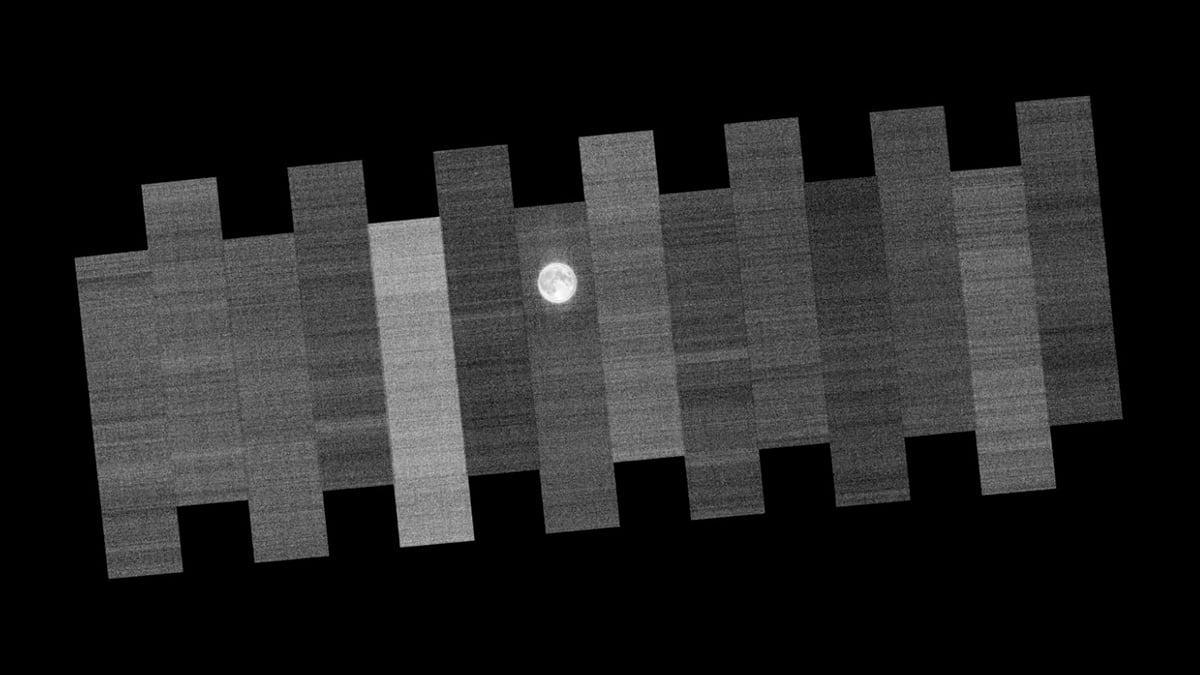
To address this problem, NASA’s Landsat 9 satellite performs a calibration activity that may seem a little unusual. Once every month, the satellite briefly stops observing Earth and turns toward the full Moon. The Moon acts as a highly stable reference source. By measuring it repeatedly, engineers can evaluate the health of the satellite’s imaging system and maintain the accuracy of the data record. NASA recently highlighted this process in an image titled “A Full Moon Checkup.” What emerged was a checkup image transformed into an artistic rendition of the Moon.
Moon as an ideal calibration target
Calibration requires a stable reference. Engineers compare sensor measurements against something whose properties are well understood and change very little over time. Earth, however, does not satisfy that requirement. Clouds form and dissipate continuously. Vegetation responds to seasonal cycles. Snow cover varies from year to year. Rivers shift, coastlines evolve, and cities expand.
The Moon offers a much better solution. Unlike Earth, the Moon lacks an atmosphere. It has no weather systems, no rainfall, and no vegetation. Its surface changes extremely slowly on human timescales. More importantly, scientists have spent decades studying how sunlight reflects from different parts of the lunar surface. These studies allow researchers to predict the Moon’s brightness under specific viewing conditions with remarkable accuracy.
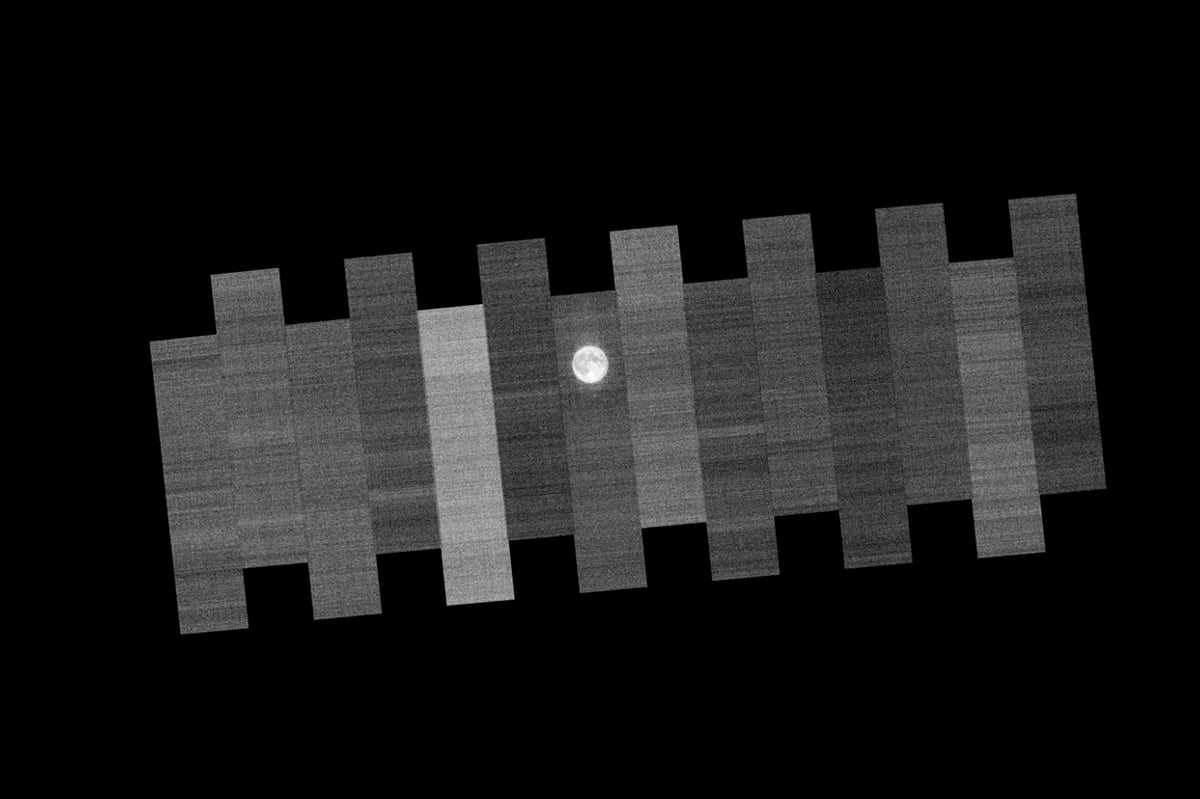
Because of this stability, the Moon functions as a natural calibration standard. Engineers can observe it repeatedly and compare new measurements with previous observations. If the instrument records unexpected differences, they can investigate whether the sensor itself has changed.
The idea is straightforward. If a sensor repeatedly measures the same stable object, engineers can identify gradual changes in instrument performance. Those measurements then help maintain the consistency of the scientific record.
Landsat 9’s monthly lunar checkup
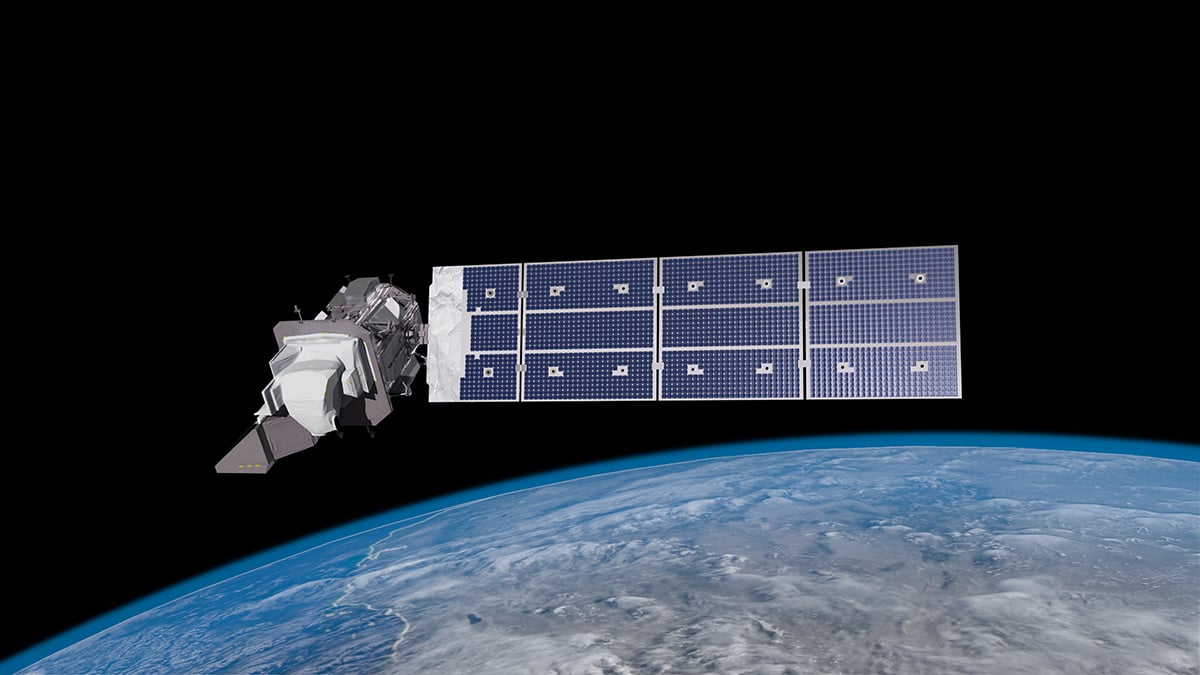
Around the time of the full Moon, mission controllers command Landsat 9 to perform a series of maneuvers. The spacecraft temporarily interrupts its normal Earth-observation schedule and rotates so that its imaging instrument points toward the Moon.
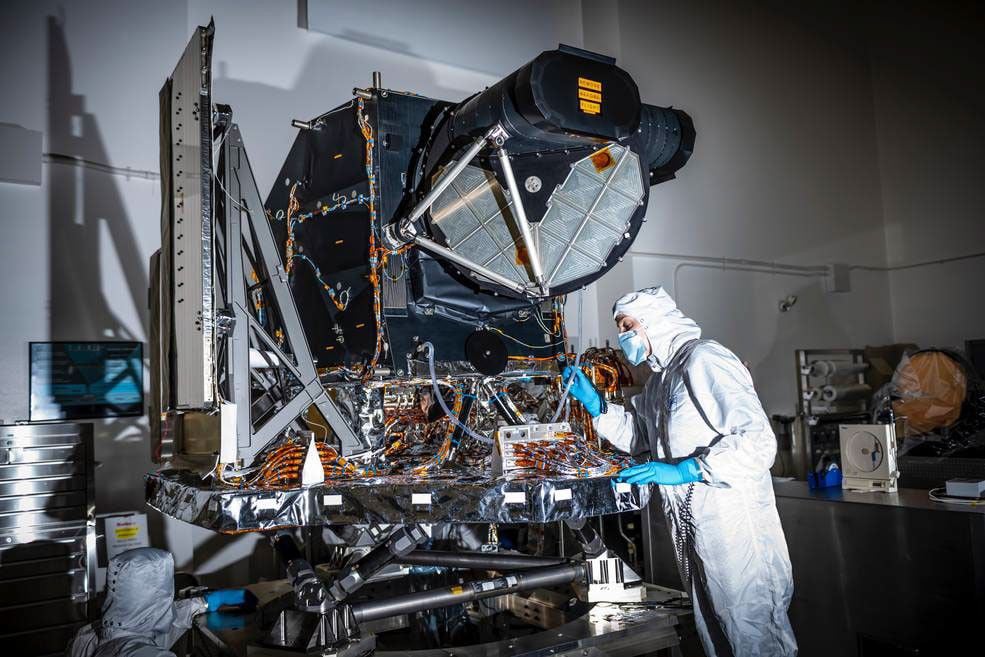
The primary instrument involved in this process is the Operational Land Imager, commonly known as OLI. This instrument collects reflected sunlight across multiple spectral bands and produces many of the images used by scientists around the world.
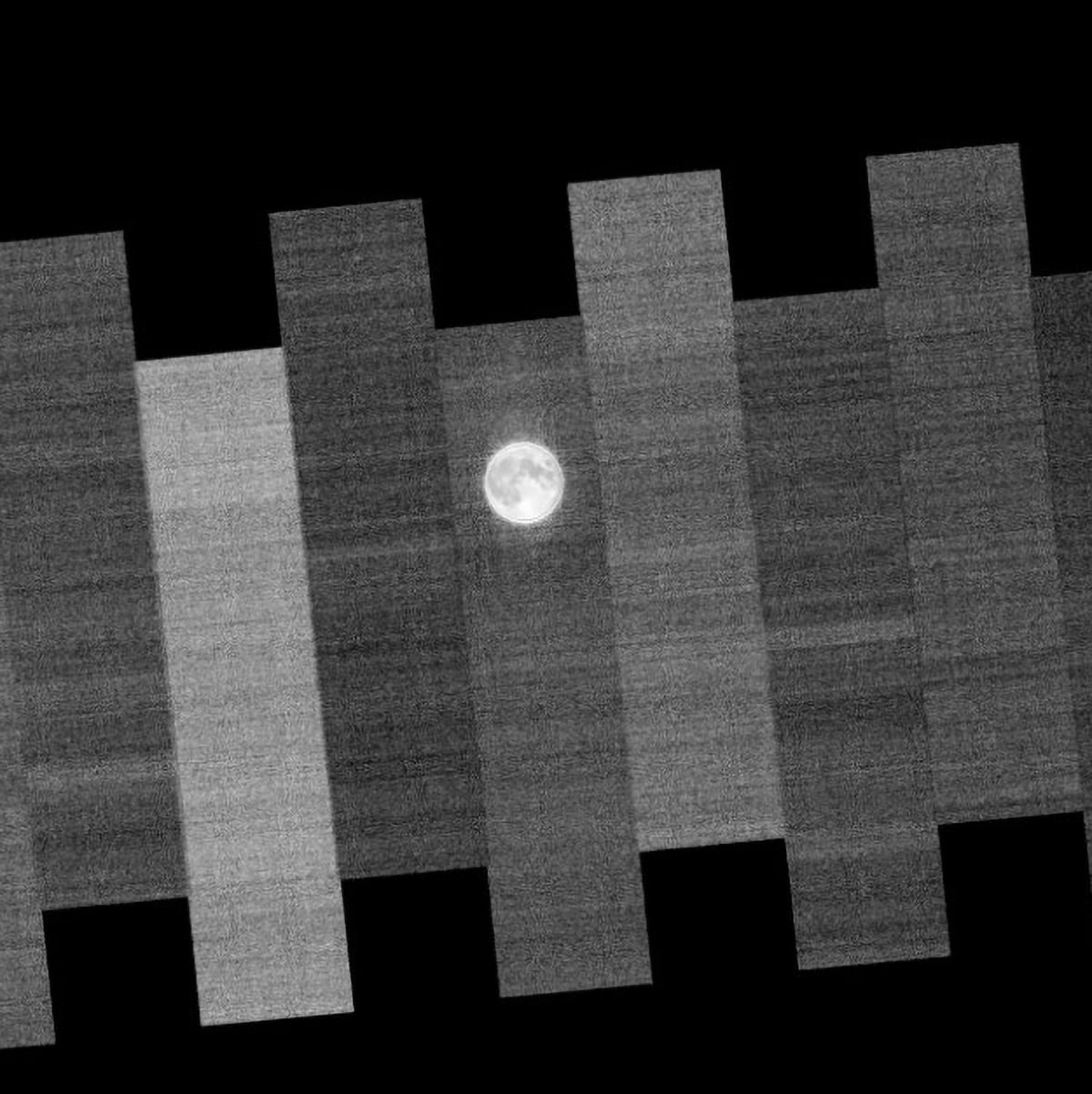
During the calibration sequence, Landsat 9 acquires a series of lunar observations. NASA reports that the spacecraft collects fifteen separate views of the Moon during the operation. Each observation contributes information about detector performance and instrument stability.
The measurements are then compared with historical records collected throughout the mission. Engineers examine the brightness values recorded by the instrument and search for signs of sensor drift. Even extremely small variations can provide useful information about the health of the detector system.
A closer look at the Operational Land Imager
NASA’s recent visualization offers insight into how the Operational Land Imager performs these lunar observations. The instrument contains fourteen detector modules arranged across its focal plane. Each module records part of the incoming signal. Together, they create the complete image products distributed to scientists and researchers. Because each detector module must perform consistently, engineers evaluate them individually during lunar calibration sessions.
To achieve this goal, Landsat 9 follows a strict observation pattern. The spacecraft positions itself so that the Moon passes through the field of view of each detector module. As a result, engineers obtain measurements from every section of the instrument.
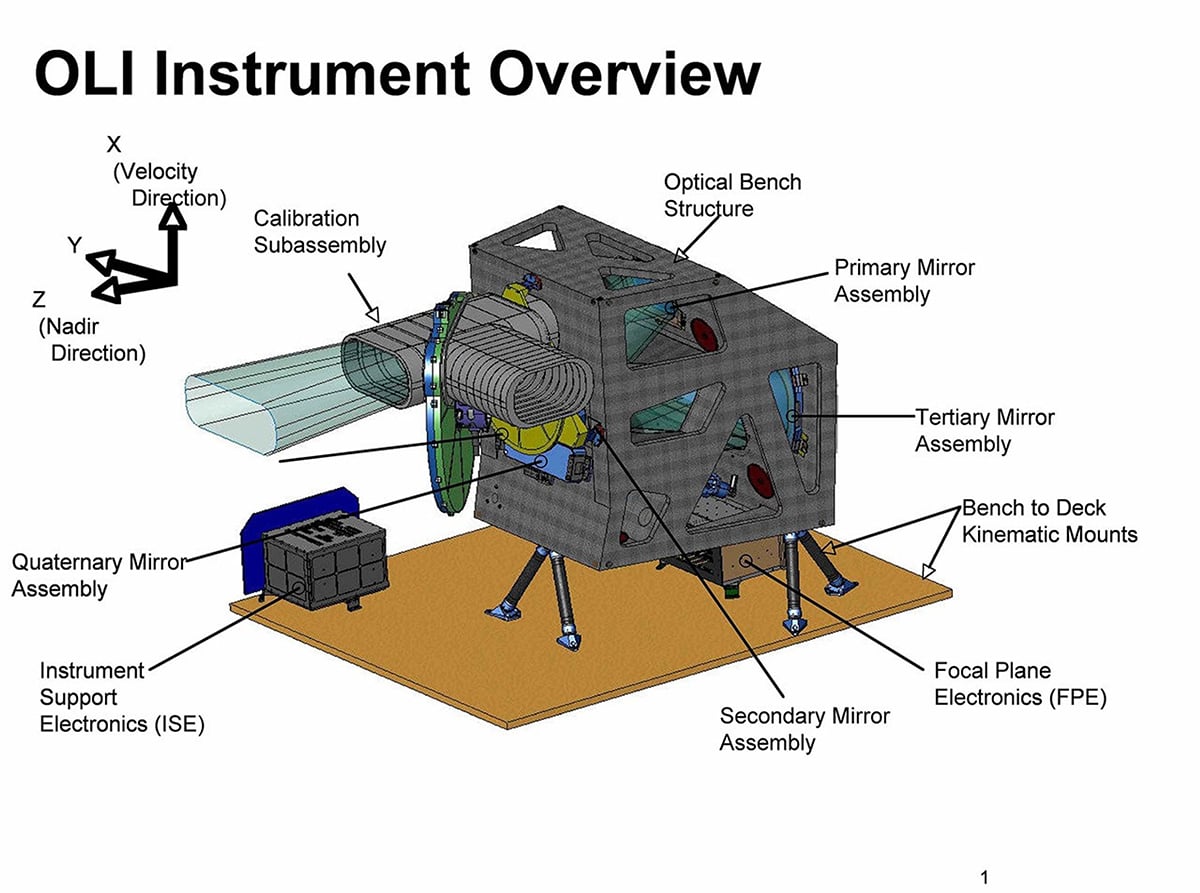
The animation released by NASA illustrates this process. It reveals how the detector system scans the Moon during calibration. Viewers can see the lunar disk moving through the instrument’s observation paths as the spacecraft executes the maneuver.
This provides valuable diagnostic information. If one detector responds differently from the others, engineers can identify the discrepancy and evaluate its impact. They can then update calibration parameters used during data processing.
Clear skies!
See more from DIYPhotography.net on Google
Add DIYPhotography.net as a trusted source. This makes
our stories more likely to appear in your Google Search results.
 Add as a preferred source on Google

Soumyadeep Mukherjee
Soumyadeep Mukherjee is an award-winning astrophotographer from India. He has a doctorate degree in Linguistics. His work extends to the sub-genres of nightscape, deep sky, solar, lunar and optical phenomenon photography. He is also a photography educator and has conducted numerous workshops. His works have appeared in over 40 books & magazines including Astronomy, BBC Sky at Night, Sky & Telescope among others, and in various websites including National Geographic, NASA, Forbes. He was the first Indian to win “Astronomy Photographer of the Year” award in a major category.

Join the Discussion
DIYP Comment Policy
Be nice, be on-topic, no personal information or flames.