























This Guy Makes the “Ultimate Mosquito Killer” With Old DSLR, AI, and a Laser
Jun 2, 2026
Dunja Đuđić Kalinin
Dunja Djudjic is a multi-talented artist based in Novi Sad, Serbia. With 15 years of experience as a photographer, she specializes in capturing the beauty of nature, travel, concerts, and fine art. In addition to her photography, Dunja also expresses her creativity through writing, embroidery, and jewelry making.
Share:
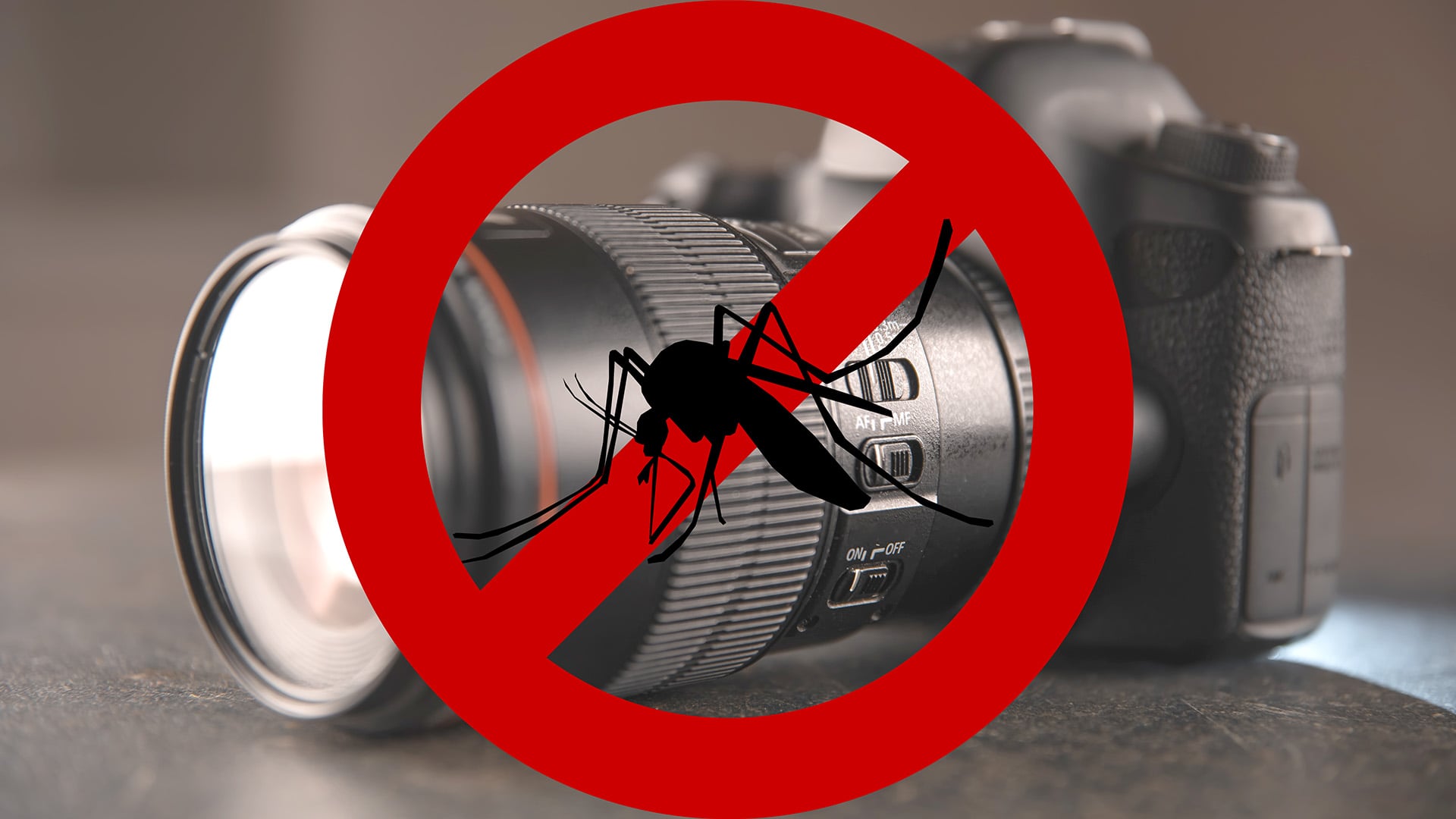
A specialist in computer vision and robotics has built a system that merges AI and an old DSLR to kill mosquitoes. Yep, you read that right. Steven Cheng built a deep learning model that detects mosquitoes and shoots them down with a laser. It’s an experimental project, but a working one, and pretty fascinating and terrifying at the same time. He documented the whole build, which he calls “the ultimate mosquito killer.”
Spent 4 months building the ultimate mosquito killer: an artillery cannon guided by computer vision + deep learning.
— Steven Cheng (@stevencheng) May 28, 2026
Trained a custom model to detect and lock onto mosquitoes using a DSLR + zoom lens setup.
The dataset collection phase was brutal — the mosquitoes definitely… pic.twitter.com/jqfgz0eq9l
It Starts with the Data
The core of the system is a custom-trained detection model, and that model needed a custom mosquito dataset to learn from. Steven built one using a Canon DSLR fitted with a high-magnification zoom lens (I couldn’t quite catch from the video which one, though). That same camera rig later doubles as the system’s main sensor during operation.
Gathering the images was the low-tech part. Steven said the process left him with countless mosquito bites all over his body. Kinda like me after a summer hike… I only have an old-school spray repellent to rely on. After taking photos, Steven annotated them and used them to train a deep learning model to identify mosquitoes in flight.
Training was pretty hardware-intensive. Steven said it “really put [his] graphics card through its paces.” But by the end, the model’s performance ended up being accurate enough to separate a mosquito from background noise.
Detection, Then Response
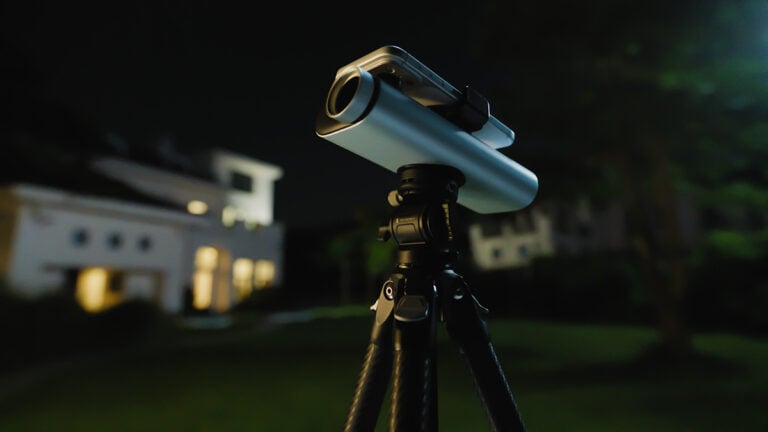
Once detection worked, Steven added the part that does the killing. He integrated a laser calibrated, in his words, to “instantly turn mosquitoes into roasted ones.” It’s mounted on a high-precision industrial rotary stage, which lets it move fast and accurately as it tracks a target.
The system runs as a closed loop. The camera spots a mosquito, the model confirms it, and the hardware adjusts in real time to aim and fire. That’s the key difference from a standard bug zapper. A zapper waits for insects to come to it. This actively tracks and kills them one by one.
However, while watching the video, the first thing I noticed was the small flame when a mosquito gets hit. My mind immediately screamed, “Fire hazard!” But as the video kept going, I realized that Steven added a second wide-angle camera that detects nearby people, and he trained the model to recognize flammable materials. If a target overlaps with any of those, the laser is disabled. So, the safeguard exists. Whether it’s precise enough in every situation is the part I’d want to see tested hard before I left this running unattended.
After assembling and testing the build, Cheng used it at home. He says that after a single night of operation, every mosquito in his home was “successfully eliminated.” And apparently, nothing was set on fire.
Not the First Laser Aimed at Mosquitoes
Commenting on Steve’s project on X, @thingwere pointed to an older project, from more than a decade ago, that used a laser but in a different way. Nathan Myhrvold and his team demonstrated a system that used a laser not to kill mosquitoes, but to identify if they’re male or female. As he explained it, you shine a non-lethal laser on the insect to listen to the wing beat frequency. The laser measures its size, then decides whether it’s a target worth zapping. “We only kill the female mosquitoes,” he explains, since the females are the ones that bite and spread disease like malaria. Different method, but interestingly, the same method of pointing a laser at the annoying (and potentially dangerous) creature.
But What If…?
In Steven’s case, as he says, this was “basically repurposing old hardware,” which brings together DIY spirit, upcycling, and innovation. I quite like that. If you’d like to build one of these things on your own, Steven plans to publish the full project on Nenpower, so keep an eye on him.
However, being me, I can’t help but get a little dark. Take the mosquitoes out of the equation, and you have a system that autonomously detects a small moving target, tracks it, and fires at it. It’s the kind of capability that looks very different in the hands of people with the money and motive to scale it up. After all, the most wicked and evil minds of this world have the most money and power in their hands. So, what would stop them from developing technology like this and using it in a war or a protest? The jump from a machine that “kills bugs” to one that “targets whatever it’s pointed at” is uncomfortably short. Or perhaps I should just stop reading news, move away from Serbia (where protests have been ongoing for the past 19 months), and go touch some grass.
…
Okay, I touched my houseplants for a bit. I’m calm, I’m fine. I fully support the device that, at least for now, kills mosquitoes that have turned my legs into a polka dot canvas.
Let me know what you think. Would you build something like this with your old gear and hardware? And more importantly, would you run one in your bedroom overnight?
[via Techspot]
See more from DIYPhotography.net on Google
Add DIYPhotography.net as a trusted source. This makes
our stories more likely to appear in your Google Search results.
 Add as a preferred source on Google

Dunja Đuđić Kalinin
Dunja Djudjic is a multi-talented artist based in Novi Sad, Serbia. With 15 years of experience as a photographer, she specializes in capturing the beauty of nature, travel, concerts, and fine art. In addition to her photography, Dunja also expresses her creativity through writing, embroidery, and jewelry making.




Join the Discussion
DIYP Comment Policy
Be nice, be on-topic, no personal information or flames.