



















What Is a Daguerreotype? The Photography Process That Changed History
Jul 13, 2026
Leonard Skapp

Alex Baker is a portrait and lifestyle driven photographer based in Valencia, Spain. She works on a range of projects from commercial to fine art and has had work featured in publications such as The Daily Mail, Conde Nast Traveller and El Mundo, and has exhibited work across Europe
Share:
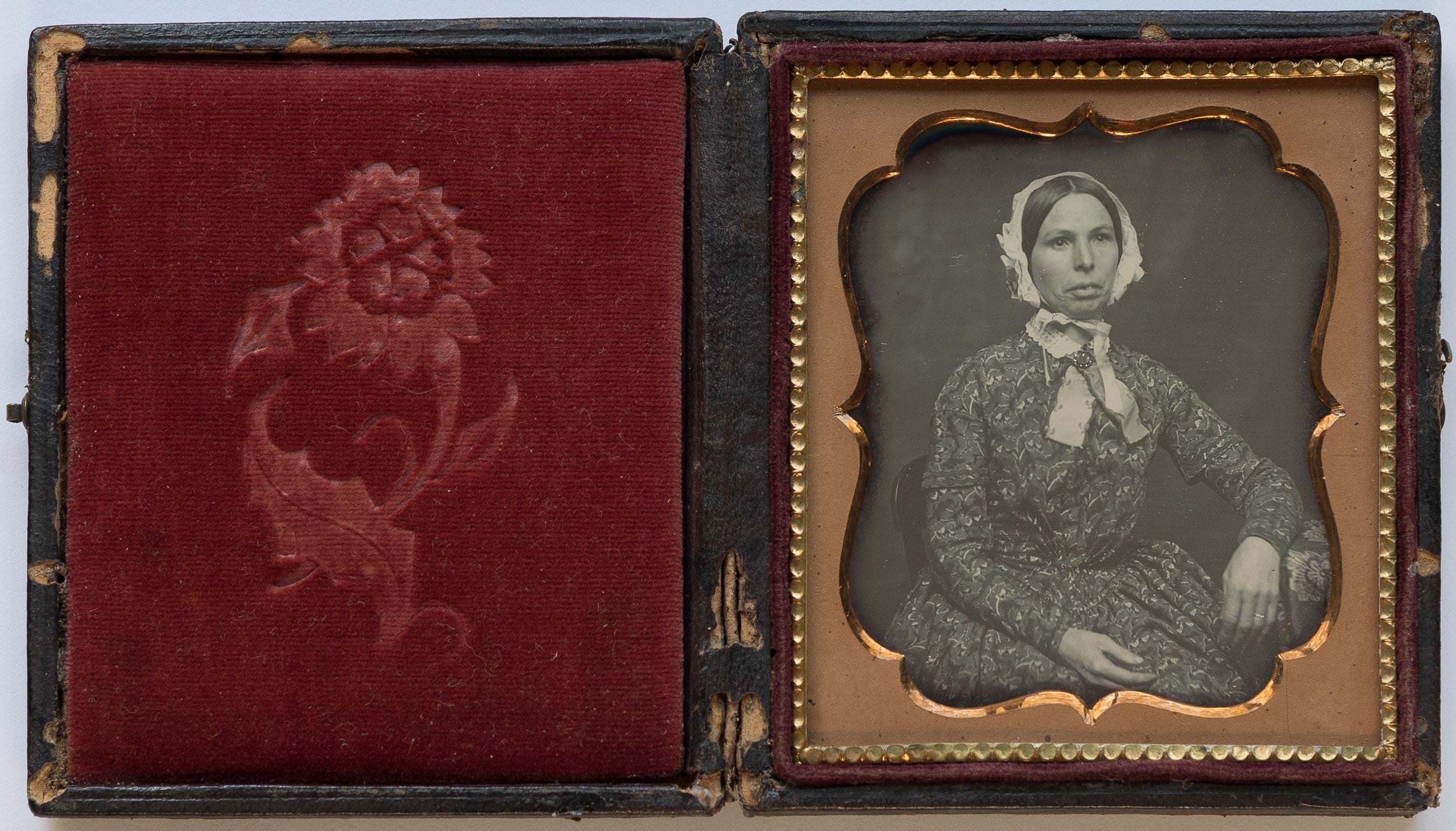
Long before digital cameras, memory cards, and even photographic film, there was the daguerreotype. Introduced in the 19th century, it was the first commercially successful photographic process and marked the beginning of photography as we know it today.
Although daguerreotypes have long since been replaced by newer technologies, they remain one of the most important milestones in photographic history. They made it possible to capture incredibly detailed images at a time when photography was still in its infancy and paved the way for the cameras and techniques we use today.
What is a daguerreotype?
A daguerreotype is a photograph created on a highly polished silver-plated copper sheet using a process developed by French artist and inventor Louis Daguerre. Unlike modern photographs, each daguerreotype was a single, unique image.

There was no negative, so it wasn’t possible to make multiple copies. If someone wanted another portrait, they had to sit for the camera all over again. The finished image had a remarkable level of detail and, when viewed from the right angle, almost appeared three-dimensional.
When was the daguerreotype invented?
The daguerreotype process was publicly announced in 1839, a year that’s often considered the birth of practical photography. However, the story began earlier through the work of Nicéphore Niépce, who successfully created the world’s earliest surviving permanent photograph in the 1820s using a process known as heliography.
Niépce later partnered with Louis Daguerre to improve photographic techniques. After Niépce’s death in 1833, Daguerre continued the research and eventually developed the process that would bear his name. The French government acquired the rights to the invention and made it freely available to the world, helping photography spread rapidly across Europe and North America.
How did the daguerreotype process work?
Creating a daguerreotype was a lengthy and highly technical process. First, a copper plate coated with polished silver was exposed to iodine vapour, creating a light-sensitive surface. The plate was then placed inside a camera and exposed to light. Early exposures could last several minutes, meaning subjects had to remain almost perfectly still.
After exposure, the invisible latent image was developed using heated mercury vapour before being fixed with a chemical solution to prevent further exposure to light. Finally, the finished image was carefully sealed behind glass to protect its delicate surface from damage and tarnishing. While the process sounds complicated today, it represented an enormous breakthrough for the time.
Why were daguerreotypes so popular?
For the first time in history, ordinary people could have an accurate likeness of themselves or their loved ones. Before photography, commissioning a painted portrait was expensive and beyond the reach of many families. Daguerreotypes offered a more affordable alternative while capturing a level of realism that artists simply couldn’t match.
Studios quickly opened across Europe and the United States, and portrait photography became one of the earliest commercial uses of the new technology. Despite the long exposure times, people were eager to sit for a photograph because it was often the first, and sometimes only, image they would ever have of themselves.
Why did daguerreotypes disappear?
Although revolutionary, the daguerreotype had several limitations. Each image was unique and couldn’t be reproduced, exposure times were relatively long, and the polished metal surface was fragile and difficult to view unless held at the correct angle.
During the 1850s, newer photographic processes such as the ambrotype and tintype offered faster, cheaper, and more practical alternatives. Soon after, glass plate negatives made it possible to produce multiple prints from a single photograph, something daguerreotypes could never achieve. As photography continued to evolve, film eventually replaced glass plates, followed by digital cameras in the late 20th century.
Can you still make a daguerreotype today?
Yes, although it’s now considered a specialist historical process. A small number of photographers and craftspeople around the world continue to create daguerreotypes using traditional methods. The process remains highly labour-intensive, requires specialist equipment, and involves hazardous chemicals, making it far less accessible than modern photography.
Today, daguerreotypes are more commonly found in museums, archives, and private collections, where they’re valued both as historical artefacts and remarkable examples of early photographic craftsmanship.
Key takeaways
A daguerreotype was the first commercially successful photographic process and played a crucial role in making photography accessible to the public. Introduced by Louis Daguerre in 1839 and building on the earlier work of Nicéphore Niépce, it produced incredibly detailed images on silver-plated copper sheets.
Although later photographic processes eventually replaced the daguerreotype, its influence can still be seen today. It transformed photography from an experimental scientific curiosity into a practical way of recording people, places, and moments in history, laying the foundations for every photograph that followed.
[Cover photo: [Unknown], CC0, via Wikimedia Commons]
See more from DIYPhotography.net on Google
Add DIYPhotography.net as a trusted source. This makes
our stories more likely to appear in your Google Search results.
 Add as a preferred source on Google

About Leonard Skapp
Leonard “Len” Skapp is a photographer with a particular interest in cameras, lenses, accessories, camera bags, lens filters, tripods, camera straps, and, on rare occasions, photography itself. Equal parts reviewer and enthusiast, he enjoys digging into the technical details behind the latest gear and translating them into plain English for fellow photographers. He maintains that every purchase is a carefully considered investment, although his bank account and overflowing camera cupboard continue to dispute this claim.
We love it when our readers get in touch with us to share their stories. This article was contributed to DIYP by a member of our community. If you would like to contribute an article, please contact us here.
Related Posts
 How street photography changed my lifestreet photography changed my lifeHow street photography changed my life
 Ten important moments in history that changed photography
 History.JPG: The American Museum of Natural History Digitizes its Photography Collection for Online Public Access
 “Chimacabres” are unique creatures created by combining daguerreotype with light painting
Join the Discussion
DIYP Comment Policy
Be nice, be on-topic, no personal information or flames.