

























This Image Shows What Is Hidden Inside the Southern Pinwheel Galaxy
Oct 6, 2026
Soumyadeep Mukherjee
Soumyadeep Mukherjee is an award-winning astrophotographer from India. He has a doctorate degree in Linguistics. His work extends to the sub-genres of nightscape, deep sky, solar, lunar and optical phenomenon photography. He is also a photography educator and has conducted numerous workshops. His works have appeared in over 40 books & magazines including Astronomy, BBC Sky at Night, Sky & Telescope among others, and in various websites including National Geographic, NASA, Forbes. He was the first Indian to win “Astronomy Photographer of the Year” award in a major category.
Share:
M83 has long been a favorite target for deep-sky photographers. The galaxy has a bright central region, sweeping spiral arms, and dark lanes that cut through its face. With a good telescope and enough exposure time, those features stand out in remarkable detail. M83 lies about 15 million light-years from Earth in the constellation Hydra. It is one of the closest large spiral galaxies to us and appears almost face-on.
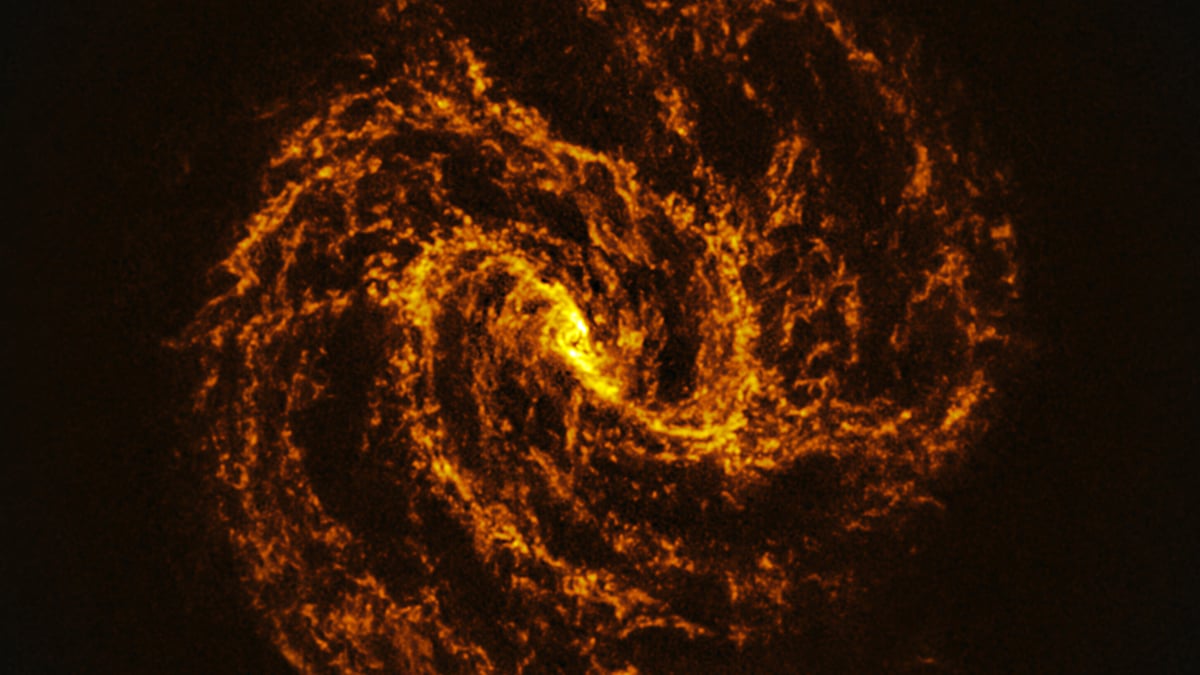
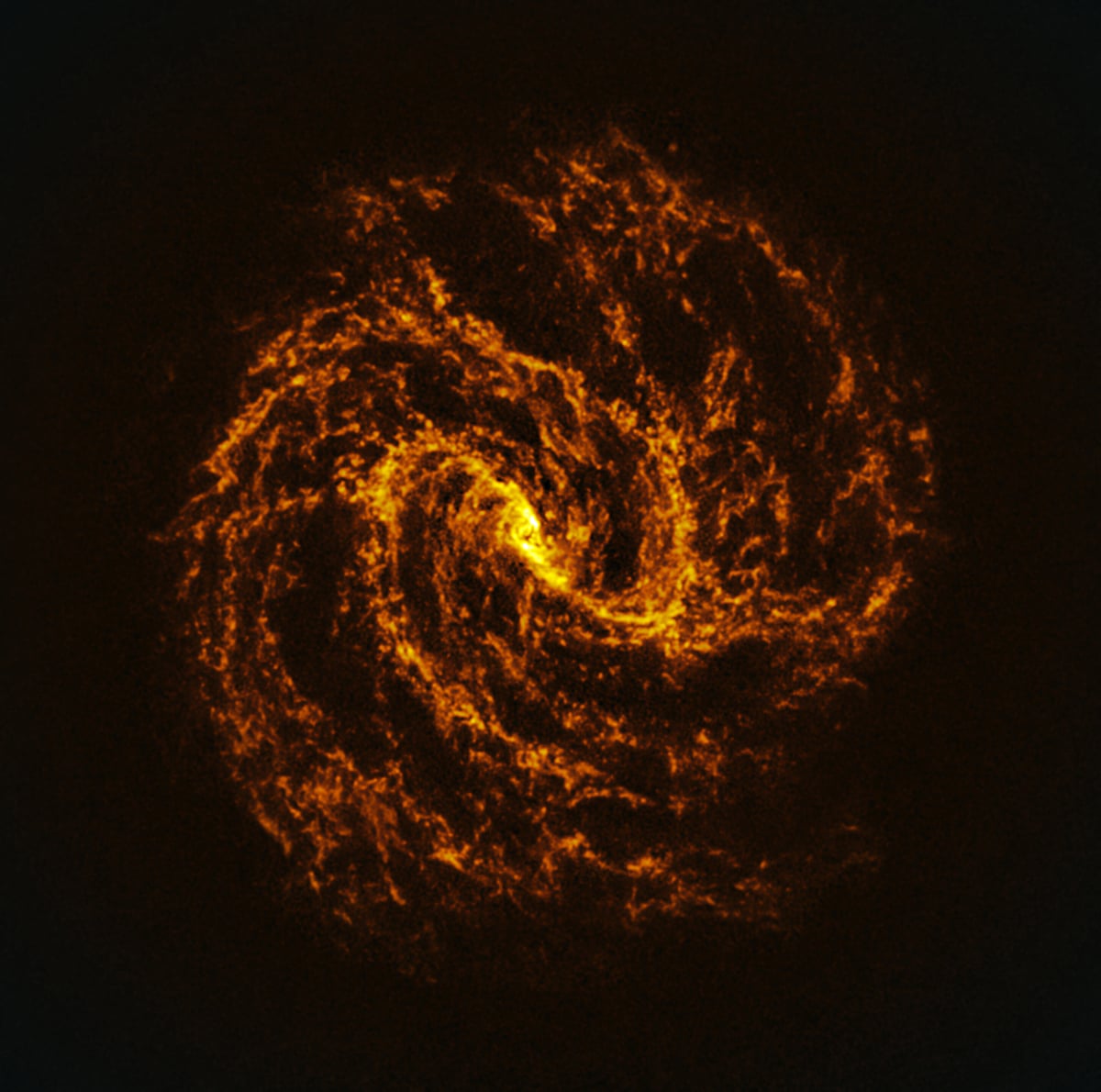
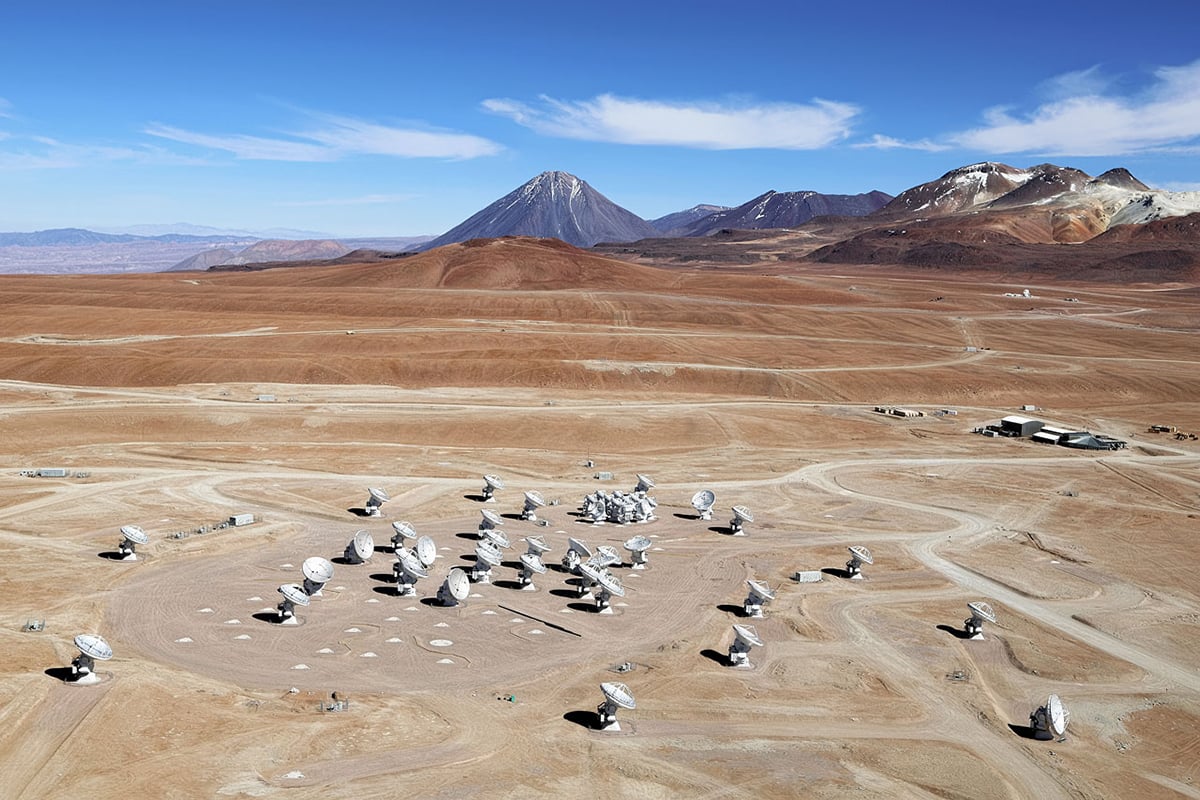
A new image of the Southern Pinwheel Galaxy, or M83, from the European Southern Observatory (ESO) shows the galaxy in a way that an ordinary telescope doesn’t. The image traces cold molecular gas spread across its spiral arms. The result looks very different from the familiar photographs of the Southern Pinwheel Galaxy. The image was captured by the Atacama Large Millimeter/submillimeter Array, or ALMA.
M83 looks very different through ALMA
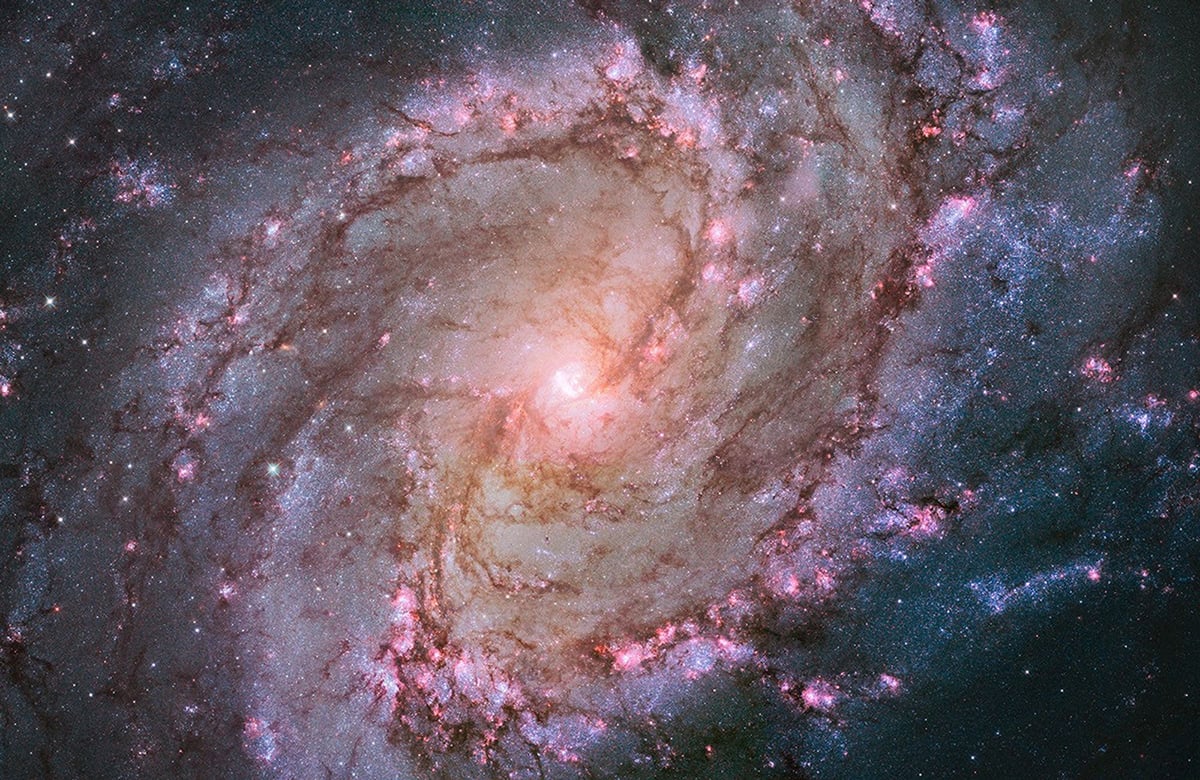
Most photographs of M83 show the features that make the galaxy easy to recognize. Its bright central region sits inside a broad disk of stars, while spiral arms extend outwards from the center. Dark dust lanes run through those arms and break up the starlight.
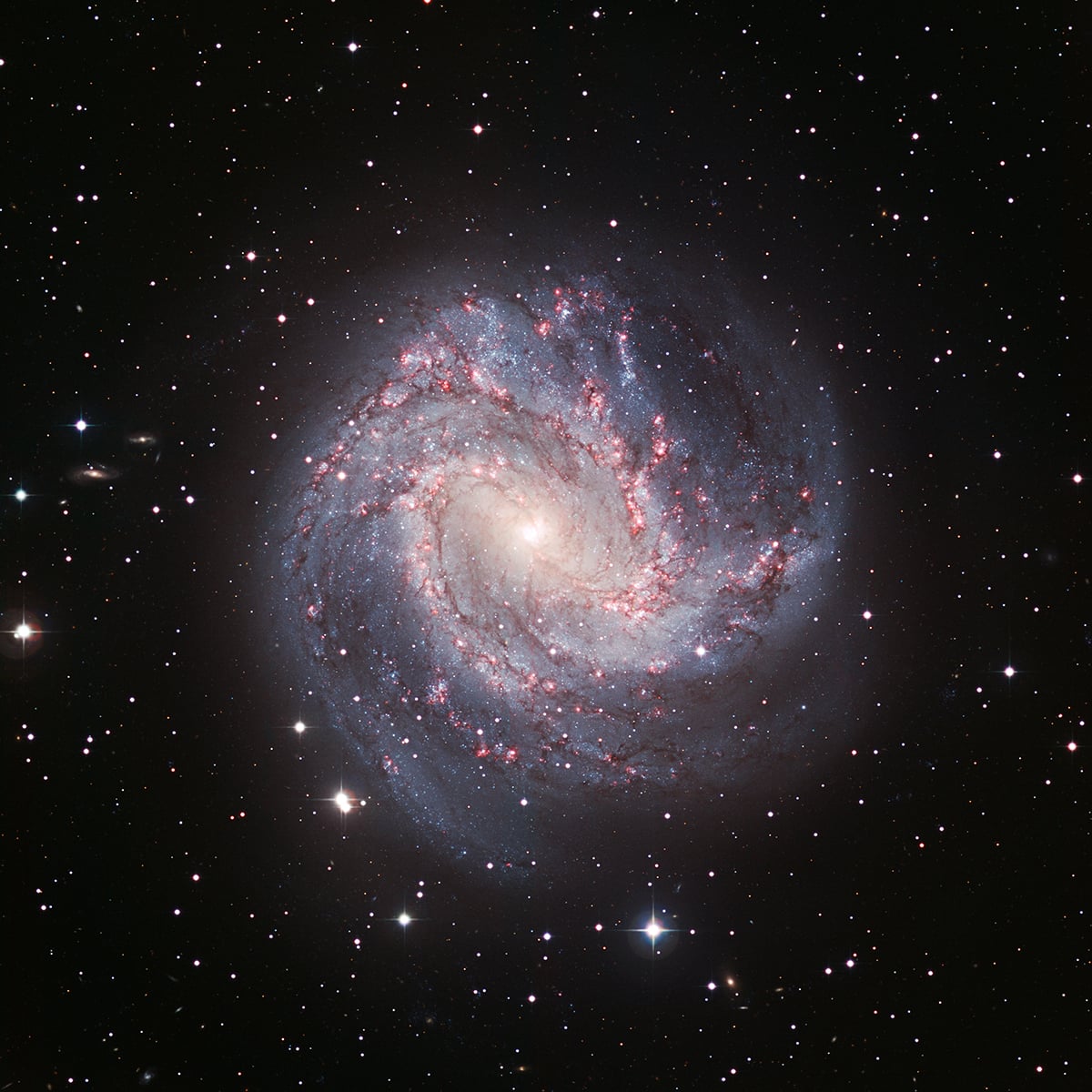
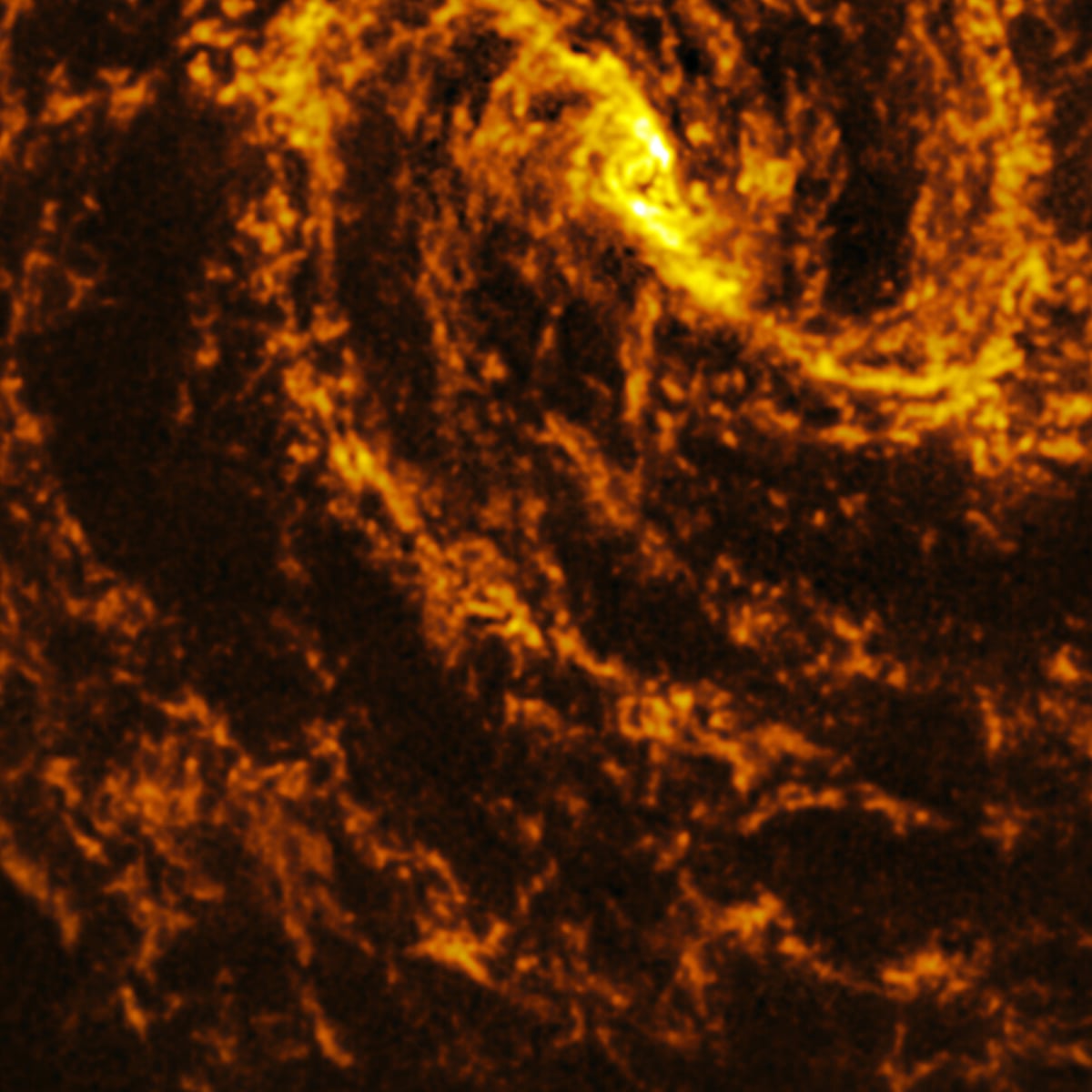
In the ALMA image, we get a different view compared to an optical telescope image, including ESO’s Wide-Field Imager. The stars that dominate an optical photograph no longer provide the main structure. The image follows cold molecular gas across the galaxy. The gas distribution creates a different pattern, with bright regions appearing where the optical image shows dark lanes and other faint structures.
That difference comes from the wavelengths each telescope can detect. The Wide Field Imager records visible light, the part of the electromagnetic spectrum that human eyes can see. ALMA observes at much longer millimeter and submillimeter wavelengths. Those wavelengths allow astronomers to study cold material that does not stand out in visible light.
The dark lanes contain the ingredients for new stars
Molecular gas provides much of the material needed to make stars. Inside a sufficiently dense cloud, gravity can pull gas together and create denser pockets. If those regions continue to collapse, they can eventually form stars and planetary systems.
Astronomers therefore want to know where molecular gas collects and what happens to it afterwards. An optical photograph can show the stars that have already formed, but it gives only limited information about the cold clouds that came before them. Dust can also hide young stars and dense regions from visible-light observations.
ALMA observations allow astronomers to map molecular gas across M83 and study how it relates to the galaxy’s other structures. Researchers can compare the gas in the spiral arms with gas closer to the center or farther out in the disk. They can then compare those regions with observations of young stars and other signs of recent star formation.
ALMA sees what an optical camera misses
A conventional deep-sky camera records visible light and, depending on its sensor, some near-infrared light. That is enough to produce detailed photographs of stars, galaxies, and nebulae. But much of the Universe emits radiation outside those wavelengths.
ALMA works at millimeter and submillimeter wavelengths. The observatory uses an array of radio antennas, not a conventional optical camera. By combining measurements from the antennas, astronomers produce detailed maps of astronomical sources.
These observations give researchers access to cold gas and dust that may remain difficult to see at shorter wavelengths. In M83, that includes molecular material spread through the galaxy’s disk.
Clear skies!
See more from DIYPhotography.net on Google
Add DIYPhotography.net as a trusted source. This makes
our stories more likely to appear in your Google Search results.
 Add as a preferred source on Google

Soumyadeep Mukherjee
Soumyadeep Mukherjee is an award-winning astrophotographer from India. He has a doctorate degree in Linguistics. His work extends to the sub-genres of nightscape, deep sky, solar, lunar and optical phenomenon photography. He is also a photography educator and has conducted numerous workshops. His works have appeared in over 40 books & magazines including Astronomy, BBC Sky at Night, Sky & Telescope among others, and in various websites including National Geographic, NASA, Forbes. He was the first Indian to win “Astronomy Photographer of the Year” award in a major category.

Join the Discussion
DIYP Comment Policy
Be nice, be on-topic, no personal information or flames.