









OBSBOT Tail 2 ADV and Tail Air 2: Built for Live Production Teams Large and Small
Nov 20, 2026

Share:
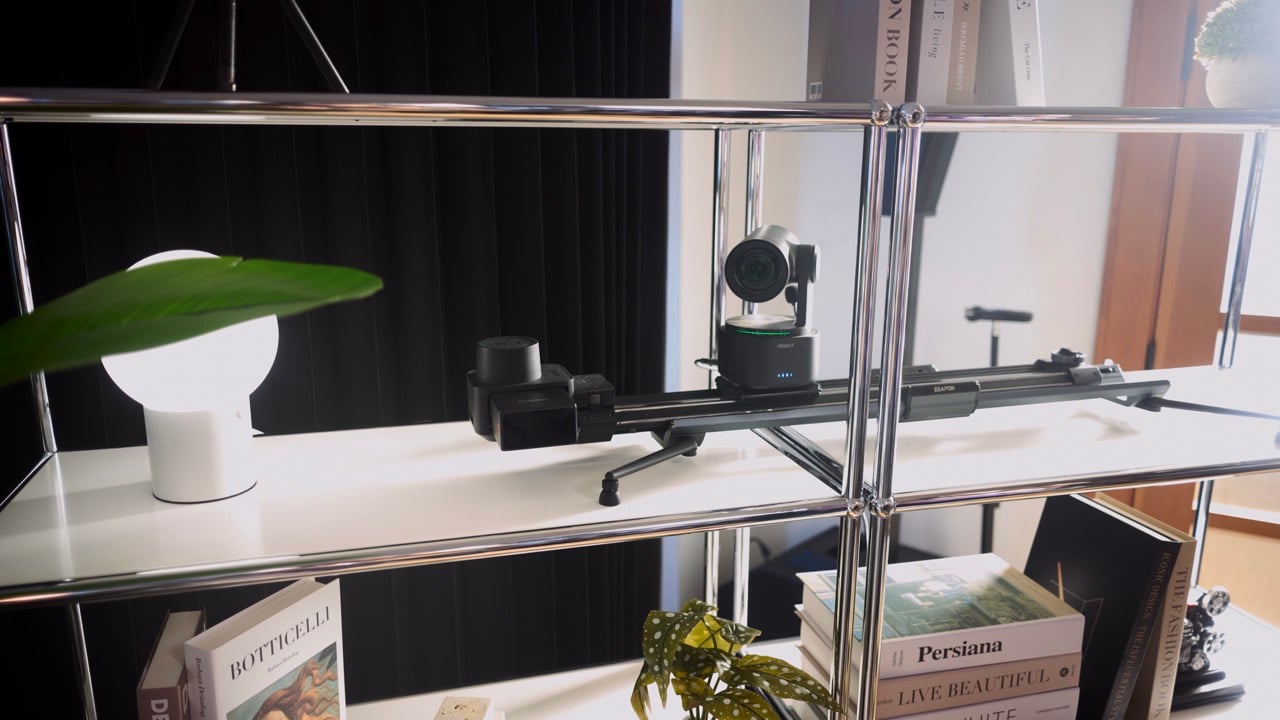
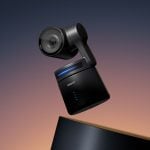
OBSBOT has been pushing the limits of streaming and online live production for the better part of a decade. From their AI-powered PTZ and webcams, OBSBOT has found innovative ways to simplify live production whether you’re a full studio team or a single creator. Today, OBSBOT announced the newest production cameras – the Tail 2 ADV and Tail Air 2. We were at the New York City launch to see the new cameras and OBSBOT’s new workflow for ourselves.
OBSBOT Tail 2 ADV and Tail Air 2: Here’s What’s New

At its core, OBSBOT has always built camera systems around two guiding principles: smooth, intelligent camera movement and reliable subject tracking and detection. Traditionally, capturing dynamic, broadcast-worthy angles meant hiring a dedicated camera operator for every lens on set. By pairing responsive gimbal mechanics with advanced subject recognition, OBSBOT gives presenters, musicians, athletes, and production teams the freedom to move naturally across a stage without worrying about stepping out of frame. Both the Tail 2 ADV and the Tail Air 2 build directly on that foundation while targeting distinct production challenges.
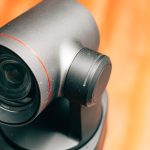
Designed with large venues and demanding broadcast environments in mind, the Tail 2 ADV dramatically bridges the distance between the camera riser and the stage. Equipped with a powerful 21x optical zoom—and capable of reaching up to 40x with hybrid zoom—the camera can lock onto and track a subject from up to 240 meters away. That kind of reach makes it well-suited for auditoriums, houses of worship, conference keynotes, and live sports where physical placement is limited. Crucially, the Tail 2 ADV doesn’t sacrifice image fidelity to achieve that distance. Its 12-element optical system and variable aperture, which opens up to a fast f/1.7, work together to maintain edge-to-edge sharpness, natural depth of field, and strong light transmission even when punched all the way in.

Meanwhile, the Tail Air 2 focuses on bringing flagship-grade image quality to a compact, adaptable form factor. It boasts the largest sensor ever featured in an OBSBOT camera, pairing a 1-inch sensor with a dedicated AI image processing chip engineered specifically to suppress grain and preserve clarity in low-light environments. Live events rarely offer studio-perfect lighting, and that is where the Tail Air 2’s LOFIC HDR capability comes into play. By effectively balancing extreme highlights and deep shadows in high-contrast scenes, LOFIC HDR keeps footage crisp and natural under harsh stage spotlights, backlit windows, or unpredictable venue lighting.
Production is More than Just the Camera
During the New York City launch, OBSBOT also offered a sneak peek into where the company is headed next. On stage, CEO Liu Bo outlined a broader vision for the future of live broadcast—one where AI-powered cameras are merely the starting point of an integrated, end-to-end production workflow.

Rather than forcing creators and technical directors to stitch together third-party switchers, controllers, and routing gear, OBSBOT is building out the rest of the signal chain. Bo previewed a compact, multi-function production box capable of condensing an entire traditional production control board into a portable unit that mounts directly onto a tripod. Paired with upcoming AI-assisted multi-cam broadcast software designed to streamline live switching and camera coordination, the ecosystem promises to make multi-angle production far more approachable for lean teams. With these hardware and software announcements, OBSBOT is clearly bridging the gap between creator accessibility and broadcast-grade reliability—positioning itself to become a household name across the live production industry.
See more from DIYPhotography.net on Google
Add DIYPhotography.net as a trusted source. This makes
our stories more likely to appear in your Google Search results.
 Add as a preferred source on Google
Filed Under:
Tagged With:


Join the Discussion
DIYP Comment Policy
Be nice, be on-topic, no personal information or flames.