



















Sky-Watcher Introduces Heliostar 50: A Compact Solar Telescope
Nov 16, 2026
Soumyadeep Mukherjee
Soumyadeep Mukherjee is an award-winning astrophotographer from India. He has a doctorate degree in Linguistics. His work extends to the sub-genres of nightscape, deep sky, solar, lunar and optical phenomenon photography. He is also a photography educator and has conducted numerous workshops. His works have appeared in over 40 books & magazines including Astronomy, BBC Sky at Night, Sky & Telescope among others, and in various websites including National Geographic, NASA, Forbes. He was the first Indian to win “Astronomy Photographer of the Year” award in a major category.
Share:
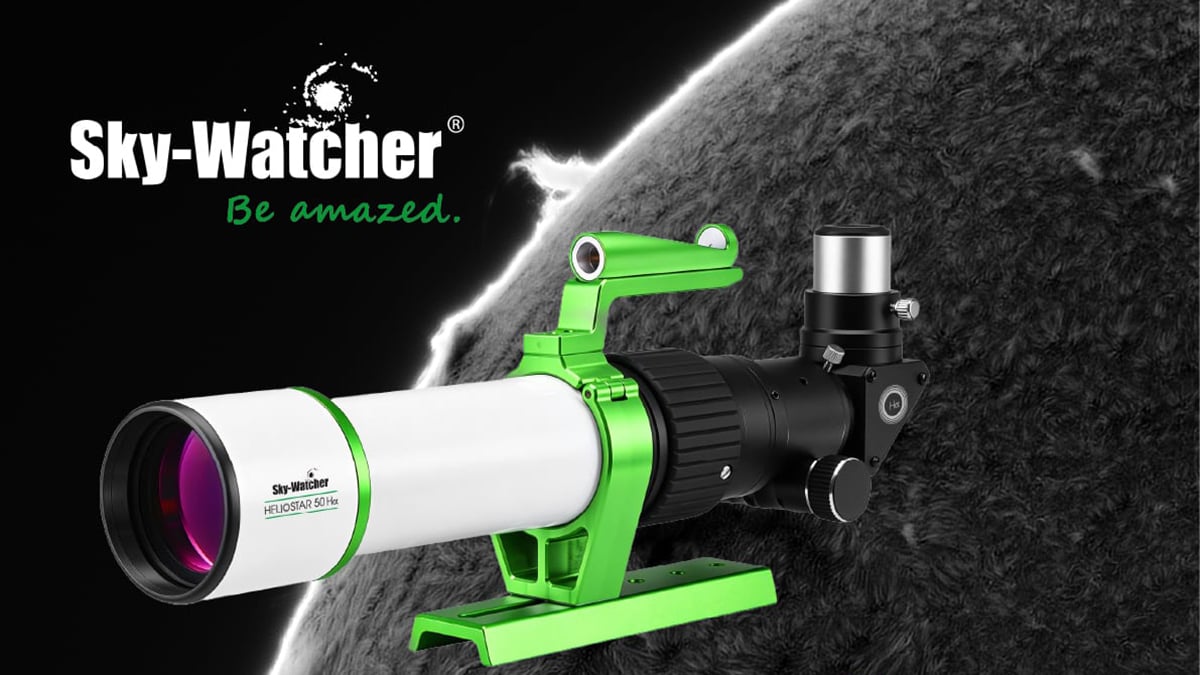
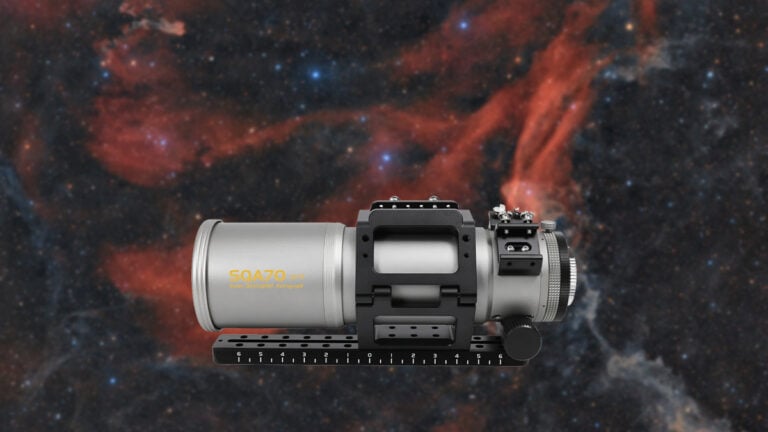
H-Alpha Solar telescopes allow astronomers to observe features that remain hidden in ordinary white-light images. Sky-Watcher has introduced a new compact telescope for this specialised field of solar observation. The new Heliostar 50 features a 50mm aperture with a relatively short focal length and a narrowband filtering system.
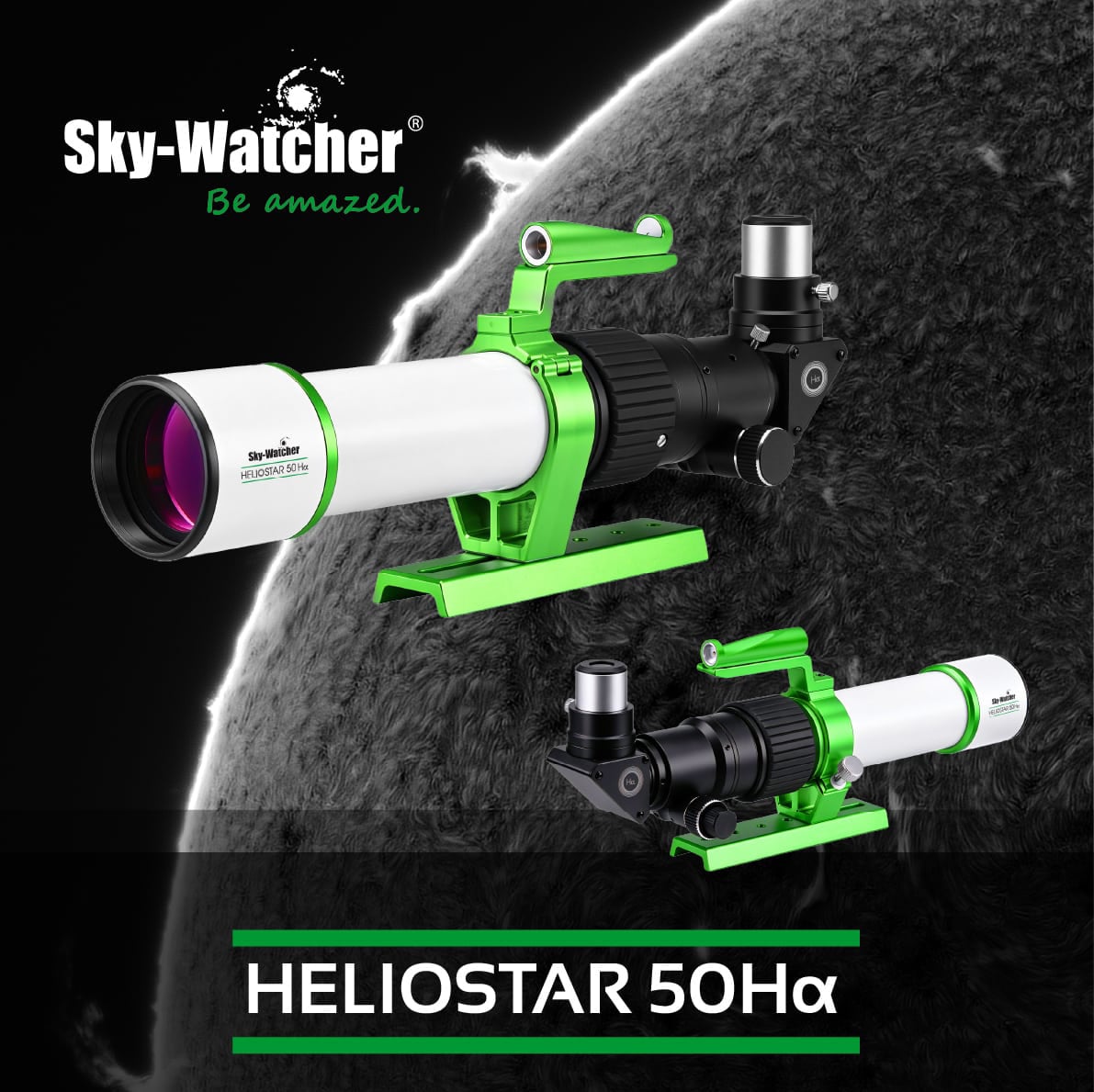
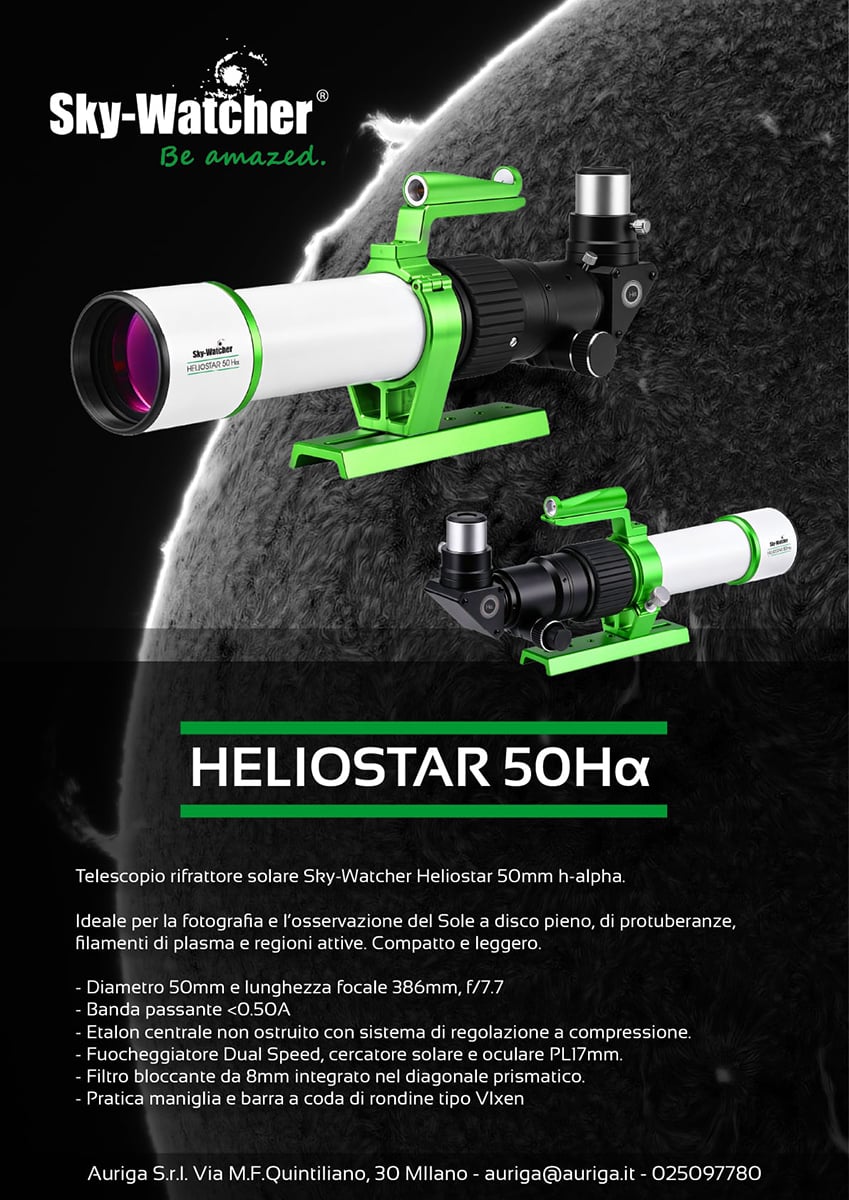
This new model joins Sky-Watcher’s existing Heliostar 76, Heliostar 100, and Heliostar 150 telescopes. At 1.86kg, it is the smallest and lightest member of the family. It has a focal length of 386mm and operates at f/7.7. It has a bandpass narrower than 0.5Å, using its Solis Etalon technology.
A compact and portable solar telescope
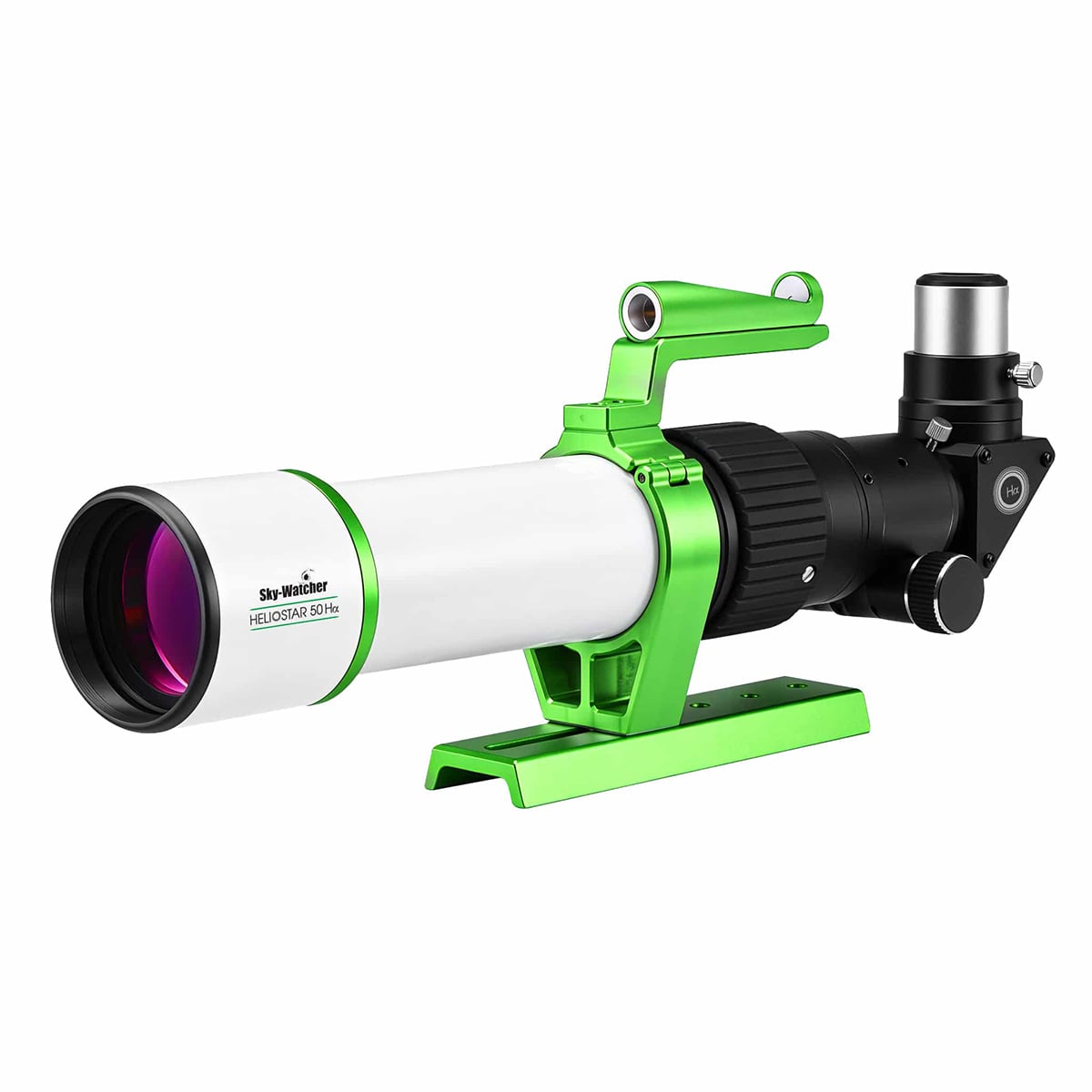
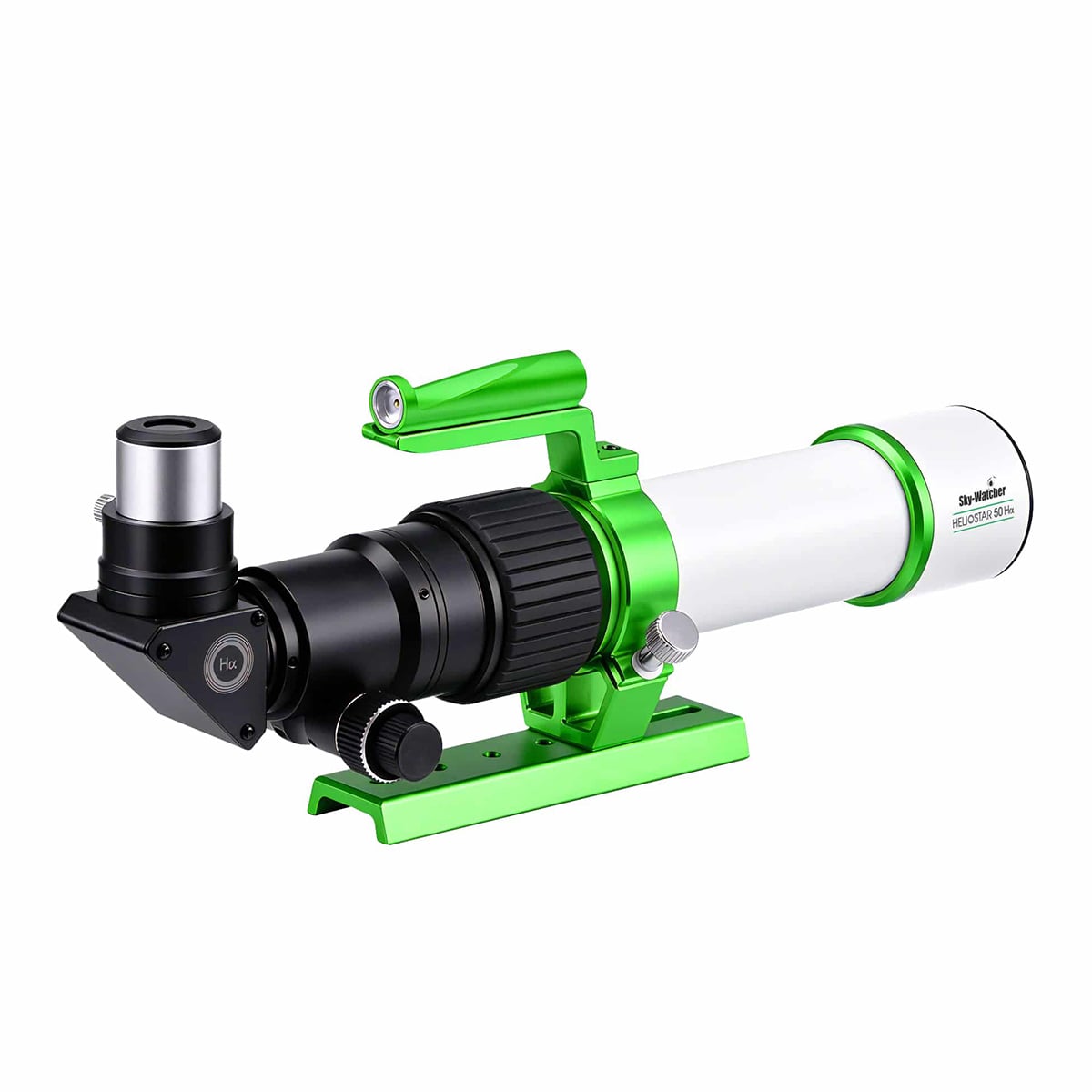
The Heliostar 50 has a 50mm objective and a 386mm focal length. Its optical tube weighs 1.86kg, making it considerably smaller than the larger instruments in the Heliostar family. That also makes it the most portable option. It should appeal to astrophotographers and visual astronomers who want a dedicated portable solar instrument.
The solar disc occupies roughly half a degree in the sky. A 386mm telescope can accommodate the complete disc on many astronomy camera sensors, although the final framing depends on sensor dimensions.
Sky-Watcher has fitted the telescope with a dual-speed 2-inch focuser. The two-speed mechanism allows users to make larger focusing adjustments before refining the image. The package includes a Solar Zenit prism diagonal, which houses an 8mm blocking filter. Buyers also receive a 17mm Plössl eyepiece, a solar finder, mounting ring, and Vixen-style dovetail bar.
What does H-Alpha observation reveal
The Heliostar 50 works at the hydrogen-alpha wavelength of 656.3nm. This spectral line comes from hydrogen and provides access to the Sun’s chromosphere. The chromosphere sits above the photosphere, which produces most of the visible light we see from the Sun.
Solar prominences are among the most familiar features in H-alpha images. They consist of relatively cool plasma suspended above the Sun’s visible edge. Filaments offer another view of the same activity. They contain plasma suspended above the solar surface, but appear dark against the brighter chromosphere.
H-alpha observations also reveal plages and active regions. These areas often surround sunspots and show increased magnetic activity. Solar flares can produce rapid changes in their appearance. Astrophotographers can record these events through repeated video captures, then select and stack the sharpest frames.
Solis Etalon Technology: Bandpass below 0.5Å
The etalon is the heart of the Heliostar 50’s filtering system. It is an optical interferometer that selects a very narrow range of wavelengths from incoming sunlight. Two highly reflective, parallel surfaces form the main part of a conventional etalon. Light reflects repeatedly between them, and interference determines which wavelengths pass through.
Sky-Watcher has specified a bandpass below 0.5Å for the Heliostar 50. Its Solis Etalon technology achieves this without requiring a second etalon. The Heliostar 50 also integrates an 8mm blocking filter into the supplied Solar Zenit prism diagonal.
Sky-Watcher has made an interesting distinction between the Heliostar 50 and its larger siblings. According to the product description, the new telescope uses a different etalon design from the Heliostar 76, 100 and 150. It has a central, unobstructed etalon with a lateral compression tuning mechanism.
Price and availability
At the time of writing this, Sky-Watcher hasn’t made any announcement regarding the pricing and availability of the Heliostar 50 solar telescope. We will update this space as and when this information is officially available.
Clear skies!
See more from DIYPhotography.net on Google
Add DIYPhotography.net as a trusted source. This makes
our stories more likely to appear in your Google Search results.
 Add as a preferred source on Google

Soumyadeep Mukherjee
Soumyadeep Mukherjee is an award-winning astrophotographer from India. He has a doctorate degree in Linguistics. His work extends to the sub-genres of nightscape, deep sky, solar, lunar and optical phenomenon photography. He is also a photography educator and has conducted numerous workshops. His works have appeared in over 40 books & magazines including Astronomy, BBC Sky at Night, Sky & Telescope among others, and in various websites including National Geographic, NASA, Forbes. He was the first Indian to win “Astronomy Photographer of the Year” award in a major category.



Join the Discussion
DIYP Comment Policy
Be nice, be on-topic, no personal information or flames.