






















Sky-Watcher Skymax 200DX Maksutov-Cassegrain Telescope Launched
Feb 3, 2026
Soumyadeep Mukherjee
Soumyadeep Mukherjee is an award-winning astrophotographer from India. He has a doctorate degree in Linguistics. His work extends to the sub-genres of nightscape, deep sky, solar, lunar and optical phenomenon photography. He is also a photography educator and has conducted numerous workshops. His works have appeared in over 40 books & magazines including Astronomy, BBC Sky at Night, Sky & Telescope among others, and in various websites including National Geographic, NASA, Forbes. He was the first Indian to win “Astronomy Photographer of the Year” award in a major category.
Share:
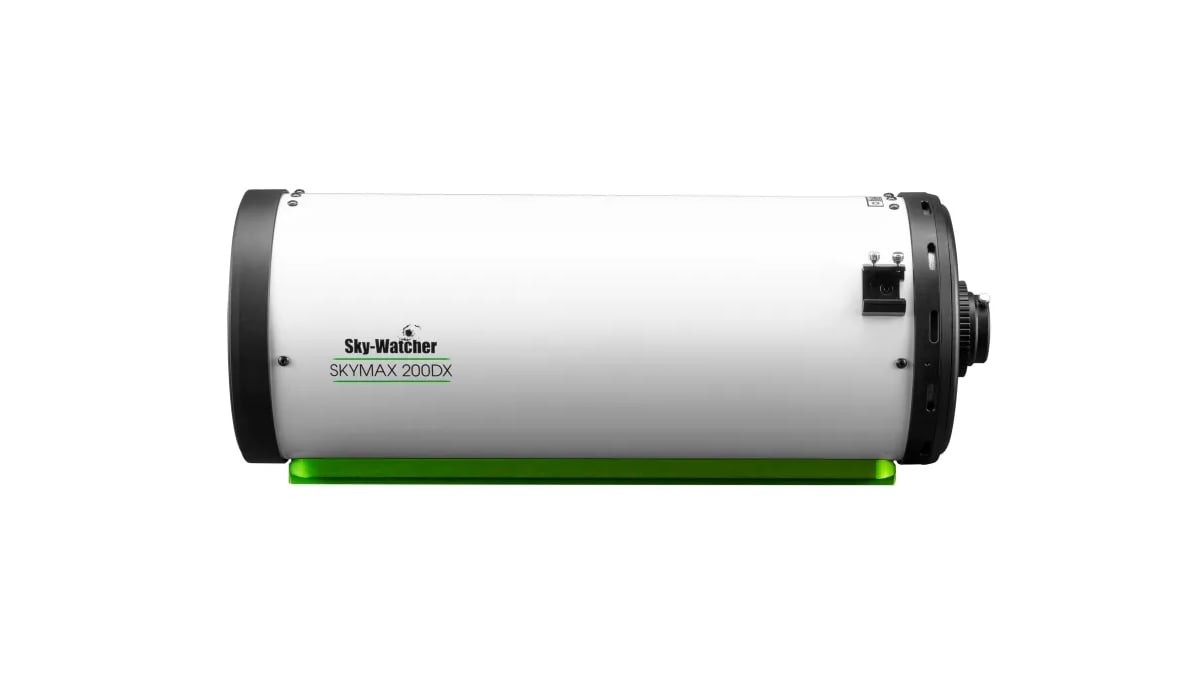
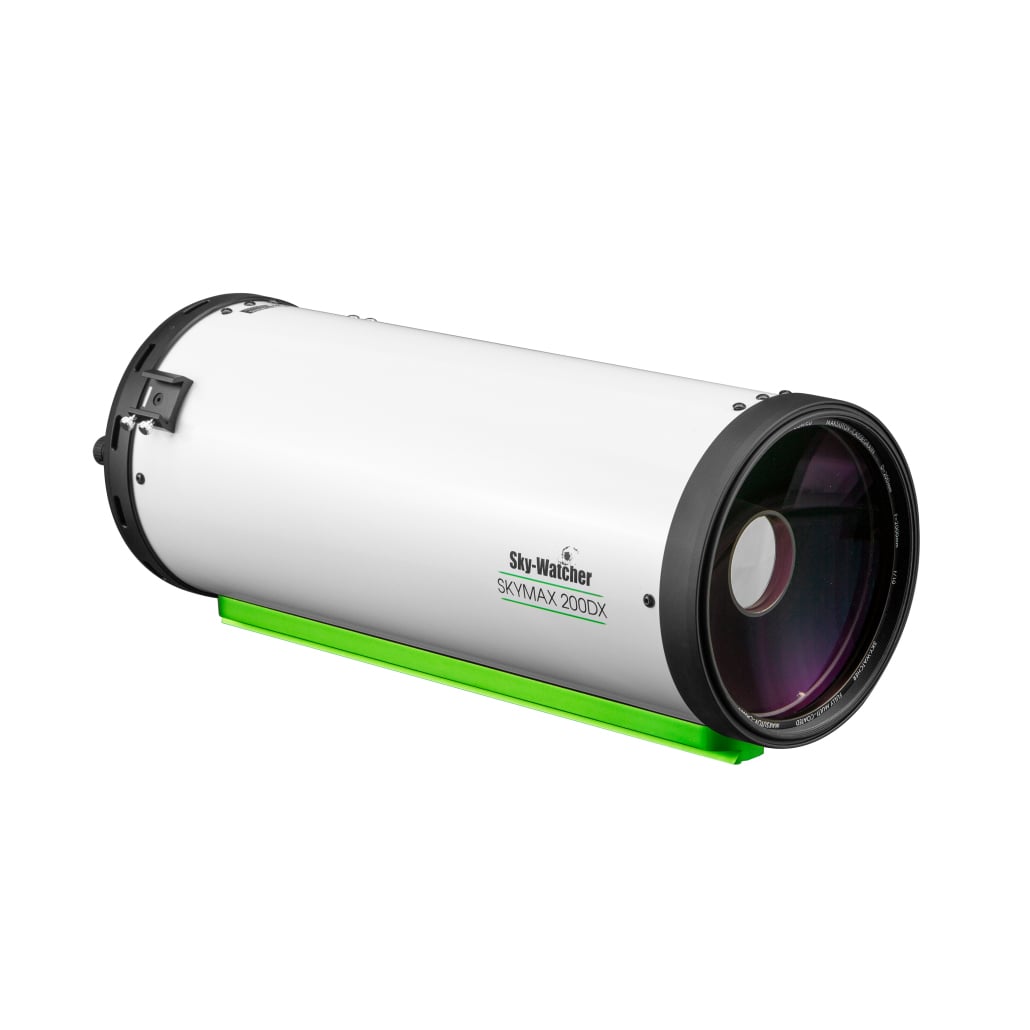
High-resolution amateur astronomy has always balanced two competing goals. Observers want large apertures and long focal lengths for detail. At the same time, they want compact systems that remain practical to transport and mount. For decades, the Maksutov-Cassegrain design has offered a solution to this challenge by combining folded optics with strong aberration control. Now, Sky-Watcher advances this concept further with the Skymax 200DX Maksutov-Cassegrain Telescope, a new 200 mm flat-field optical tube assembly built for both visual astronomy and contemporary astrophotography.
Sky-Watcher presents it as a dedicated optical tube assembly, or OTA. The telescope targets experienced users who prefer to select their own mounts, cameras, and accessories. With a 200 mm aperture, a 2000 mm focal length, and a native focal ratio of f/10, the telescope delivers the magnification and resolving power needed for detailed lunar, planetary, and compact deep-sky work.
A classic optical design: Maksutov-Cassegrain
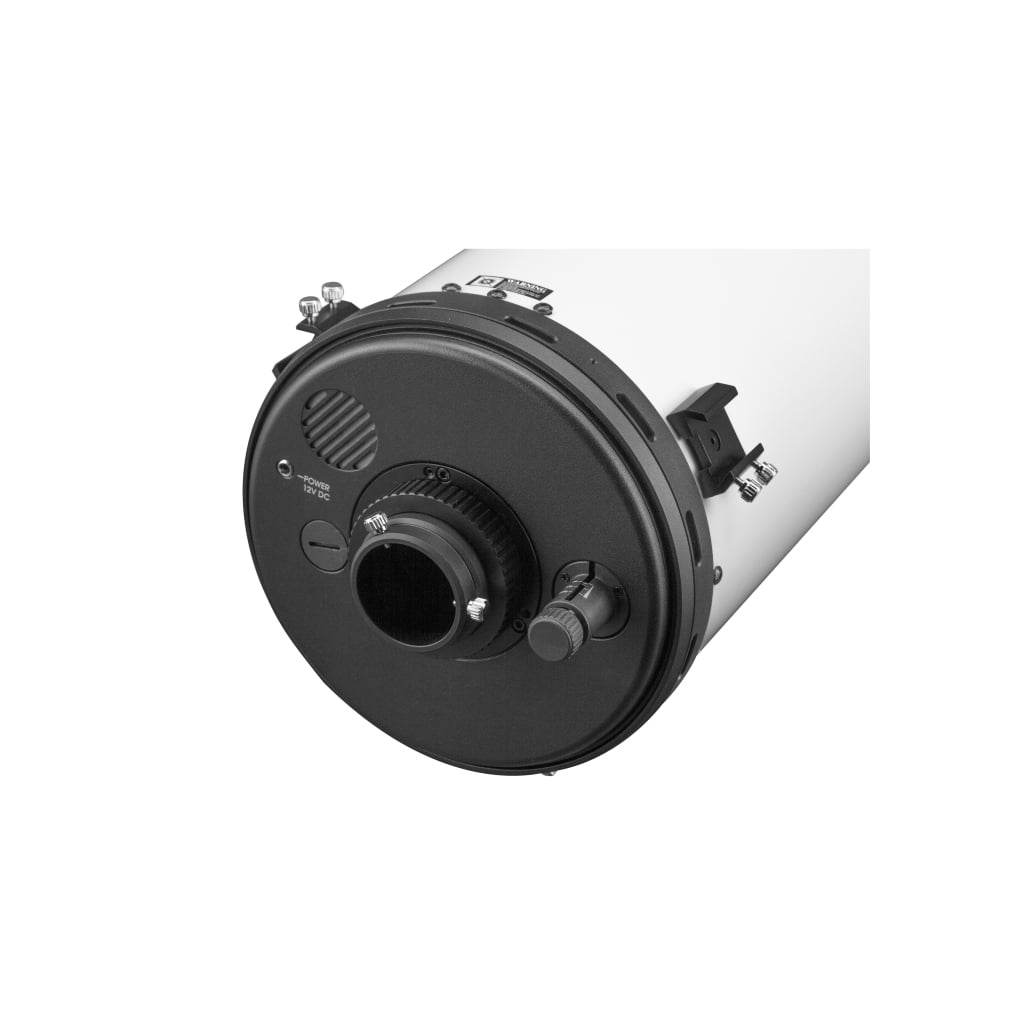
The Skymax 200DX builds on the traditional Maksutov-Cassegrain layout. Light enters through a meniscus corrector at the front of the tube. It then reflects off a primary mirror at the rear, redirects forward via a secondary mirror, and finally exits through the back of the telescope to the eyepiece or camera.
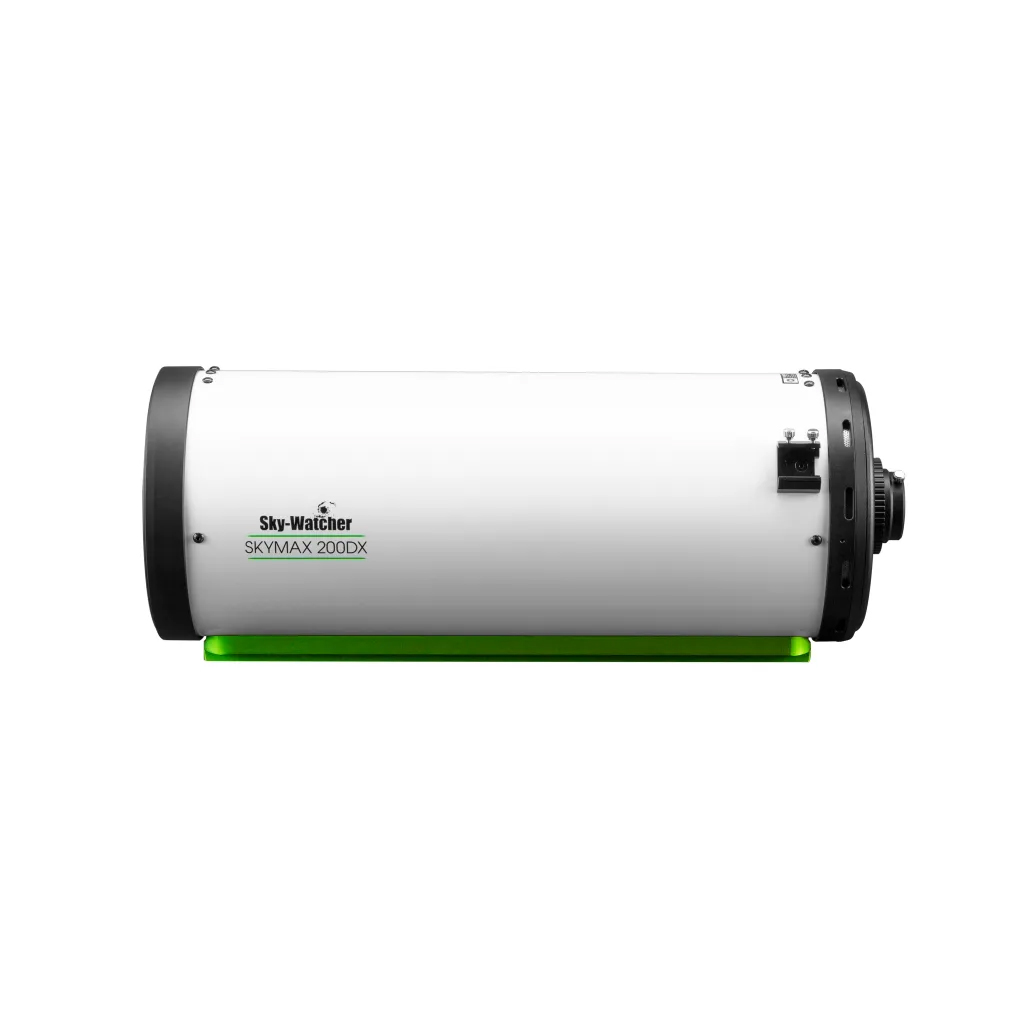
This folded light path allows Skymax 200DX to achieve a long focal length in a physically short tube. Although the telescope operates at 2000 mm, the optical tube measures only about 665 mm in length. This compact geometry makes transport and mounting far easier than with comparably long refractors or classical reflectors.
The company redesigned the optical system to produce a flat focal plane. Traditional Maksutov telescopes often exhibit field curvature. Stars appear sharp in the center but soften toward the edges, especially on large sensors. The Skymax 200DX addresses this limitation directly. Its optics deliver consistent sharpness across an image circle of up to 44 mm. As a result, stars remain tight from center to corner on many APS-C and full-frame cameras.
This flat-field performance marks one of the most important upgrades in this model. It transforms the Maksutov from a primarily visual and planetary instrument into a serious imaging platform.
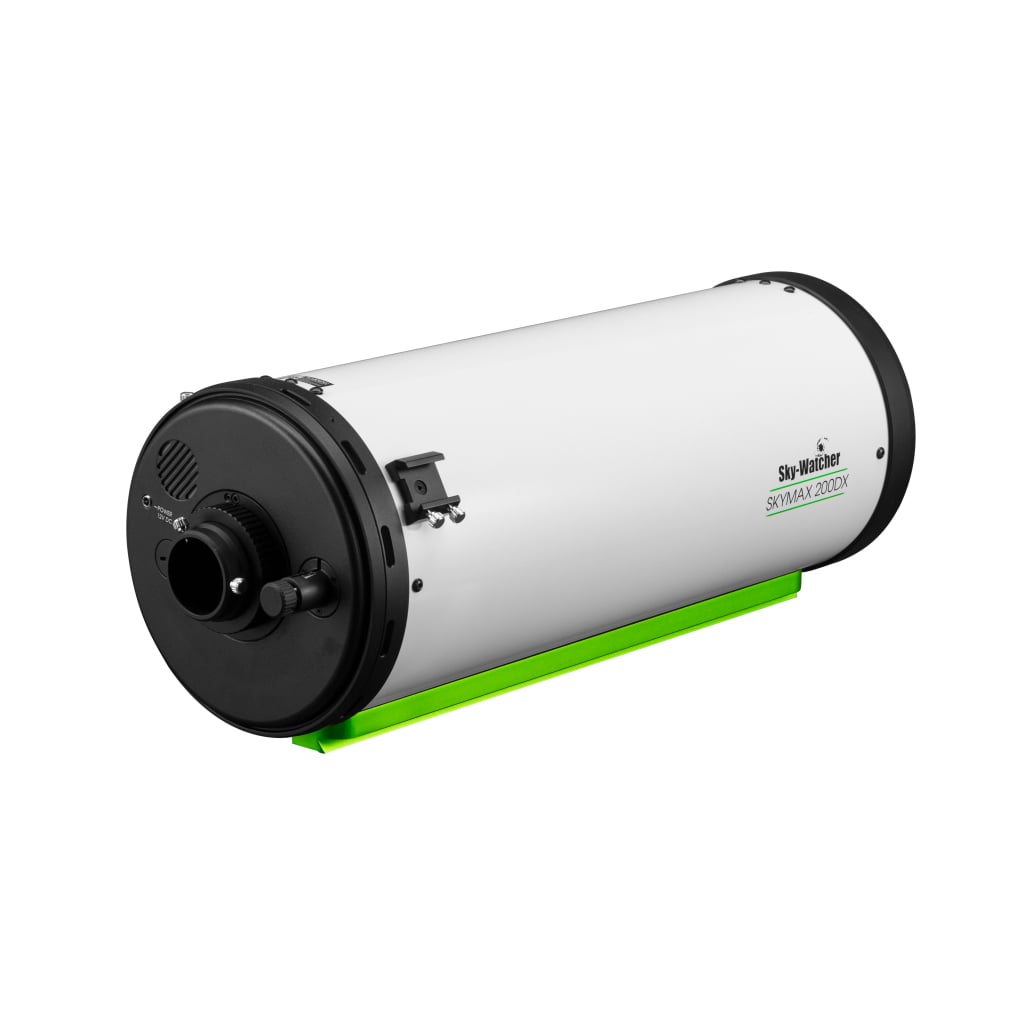
Aperture, Focal Length, and other specifications
A 200 mm aperture provides substantial light-gathering power. Compared with smaller Maksutov designs, the Skymax 200DX collects significantly more light and resolves finer detail. This improvement becomes immediately apparent on the Moon and planets. Crater rims show sharper edges. Subtle tonal variations emerge in lunar maria. On Jupiter, cloud belts gain structure. On Saturn, ring divisions appear more clearly under steady skies.
The 2000 mm focal length plays an equally important role. Long focal lengths enlarge small targets. They make planetary disks easier to sample with modern cameras and allow visual observers to reach high magnification without extreme eyepiece combinations. These characteristic suits the Skymax 200DX perfectly for high-resolution work, where scale matters more than field width.
Yet Sky-Watcher also recognized the need for flexibility. To expand the telescope’s imaging range, the system supports an optional 0.7× focal reducer. With this accessory in place, the effective focal length drops to about 1400 mm, and the focal ratio improves to roughly f/7. This change speeds up the system and widens the field of view. Exposure times shorten. Framing becomes easier. A broader range of deep-sky targets comes within reach.
This dual-mode capability allows users to move between high-magnification planetary imaging and moderately wide deep-sky work without changing telescopes.
Visual observing with high contrast and stability
For visual observers, the Skymax 200DX offers several inherent advantages. First, the Maksutov design produces naturally high contrast. The corrector lens effectively suppresses aberrations, while the closed tube minimizes internal air currents. Together, these factors stabilize images and enhance fine detail.
Second, the closed optical system protects internal components from dust and moisture. This feature reduces maintenance and preserves optical alignment over time.
Third, the long focal length supports comfortable high-power observing. Lunar ridges, crater chains, and shadow transitions reveal intricate structure. On favorable nights, planetary surfaces show delicate variations that smaller apertures struggle to present.
Although the telescope excels on bright objects, it also performs well on compact deep-sky targets. Planetary nebulae, globular clusters, and small galaxies benefit from the aperture and resolution. While this is not a wide-field instrument, it provides clarity to objects within its narrower field. The compact tube further enhances usability. Despite its optical power, the telescope remains manageable for backyard setups and field deployments alike.
Designed for astrophotography
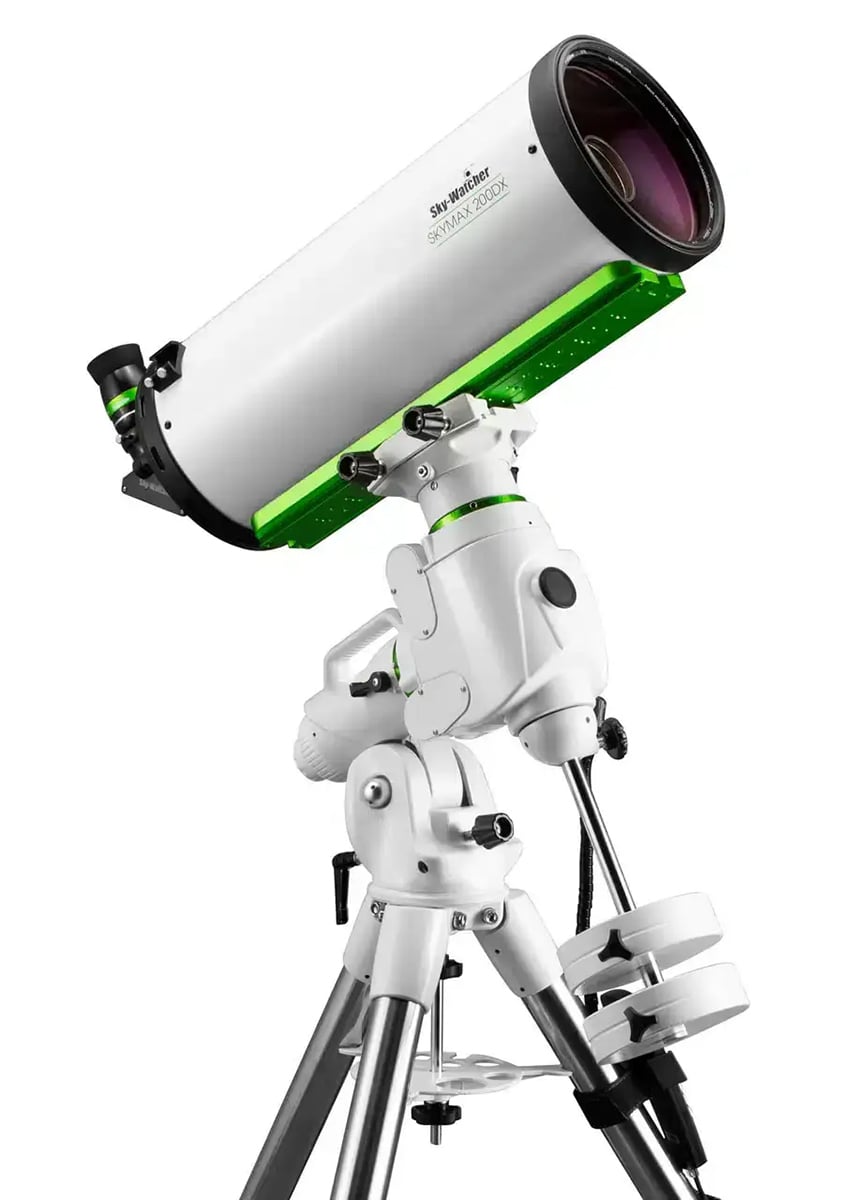
Astrophotography now relies heavily on large sensors, precise guiding, and calibrated optical systems. Sky-Watcher designed the Skymax 200DX with these requirements in mind. The 44 mm corrected image circle accommodates modern cameras without severe edge degradation. Stars stay round across much of the frame. This capability alone distinguishes the 200DX from many earlier Maksutov designs.
The optional focal reducer expands imaging flexibility. At f/7, the system becomes noticeably faster. This speed increase improves signal acquisition and allows deeper imaging within limited time windows. It also reduces demands on guiding accuracy, which helps users achieve cleaner results on compact mounts. Planetary imagers will appreciate the native f/10 configuration. It provides an ideal scale for high-speed cameras and lucky imaging techniques. Deep-sky imagers can adopt the reduced configuration for galaxies, planetary nebulae, and smaller emission regions.
In both cases, the flat field simplifies post-processing. It reduces the need for aggressive cropping and minimizes corner corrections. The telescope integrates naturally with equatorial mounts and autoguiding systems. Once mounted and aligned, it supports long exposure sequences and structured imaging workflows.
Ket specifications, price, and availability
Here are the key specifications of the Sky-Watcher Skymax 200DX:
| Optical Design | Maksutov-Cassegrain |
| Effective Aperture | 200 mm |
| Focal Length | 2000 mm |
| Focal Ratio | F10 |
| Image Circle | 44 mm |
| Optional Focal Reducer | 0.7x |
| OTA Length | 665 mm |
| OTA Diameter | 235 mm |
| OTA Net Weight | 12kg |
The Skymax 200DX Maksutov-Cassegrain telescope is priced at $2,450 (AU$ 3,499). The telescope will be in stock and available for ordering from May 2026 via the official website and other retailers.
The Skymax 200DX does not target beginners looking for a turnkey telescope. Instead, it serves enthusiasts who already understand optical systems and mounting requirements. The telescope also appeals to users who want a single optical tube that supports multiple disciplines. With one configuration, it becomes a planetary imaging platform. With another, it transitions into a deep-sky instrument for smaller targets.
This versatility makes the Skymax 200DX especially attractive to astronomers who prefer to concentrate their investment in one high-quality OTA,
Clear skies!
See more from DIYPhotography.net on Google
Add DIYPhotography.net as a trusted source. This makes
our stories more likely to appear in your Google Search results.
 Add as a preferred source on Google

Soumyadeep Mukherjee
Soumyadeep Mukherjee is an award-winning astrophotographer from India. He has a doctorate degree in Linguistics. His work extends to the sub-genres of nightscape, deep sky, solar, lunar and optical phenomenon photography. He is also a photography educator and has conducted numerous workshops. His works have appeared in over 40 books & magazines including Astronomy, BBC Sky at Night, Sky & Telescope among others, and in various websites including National Geographic, NASA, Forbes. He was the first Indian to win “Astronomy Photographer of the Year” award in a major category.




Join the Discussion
DIYP Comment Policy
Be nice, be on-topic, no personal information or flames.