























Svbony SC715C: A Practical Planetary camera with IMX715
Aug 14, 2025
Soumyadeep Mukherjee
Soumyadeep Mukherjee is an award-winning astrophotographer from India. He has a doctorate degree in Linguistics. His work extends to the sub-genres of nightscape, deep sky, solar, lunar and optical phenomenon photography. He is also a photography educator and has conducted numerous workshops. His works have appeared in over 40 books & magazines including Astronomy, BBC Sky at Night, Sky & Telescope among others, and in various websites including National Geographic, NASA, Forbes. He was the first Indian to win “Astronomy Photographer of the Year” award in a major category.
Share:
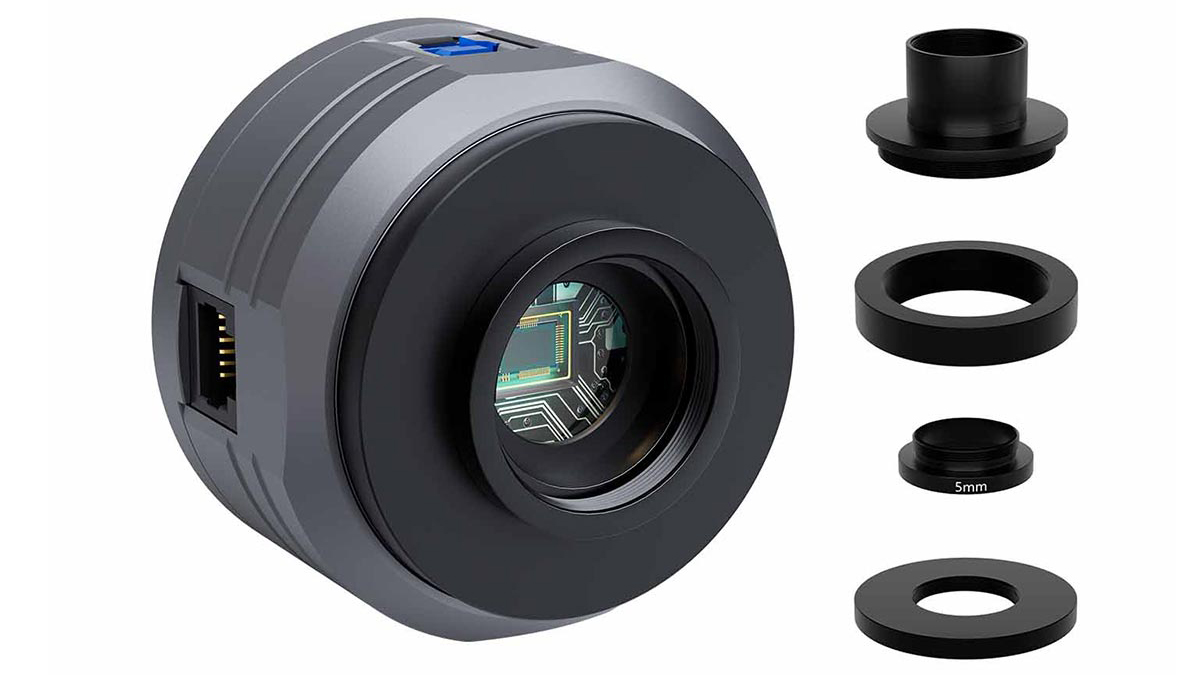
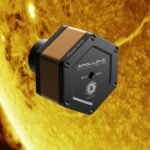
The SC715C is Svbony’s new color planetary camera. It targets observers who want clean detail from compact setups. It blends a modern Sony sensor with fast USB 3.0 transfer and a guiding port and adds a hardware buffer for smoother capture. The result is a capable, affordable tool for lunar and planetary work. It can also reach bright deep-sky targets with the right workflow. The current sale price makes it more attractive for beginners and clubs.
Sensor and image quality
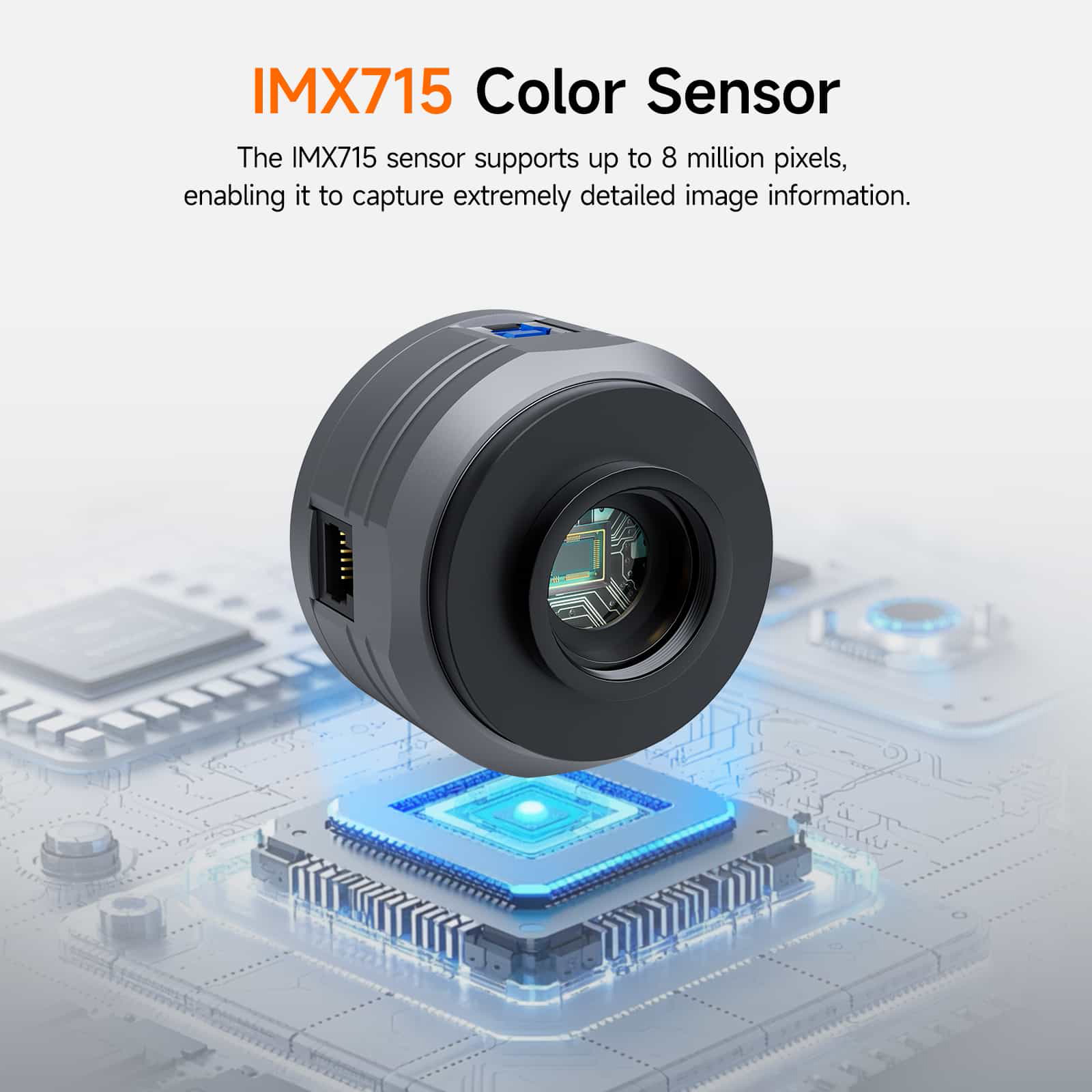
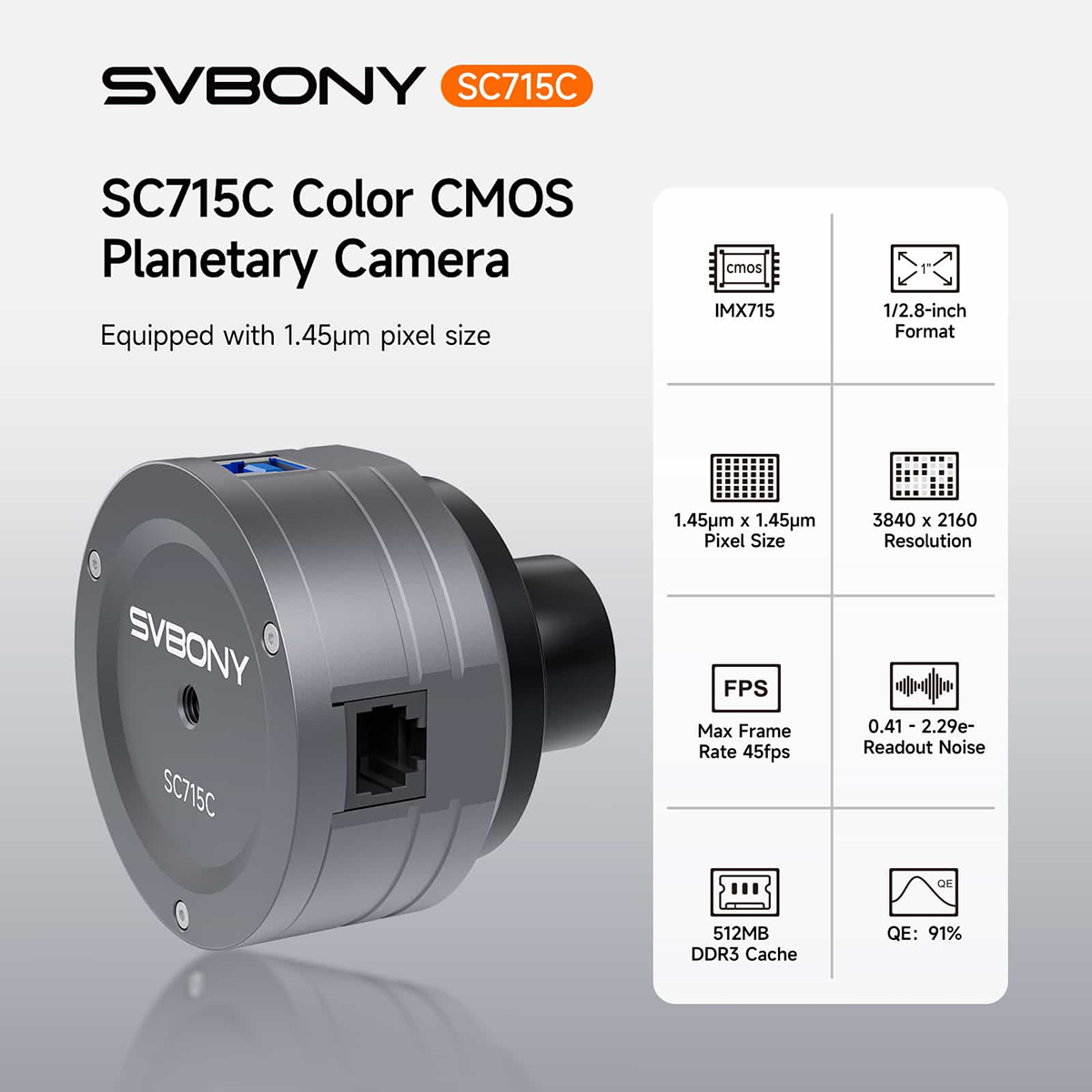
The core of this camera is Sony’s IMX715 color CMOS sensor. It is a 1/2.8-inch format device with small 1.45 µm pixels. The native resolution is 3840 × 2160, or 8.4 megapixels. This format gives high sampling at modest focal lengths. It suits common Maksutov, SCT, and small Newtonian setups. It also supports 1×1 and 2×2 binning for flexible scales. Svbony notes a wide dynamic range of 72.8 dB. The spec sheet lists read noise between 0.41 and 2.29 electrons. These figures help with low-contrast details on the Moon and planets.
Starvis II technology
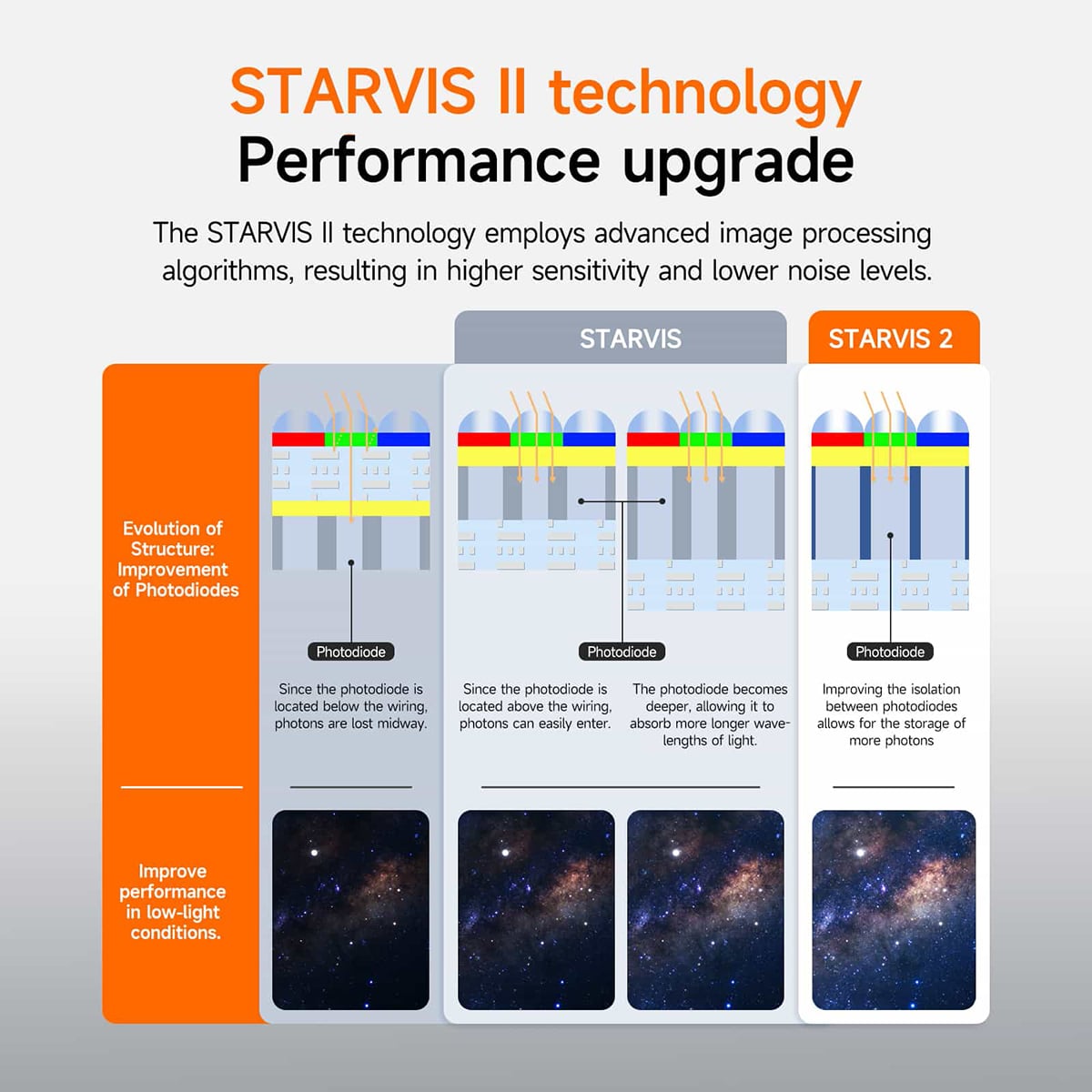
Svbony highlights STARVIS II technology in this model. STARVIS II improves sensitivity and reduces noise in low light. This helps when you push short exposures at high frame rates. It also helps when seeing conditions vary. The camera remains responsive while holding fine detail. For planetary cameras, that balance is important for preserving micro-contrast in belts and craters.
Speed and data handling
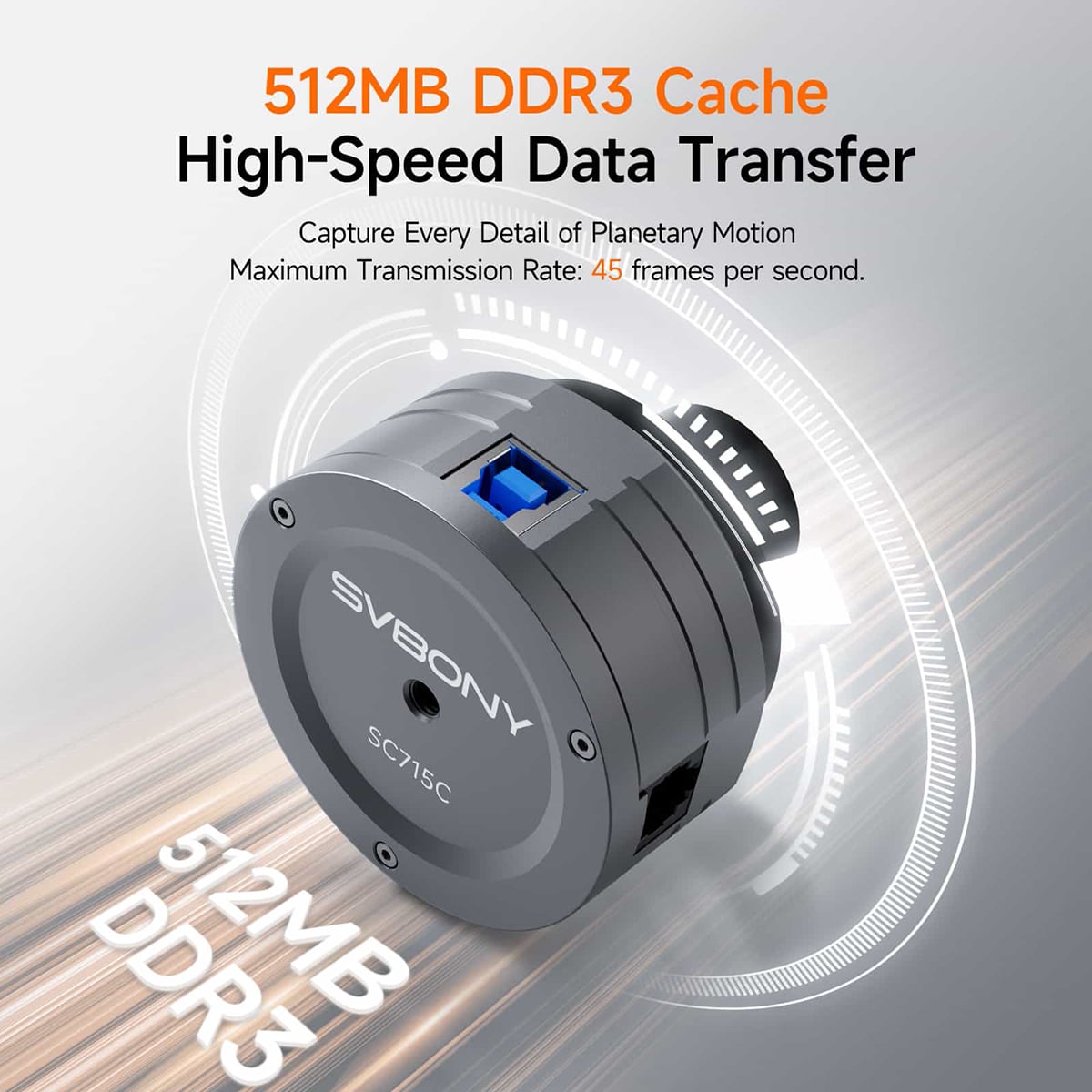
High frame rates raise the odds of sharp frames. The SC715C delivers 45.5 frames per second at full resolution. It uses a USB 3.0 interface with 5 Gbps bandwidth. The camera also includes a 512 MB DDR3 buffer. The buffer reduces dropped frames during recording. It helps when the computer pauses or the disk slows. Planetary imaging gains from that stability. You can record longer runs without tearing or gaps. The buffer also improves responsiveness while focusing. These hardware choices show careful attention to capture flow.
Svbony also lists sensor-level speed figures. The IMX715 can reach up to 60.3 fps at 12-bit readout. It can reach 90.9 fps at 10-bit readout, depending on mode. Real-world frame rates depend on ROI choices and software. The headline 45.5 fps at full frame is a solid baseline. Most planetary imagers crop to a region of interest. That pushes frame rates higher for Jupiter or Saturn. It also reduces file sizes during long captures.
Guiding, connections, and design
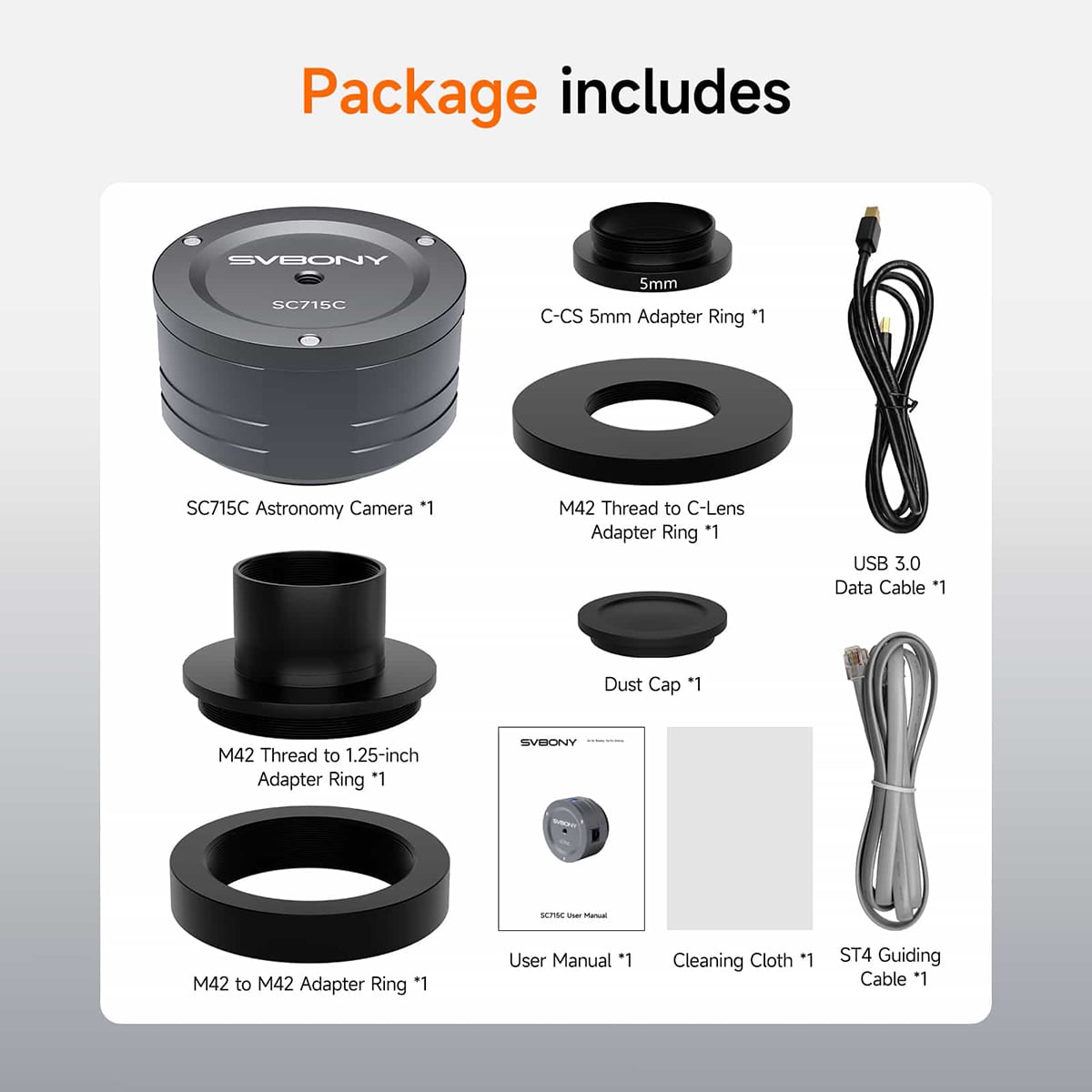
The SC715C includes an ST4 autoguider port. You can connect it directly to a mount’s guide input. This helps correct drift during longer captures. It also helps when you switch from planets to bright DSOs. The body has a 1/4-inch rear thread for tripod mounting. The front uses an M42 male thread for standard astro adapters. Svbony ships several adapters in the box. You get M42–M42, M42–1.25-inch, C-lens, and a 5 mm C-to-CS ring. These cover most telescope and lens setups. The package also includes a USB 3.0 cable and an ST4 cable. The camera body weighs about 147 g. The housing is aluminum with an anodized finish. The lightweight reduces stress on small focusers, and the metal body helps with passive heat dissipation.
USB 3.0 is standard for modern capture. It supports the stated frame rates and bit depths and reduces latency in live view. That helps with collimation and focus. The physical B-type connector is robust in the field. It resists accidental unplugging better than micro connectors. The port choice aligns with other Svbony planetary models. It simplifies cable management if you already own their gear.
Price and availability
The Svbony SC715C is priced at $229.99 and is available via the official website.
The spec sheet defines a clear use case. It is a color camera that balances resolution and speed that has a modern back-illuminated sensor with strong sensitivity, a wide exposure range, and low read noise. It connects over robust USB 3.0 and supports guiding and includes a hardware buffer to smooth capture. The body is light yet sturdy. The package includes the required adapters and cables. These are the features that matter for first-time imagers.
Clear skies!
See more from DIYPhotography.net on Google
Add DIYPhotography.net as a trusted source. This makes
our stories more likely to appear in your Google Search results.
 Add as a preferred source on Google

Soumyadeep Mukherjee
Soumyadeep Mukherjee is an award-winning astrophotographer from India. He has a doctorate degree in Linguistics. His work extends to the sub-genres of nightscape, deep sky, solar, lunar and optical phenomenon photography. He is also a photography educator and has conducted numerous workshops. His works have appeared in over 40 books & magazines including Astronomy, BBC Sky at Night, Sky & Telescope among others, and in various websites including National Geographic, NASA, Forbes. He was the first Indian to win “Astronomy Photographer of the Year” award in a major category.


Join the Discussion
DIYP Comment Policy
Be nice, be on-topic, no personal information or flames.
One response to “Svbony SC715C: A Practical Planetary camera with IMX715”
Helpful hint: If it’s an off-the-shelf product, it’s not DIY.