




















UMi 17X: A New Harmonic Mount from Proxisky Launched
Nov 1, 2025
Soumyadeep Mukherjee
Soumyadeep Mukherjee is an award-winning astrophotographer from India. He has a doctorate degree in Linguistics. His work extends to the sub-genres of nightscape, deep sky, solar, lunar and optical phenomenon photography. He is also a photography educator and has conducted numerous workshops. His works have appeared in over 40 books & magazines including Astronomy, BBC Sky at Night, Sky & Telescope among others, and in various websites including National Geographic, NASA, Forbes. He was the first Indian to win “Astronomy Photographer of the Year” award in a major category.
Share:
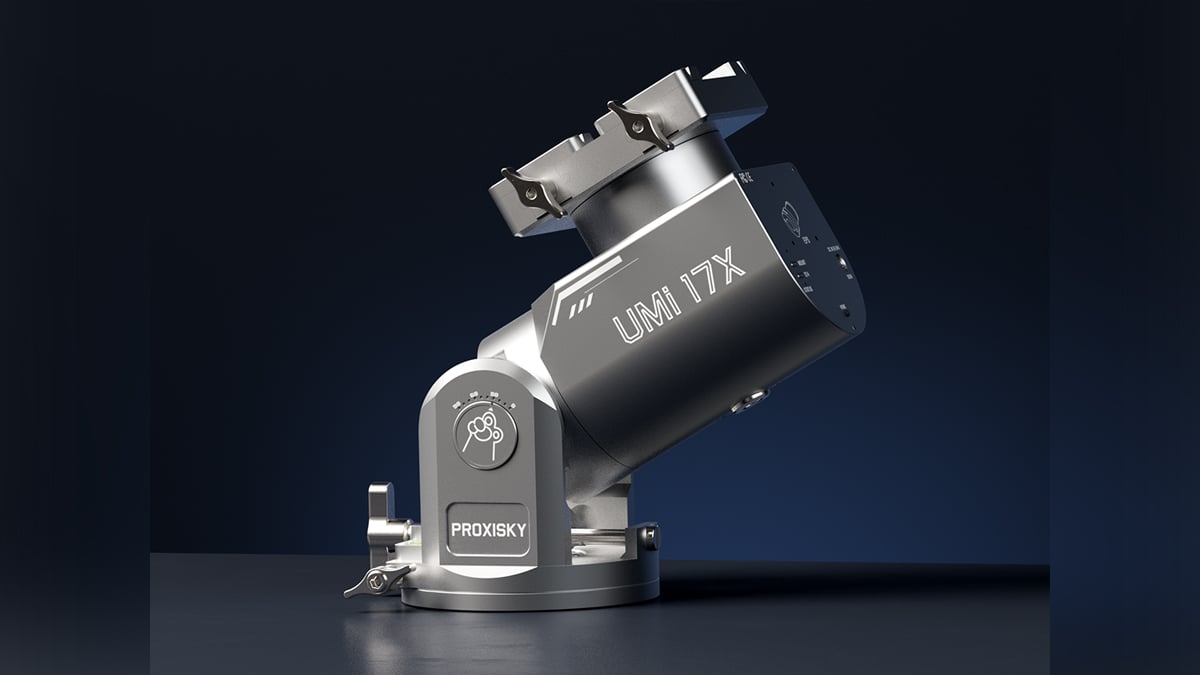
Astrophotography has changed dramatically in the past few years. Lightweight telescopes, small imaging sensors, and portable mounts have opened the sky to travellers and night-sky enthusiasts. The Proxisky UMi 17X arrives in this fast-evolving landscape as a compact harmonic-drive equatorial mount aimed at serious astrophotographers who value precision and portability.
Proxisky, a Hong Kong-based manufacturer known for its UMi series, designed the 17X as an all-metal, strain-wave-driven mount that can track stars, planets, and deep-sky targets with the stability of a larger system. This new model continues Proxisky’s focus on making professional-grade mounts that are light enough to carry and robust enough for long exposures in the field.
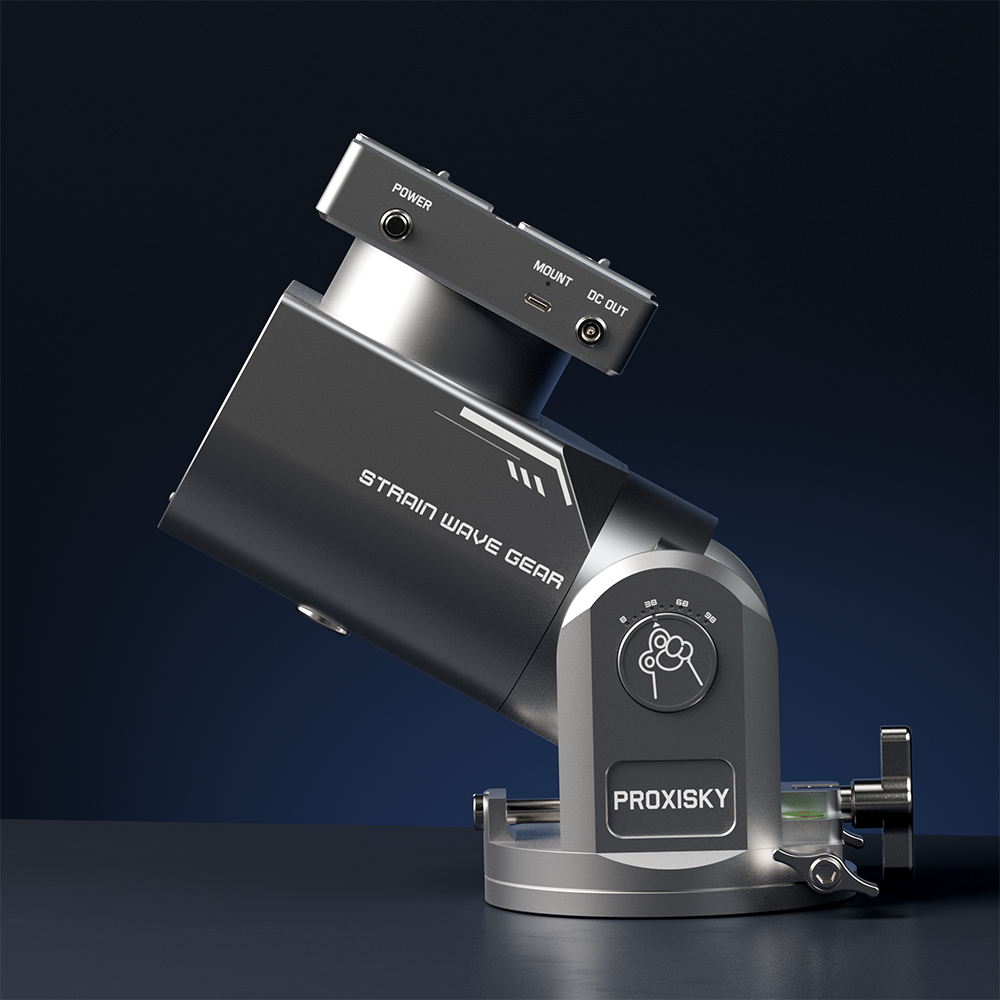
Compact design and harmonic precision
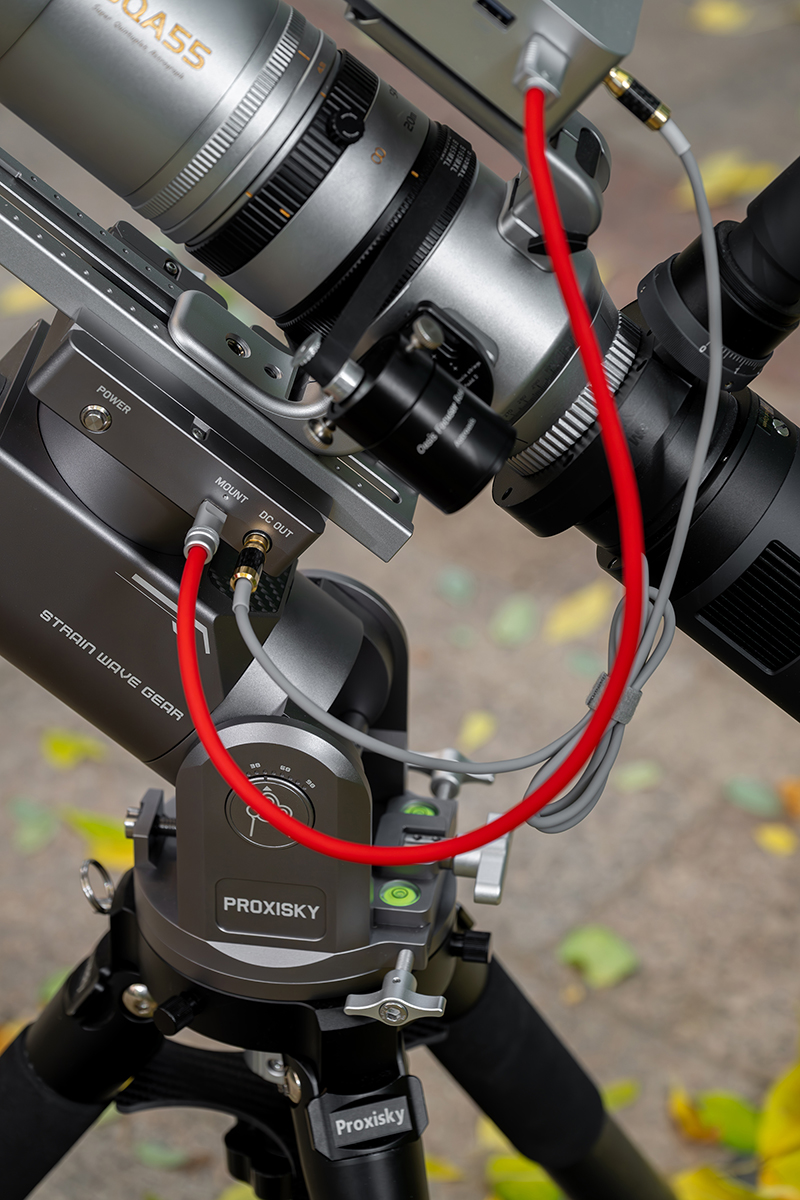
At the heart of the UMi 17X lies its strain-wave (harmonic) gear system. This type of drive is now a preferred solution for portable equatorial mounts because it delivers high torque with almost zero backlash. In traditional worm-gear systems, small mechanical gaps can lead to tracking errors over long exposures. The harmonic drive minimizes that problem by flexing an internal wave generator inside a circular spline, creating fine, repeatable motion.
This technology allows the UMi 17X to stay small while maintaining accuracy. For astrophotographers, that means smooth guiding and stable tracking without large counterweights or heavy housings. The harmonic design also makes the mount nearly maintenance-free, since fewer components need regular adjustment.
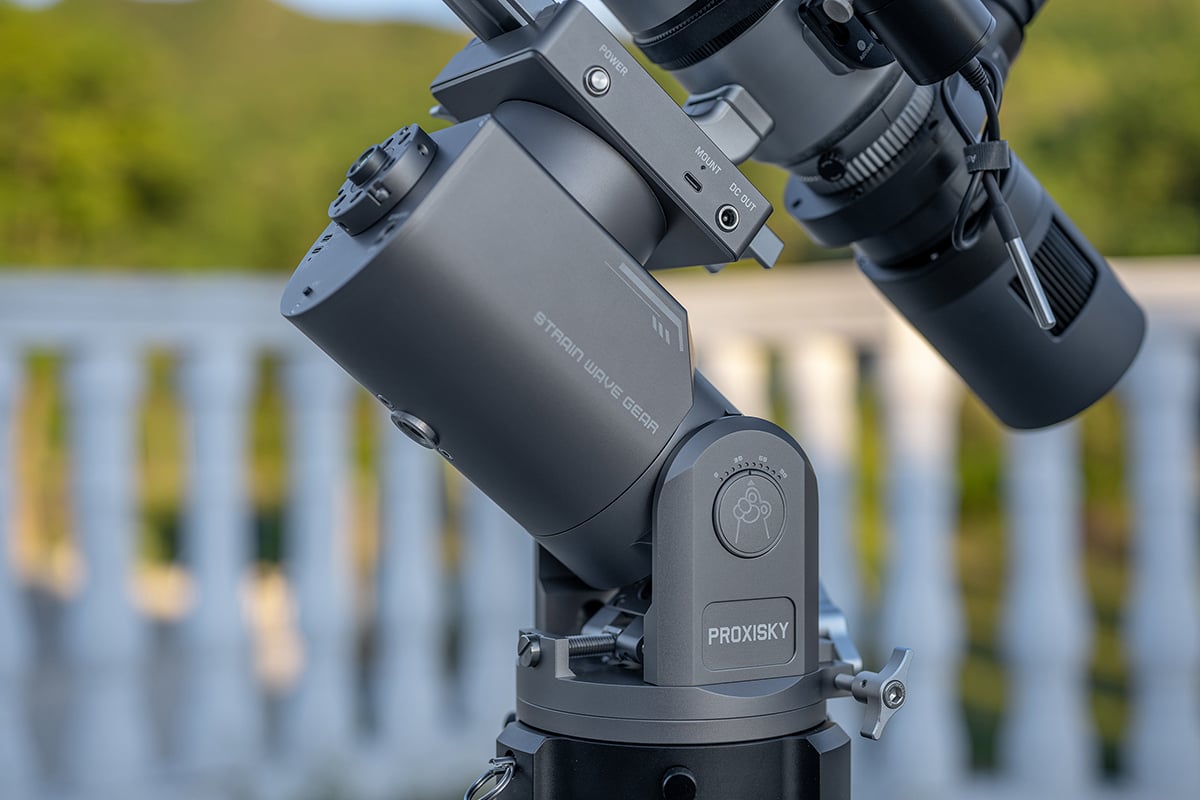
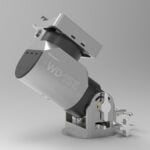
Proxisky has used this design philosophy throughout the UMi line, but the 17X represents the most refined version yet. Its housing appears machined from precision-milled aluminum with rounded edges and a clean, industrial finish. The compact frame allows for quick setup in tight spaces, ideal for field work, desert imaging sessions, or rooftop setups where portability is essential.
Travel-friendly build and package
The official UMi 17X package reflects Proxisky’s understanding of what travelling astrophotographers need. Each mount ships in a hard protective case lined with custom EVA foam, keeping the unit secure during air travel or road transport. The kit also includes the required data and power cables, so there’s no need to buy additional accessories for initial setup.
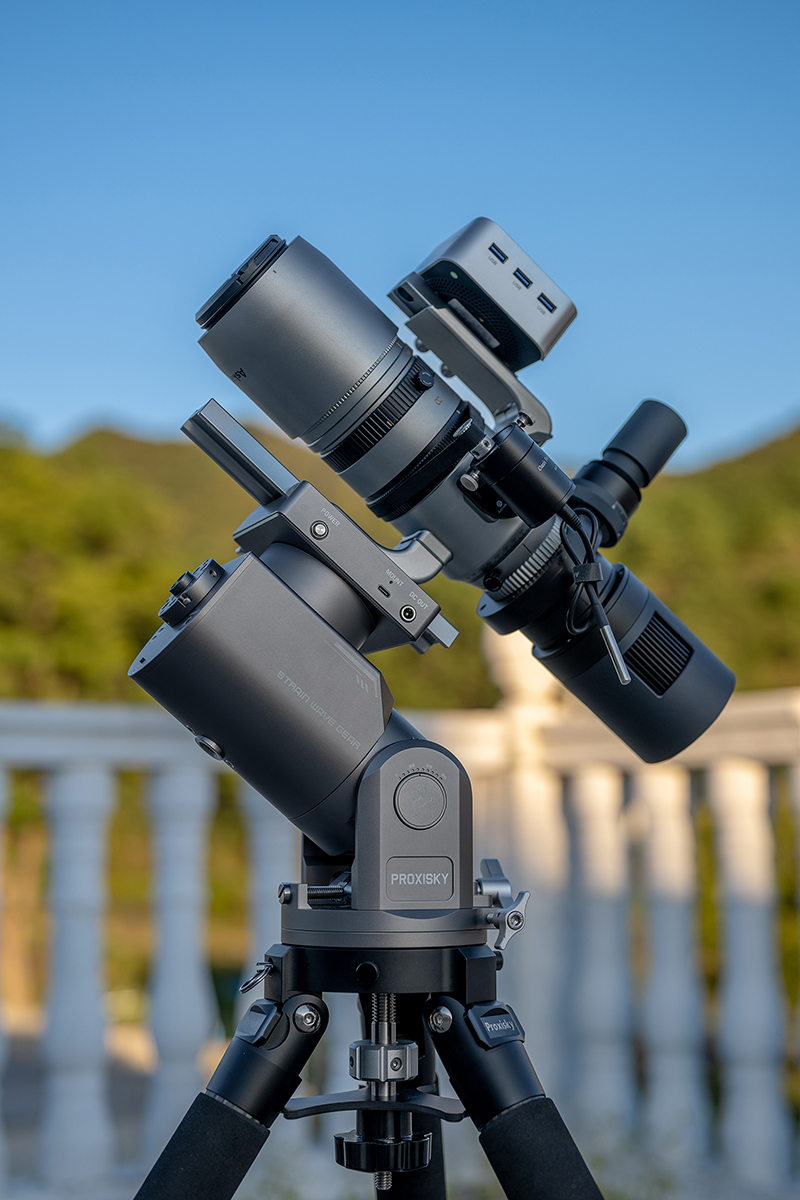
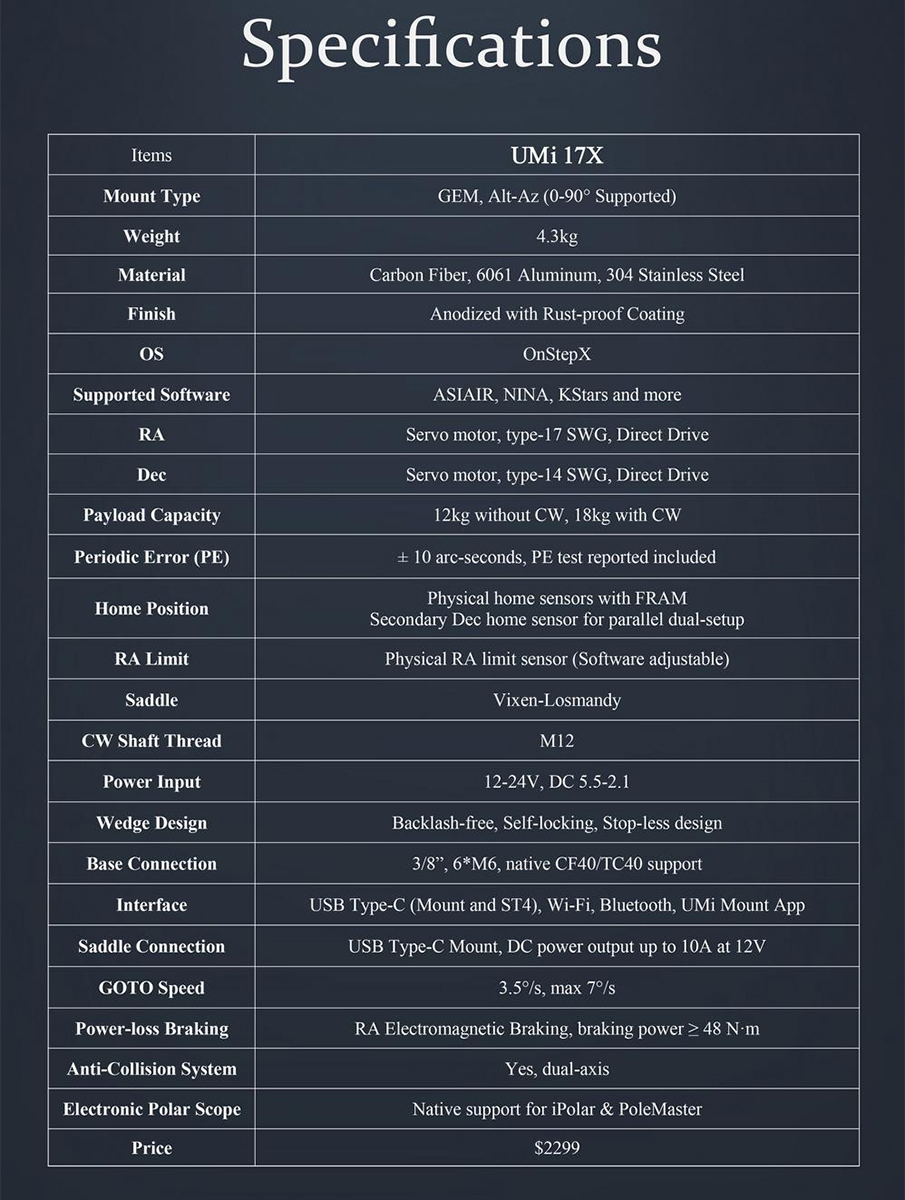
The mount weighs only 4.3 kg, making it very portable. Even with this small weight, it has a payload capacity of 12 kg (without counterweight) and 18 kg (with counterweight). This capacity makes it suitable to pair with medium-sized refractors and astrographs up to around 100 mm aperture, along with typical cameras, filter wheels, and guide scopes.
Built for imaging
Harmonic mounts like the UMi 17X are increasingly favored by astrophotographers because of their mechanical stability and low periodic error. Proxisky’s previous models demonstrated RMS guiding accuracy well under one arcsecond when tuned correctly. Users of earlier UMi versions have reported successful long-exposure imaging sessions with minimal drift.
The 17X builds on those successes. Proxisky’s engineering design emphasizes smooth, responsive motion control and a high-resolution encoder system to maintain precise positioning during multi-hour exposures. The result is steady tracking that allows astrophotographers to focus on composition rather than constant correction.
Because of its compact form, the mount can operate without heavy counterweights in many setups, although balancing remains important for the best results. The design favors those who want to work quickly in remote environments, an advantage during expeditions, star parties, or teaching workshops.
Comparing the UMi 17X with earlier UMi models
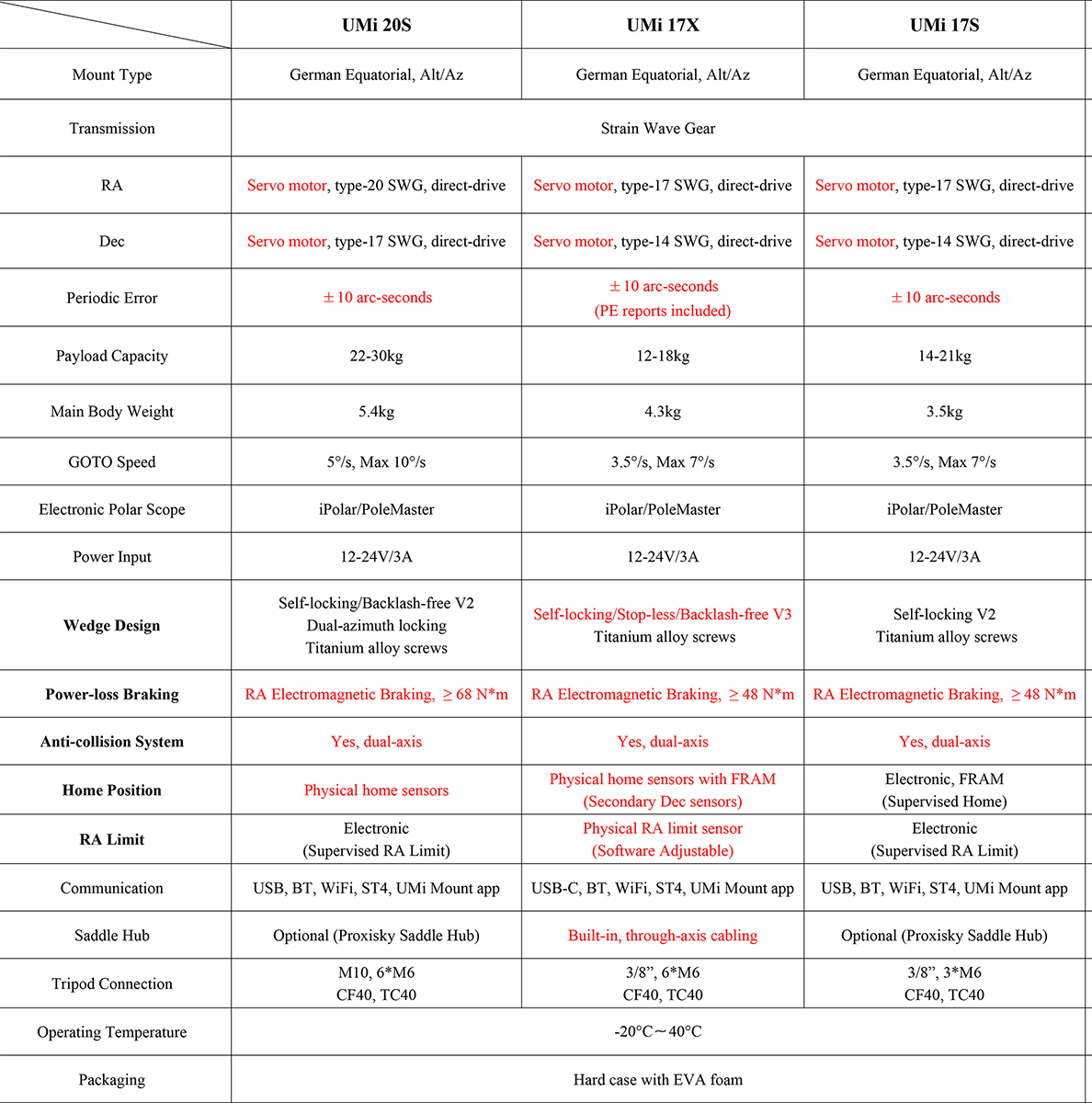
To understand where the 17X stands, it is helpful to briefly examine the rest of the UMi lineup. The earlier UMi 17 and UMi 17 Lite models established Proxisky’s reputation for compact harmonic mounts. They introduced the company’s signature design language: rounded bodies, silver-gray finish, and integrated cabling. The UMi 17 S and UMi 20 S extended payload capacity and added refinements in motor control and software integration.
The UMi 17X appears to continue that evolution. Its naming suggests a higher-end iteration of the 17 series, potentially integrating lessons learned from the “S” versions. What sets it apart, according to Proxisky’s overall messaging, is an emphasis on refined build quality and ready-to-use packaging. The company’s inclusion of a hard case and prepaid global shipping implies that the 17X is positioned as a turn-key mount for traveling professionals, not just hobbyists upgrading from lighter star trackers.
Control, connectivity, and integration
Proxisky’s earlier UMi models operated on motor control systems compatible with common guiding software, often through open protocols such as ASCOM and INDI. That trend continues with the UMi 17X. It has multiple ports for data and power connections, suggesting compatibility with computer-based control and auto-guiding systems.
For astrophotographers using imaging automation platforms like N.I.N.A., Ekos, or ASIAIR, compatibility and stable communication are critical. Proxisky’s support documentation for previous mounts offers downloadable drivers, firmware updates, and manuals for integration with these ecosystems. Having an active support page with manuals and guides suggests that similar resources will be made available for the 17X soon.
Power management also appears streamlined. The mount uses a single external power input and has secure connectors to prevent accidental disconnection during tracking. This is important in field conditions, where sudden loss of power can cause loss of alignment and image sequences.
Price and availability
The Proxisky UMi 17X is priced at $2,299 for the mount-only package. It is now available for ordering via the official website.
Portable harmonic-drive mounts are rapidly replacing older worm-gear designs for many professional astrophotographers in the field. The combination of low weight, high torque, and minimal backlash makes them ideal for today’s imaging systems, especially as cameras become lighter and optics more compact.
The 17X positions Proxisky squarely within this trend. By focusing on an all-in-one design that minimizes setup complexity, the company is appealing to users who no longer want to carry bulky counterweights or assemble multiple components at night. The harmonic-drive design also allows smooth slewing and tracking at different speeds without noticeable play, helping maintain sharp stars in long exposures. In practice, that could make the UMi 17X an excellent choice for astrophotographers who travel to remote dark-sky locations where portability and reliability outweigh raw payload capacity.
Clear skies!
See more from DIYPhotography.net on Google
Add DIYPhotography.net as a trusted source. This makes
our stories more likely to appear in your Google Search results.
 Add as a preferred source on Google

Soumyadeep Mukherjee
Soumyadeep Mukherjee is an award-winning astrophotographer from India. He has a doctorate degree in Linguistics. His work extends to the sub-genres of nightscape, deep sky, solar, lunar and optical phenomenon photography. He is also a photography educator and has conducted numerous workshops. His works have appeared in over 40 books & magazines including Astronomy, BBC Sky at Night, Sky & Telescope among others, and in various websites including National Geographic, NASA, Forbes. He was the first Indian to win “Astronomy Photographer of the Year” award in a major category.

Join the Discussion
DIYP Comment Policy
Be nice, be on-topic, no personal information or flames.