






















ZWO Launches Upgraded ASI2600 Pro: APS-C Astronomy Cameras
Sep 23, 2025
Soumyadeep Mukherjee
Soumyadeep Mukherjee is an award-winning astrophotographer from India. He has a doctorate degree in Linguistics. His work extends to the sub-genres of nightscape, deep sky, solar, lunar and optical phenomenon photography. He is also a photography educator and has conducted numerous workshops. His works have appeared in over 40 books & magazines including Astronomy, BBC Sky at Night, Sky & Telescope among others, and in various websites including National Geographic, NASA, Forbes. He was the first Indian to win “Astronomy Photographer of the Year” award in a major category.
Share:

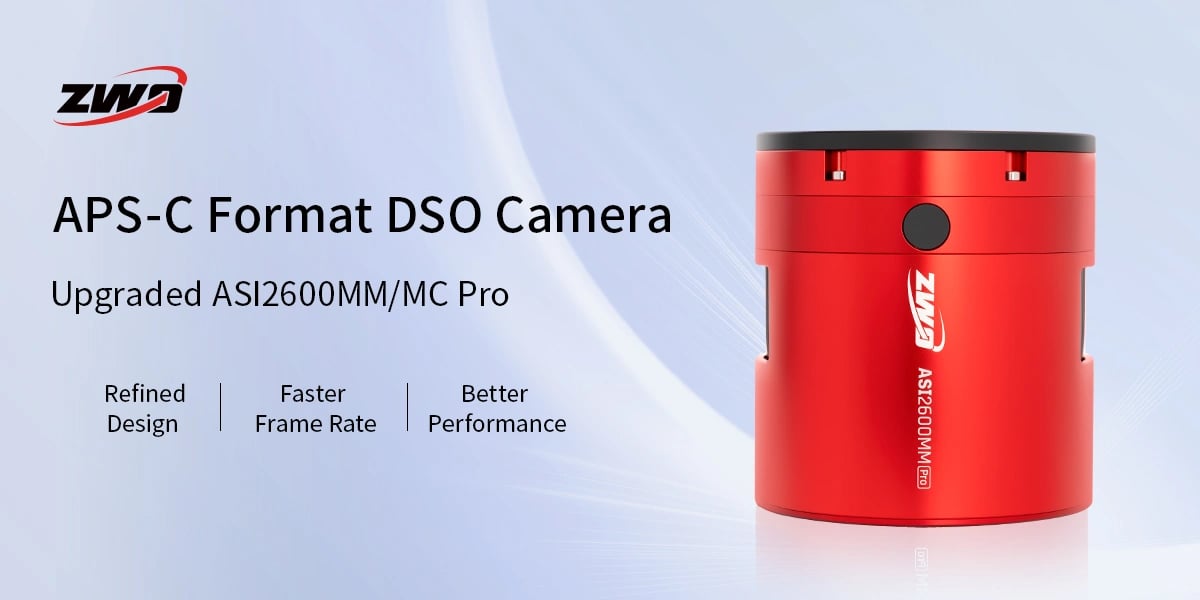
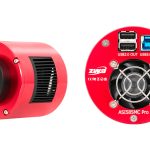
ZWO has recently launched the upgraded ASI2600 Pro, a camera that builds on the success of its predecessor while refining key features for deep-sky imaging. The new model keeps the highly regarded Sony IMX571 APS-C sensor and adds practical improvements that enhance reliability, image quality, and user experience.
The ASI2600 has always been praised for its high sensitivity and excellent dynamic range. With this upgraded model, ZWO addresses real-world imaging challenges, such as dew formation, sensor noise, and frame stability. The result is a camera that remains approachable for both hobbyists and advanced users while offering more robust performance in demanding situations.
Sensor and core specifications
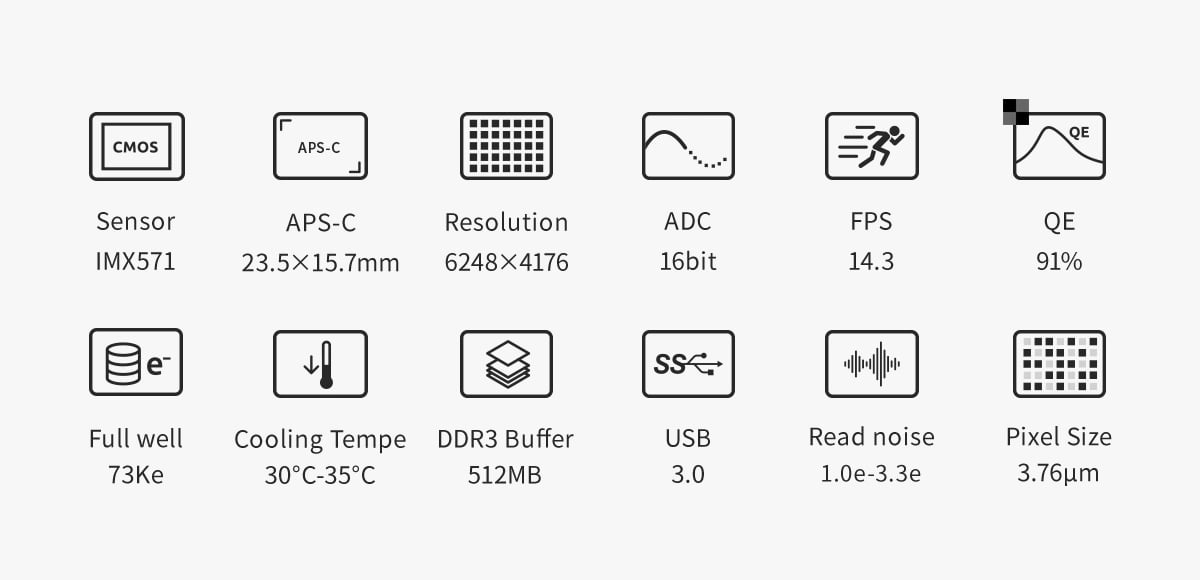
At the heart of the upgraded ASI2600 Pro is the Sony IMX571 APS-C sensor, measuring 23.5 × 15.7 mm with a 28.3 mm diagonal. This sensor delivers 6248 × 4176 pixels, resulting in a true 26-megapixel image. Each pixel is 3.76 μm in size, which balances resolution with light-gathering capacity.
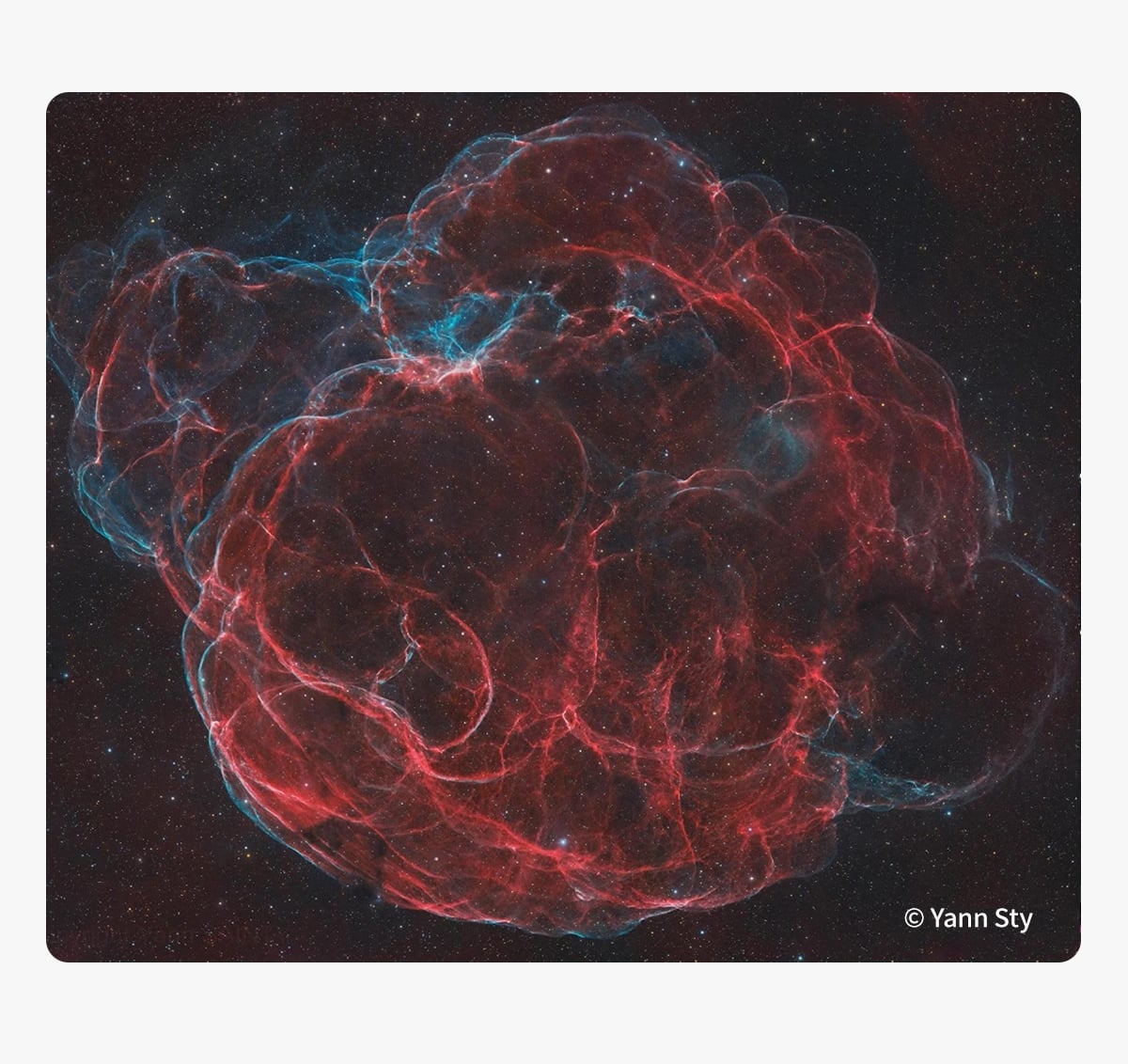
One of the standout specifications is the full-well capacity of 73,000 electrons. This higher full-well allows the camera to record brighter stars without saturating and captures subtle details in faint nebulae simultaneously. Combined with the sensor’s native 16-bit ADC, it provides a 14-stop dynamic range, ensuring smooth tonal transitions and richer gradients.
ZWO continues to use zero amp-glow circuitry, which eliminates the unwanted brightening around the corners of images common in long-exposure CMOS sensors. This design feature alone reduces post-processing work and improves overall image quality, particularly in high-gain, long-exposure imaging.

Cooling, quantum efficiency, and noise management
Cooling is a critical factor for astrophotography cameras. The upgraded ASI2600 Pro features a two-stage TEC cooling system that lowers the sensor temperature by 30–35°C below ambient, measured at 30°C ambient temperature. This substantial cooling significantly reduces dark current and thermal noise, which are critical for clean long exposures.
The monochrome ASI2600MM Pro reaches a peak QE of 91%, while the color ASI2600MC Pro has around 80% QE. High quantum efficiency translates to better photon capture, meaning more signal from faint stars and nebulae.
The camera includes High Conversion Gain (HCG) mode, which automatically activates at a gain of 100. This mode reduces readout noise while preserving dynamic range, offering the best compromise for deep-sky imaging. As a result, astrophotographers can capture faint details without sacrificing bright core integrity.
Data handling and connectivity
Data handling has been significantly refined in the upgraded ASI2600 Pro. The camera incorporates a 512 MB DDR3 memory buffer alongside a USB 3.0 interface. This combination ensures fast, stable, and secure data transfer even during long exposures or continuous high-resolution captures.
The memory buffer reduces the risk of dropped frames or latency issues that can occur in older cameras, especially when capturing sequences of large 26-megapixel frames. These enhancements provide a more reliable workflow for prolonged imaging sessions and improve compatibility with demanding capture software.
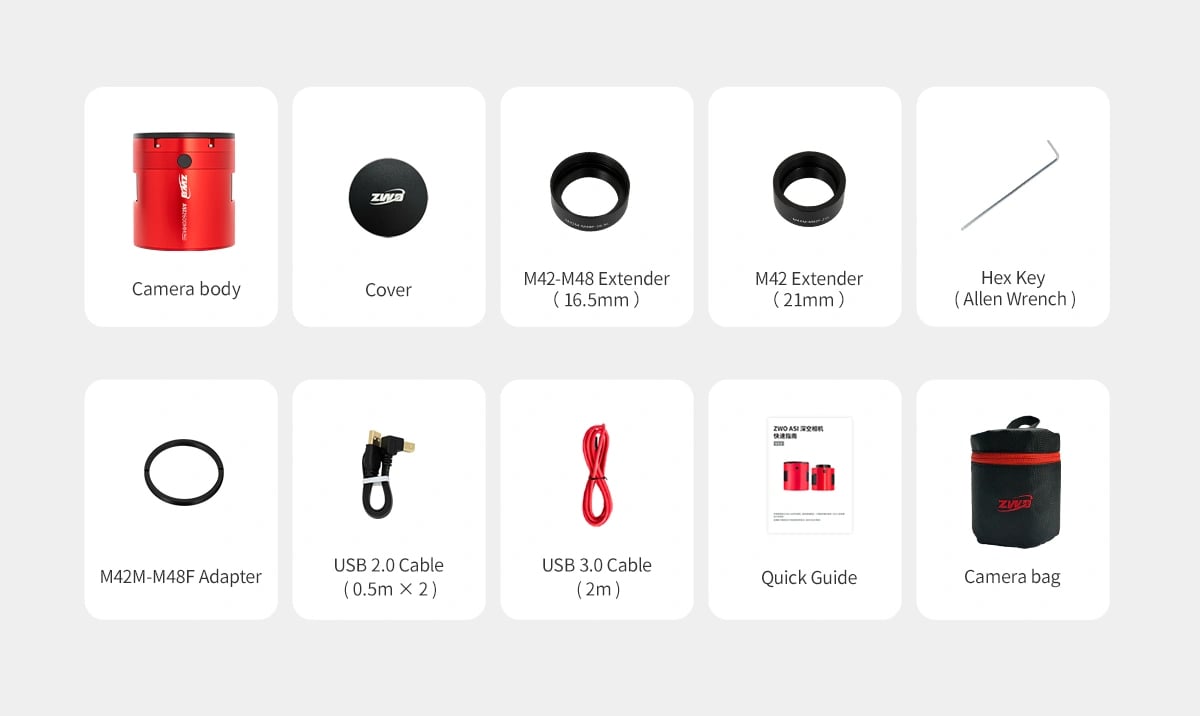
Additionally, the camera includes interfaces for external devices, allowing easy connection to filter wheels, focusers, and other accessories. This ensures flexibility and integration with complex imaging rigs.

Anti-Dew and mechanical refinements
One of the practical improvements in the upgraded ASI2600 Pro is its built-in anti-dew system. A polyimide heater is bonded directly to the protective window, preventing frost or condensation from forming during long night sessions. This feature alone can save time and frustration, especially in humid conditions.
The camera also includes a sensor tilt adjustment plate. With three sets of adjustment screws, users can fine-tune the sensor plane relative to the telescope’s optical axis. This ensures a flat imaging field and consistent star shapes across the frame, which is especially important for fast refractors or wide-field setups.

Comparison with the older ASI2600
While the upgraded ASI2600 Pro retains the same IMX571 sensor as the older model, ZWO has introduced several meaningful enhancements:
- Increased full-well capacity: now 73 ke⁻ versus the older 50 ke⁻, improving highlight handling.
- Larger memory buffer: 512 MB DDR3 versus smaller buffers in earlier models, enhancing frame stability.
- Refined TEC cooling and anti-dew system: offers more consistent temperature control and protection against condensation.
- Firmware and readout optimizations: further reduce noise and improve HCG performance, supporting long-exposure reliability.
Price and availability
ZWO lists the upgraded ASI2600MC Pro at $1,499 and ASI2600MM Pro at $1,999. Both models are available through ZWO’s official store.
Clear skies!
See more from DIYPhotography.net on Google
Add DIYPhotography.net as a trusted source. This makes
our stories more likely to appear in your Google Search results.
 Add as a preferred source on Google

Soumyadeep Mukherjee
Soumyadeep Mukherjee is an award-winning astrophotographer from India. He has a doctorate degree in Linguistics. His work extends to the sub-genres of nightscape, deep sky, solar, lunar and optical phenomenon photography. He is also a photography educator and has conducted numerous workshops. His works have appeared in over 40 books & magazines including Astronomy, BBC Sky at Night, Sky & Telescope among others, and in various websites including National Geographic, NASA, Forbes. He was the first Indian to win “Astronomy Photographer of the Year” award in a major category.

Join the Discussion
DIYP Comment Policy
Be nice, be on-topic, no personal information or flames.