


















ZWO AM7 Harmonic Drive Mount Launched: Larger and Better?
Jan 28, 2026
Soumyadeep Mukherjee
Soumyadeep Mukherjee is an award-winning astrophotographer from India. He has a doctorate degree in Linguistics. His work extends to the sub-genres of nightscape, deep sky, solar, lunar and optical phenomenon photography. He is also a photography educator and has conducted numerous workshops. His works have appeared in over 40 books & magazines including Astronomy, BBC Sky at Night, Sky & Telescope among others, and in various websites including National Geographic, NASA, Forbes. He was the first Indian to win “Astronomy Photographer of the Year” award in a major category.
Share:
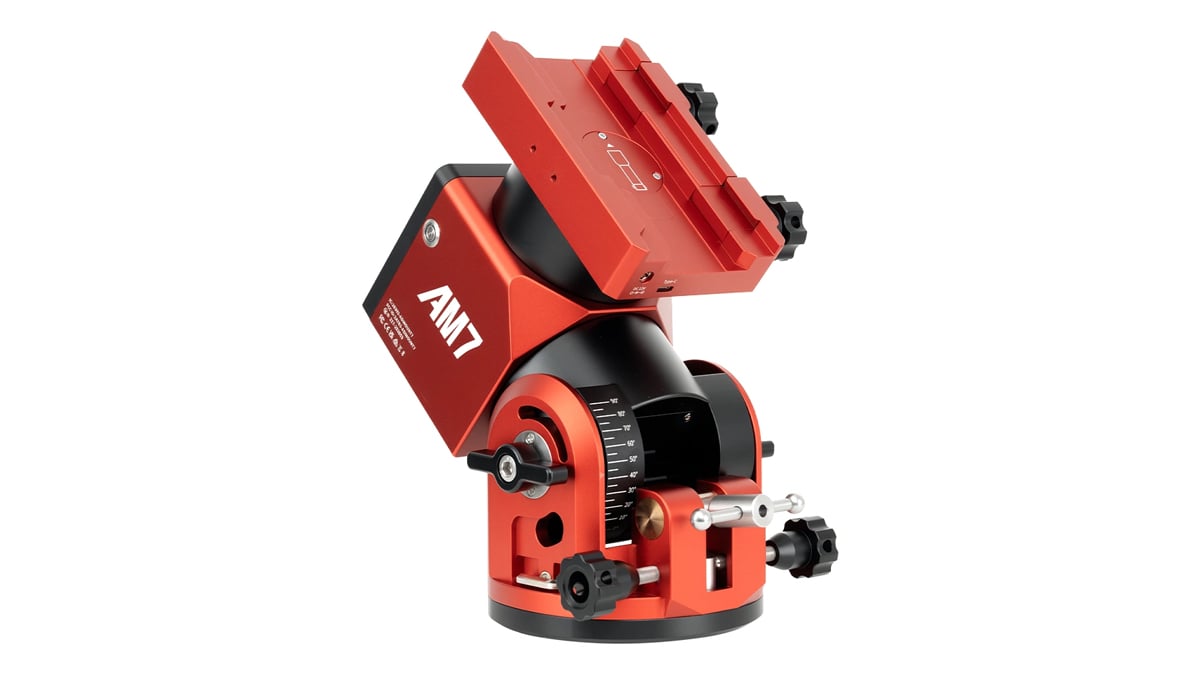
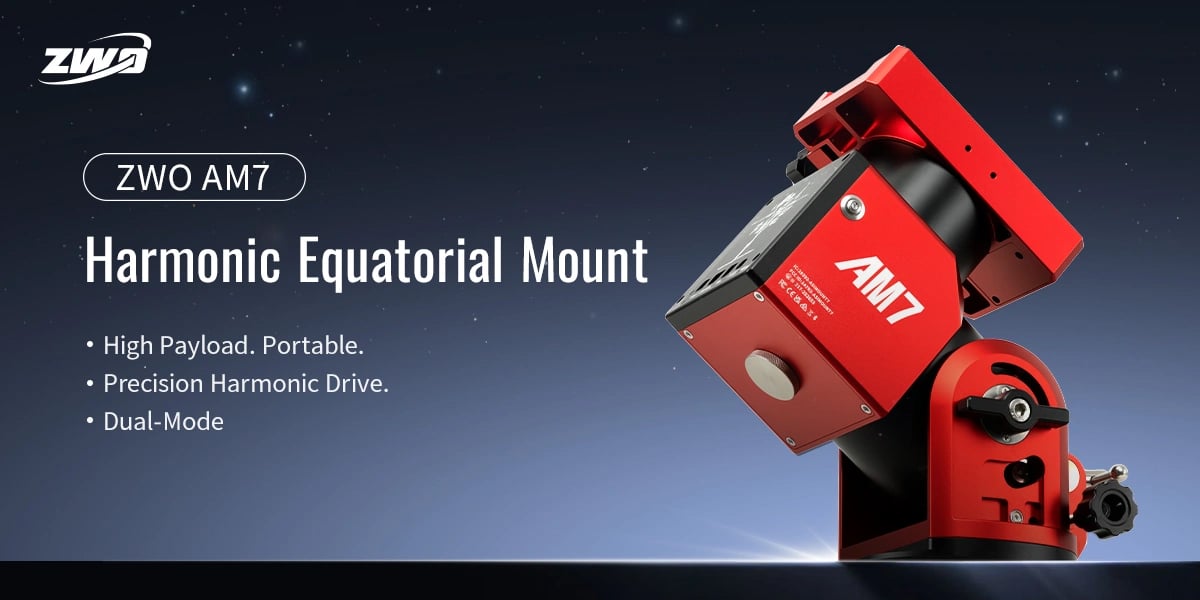
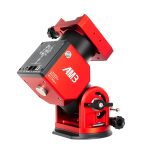
Astrophotography has entered a new era of precision, driven by advances in mount technology. At the heart of any successful imaging session lies the telescope mount. It must move with extreme accuracy and must support significant weight. It must also integrate with modern imaging systems. The ZWO AM7 Harmonic Equatorial Mount delivers on all these fronts with a fresh blend of engineering and design tailored for advanced astrophotographers.
The newly launched ZWO AM7 represents a continuing step for harmonic drive mounts. ZWO has built it with heavy imaging rigs in mind, systems that include long focal length telescopes, guide scopes, electronic accessories, and cooled cameras like the ZWO ASI 2600. The mount’s design focuses on stable tracking, robust payload handling, and clean setup workflows, all while maintaining portability.
Table of contents
- Understanding harmonic drive mounts
- Key capabilities of the ZWO AM7
- Cleaner setups with integrated connectivity
- Dual operating modes for flexibility
- Connectivity and control
- Built for cold conditions and daily use
- Comparing the AM7, AM5N, and AM3N
- Key specifications, price, and availability
- The AM7 in the broader landscape
Understanding harmonic drive mounts
In traditional equatorial mounts, gears or worm drives move the telescope in right ascension and declination. These systems have served astronomers well. Yet they also have drawbacks. Backlash, mechanical play, and wear can affect tracking precision. In astrophotography, even small errors can blur long exposures.
Harmonic drive technology takes a different approach. It uses flexible components in a strain wave gear system. These parts deliver high reduction ratios with very low backlash. The result is smoother motion and more consistent tracking. ZWO has adopted this design across its newer mounts, including the AM3N, the popular ZWO AM5N Harmonic Equatorial Mount, and now the AM7.
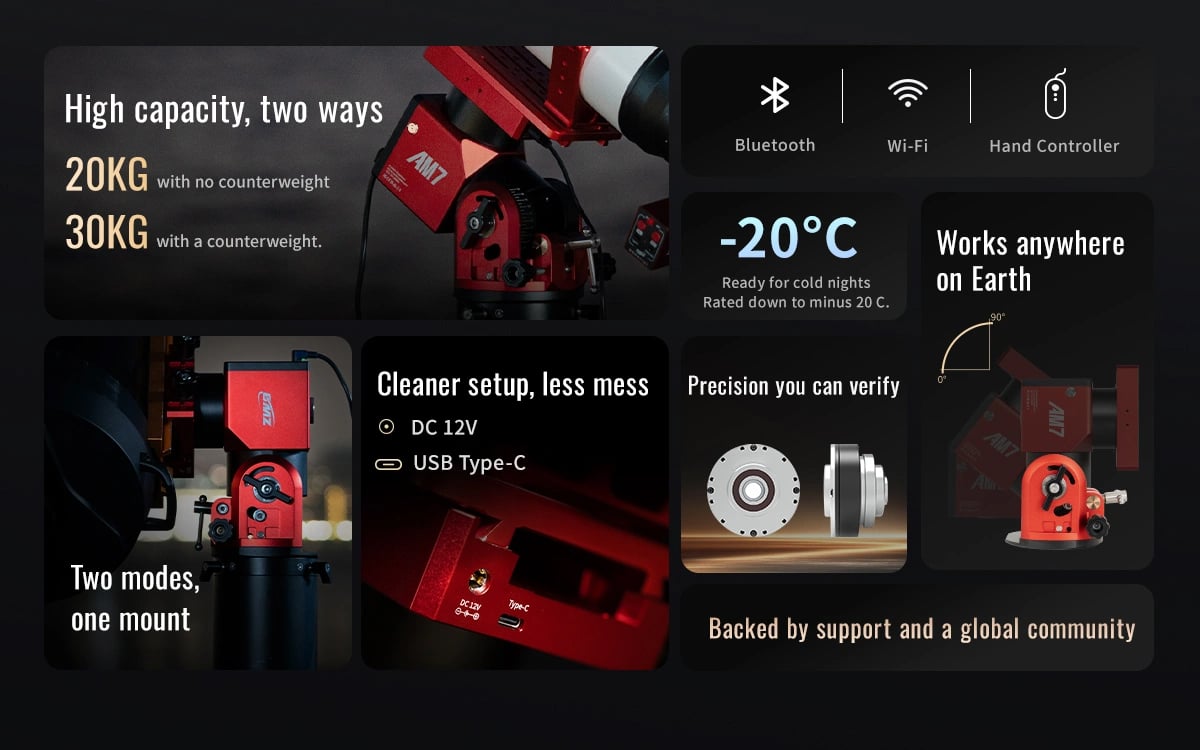
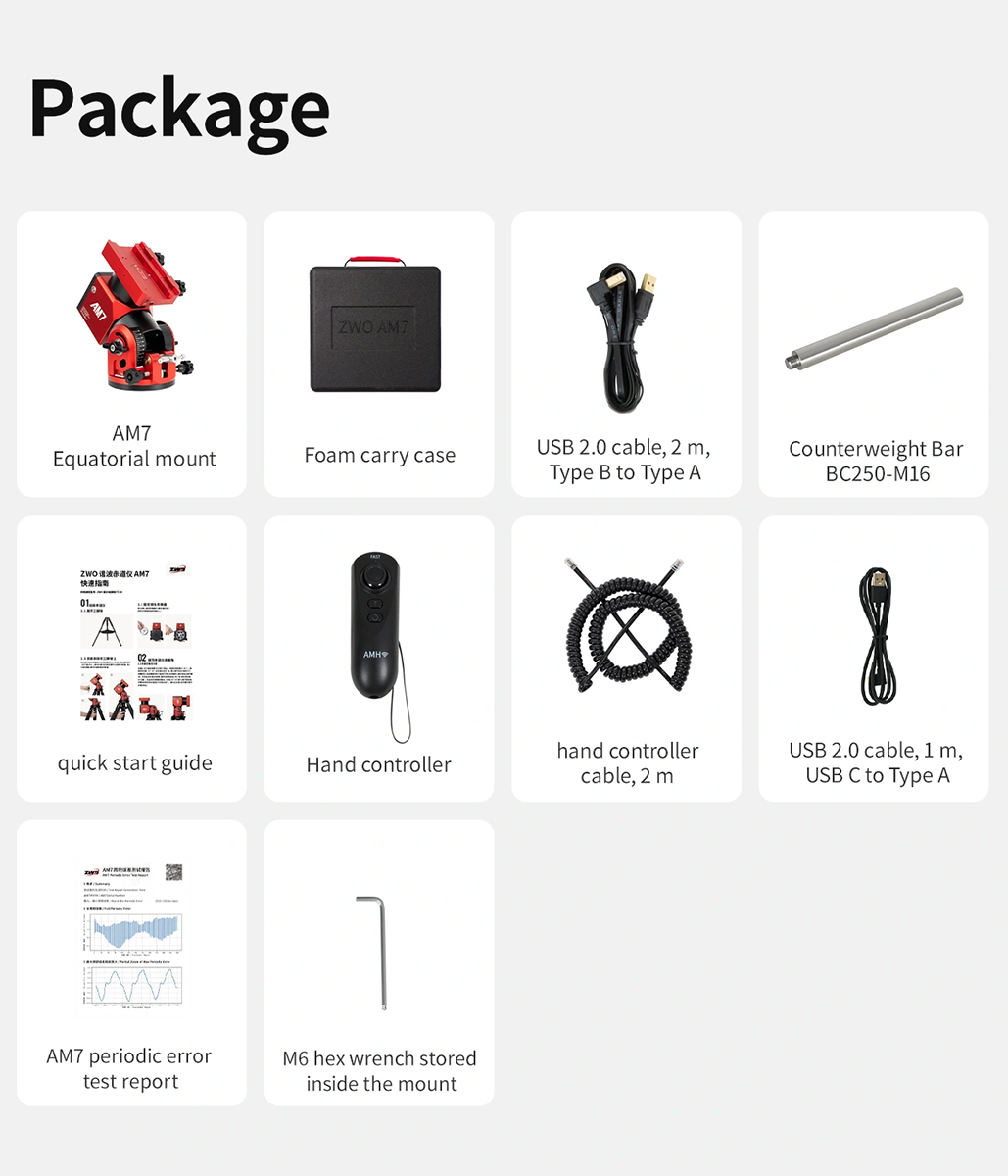
The AM7’s harmonic drive, combined with a synchronous belt system, provides a 300:1 reduction ratio. This setup provides strong torque and stable action under load. Before each unit ships, ZWO measures its periodic error and includes a unique report in the box. This verifies the mount’s performance and gives users confidence in its tracking behavior under real conditions.
Precise tracking is important because astrophotography often requires long exposures. Stars and nebulae drift as Earth rotates. The mount must counteract that motion accurately. With harmonic gearing, the AM7’s design targets dependable performance that meets the needs of complex imaging rigs.
Key capabilities of the ZWO AM7
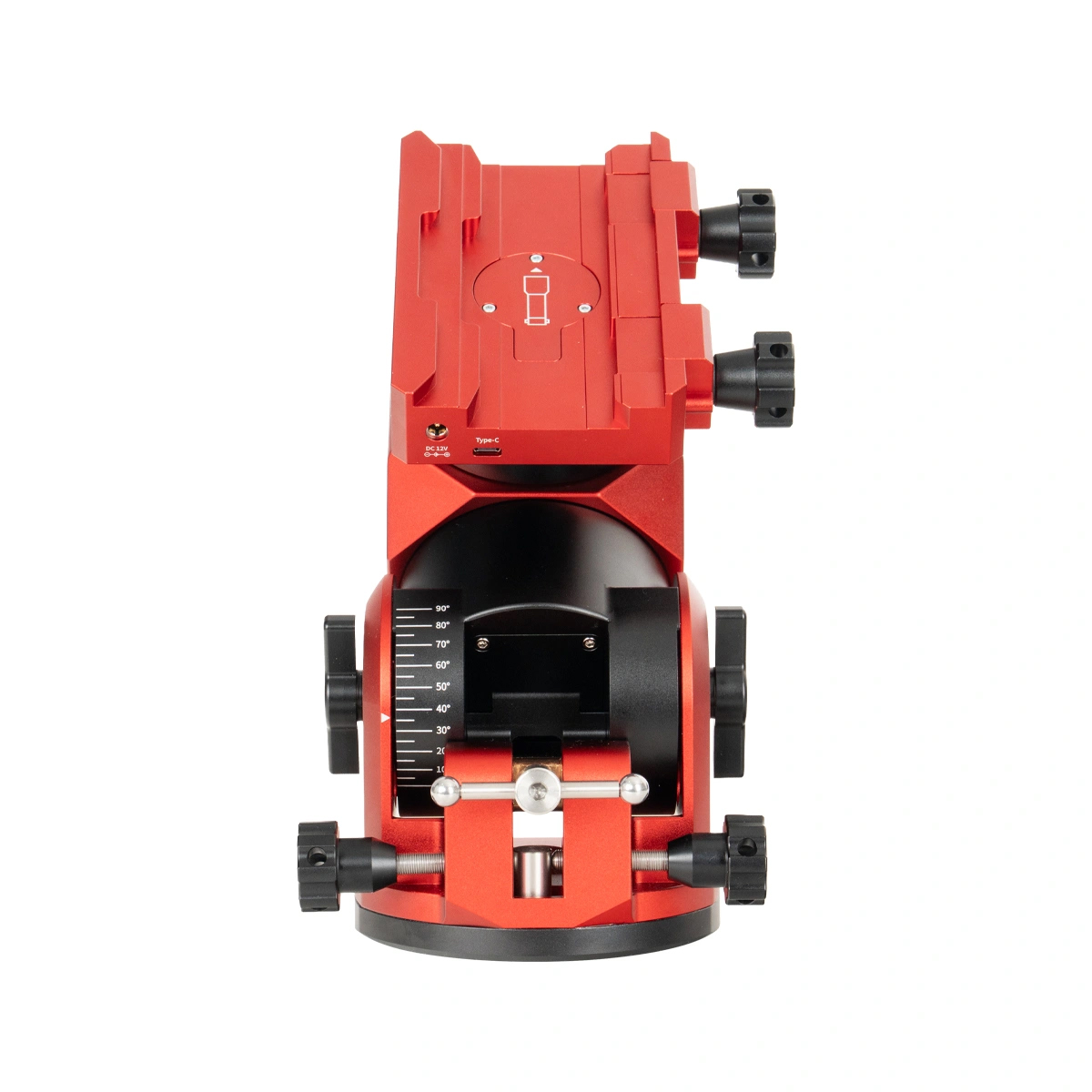
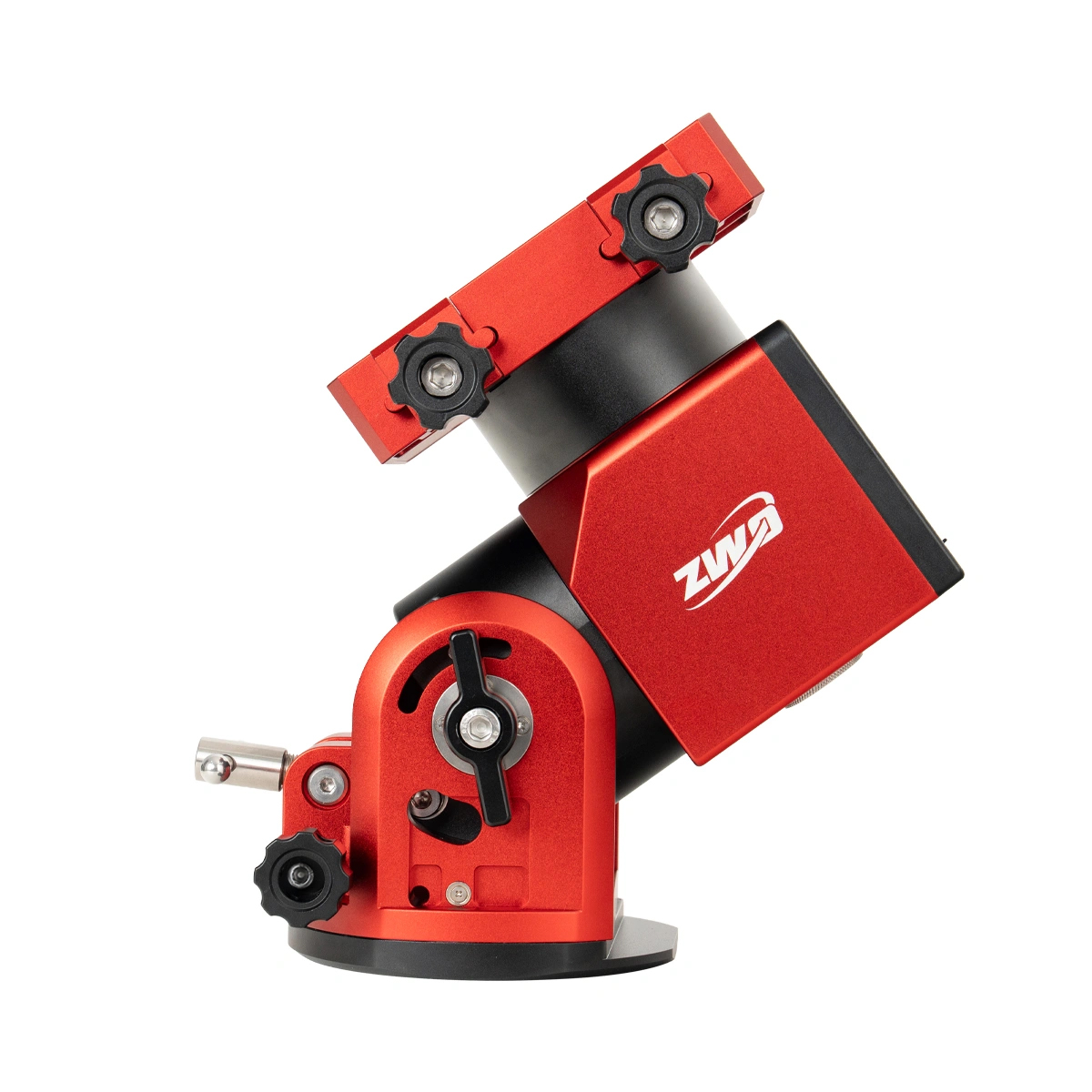
The AM7 is ZWO’s most capable harmonic equatorial mount to date. It supports both equatorial and alt-azimuth modes, giving astrophotographers flexibility for imaging and visual observing. The transition between modes is straightforward. Indicators on the mount show which mode is active, making setup faster under the night sky.
One of the standout specifications of the AM7 is its payload capacity. Without counterweights installed, it can support up to 20 kilograms of gear. Add counterweights, and that capacity rises to 30 kilograms. This level of support opens the door to heavier telescopes and more accessories, such as guide scopes, filter wheels, and cooled cameras, without pushing the mount to its limits.
Despite this capacity, the mount head itself weighs only about 6.5 to 6.75 kilograms. In practical terms, this means the AM7 delivers high strength without excessive weight. Astronomers who travel to dark-sky sites will appreciate the balance between capability and portability.
Tracking precision is a focus for the AM7. ZWO controls the periodic error within ±10 arcseconds, a tight tolerance for a harmonic mount of this size. A reported periodic error curve shows exactly how your unit performs. It makes it easier to plan guiding strategies and anticipate performance under different sky conditions.
Cleaner setups with integrated connectivity
Equatorial mounts have evolved beyond simple axes and motors. Astrophotographers use multiple accessories that require power and data connections. Cameras, filter wheels, guide cameras, and autofocusers each add cables to your rig. Cable drag can introduce unwanted torque on the mount and complicate setup.
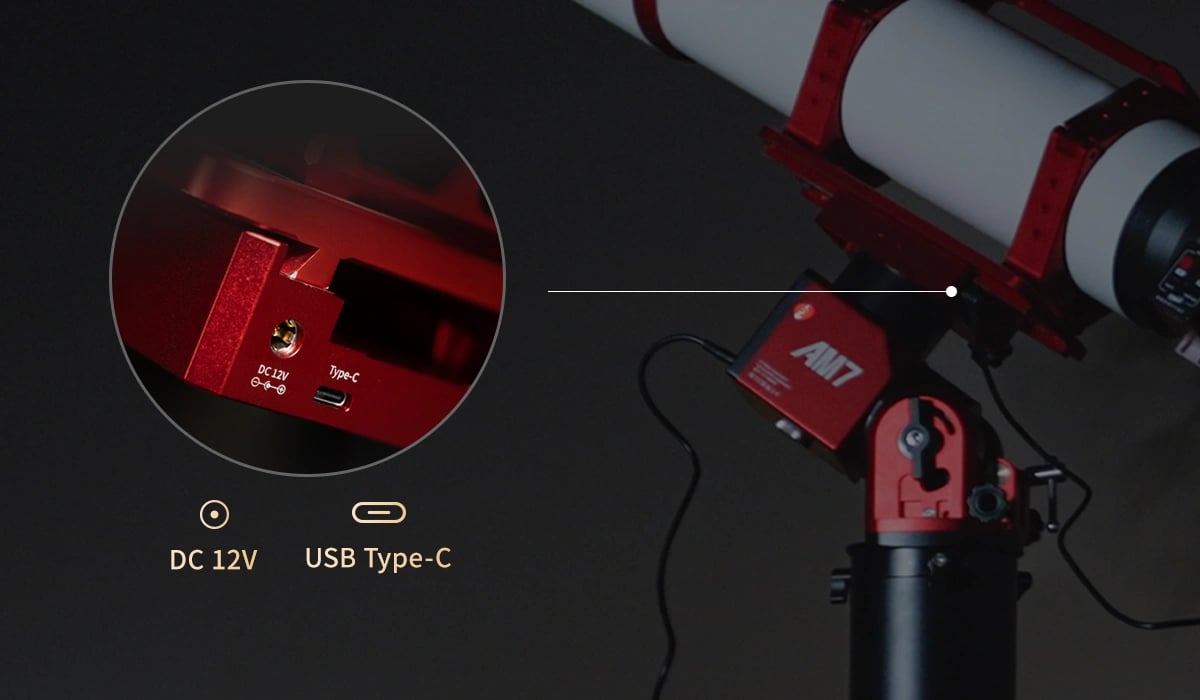
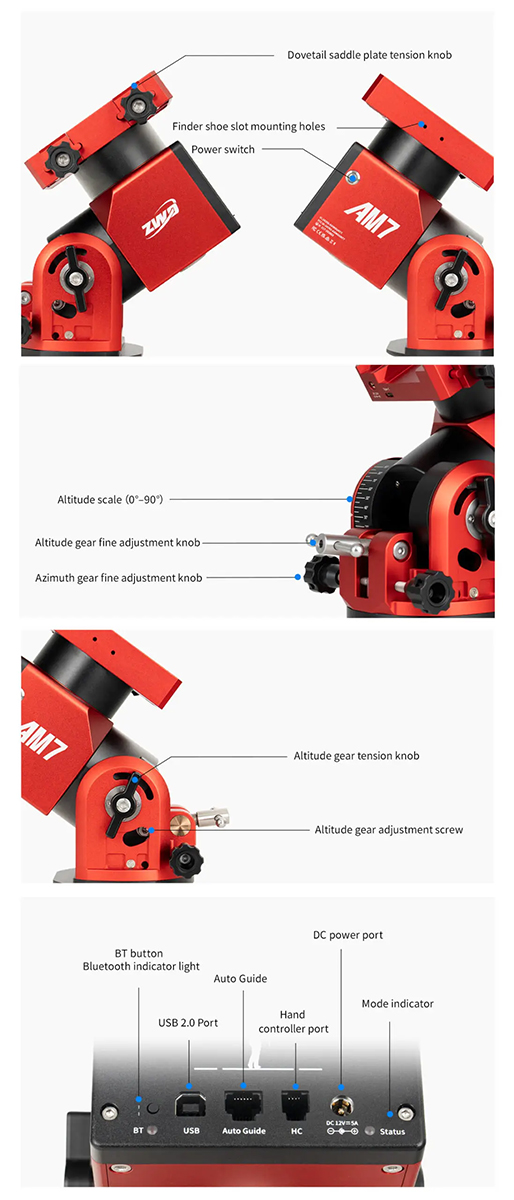
ZWO tackled this issue proactively. The AM7 includes built-in USB-C and DC power ports directly on the dovetail saddle. This placement lets you route power and data cables through the mount body, not around it. The result is a cleaner and more efficient cable layout.
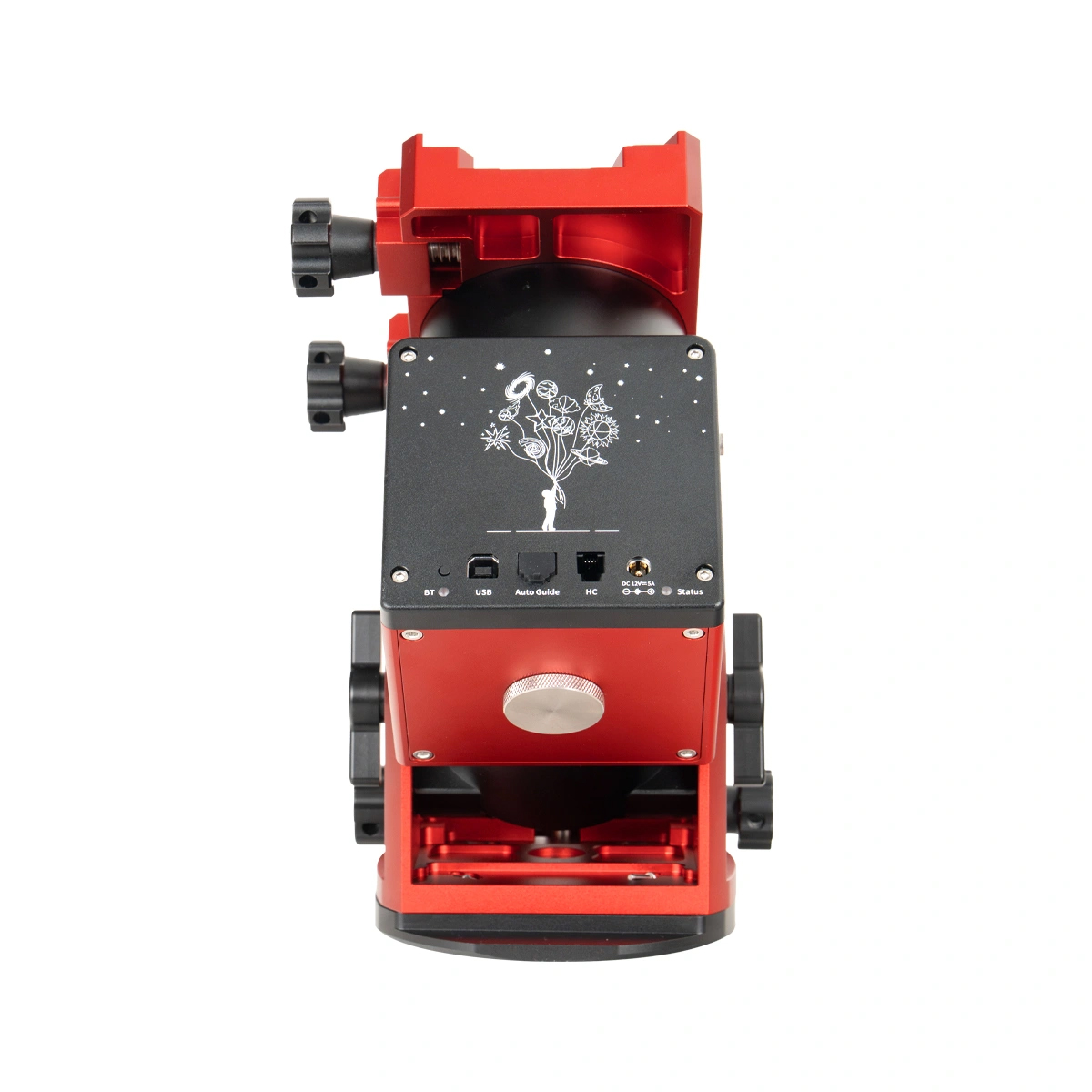
With integrated ports and reduced external cabling, you spend less time untangling wires and more time imaging. This simple change in design translates directly to faster setup, fewer connection errors, and a less cluttered field configuration.
Another small but practical feature is the magnetic hex wrench that stores directly on the mount body. In dim light or under the stars, having tools close at hand makes adjustments quicker and less frustrating.
Dual operating modes for flexibility
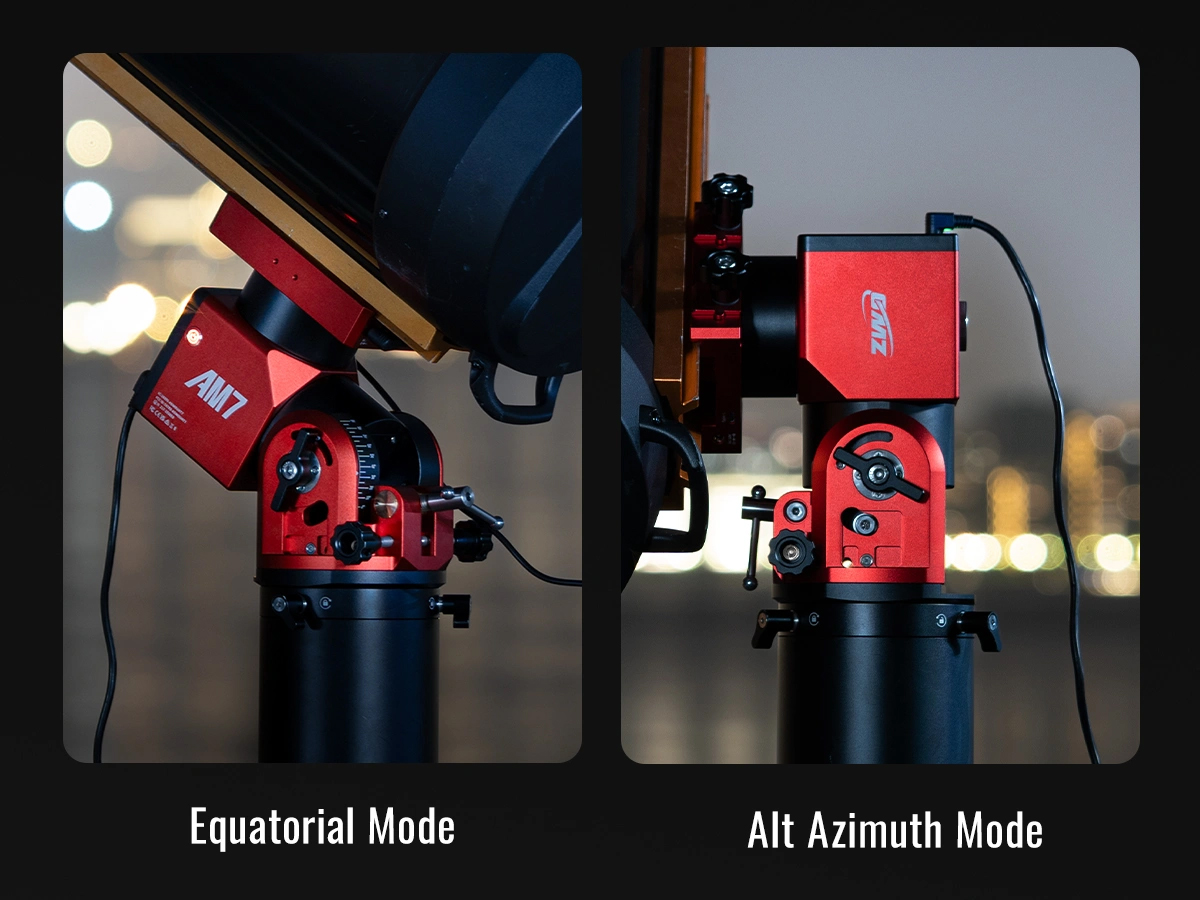
The AM7 is a truly versatile mount. It supports both equatorial mode and alt-azimuth mode in a single unit. Each mode has its place in astronomy. In equatorial mode, the mount aligns with Earth’s rotation axis. This configuration allows sidereal tracking, the motion needed to keep stars stationary in your field of view. Long-exposure astrophotography depends on this mode. With precise tracking and controlled field rotation, your images stay sharp across extended exposures.
In alt-azimuth mode, the mount moves in simple up/down and left/right axes. This mode is ideal for visual observing and quick sessions. You point at an object and enjoy it with minimal setup. The transition between modes on the AM7 involves a hardware adjustment and a simple controller selection. Indicator lights provide visual confirmation of which mode you are in: red for equatorial, green for alt-azimuth.
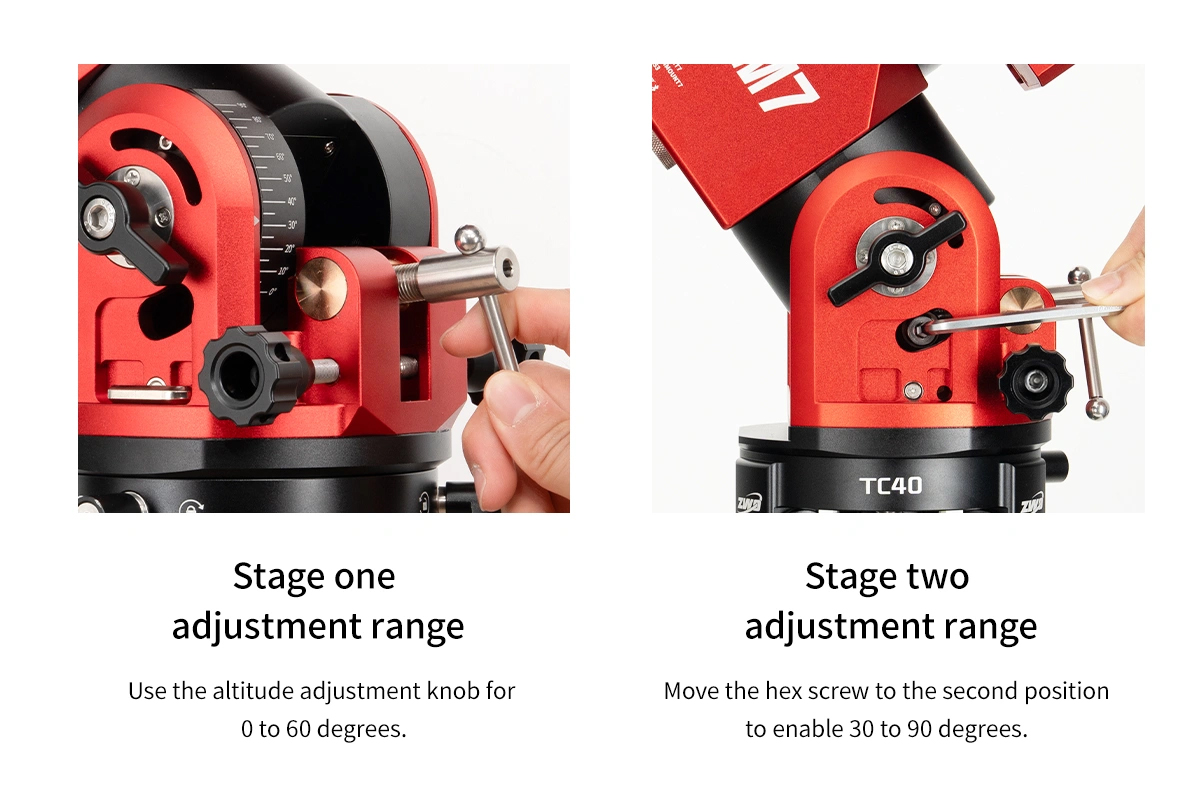
The mount’s 0° to 90° altitude adjustment range means you can align it at virtually any latitude on Earth. Whether you are imaging from the equator or from high northern or southern latitudes, the AM7 adapts without compromise. This dual-mode operation makes the AM7 a flexible choice for setups that transition between imaging, outreach observing, and general stargazing.
Connectivity and control
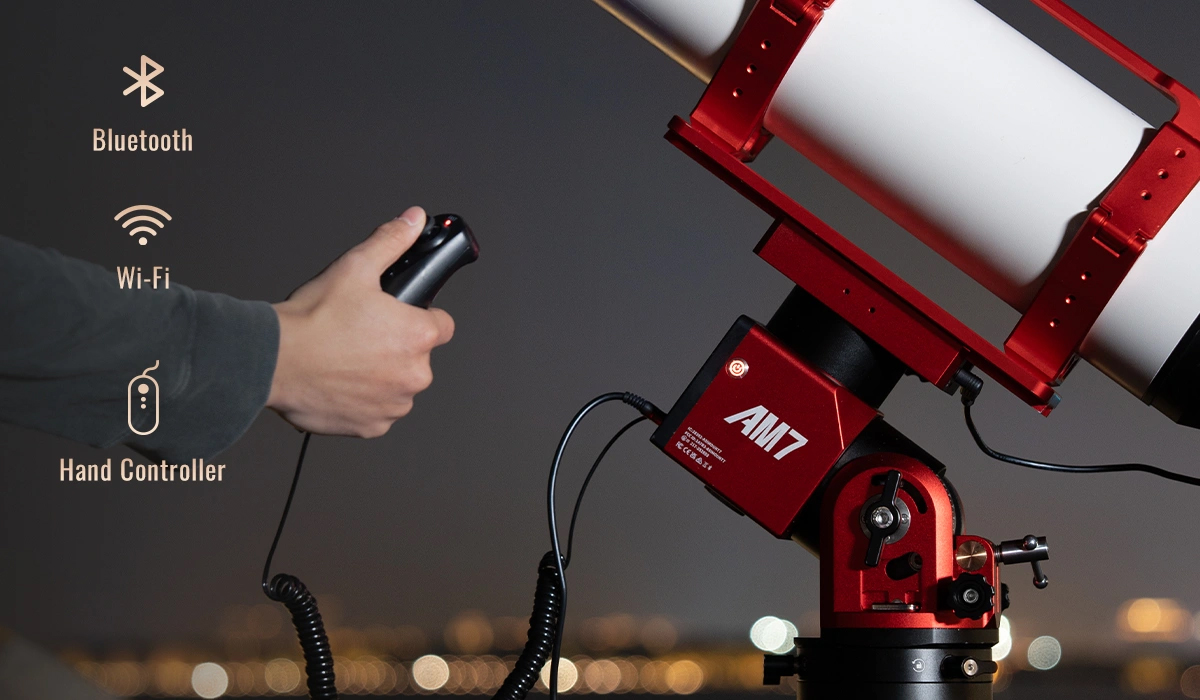
In addition to integrated power ports, the AM7 offers multiple ways to connect and control your mount. It supports Bluetooth and Wi-Fi, and comes with a smart hand controller.
Bluetooth support lets you connect directly from a smartphone. If you want simplicity and minimal hardware to carry, this is a handy option. Wi-Fi expands your control range and enables networked interactions with tablets or laptops. This level of flexibility is useful in both field setups and observatories.
The smart hand controller doubles as a control hub. It creates a Wi-Fi hotspot, lets you manage mount settings, and supports firmware updates for both mount and controller via a simple web interface. With this system, you can keep your setup current without needing extra tools or complex connections.
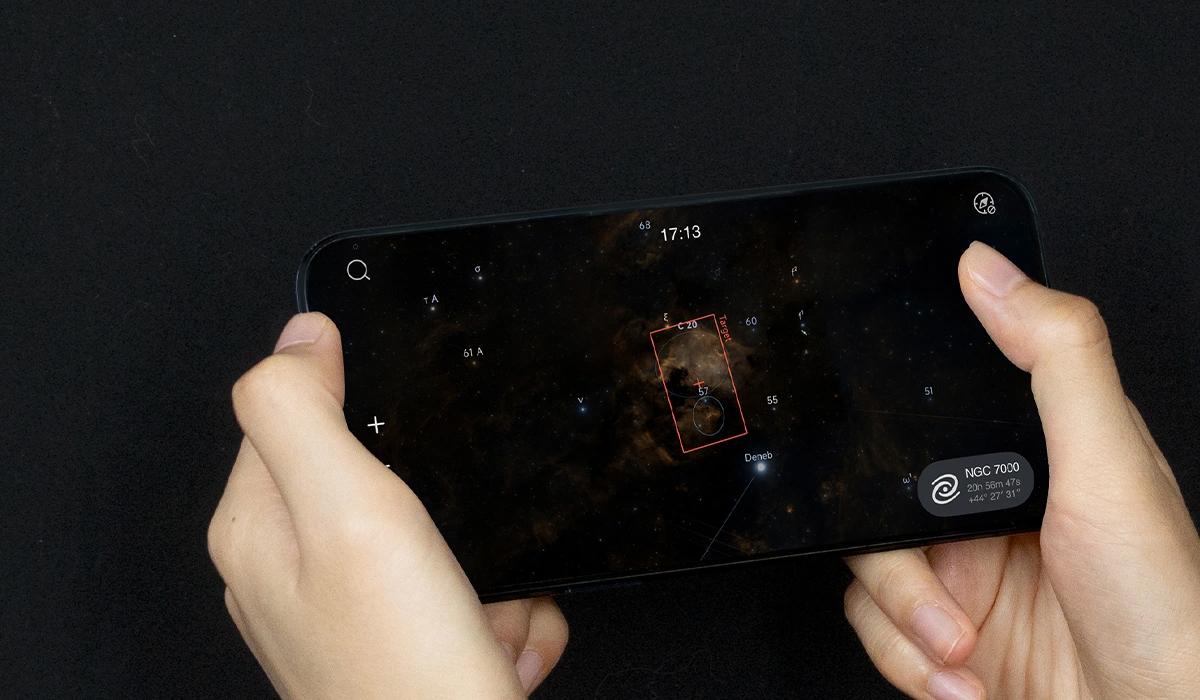
ZWO also offers the Sky Atlas mobile app for iOS and Android. Through the app, you get a live star map, an object search tool, and tracking commands that let you point the mount at targets with ease. This kind of software integration reduces friction and gets you under the sky faster.
Furthermore, the AM7 integrates smoothly with ZWO’s ASIAIR ecosystem. ASIAIR controllers can connect over the same network, allowing you to run a clean setup without direct cables between the mount and your imaging hardware. This connectivity enhances usability and keeps your workflow streamlined.
Built for cold conditions and daily use
Technical performance on paper only matters if it translates into reliability in the field. The AM7 is built with real observing conditions in mind. It is rated to operate in temperatures down to -20°C, which means you can count on it for deep winter imaging sessions or extended nights under clear skies.
Cold weather can challenge electronics and mechanical systems. By designing the AM7 to withstand these conditions, ZWO gives astrophotographers the freedom to image whenever opportunities arise, even in harsher environments.
A global community of ZWO users adds another layer of practical support. Astronomers around the world share tips, configurations, and real-world experiences. This network helps new mount owners get up to speed faster and explore the full potential of their gear.
Comparing the AM7, AM5N, and AM3N
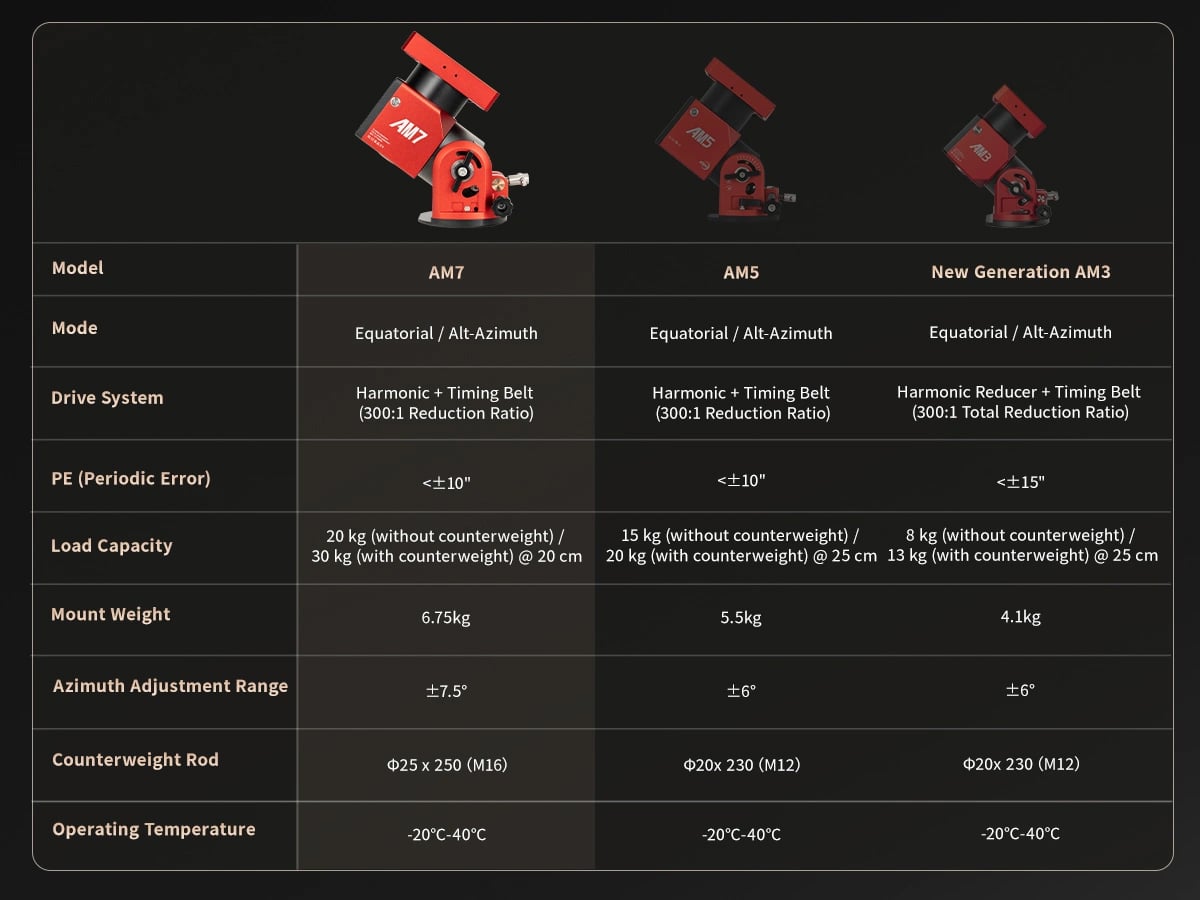
ZWO’s harmonic mount lineup has evolved. The AM3N and ZWO AM5N Harmonic Equatorial Mount established a foundation in harmonic mounting. The AM7 builds on that foundation with increased capacity and refined control.
AM3N
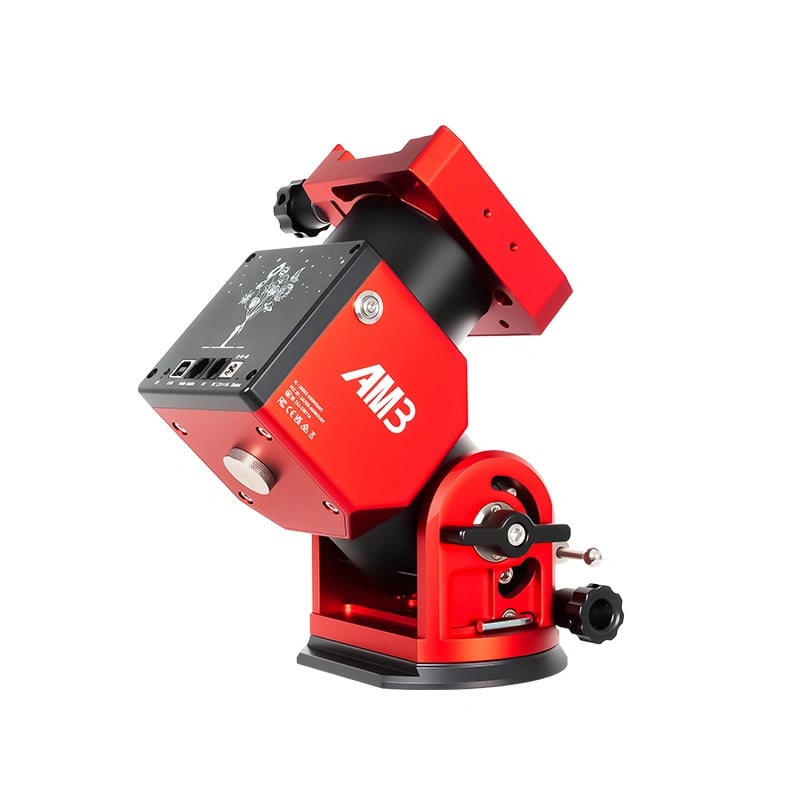
The AM3N targets smaller and more portable setups. It weighs just about 4.1 kilograms, yet supports up to 8 kg without counterweights and 13 kg with counterweights. It also uses a harmonic drive and synchronous belt with a 300:1 reduction ratio, but its periodic error is controlled within ±15 arcseconds, a slightly wider tolerance than the AM5N and AM7.
Because of its lighter weight, the AM3N is ideal for compact refractors and lighter systems. It includes modern wireless control via Wi-Fi and Bluetooth, and integrates seamlessly with mobile apps and ASIAIR. Its design focuses on portability without sacrificing tracking precision, making it a strong choice for travel or field setups.
AM5N
The AM5N stands between the AM3N and AM7 in capacity and capability. Official specs show it typically supports up to 15 kg without counterweights and up to 20 kg with counterweights installed. Its periodic error is controlled within ±10 arcseconds, the same target as the AM7. The AM5N weighs around 5–5.5 kilograms, making it slightly heavier than the AM3N but still highly portable.
The AM5N improves on earlier harmonic mounts with enhanced internal cabling, simplified power ports, and wireless connectivity via Bluetooth, USB, and Wi-Fi. It supports both equatorial and alt-azimuth modes and connects well with ASIAIR and other software.
AM7
In comparison, the AM7 takes the performance up another level. Its payload capacity (20 kg without counterweights, 30 kg with counterweights) exceeds both the AM5N and AM3N, making it suitable for heavier telescopes and larger imaging trains. The periodic error tolerance of ±10 arcseconds matches the AM5N, but the AM7’s stronger drive system and higher torque capacity provide more robust tracking under load.
Across all three mounts, the harmonic drive and synchronous belt combination remains a consistent design theme. However, the AM7 is engineered to serve as ZWO’s most capable harmonic platform, supporting advanced setups without compromising on precision or connectivity.
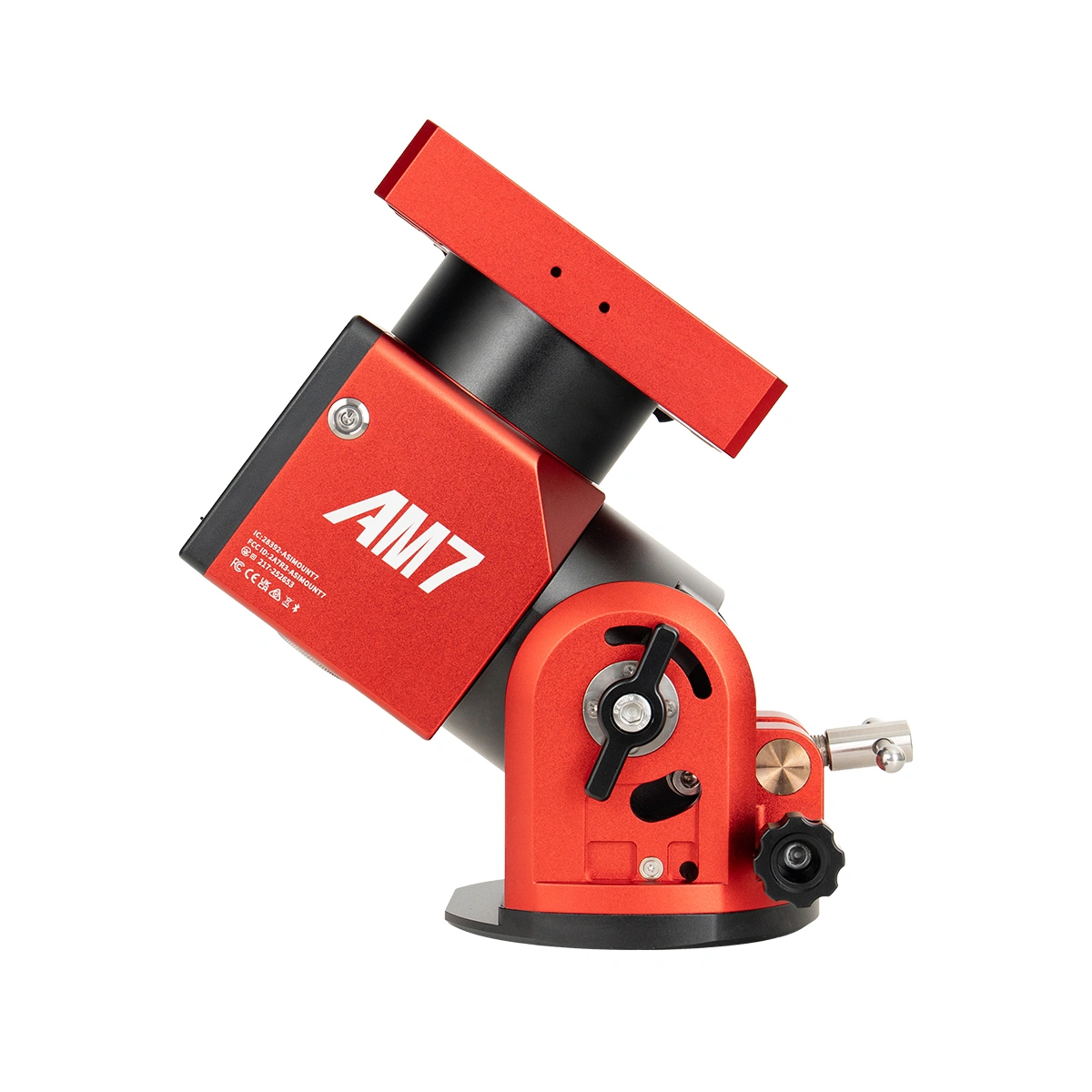
Key specifications, price, and availability
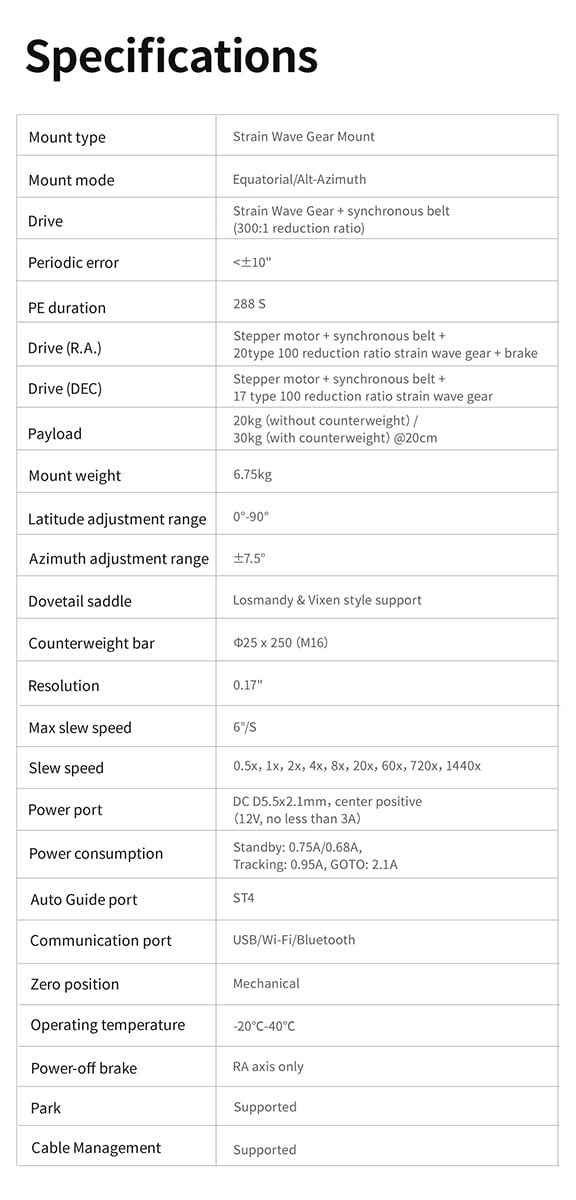
Here are some of the key specifications of the ZWO AM7 harmonic drive mount:
| Mount type | Strain Wave Gear Mount |
| Mount mode | Equatorial/Alt-Azimuth |
| Drive | Strain Wave Gear + synchronous belt (300:1 reduction ratio) |
| Periodic error | <±10″ |
| PE duration | 288 S |
| Payload | 20kg (without counterweight) / 30kg (with counterweight) |
| Mount weight | 6.75kg |
| Latitude adjustment range | 0°-90° |
| Azimuth adjustment range | ±7.5° |
| Dovetail saddle | Losmandy & Vixen style support |
| Counterweight bar | Φ25 x 250 (M16) |
| Max slew speed | 6°/S |
| Slew speed | 0.5x, 1x, 2x, 4x, 8x, 20x, 60x, 720x, 1440x |
| Power port | DC D5.5×2.1mm, center positive (12V, no less than 3A) |
| Power consumption | Standby: 0.75A/0.68A, Tracking: 0.95A, GOTO: 2.1A |
| Auto Guide port | ST4 |
| Communication port | USB/Wi-Fi/Bluetooth |
| Operating temperature | -20°C-40°C |
The ZWO AM7 is priced at $2,999 (prices may vary globally). It is available for ordering via the official ZWO website.
The AM7 in the broader landscape
Harmonic drive mounts are relatively new compared to traditional worm gear designs. ZWO has been developing its harmonic mount series for years, starting with lighter models and now culminating in the AM7 as its highest-capacity offering so far.
With the progression from earlier models to the AM7, ZWO has preserved the key strengths of harmonic systems, smooth motion, high torque, and reduced backlash, while scaling up capacity and adding modern usability features. The AM7 can handle heavy imaging loads without losing the benefits that make harmonic mounts attractive.
For astrophotographers who plan to grow their systems over time or who already work with substantial payloads, the AM7 offers a stable and flexible platform. With built-in power routing, wireless control options, dual-mode operation, and precise tracking, it meets the needs of advanced imaging workflows without unnecessary complexity.

Clear skies!
See more from DIYPhotography.net on Google
Add DIYPhotography.net as a trusted source. This makes
our stories more likely to appear in your Google Search results.
 Add as a preferred source on Google

Soumyadeep Mukherjee
Soumyadeep Mukherjee is an award-winning astrophotographer from India. He has a doctorate degree in Linguistics. His work extends to the sub-genres of nightscape, deep sky, solar, lunar and optical phenomenon photography. He is also a photography educator and has conducted numerous workshops. His works have appeared in over 40 books & magazines including Astronomy, BBC Sky at Night, Sky & Telescope among others, and in various websites including National Geographic, NASA, Forbes. He was the first Indian to win “Astronomy Photographer of the Year” award in a major category.
Join the Discussion
DIYP Comment Policy
Be nice, be on-topic, no personal information or flames.