

























AT2025ulz: Did Gemini Observatory Capture a Superkilonova Explosion?
Dec 30, 2025
Soumyadeep Mukherjee
Soumyadeep Mukherjee is an award-winning astrophotographer from India. He has a doctorate degree in Linguistics. His work extends to the sub-genres of nightscape, deep sky, solar, lunar and optical phenomenon photography. He is also a photography educator and has conducted numerous workshops. His works have appeared in over 40 books & magazines including Astronomy, BBC Sky at Night, Sky & Telescope among others, and in various websites including National Geographic, NASA, Forbes. He was the first Indian to win “Astronomy Photographer of the Year” award in a major category.
Share:

Time-domain astronomy now operates in a regime where optical surveys and gravitational-wave detectors observe the sky simultaneously. This convergence has transformed how transient events are discovered and interpreted. Explosions that once appeared isolated are now studied as part of multi-messenger systems. AT2025ulz emerged from this new observational landscape. It was detected as an optical transient during follow-up observations of a candidate gravitational-wave signal. Its subsequent evolution challenged established classification schemes and exposed gaps in current explosion models.
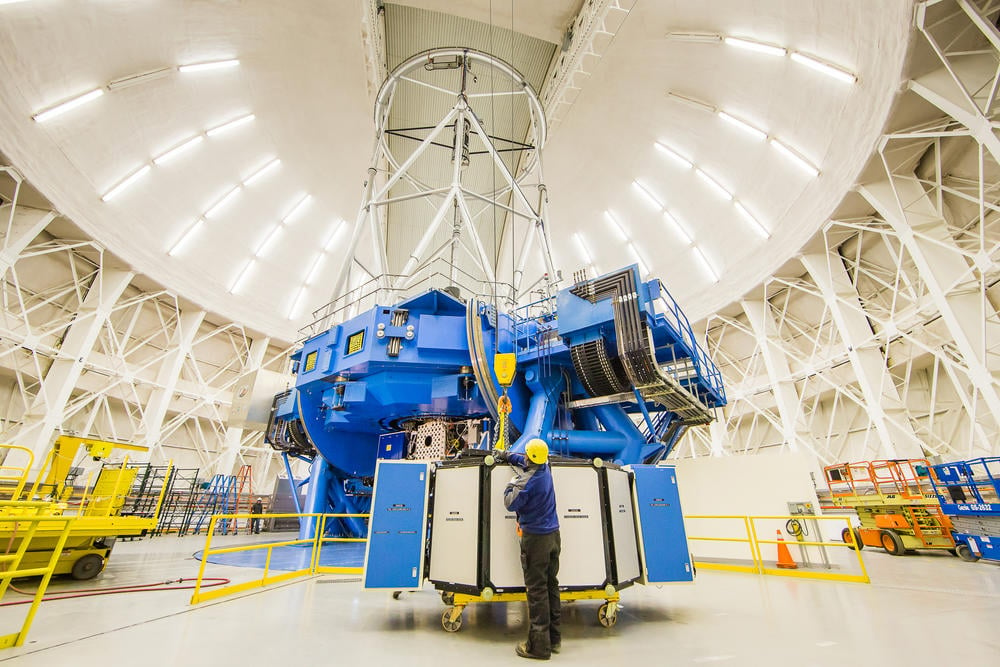
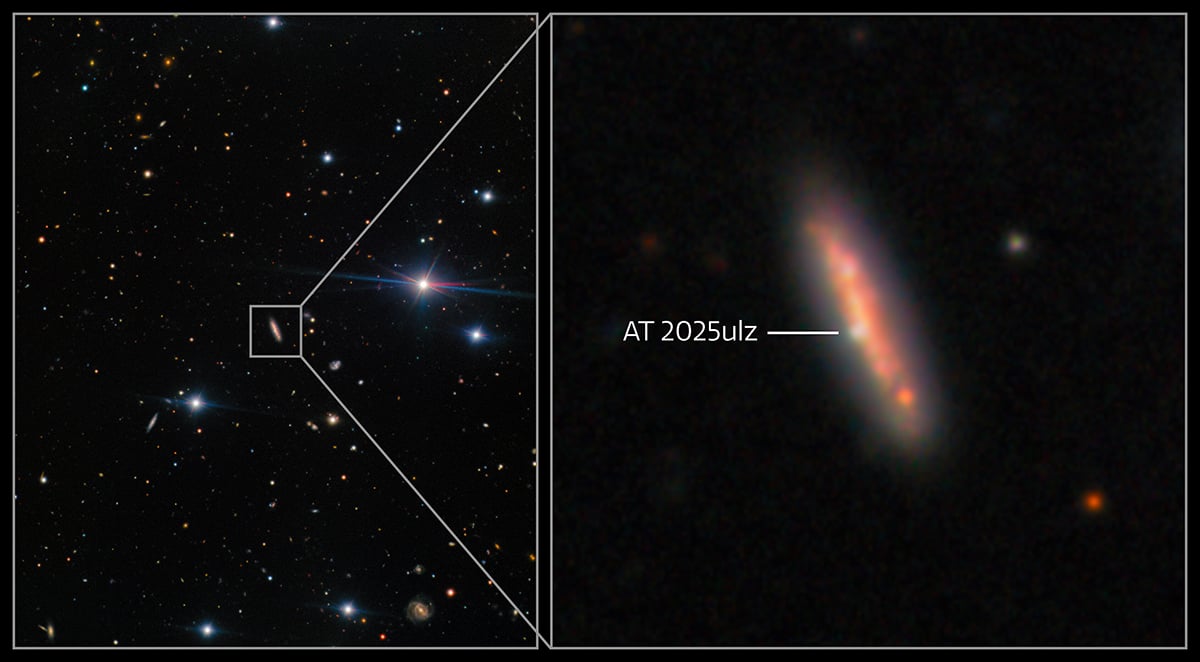
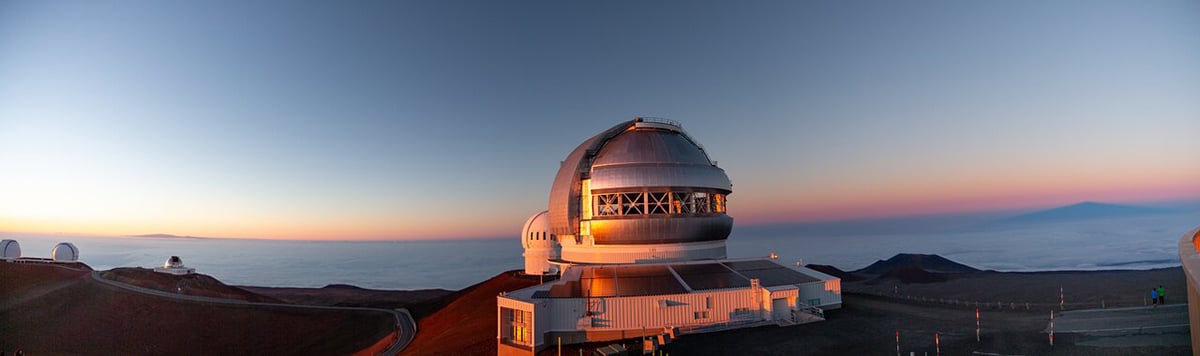
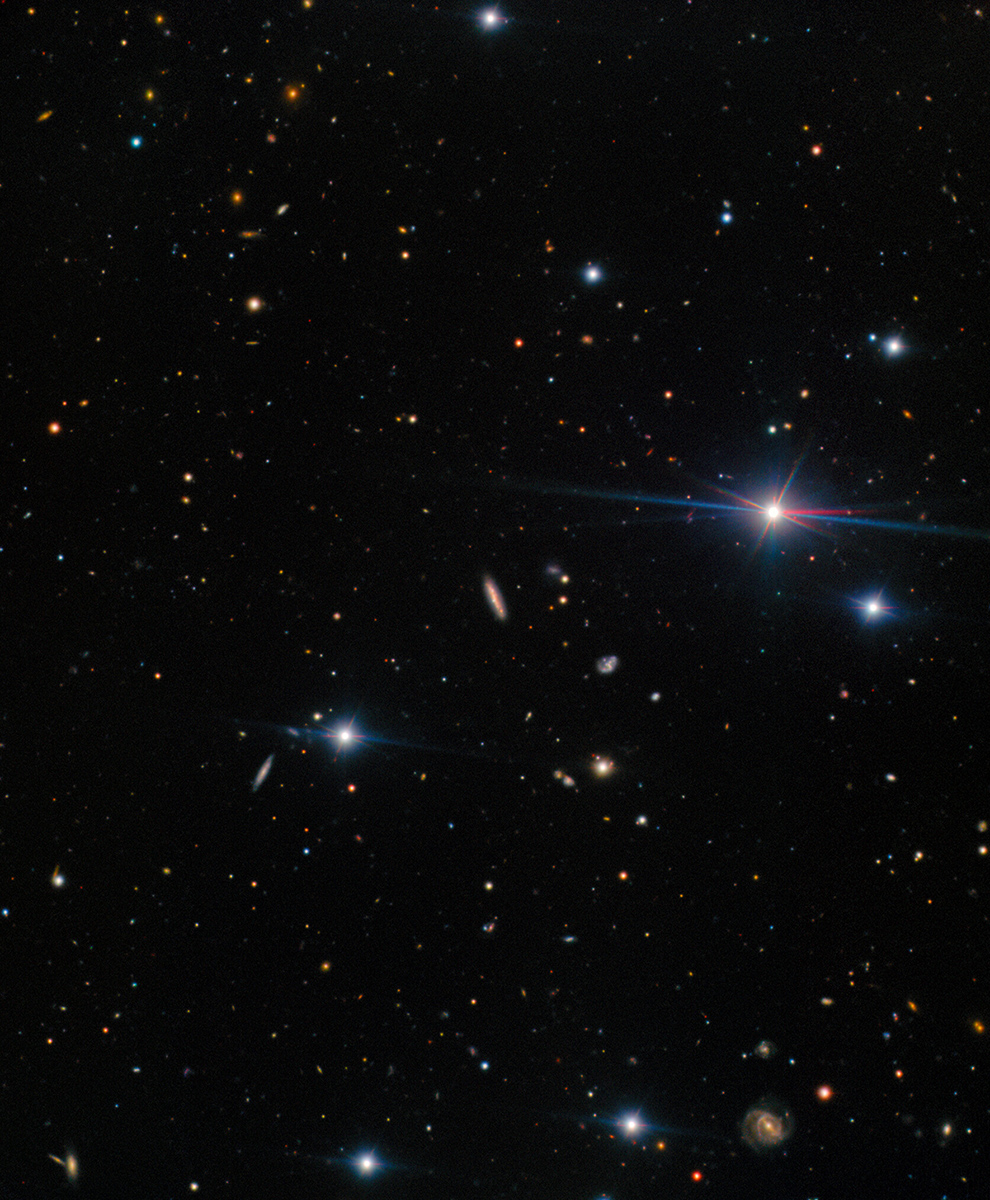
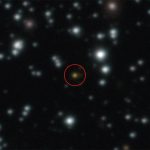
AT2025ulz was first reported on 18 August 2025 by the Zwicky Transient Facility. The detection followed an alert from the LIGO–Virgo–KAGRA network for a candidate compact-object merger, designated S250818k. The optical transient lay within the broad sky localization of the gravitational-wave signal and appeared within a compatible time window. Early photometry suggested rapid fading and red colors. These properties closely matched expectations for a kilonova. As additional data by Gemini North accumulated, however, AT2025ulz diverged sharply from that interpretation. The event has since become one of the most discussed transients of the year. It sits at the intersection of supernova physics, compact object mergers, and gravitational-wave astronomy. Its true nature remains unresolved.
Discovery and early photometric behaviour
ZTF detected AT2025ulz during routine scanning of the gravitational-wave localization region. At discovery, the source was faint and declined rapidly in brightness. The early color evolution showed a strong red component. These characteristics are typical of kilonova emission powered by the radioactive decay of neutron-rich ejecta.
The timing of the detection strengthened this interpretation. Kilonovae evolve quickly and fade within days. Rapid response is essential. Follow-up observations began almost immediately. Multiple optical facilities monitored the light curve. Spectroscopic observations were scheduled as soon as signal-to-noise allowed.
In the first days, the data remained consistent with a kilonova scenario. The luminosity scale matched expectations for a merger at the inferred distance. The decline rate was steep. Nothing in the early observations contradicted a compact-object origin.

Spectral evolution and the emergence of supernova features
Roughly one week after discovery, AT2025ulz began to brighten again. This behavior is incompatible with standard kilonova models. At the same time, the transient became bluer. Spectroscopy revealed hydrogen and helium lines in emission. These features are hallmarks of core-collapse supernovae.
Hydrogen is absent from kilonova ejecta. Neutron-star mergers expel material stripped of light elements. The appearance of hydrogen, therefore, demanded a stellar envelope. The later spectra resembled those of stripped-envelope supernovae, particularly Type IIb events. This transition reframed the event. What appeared to be a merger counterpart now looked like a stellar explosion. The light curve morphology supported this shift. After the initial decline, the luminosity followed a profile consistent with radioactive nickel decay.
One explanation treats AT2025ulz as a normal supernova observed at a very early phase. In this view, the initial red emission arises from shock-heated material cooling rapidly after breakout. Such shock-cooling signatures can mimic kilonova colors for short periods. As the ejecta expand, radioactive heating dominates, and the light curve rises again.
This scenario fits many observational constraints. Spectral evolution supports it. The total radiated energy falls within supernova expectations. Follow-up observations at radio and X-ray wavelengths did not detect emission expected from a relativistic merger outflow. The gravitational-wave event S250818k was a candidate detection. Its localization region was large. The probability of coincidental overlap with an unrelated transient is non-zero. Despite this, the kilonova-like early behavior remains difficult to dismiss. The color evolution and decline rate align unusually well with merger models. Few known supernovae replicate this combination so cleanly.
The superkilonova hypothesis
To reconcile all observations, several researchers proposed a hybrid explosion mechanism. This model has been informally labeled a superkilonova. It describes a single astrophysical event producing both supernova and kilonova signatures.
In this scenario, a rapidly rotating massive star collapses in a non-axisymmetric way. Instead of forming a single compact remnant, the core fragments into two neutron stars. These objects form a tight binary inside the collapsing star. Gravitational radiation drives a rapid merger.
The neutron-star merger produces gravitational waves and neutron-rich ejecta. This ejecta powers early kilonova-like emission. Simultaneously, the stellar envelope is expelled in a core-collapse supernova. Hydrogen and helium dominate the later spectra. The model naturally explains the sequence observed in AT2025ulz. It also predicts extreme rarity. Such fragmentation requires fine-tuned initial conditions. That rarity aligns with the lack of prior detections. The superkilonova remains theoretical. AT2025ulz is not definitive proof. It is, however, the first event that motivates serious discussion of the idea.
Host galaxy context and environmental clues
The host galaxy of AT2025ulz provides limited guidance. It is a star-forming system with no unusual properties. Such environments produce massive stars and compact binaries alike. Metallicity estimates fall within typical ranges. Star formation rates show no extremes. The galaxy does not favor one progenitor channel over another.
Distance measurements place the host within the broad range inferred for S250818k. The uncertainties remain large. This compatibility neither confirms nor refutes a physical association. Regardless of its final interpretation, AT2025ulz has significant implications. It demonstrates how early supernova emission can contaminate searches for electromagnetic counterparts to gravitational waves. Rapid fading and red colors are not unique to kilonovae.
The event highlights the importance of spectroscopy at the earliest possible stages. Color and brightness alone are insufficient. Classification requires temporal coverage across multiple wavelengths. AT2025ulz also underscores the need for improved gravitational-wave localization. Large error regions increase false associations. As detector sensitivity improves, this problem will ease but not disappear. The event served as a stress test for global follow-up networks. These gains will benefit future discoveries.
Clear skies!
See more from DIYPhotography.net on Google
Add DIYPhotography.net as a trusted source. This makes
our stories more likely to appear in your Google Search results.
 Add as a preferred source on Google

Soumyadeep Mukherjee
Soumyadeep Mukherjee is an award-winning astrophotographer from India. He has a doctorate degree in Linguistics. His work extends to the sub-genres of nightscape, deep sky, solar, lunar and optical phenomenon photography. He is also a photography educator and has conducted numerous workshops. His works have appeared in over 40 books & magazines including Astronomy, BBC Sky at Night, Sky & Telescope among others, and in various websites including National Geographic, NASA, Forbes. He was the first Indian to win “Astronomy Photographer of the Year” award in a major category.


Join the Discussion
DIYP Comment Policy
Be nice, be on-topic, no personal information or flames.