



















NGC 646: Euclid Mission Captures a Dynamic Galaxy Garland
Dec 26, 2025
Soumyadeep Mukherjee
Soumyadeep Mukherjee is an award-winning astrophotographer from India. He has a doctorate degree in Linguistics. His work extends to the sub-genres of nightscape, deep sky, solar, lunar and optical phenomenon photography. He is also a photography educator and has conducted numerous workshops. His works have appeared in over 40 books & magazines including Astronomy, BBC Sky at Night, Sky & Telescope among others, and in various websites including National Geographic, NASA, Forbes. He was the first Indian to win “Astronomy Photographer of the Year” award in a major category.
Share:
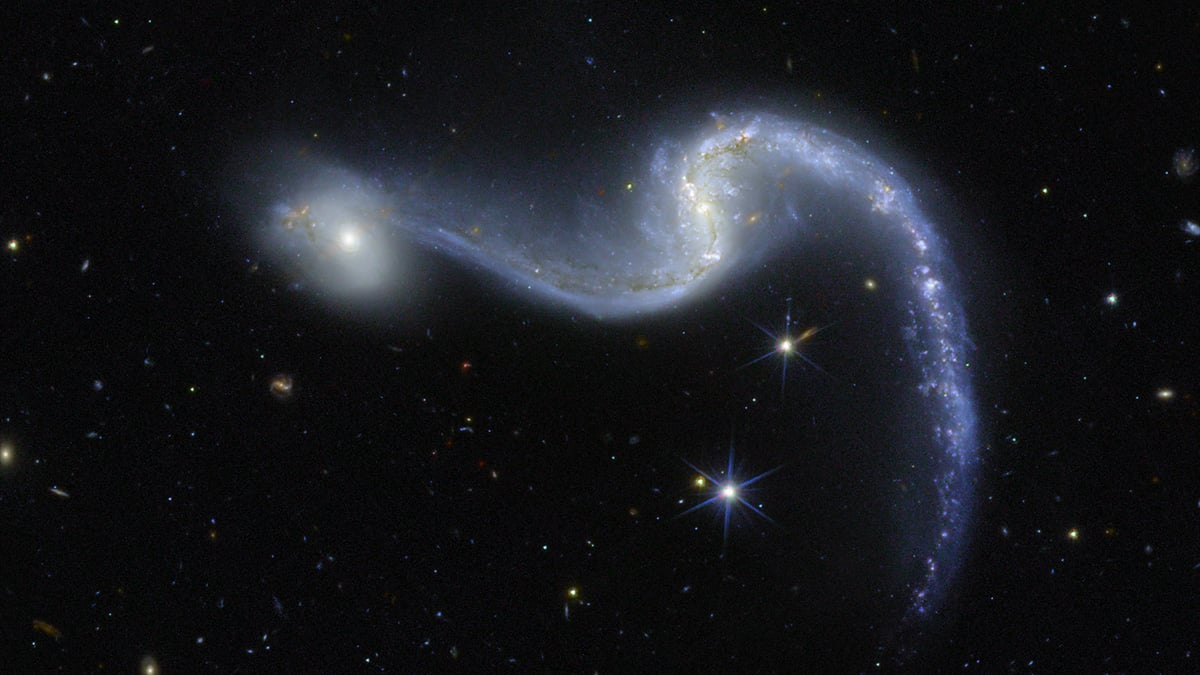
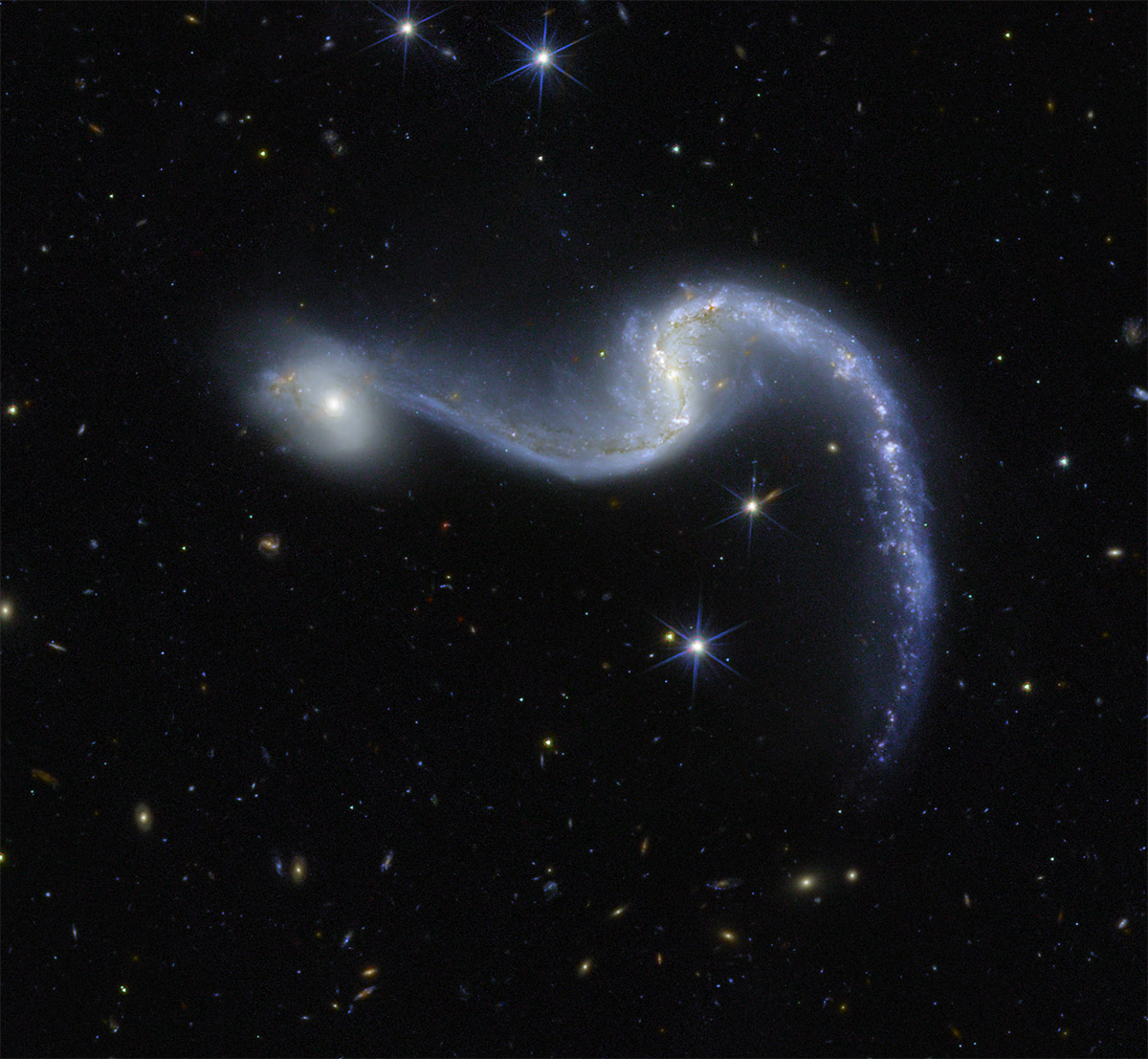
High-resolution imaging remains one of the most effective tools for understanding galaxy structure and evolution. When combined with uniform sky coverage and photometric stability, it allows astronomers to connect individual systems to the large-scale architecture of the universe. The European Space Agency’s Euclid mission was designed with this exact goal. A newly released image of the spiral galaxy NGC 646 demonstrates how Euclid bridges detailed galaxy morphology with survey-driven cosmology.
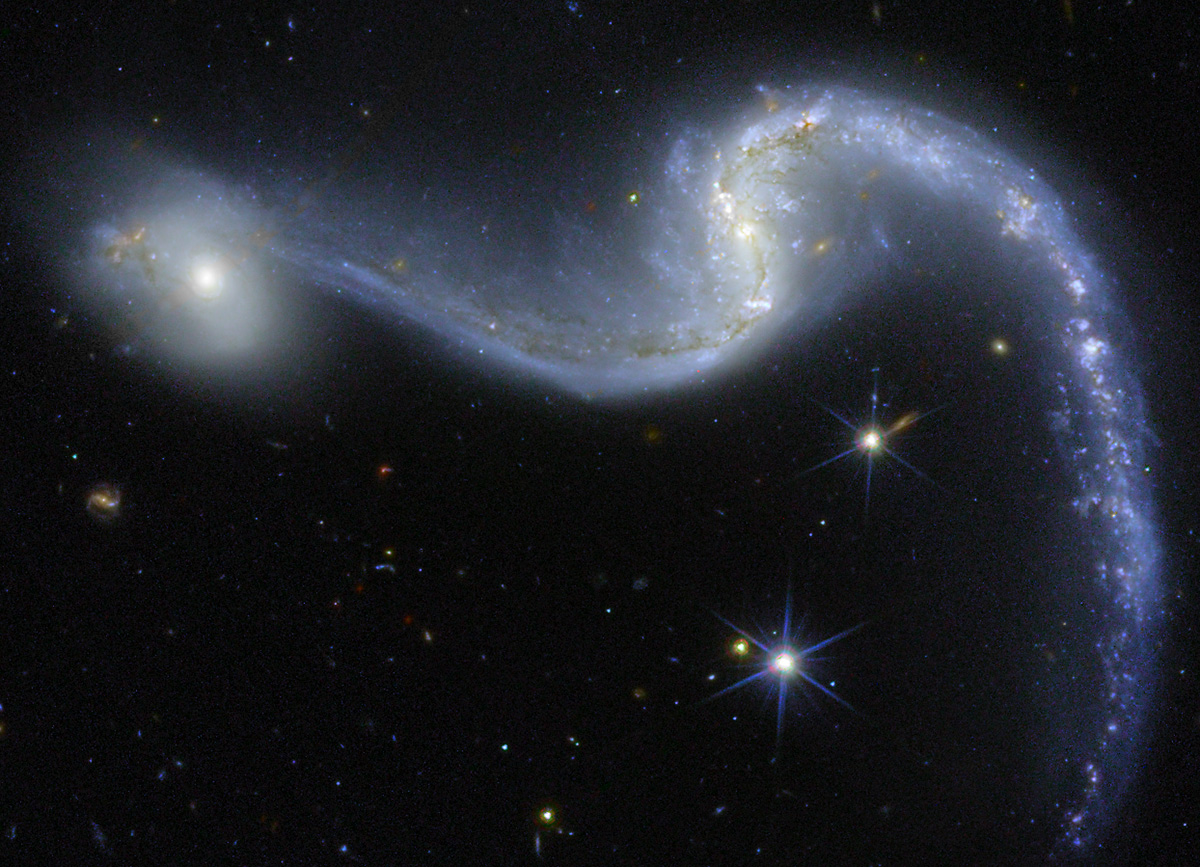
The image shows a barred spiral galaxy observed during Euclid’s early science phase. It captures fine structural features across the galactic disk, including star-forming regions, dust lanes, and a well-defined central bar. The observation highlights Euclid’s ability to deliver stable, high-quality imaging while operating as a large-area survey instrument. This combination lies at the heart of the mission’s scientific value.
NGC 646 as a test case for galaxy structure
NGC 646 is a barred spiral galaxy located roughly 400 million light-years from Earth, in the constellation Cetus. At this distance, the galaxy occupies an important observational regime. It is close enough for internal structure to be resolved, yet distant enough to resemble the systems Euclid will study in large numbers. The galaxy displays a prominent stellar bar extending from its nucleus. Spiral arms emerge smoothly from the ends of the bar and wind outward across the disk. Bright blue regions trace sites of recent star formation. Dark dust lanes cut across the luminous background, revealing the distribution of cold interstellar material.
A second galaxy appears near NGC 646 in the image. This object lies in the foreground and is not physically associated with the spiral system. Its presence results from a line-of-sight alignment. Even so, the pairing illustrates a common challenge in extragalactic astronomy. Apparent proximity does not always imply interaction. Euclid’s multi-band observations allow astronomers to separate such cases through distance measurements.
NGC 646 itself does not show strong signs of an ongoing merger. Instead, it represents a relatively stable spiral system shaped by internal dynamics and past gravitational influences. Such galaxies form the backbone of statistical studies of galaxy morphology and evolution.
Euclid’s mission design and scientific objectives
Euclid launched in July 2023 and entered a halo orbit around the Sun–Earth Lagrange Point 2. From this location, the spacecraft benefits from thermal stability and uninterrupted sky access. These conditions are essential for precision measurements across long timescales.
The mission’s primary objective is to investigate the nature of dark matter and dark energy. Dark matter governs the formation of galaxies and clusters through gravity. Dark energy drives the accelerated expansion of the universe. Both remain poorly understood despite decades of study.
To probe these components, Euclid conducts a wide-field survey covering roughly one-third of the sky. It observes billions of galaxies across optical and near-infrared wavelengths. This scale allows scientists to extract weak signals from large statistical samples. The image of NGC 646 illustrates how Euclid balances depth and coverage. While the mission does not dwell on single objects for extended periods, it still achieves a level of clarity sufficient for detailed structural analysis.
Instrumentation and observational strategy
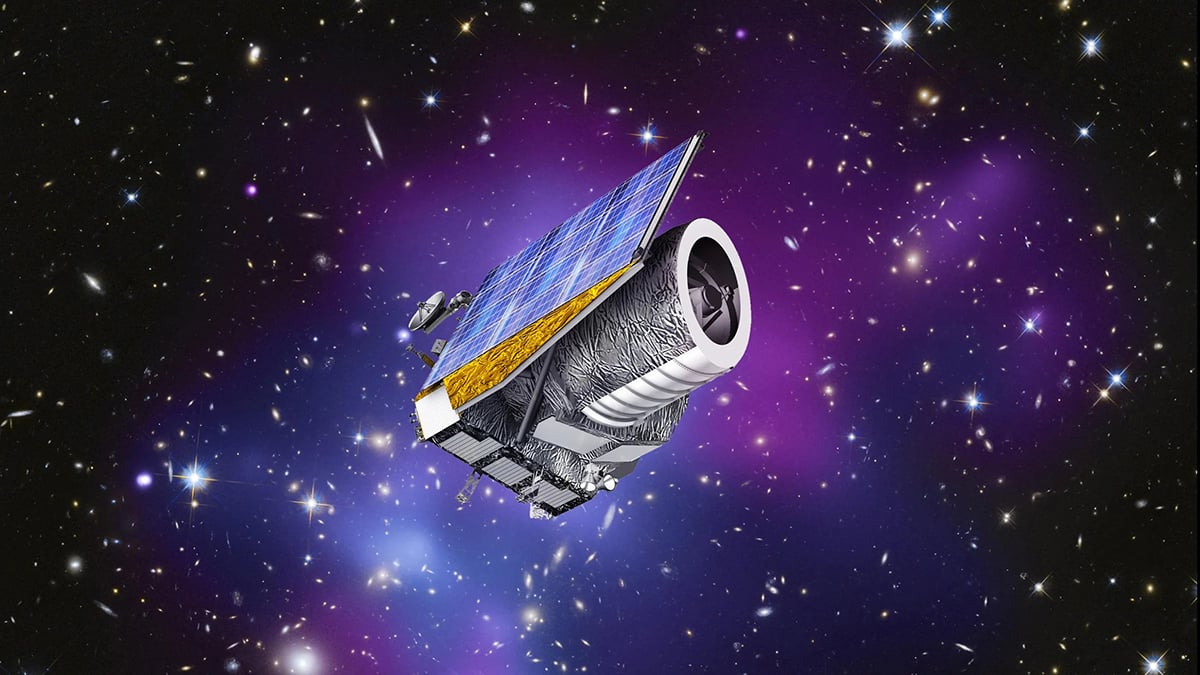
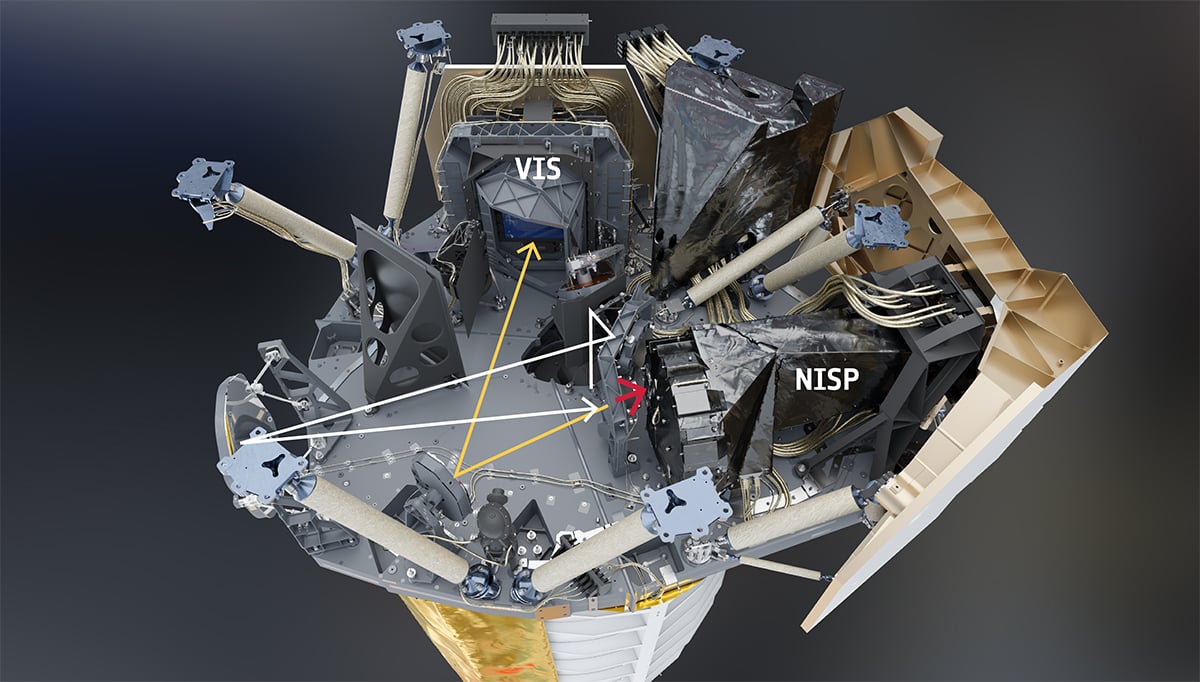
Euclid carries two scientific instruments optimized for complementary tasks. The Visible Imager, or VIS, operates in optical wavelengths. It delivers sharp and stable images with minimal distortion. These qualities are critical for measuring weak gravitational lensing.
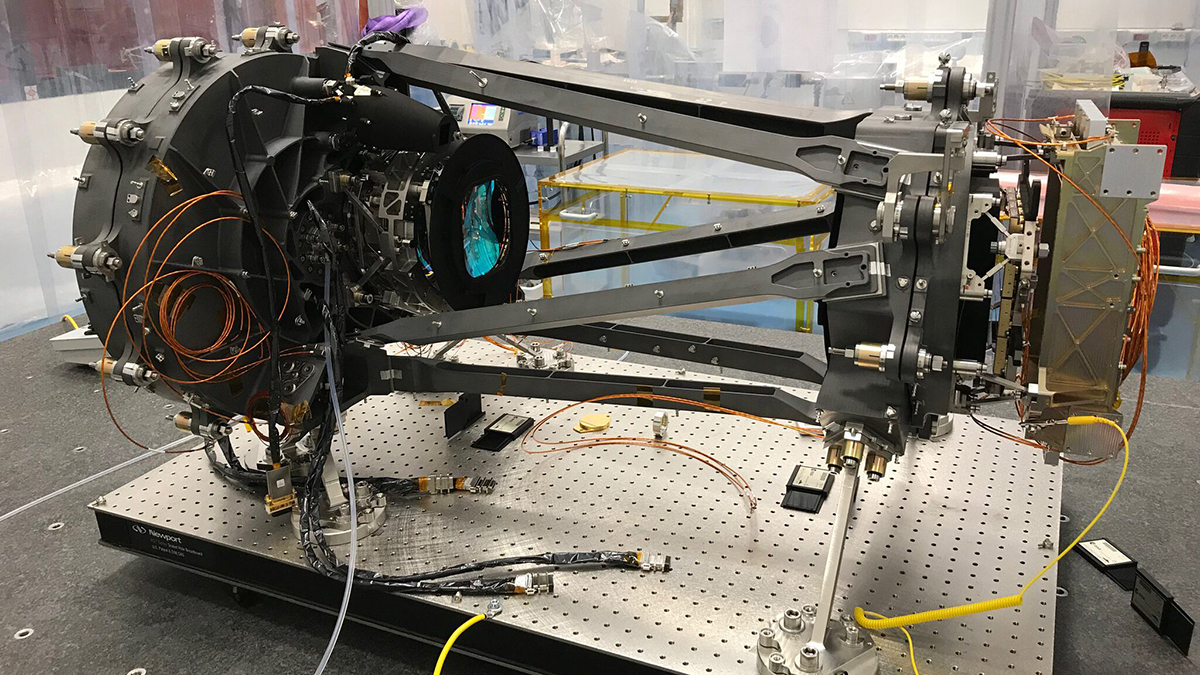
The Near-Infrared Spectrometer and Photometer, known as NISP, operates in near-infrared light. It performs both imaging and spectroscopy. From this data, astronomers derive photometric and spectroscopic redshifts. Together, VIS and NISP enable three-dimensional mapping of the universe. They provide galaxy positions, shapes, and distances within a unified framework. This approach allows Euclid to trace how matter is distributed across cosmic time.
In the NGC 646 image, Euclid combines visible and infrared data to enhance structural contrast. The result highlights young stellar populations while preserving geometric accuracy. This balance reflects the mission’s emphasis on measurement quality rather than visual enhancement.
From individual galaxies to the cosmic web
Although NGC 646 appears as a single, isolated system, it exists within a much larger context. Galaxies form and evolve inside dark matter halos. These halos connect through filaments that make up the cosmic web. Euclid studies this structure through weak gravitational lensing. As light from distant galaxies travels toward Earth, intervening mass distorts its path. The resulting shape changes are subtle. Detecting them requires exceptional image stability.
By measuring these distortions across billions of galaxies, Euclid reconstructs the underlying dark matter distribution. This method does not depend on visible tracers alone. It follows gravity directly. NGC 646 serves as a calibration benchmark within this framework. Nearby galaxies help scientists validate shape measurements and assess systematic effects. They also anchor models of galaxy morphology used at higher redshifts.
Euclid is still in the early phase of its survey. ESA has released selected images and datasets to demonstrate performance and support community preparation. These early releases include dense star fields, galaxy clusters, and deep extragalactic views. The NGC 646 image belongs to this category. It showcases the mission’s imaging capability without representing its full survey depth. Even so, it offers insight into the quality of data astronomers can expect.
The first major cosmology data release is scheduled for 2026. That release will include calibrated galaxy catalogs, redshift measurements, and lensing maps. Subsequent releases will expand sky coverage and refine data products.
Clear skies!
See more from DIYPhotography.net on Google
Add DIYPhotography.net as a trusted source. This makes
our stories more likely to appear in your Google Search results.
 Add as a preferred source on Google

Soumyadeep Mukherjee
Soumyadeep Mukherjee is an award-winning astrophotographer from India. He has a doctorate degree in Linguistics. His work extends to the sub-genres of nightscape, deep sky, solar, lunar and optical phenomenon photography. He is also a photography educator and has conducted numerous workshops. His works have appeared in over 40 books & magazines including Astronomy, BBC Sky at Night, Sky & Telescope among others, and in various websites including National Geographic, NASA, Forbes. He was the first Indian to win “Astronomy Photographer of the Year” award in a major category.


Join the Discussion
DIYP Comment Policy
Be nice, be on-topic, no personal information or flames.