






















Euclid Photographed a “Dark Galaxy”, Here is how it looks like
Jul 7, 2025
Soumyadeep Mukherjee
Soumyadeep Mukherjee is an award-winning astrophotographer from India. He has a doctorate degree in Linguistics. His work extends to the sub-genres of nightscape, deep sky, solar, lunar and optical phenomenon photography. He is also a photography educator and has conducted numerous workshops. His works have appeared in over 40 books & magazines including Astronomy, BBC Sky at Night, Sky & Telescope among others, and in various websites including National Geographic, NASA, Forbes. He was the first Indian to win “Astronomy Photographer of the Year” award in a major category.
Share:
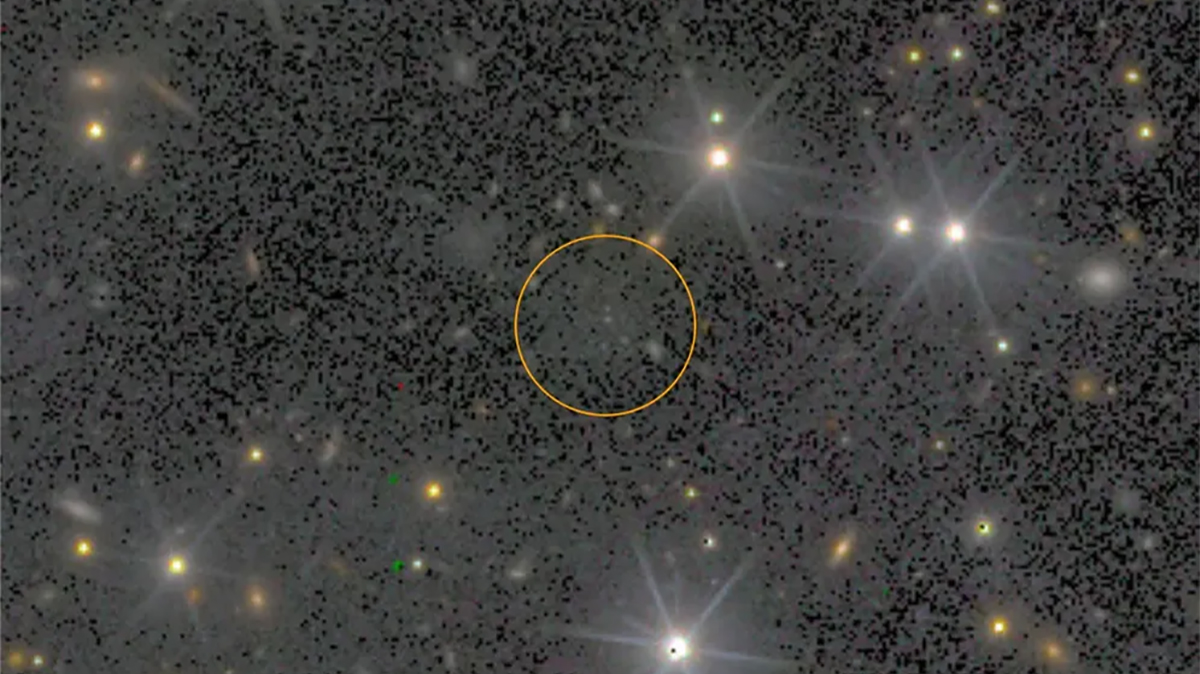
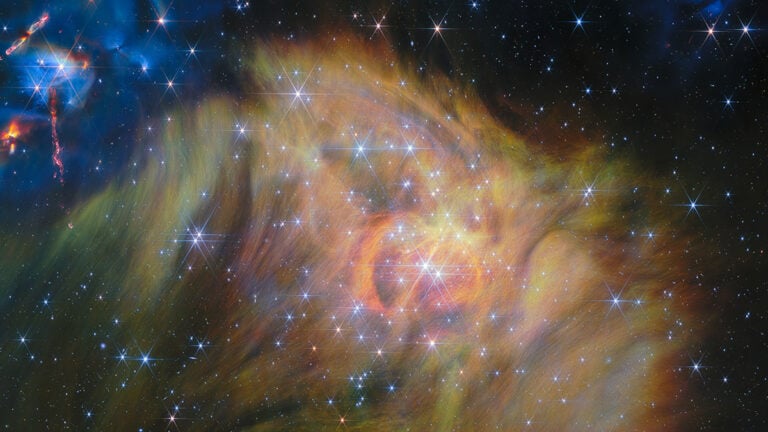
Astronomers have discovered something extraordinary in the Perseus Cluster. A galaxy almost entirely invisible has emerged from the cosmic shadows. Scientists call it CDG-2. It may be one of the most dark matter-dominated galaxies ever observed. This discovery was made by a research team led by David J. Li from the University of Toronto. The news was announced by the University of Innsbruck in June 2025. The team used data from ESA’s Euclid Space Telescope and NASA’s Hubble Space Telescope. Their results offer fresh insights into dark matter, galaxy formation, and observational techniques.
What Is a Dark Galaxy?
A dark galaxy is a galaxy made almost entirely of dark matter. It emits little or no visible light. Such galaxies do not have the usual stars and gas that make normal galaxies glow. Because of this, dark galaxies are incredibly hard to detect. They don’t shine. Telescopes looking for light often miss them entirely. But dark galaxies can still have mass. This mass can influence other nearby objects, such as star clusters. That’s exactly how CDG-2 was found.
The role of globular clusters
Globular clusters are dense, spherical groups of ancient stars. They often orbit galaxies like satellites. These clusters are bright and easier to detect than faint galaxies. Astronomers found a dense group of globular clusters in the Perseus Cluster. The group didn’t seem to belong to any known galaxy. That was the clue. The researchers asked: What are these clusters orbiting? Their positions and motions hinted at an unseen center. That center was CDG-2.
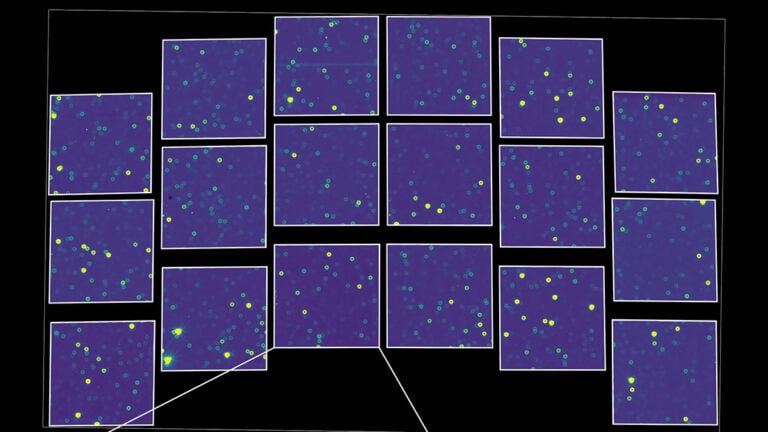
The astronomers then used imaging from the Euclid VIS instrument and the Hubble Space Telescope. These showed a very faint glow between the globular clusters. This diffuse light is the galaxy itself. The light from CDG-2 is so faint that it almost blends with the sky background. Without the cluster clue, it might have stayed hidden forever. The team also confirmed that these globular clusters are not foreground objects. They matched distances and found the clusters were located in the Perseus Cluster. That placed CDG-2 at over 240 million light-years away.

Extreme mass and darkness
CDG-2 is incredibly faint. It is about 1,000 times fainter than the Milky Way. Its surface brightness is lower than almost any known galaxy. That means it emits very little light per unit area. Yet, it contains a massive dark halo. The team estimates that CDG-2’s total mass is hundreds of billions of solar masses. But almost all that mass is invisible. The visible matter, the stars, contributes only about 0.01% of the total mass. This suggests CDG-2 is 99.99% dark matter. That makes it one of the most dark matter-dominated galaxies ever found.
Most of its visible light comes from the globular clusters. The researchers estimate that about 17% of the total light comes from these clusters. That’s a huge fraction. In normal galaxies, the globular cluster contribution is less than 1%. This makes CDG-2 a clear outlier. It may represent an entirely new class of galaxy.
Euclid’s role
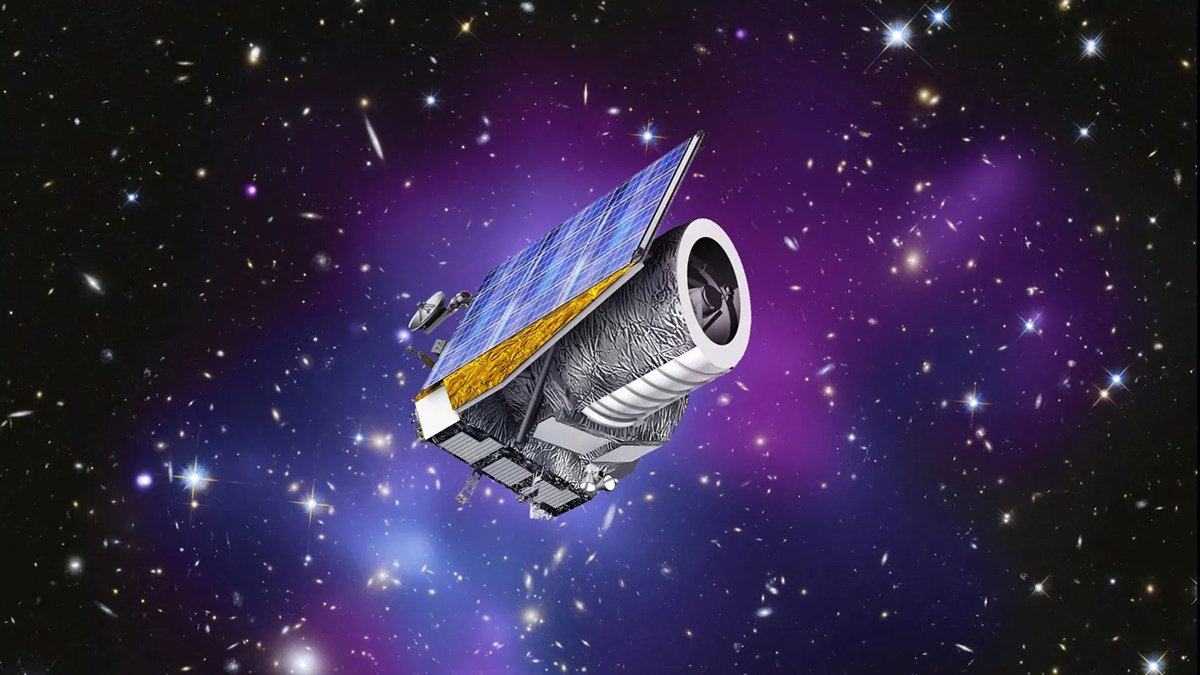
ESA’s Euclid Space Telescope, launched in July 2023, plays a vital role in this story. Euclid is designed to map the dark universe. It uses both visible and near-infrared light to detect galaxies, clusters, and dark matter structures. Euclid’s powerful VIS instrument captured images of CDG-2 and its cluster. Without Euclid’s deep imaging, the diffuse glow of CDG-2 might have been missed. This discovery confirms that Euclid is already delivering on its goals. It is finding galaxies that previous surveys overlooked.
The universe hides its secrets well. But astronomers are learning to see the invisible. The discovery of CDG-2 is a triumph of method, observation, and insight. It proves that light isn’t everything. Sometimes, what you don’t see matters more.
Clear skies!
See more from DIYPhotography.net on Google
Add DIYPhotography.net as a trusted source. This makes
our stories more likely to appear in your Google Search results.
 Add as a preferred source on Google

Soumyadeep Mukherjee
Soumyadeep Mukherjee is an award-winning astrophotographer from India. He has a doctorate degree in Linguistics. His work extends to the sub-genres of nightscape, deep sky, solar, lunar and optical phenomenon photography. He is also a photography educator and has conducted numerous workshops. His works have appeared in over 40 books & magazines including Astronomy, BBC Sky at Night, Sky & Telescope among others, and in various websites including National Geographic, NASA, Forbes. He was the first Indian to win “Astronomy Photographer of the Year” award in a major category.
Related Posts
 Euclid Unveils an Einstein Ring: A Glimpse into the Dark Universe
 Euclid Captures Orion’s Dark Cloud, Revealing a Hidden Stellar Nursery
 NGC 646: Euclid Mission Captures a Dynamic Galaxy Garland
 Enjoy The World’s Disappearing Dark Skies With These Spectacular Winning Shots from Capture The Dark 2025
Join the Discussion
DIYP Comment Policy
Be nice, be on-topic, no personal information or flames.