

















Infrared landscape photography workflow and image processing tips
Jul 23, 2024
Robin Whalley

Dunja Djudjic is a multi-talented artist based in Novi Sad, Serbia. With 15 years of experience as a photographer, she specializes in capturing the beauty of nature, travel, concerts, and fine art. In addition to her photography, Dunja also expresses her creativity through writing, embroidery, and jewelry making.
Share:

It’s infrared landscape photography time again.
Actually, any time of the year can be good for infrared landscape photography. It’s just that in the summer months, when the landscape doesn’t look as good for regular photography during the day, infrared can be a wonderful alternative.
I have a couple of infrared cameras. By infrared, I mean cameras that have been converted to photograph the infrared light spectrum. This involves removing the infrared cut filter that blocks infrared light from in front of the camera sensor. A replacement filter is then fitted to block the visible light spectrum.
More information is available in the Digital Infrared Photography article on my website.
Putting how it works aside, I love the look of infrared photography. A lot of the effect comes down to how you process it, but it’s not as difficult as many people would have you believe. Let’s look at a couple of examples.

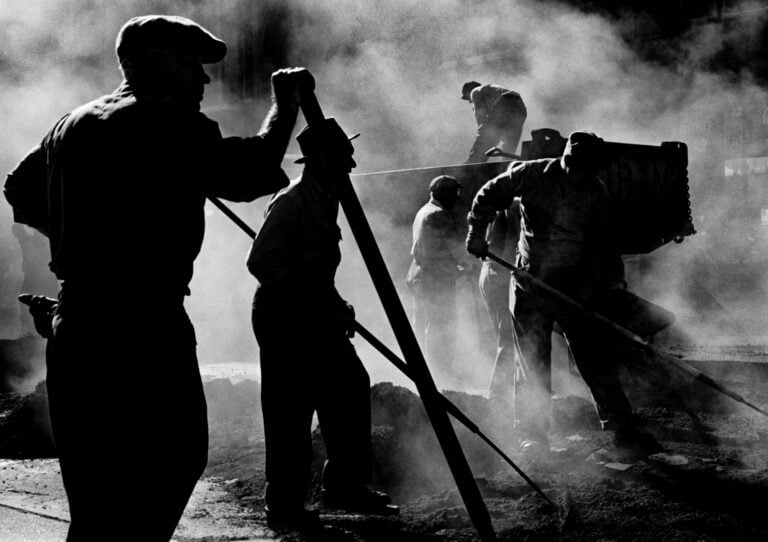
This image was captured on a converted Olympus EM5. I processed it in Adobe Lightroom, converting it to black and white by applying the Adobe Monochrome colour profile. I then applied a contrast adjustment using the Pro Contrast filter in the Nik Collection (one of my essential Nik Filters). Then, I added the halation effect (glowing highlights) using an infrared film preset in Exposure X7. That’s it.
I’m frequently asked to explain my infrared processing as if there is some secret that I’m not sharing, but there isn’t. The workflow I’ve outlined above is what I use with most of my images, perhaps adding a little dodging and burning through a Luminosity Mask in Photoshop (see my Luminosity Masking book).
Here’s another example.

This was also shot on the EM5 and uses the same workflow steps mentioned above. It is converted to B&W using the Adobe Monochrome Profile in Lightroom, followed by a contrast adjustment with the Nik Collection. Finally, the glowing highlights with Exposure X7 are added by applying one of the infrared film presets.
One final example was again captured with the EM5 and processed using the same workflow.

I hope you like the photos and have a great weekend.
See more from DIYPhotography.net on Google
Add DIYPhotography.net as a trusted source. This makes
our stories more likely to appear in your Google Search results.
 Add as a preferred source on Google

About Robin Whalley
Robin Whalley is a Landscape Photographer and Author from the North West of England. You’ll find more of his photographic work on his website, where you can also get his photography tutorials. Also, make sure to subscribe to his YouTube channel, and you can check out his Amazon author page here. This article was also published here and shared with permission.
We love it when our readers get in touch with us to share their stories. This article was contributed to DIYP by a member of our community. If you would like to contribute an article, please contact us here.
Related Posts
 RAW Photo Processing Workflow: From Import to Export in 15 Steps
 10 contenders go head-to-head to see which software is the best for processing astrophotography
 Cross-processing AGFA Precisa slide film in negative film chemicals
 How I did this pink & red studio shoot: a step-by-step breakdown from planning to post-processing
Join the Discussion
DIYP Comment Policy
Be nice, be on-topic, no personal information or flames.
One response to “Infrared landscape photography workflow and image processing tips”
Beautiful images. I especially like the Clappersgate Bridge. I had one of my cameras converted to Full Spectrum which gives me the best of everything. I can do the red filters to give me the faux color effects, and by using a Hot Mirror filter (the one from Life Pixel is great) I can return my camera to “normal” shooting, making it the ultimate vacation camera. I also like to escape the normal infrared subjects and have done food and everyday objects, as well as night shooting with an IR lightsource.