
























Hubble Captures NGC 4388’s Escaping Gas Plume: A Galaxy Caught in Transformation
Dec 18, 2025
Soumyadeep Mukherjee
Soumyadeep Mukherjee is an award-winning astrophotographer from India. He has a doctorate degree in Linguistics. His work extends to the sub-genres of nightscape, deep sky, solar, lunar and optical phenomenon photography. He is also a photography educator and has conducted numerous workshops. His works have appeared in over 40 books & magazines including Astronomy, BBC Sky at Night, Sky & Telescope among others, and in various websites including National Geographic, NASA, Forbes. He was the first Indian to win “Astronomy Photographer of the Year” award in a major category.
Share:
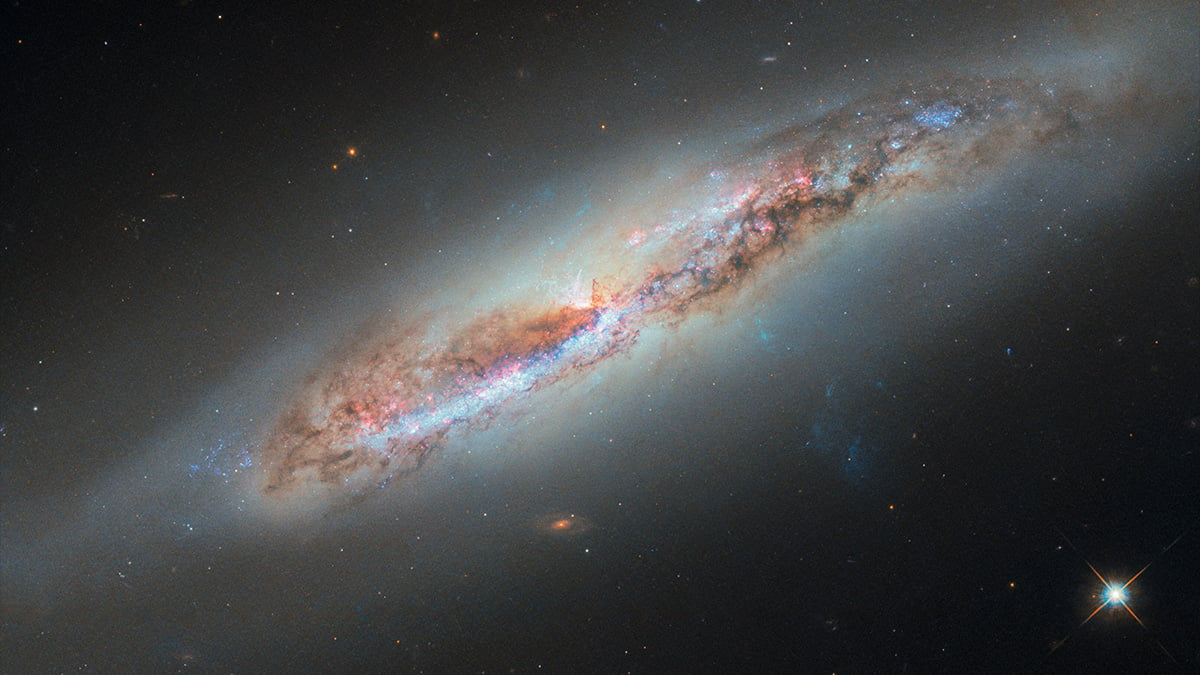
The Hubble Space Telescope has captured a galaxy in the middle of a slow but powerful transformation. The galaxy is NGC 4388, a spiral system moving through the dense environment of the Virgo Cluster. In Hubble’s latest image, a long plume of glowing gas stretches away from the galaxy’s disk. The structure looks delicate, but it tells a violent story. The galaxy is losing its gas as it travels through its crowded surroundings. This image was released by ESA/Hubble as part of its Picture of the Week series. It shows a fundamental process that shapes how galaxies live and die. Astronomers call this process ram-pressure stripping. In NGC 4388, it is happening in plain view.
A spiral seen from the side
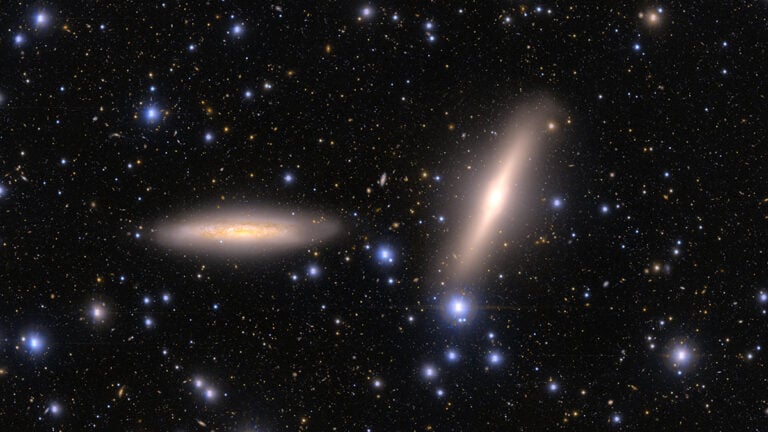
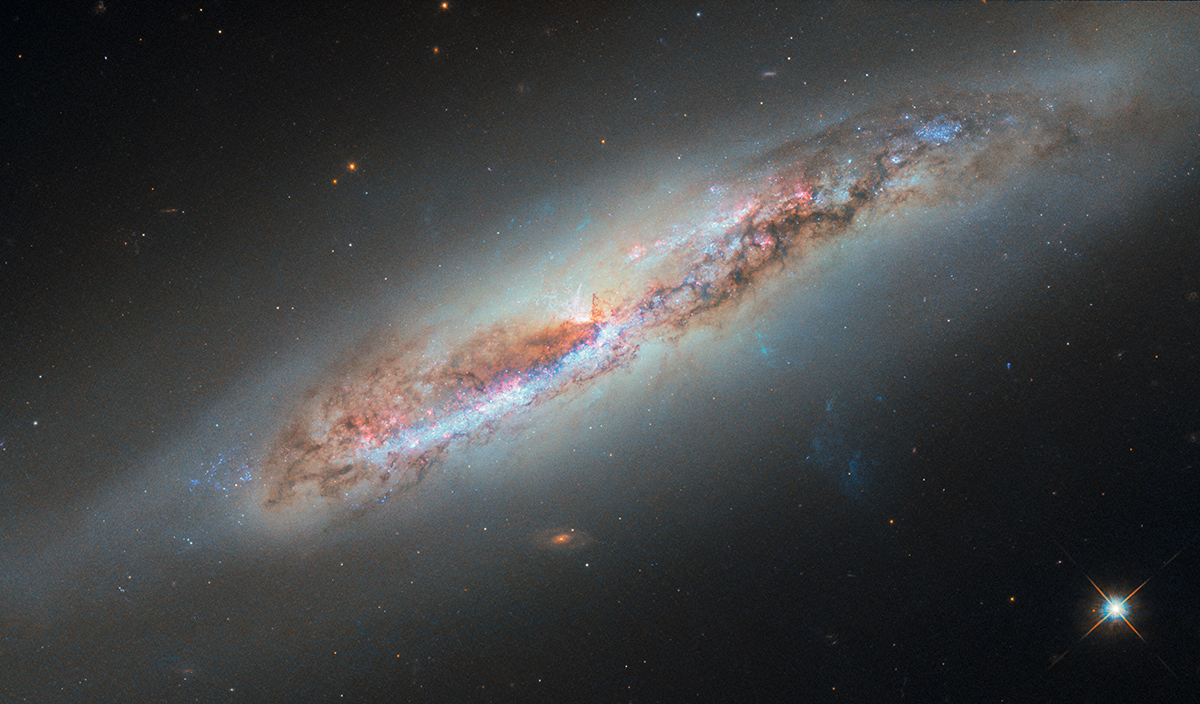
NGC 4388 lies about 60 million light-years from Earth, inside the Virgo Cluster. From our perspective, the galaxy appears almost perfectly edge-on. That angle gives the image its dramatic look. The thin disk cuts sharply across the frame, while dark dust lanes block parts of the starlight. The galaxy’s central region shines brighter than the rest.
This orientation also makes the escaping gas easier to see. The plume extends away from the disk, trailing behind the galaxy like a wake. Without this edge-on view, the feature would be harder to separate from the main body. The galaxy is not quiet at its core. NGC 4388 hosts a supermassive black hole and belongs to a class known as Seyfert galaxies. Its nucleus emits strong radiation, which influences the surrounding gas. That activity becomes important when trying to understand why the gas in the plume glows.
Moving through a hostile environment
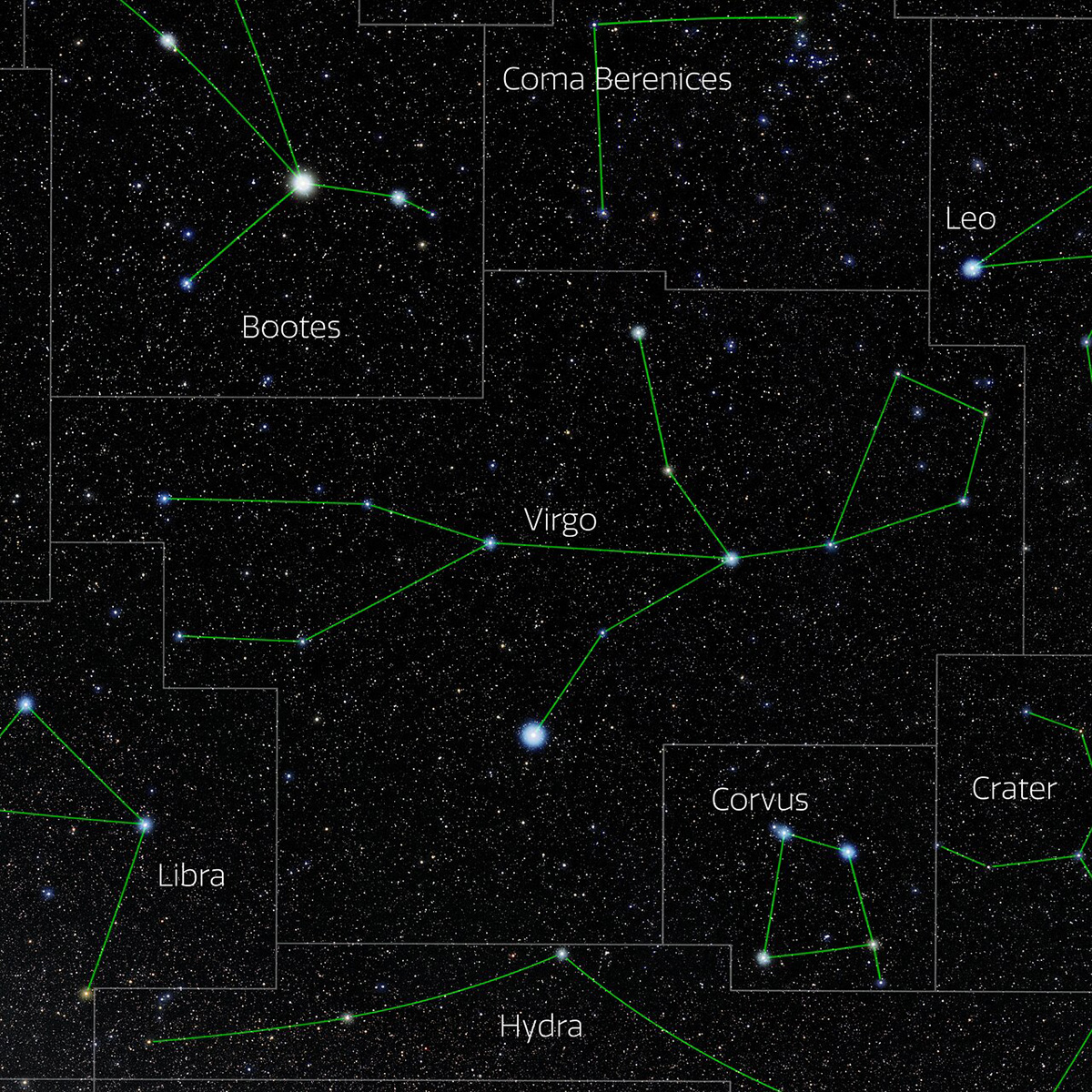
The Virgo Cluster is not an empty space. It contains hundreds of galaxies and a vast amount of hot, thin gas spread between them. This gas forms the intracluster medium. Although it is extremely diffuse, it fills enormous volumes and reaches very high temperatures.
NGC 4388 is moving rapidly through this medium. As it does, the galaxy experiences pressure, much like air pushing against a moving vehicle. In space, that pressure acts on the gas inside the galaxy. Stars remain unaffected, but gas does not. Over time, the pressure becomes strong enough to push gas out of the galaxy’s disk. Astronomers refer to this effect as ram-pressure stripping. The faster the galaxy moves and the denser the surrounding gas, the stronger the stripping becomes. In the Virgo Cluster, both conditions apply. NGC 4388 is therefore an ideal case for studying this process.
Earlier radio observations revealed that the galaxy has already lost a large amount of neutral hydrogen, the cold gas needed for star formation. Some studies traced this stripped gas across distances exceeding 100 kiloparsecs. The Hubble image now shows the ionized part of that same story.
The glowing and escaping gas
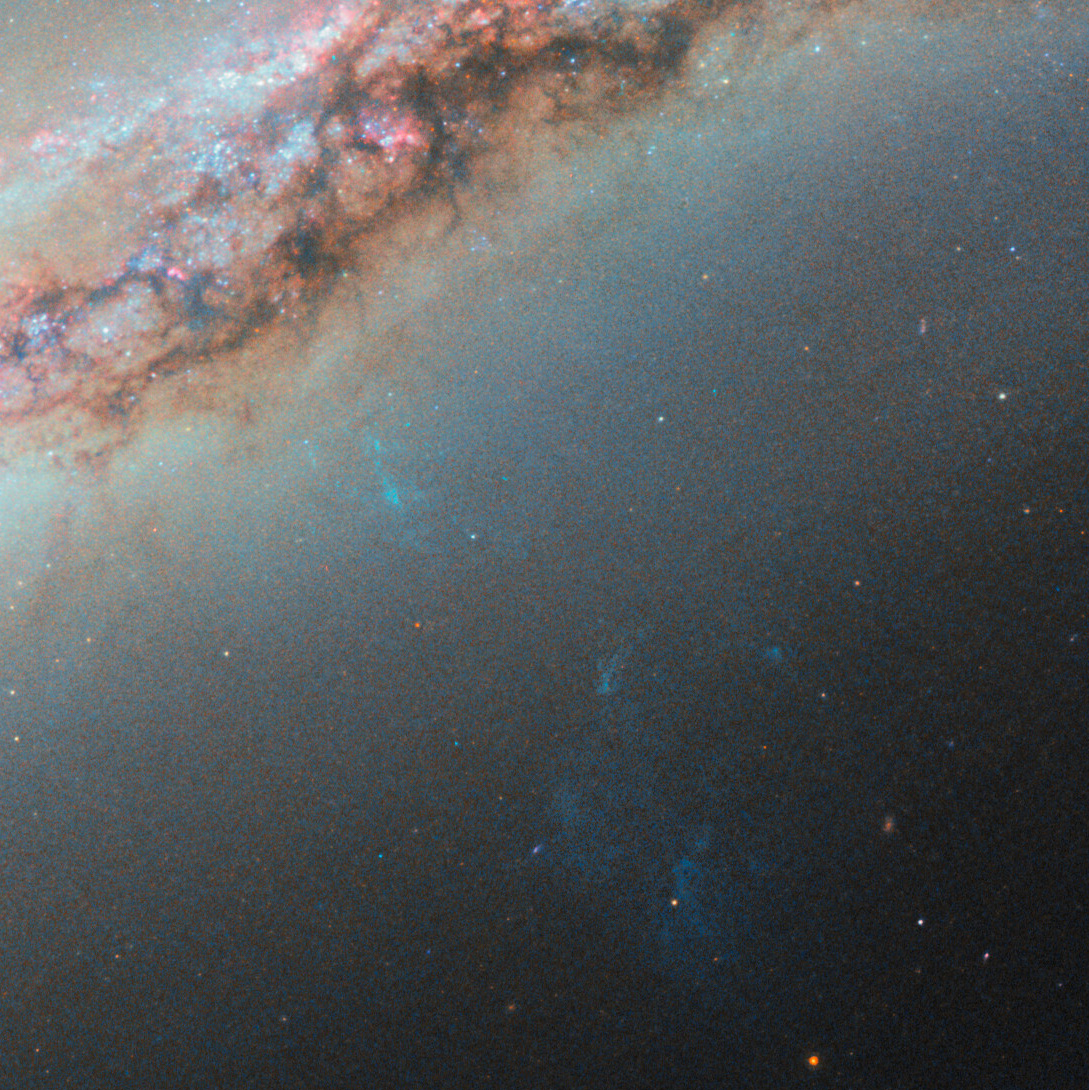
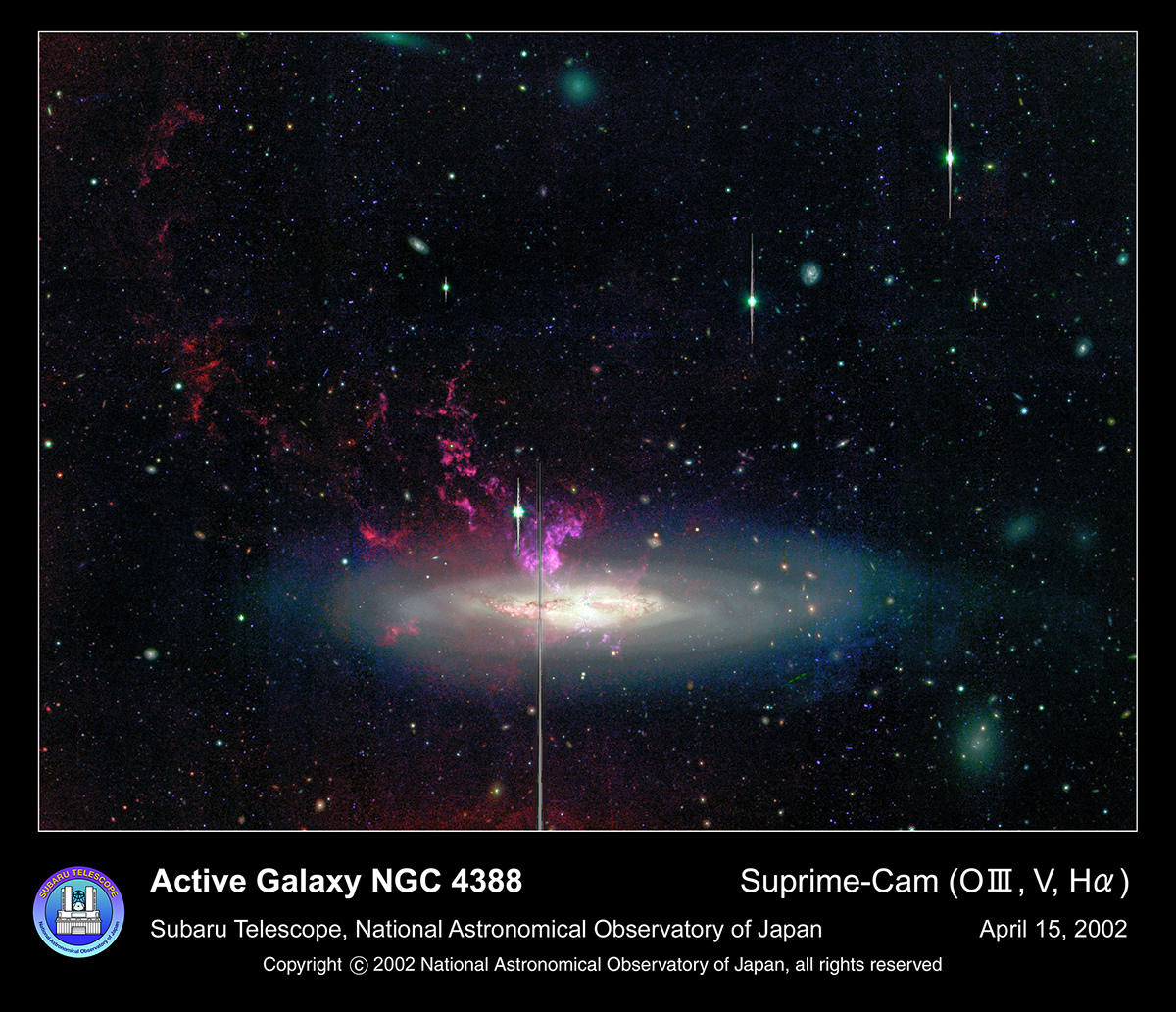
The gas plume in the Hubble image is faint but clearly visible. It glows because it is ionized. Ionization requires energy. In NGC 4388, astronomers believe more than one source contributes. Close to the galaxy, radiation from the active nucleus likely plays a major role. The central black hole and its surrounding disk emit energetic photons. These photons can travel into nearby gas and strip electrons from atoms. When electrons later recombine, the gas emits light.
Farther from the galaxy, radiation alone may not be enough. There, shock heating becomes important. As stripped gas collides with the intracluster medium, it experiences turbulence and compression. These shocks heat the gas and ionize it. The result is a faint glow that Hubble can detect.
The image does not settle which mechanism dominates. It shows that both are plausible and may act together. What it does provide is spatial detail. The fine structure of the plume helps astronomers target future observations that can measure gas motion and temperature. In NGC 4388, evidence suggests that the most intense stripping occurred around 200 million years ago. That timing likely corresponds to a close pass near the cluster’s dense core. Since then, the galaxy has continued to lose gas, though at a slower rate.
The outer regions of the galaxy suffer first. These areas contain loosely bound gas that is easier to strip. As the outer disk loses fuel, star formation shuts down there. The inner regions survive longer, protected by the galaxy’s deeper gravitational well. Over time, continued gas loss can alter the galaxy’s appearance and behavior. A spiral galaxy may retain its shape but lose its star-forming character. This process helps explain why galaxy clusters contain many gas-poor, passive systems.
A broader pattern in Virgo
NGC 4388 is not unique. The Virgo Cluster hosts many galaxies showing signs of ram-pressure stripping. Astronomers have observed truncated gas disks, extended tails, and displaced star-forming regions in several cluster members. Because Virgo lies relatively close to Earth, researchers can study these effects in detail. They combine optical images, radio maps, and X-ray data to build a full picture of how gas moves and transforms.
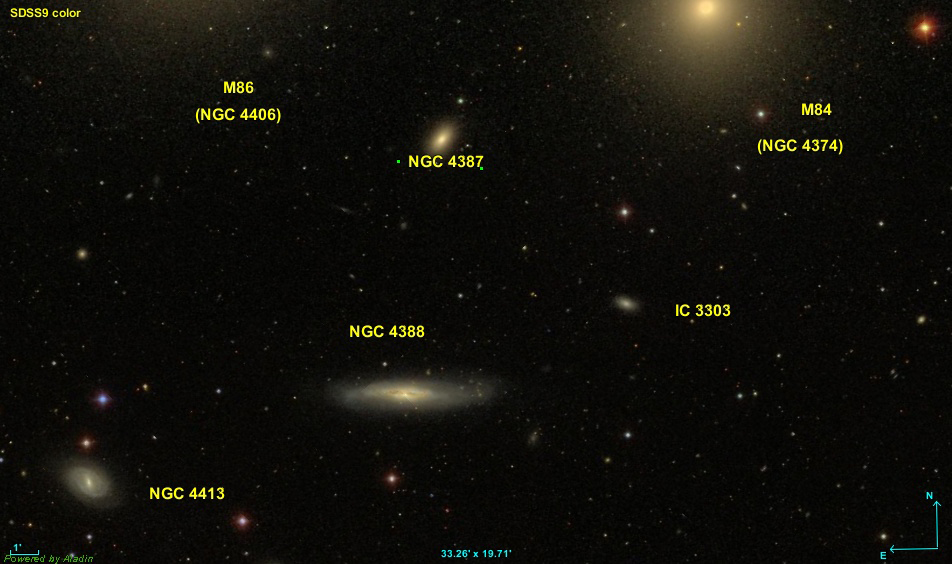
Hubble’s contribution is resolution. It reveals structure on scales that ground-based telescopes often blur. Filaments, knots, and sharp edges become visible. These features matter. They show how gas breaks apart, cools, or heats as it leaves the galaxy. By comparing galaxies at different stages of stripping, astronomers can reconstruct how quickly the process unfolds. NGC 4388 represents a stage where gas loss is advanced but not complete.
Despite decades of study, ram-pressure stripping still raises questions. One key issue concerns the fate of the stripped gas. Does it disperse into the cluster, or can it collapse and form stars? Some observations suggest limited star formation in dense clumps within gas tails. Others show little activity. In NGC 4388, star formation in the tail appears weak. Understanding why remains an active area of research. Another open question involves the role of the active nucleus. How much does the black hole influence the ionization and structure of the stripped gas? Separating its effects from shock heating requires detailed spectroscopy. Future observations with space- and ground-based instruments will address these issues.
Clear skies!
See more from DIYPhotography.net on Google
Add DIYPhotography.net as a trusted source. This makes
our stories more likely to appear in your Google Search results.
 Add as a preferred source on Google

Soumyadeep Mukherjee
Soumyadeep Mukherjee is an award-winning astrophotographer from India. He has a doctorate degree in Linguistics. His work extends to the sub-genres of nightscape, deep sky, solar, lunar and optical phenomenon photography. He is also a photography educator and has conducted numerous workshops. His works have appeared in over 40 books & magazines including Astronomy, BBC Sky at Night, Sky & Telescope among others, and in various websites including National Geographic, NASA, Forbes. He was the first Indian to win “Astronomy Photographer of the Year” award in a major category.



Join the Discussion
DIYP Comment Policy
Be nice, be on-topic, no personal information or flames.