






















A Hidden Spiral: Hubble Photographs the Faint Galaxy NGC 45
Aug 11, 2025
Soumyadeep Mukherjee
Soumyadeep Mukherjee is an award-winning astrophotographer from India. He has a doctorate degree in Linguistics. His work extends to the sub-genres of nightscape, deep sky, solar, lunar and optical phenomenon photography. He is also a photography educator and has conducted numerous workshops. His works have appeared in over 40 books & magazines including Astronomy, BBC Sky at Night, Sky & Telescope among others, and in various websites including National Geographic, NASA, Forbes. He was the first Indian to win “Astronomy Photographer of the Year” award in a major category.
Share:
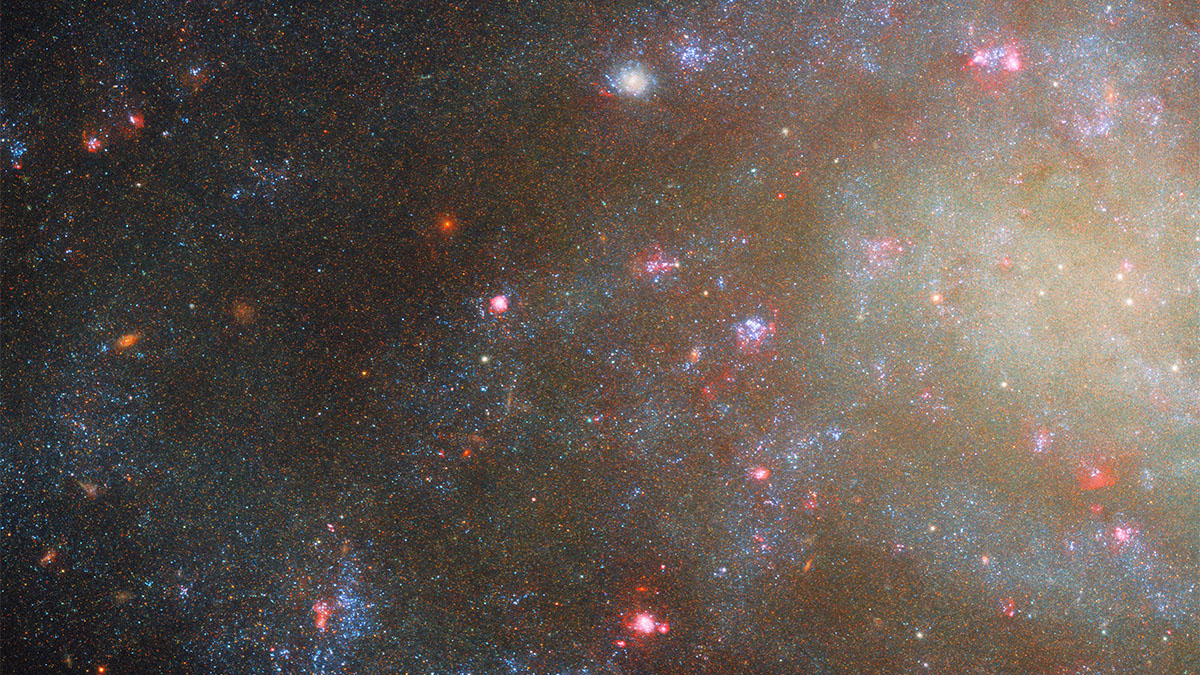
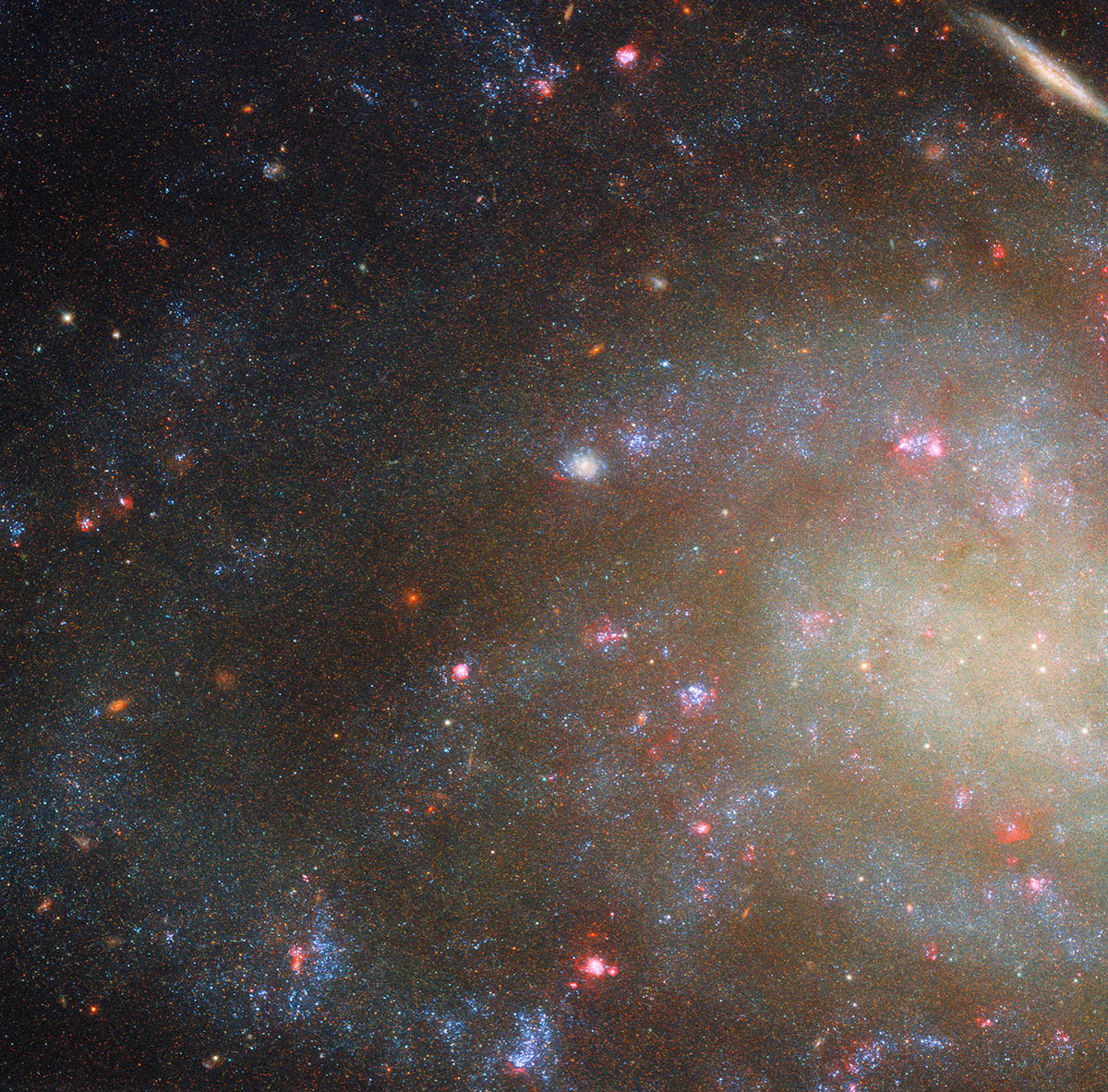
The Hubble Space Telescope has revealed a breathtaking view of NGC 45, a spiral galaxy about 22 million light-years away in the constellation Cetus. The image shows the galaxy’s feathery outer arms in remarkable detail. At first glance, NGC 45 looks like many other spirals. But it is far from ordinary. This galaxy belongs to a class called low surface brightness galaxies. These are so faint that their average brightness is less than the glow of the night sky. Such galaxies are hard to detect, even with large ground-based telescopes. Astronomers believe they are not rare. In fact, between 30 and 60 percent of all galaxies in the Universe may fall into this category. But because of their faintness, they remain poorly understood. Each observation is valuable, helping scientists fill gaps in our knowledge of galaxy evolution.
The science of low surface brightness galaxies
Low surface brightness galaxies (LSBs) challenge many ideas about how galaxies form and grow. They are diffuse and extended, containing relatively few stars for their size. They often have large reservoirs of gas, yet they form stars slowly. The reasons for this slow pace are still debated. One key factor may be dark matter. The rotation curves of LSBs suggest they are dominated by massive dark matter halos. This extra invisible mass may keep the gas spread out, preventing it from collapsing into dense star-forming clouds. Studying LSBs like NGC 45 can test these theories and reveal how dark matter shapes galaxies. NGC 45’s faint arms also make it an ideal place to study star formation in low-density environments. By comparing it with brighter spirals, astronomers can see how the environment and mass affect stellar birth rates. Such comparisons refine our understanding of the variety of galaxies in the Universe.
Inside the Hubble portrait
The Hubble image of NGC 45 is a rich scientific map. The tiny blue dots sprinkled across the spiral arms are young star clusters. These stars are hot, massive, and only a few million years old. Their brilliant ultraviolet light stands out even in this faint galaxy. Scattered among them are pink-red patches glowing in H-alpha light. These regions are clouds of hydrogen gas ionized by newborn stars. H-alpha emission is one of the clearest indicators of current star formation. In the image, these glowing pockets appear as tiny beacons against the dark background.
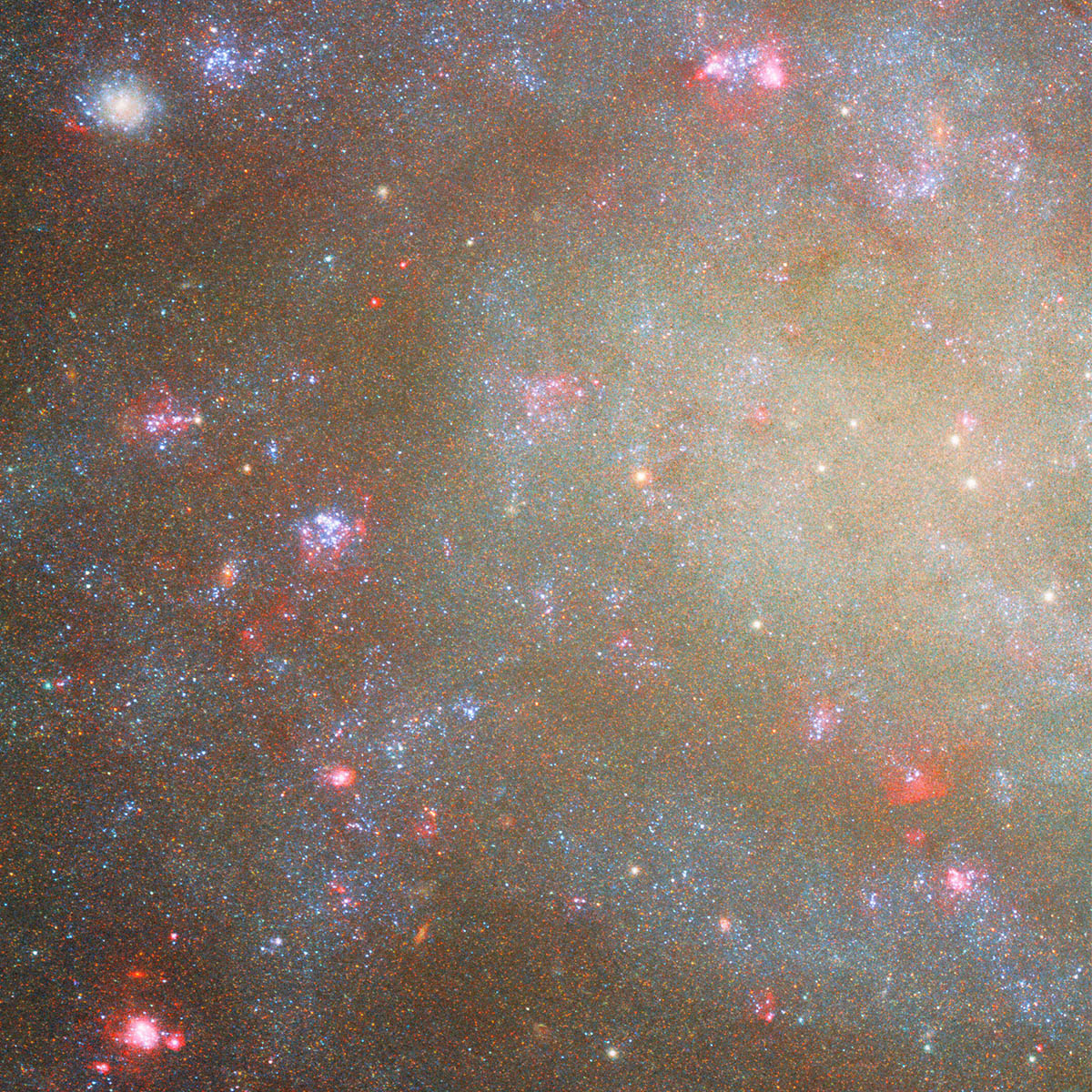
The observation combines data from two separate Hubble programs. One surveyed nearby galaxies from ultraviolet through near-infrared wavelengths. The other focused specifically on H-alpha light to map active star-forming regions. Together, they offer both a broad and detailed view of the galaxy’s structure. Hubble used its Wide Field Camera 3 (WFC3) for this work. WFC3 is sensitive to ultraviolet, optical, and near-infrared light, making it perfect for multi-wavelength studies. The combination of filters creates the rich colors in the final image, with each hue linked to a physical process in the galaxy.
How astronomers study faint galaxies
The process of turning raw Hubble exposures into this final image involves several steps. First, scientists calibrate the data to remove instrumental effects. They clean the frames of cosmic ray strikes and noise. Then, they align exposures from different filters and combine them to create a single, deep image. The colors are assigned based on the filters used. Blue tones represent shorter wavelengths dominated by young, hot stars. Red tones mark H-alpha emission from ionized gas. This approach allows astronomers to read the image like a map, linking colors to star formation history. For NGC 45, such combined studies could reveal why it retains so much gas yet forms stars so slowly. It could also shed light on how its dark matter halo influences the distribution of both gas and stars.
A quiet but important cosmic neighbor
NGC 45 may not be as famous as Andromeda or the Whirlpool Galaxy, but it is just as important scientifically. Its faint, graceful arms show how star formation can proceed gently over billions of years. Its structure offers a nearby laboratory for testing ideas about dark matter, galaxy stability, and the role of the environment.
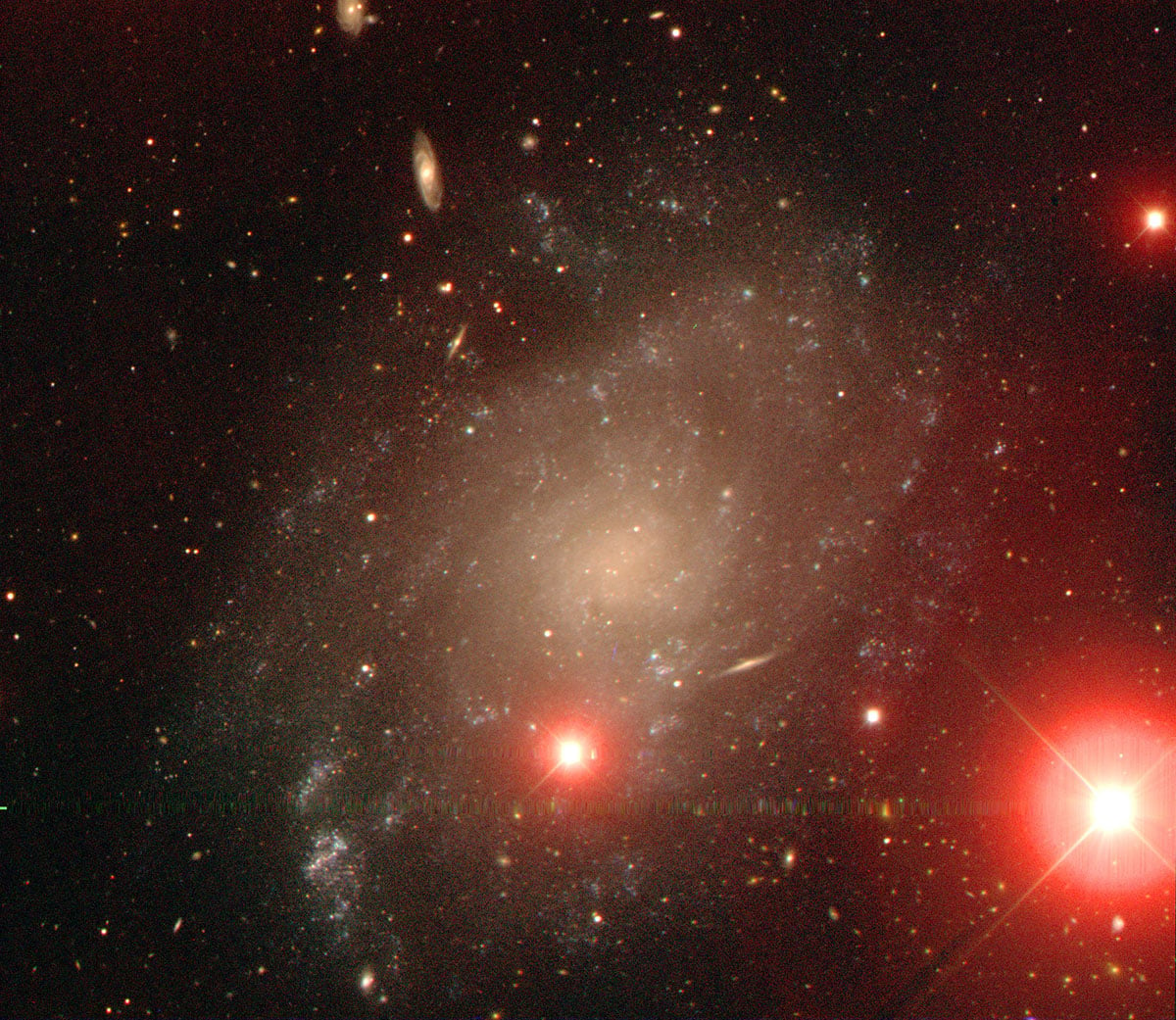
Hubble’s portrait is a tool for research, a window into a rarely seen type of galaxy, and a reminder that cosmic beauty often hides in subtle places.
Clear skies!
See more from DIYPhotography.net on Google
Add DIYPhotography.net as a trusted source. This makes
our stories more likely to appear in your Google Search results.
 Add as a preferred source on Google

Soumyadeep Mukherjee
Soumyadeep Mukherjee is an award-winning astrophotographer from India. He has a doctorate degree in Linguistics. His work extends to the sub-genres of nightscape, deep sky, solar, lunar and optical phenomenon photography. He is also a photography educator and has conducted numerous workshops. His works have appeared in over 40 books & magazines including Astronomy, BBC Sky at Night, Sky & Telescope among others, and in various websites including National Geographic, NASA, Forbes. He was the first Indian to win “Astronomy Photographer of the Year” award in a major category.

Join the Discussion
DIYP Comment Policy
Be nice, be on-topic, no personal information or flames.