

















These are the Closest-ever Images to the Sun: Parker Solar Probe
Aug 11, 2025
Soumyadeep Mukherjee
Soumyadeep Mukherjee is an award-winning astrophotographer from India. He has a doctorate degree in Linguistics. His work extends to the sub-genres of nightscape, deep sky, solar, lunar and optical phenomenon photography. He is also a photography educator and has conducted numerous workshops. His works have appeared in over 40 books & magazines including Astronomy, BBC Sky at Night, Sky & Telescope among others, and in various websites including National Geographic, NASA, Forbes. He was the first Indian to win “Astronomy Photographer of the Year” award in a major category.
Share:
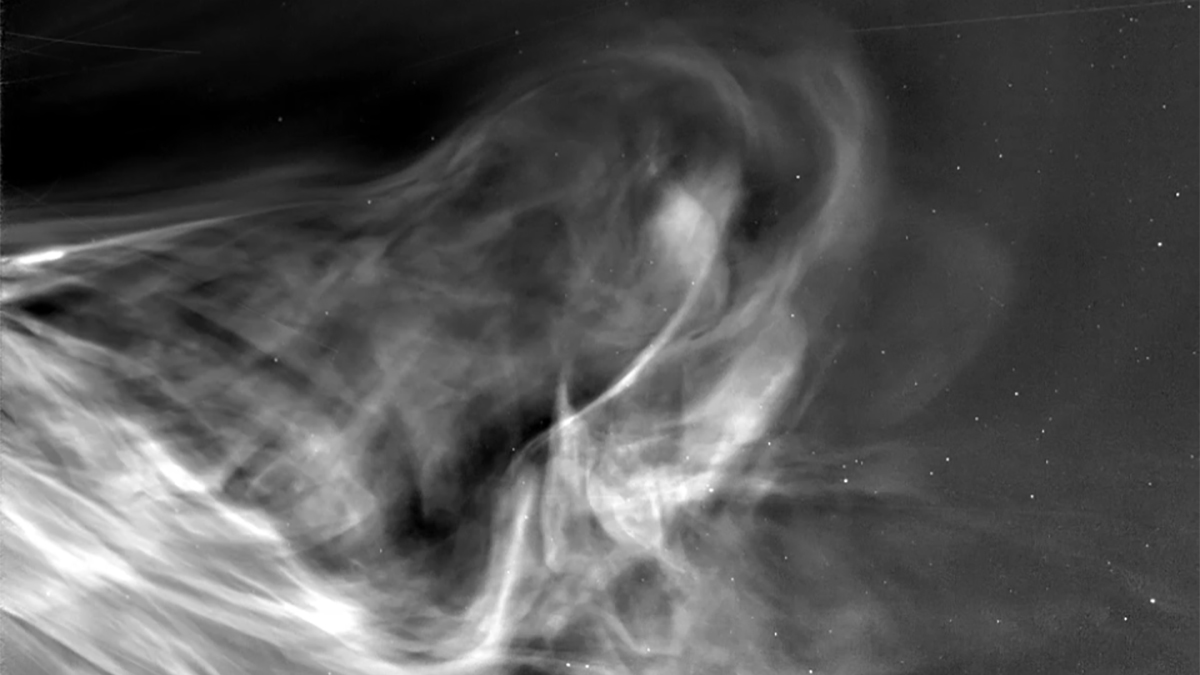
NASA’s Parker Solar Probe has delivered the closest images of the Sun ever taken. These pictures, captured during a daring flyby in December 2024, reveal the Sun’s outer atmosphere in unprecedented detail. For scientists, this is a breakthrough moment in heliophysics. For the rest of us, it’s a breathtaking look at the heart of our solar system.
A record-breaking journey into the corona
On December 24, 2024, the Parker Solar Probe made history. It swooped to within 3.8 million miles (6.1 million kilometers) of the Sun’s surface. That’s deep inside the Sun’s outer atmosphere, the corona. The spacecraft was moving at over 430,000 miles per hour, fast enough to travel from New York to Tokyo in under a minute. This close pass was possible thanks to the probe’s Thermal Protection System, a carbon-composite heat shield that withstands temperatures exceeding 1,370°C. The spacecraft skimmed regions that were once only visible from Earth-based telescopes during total solar eclipses.
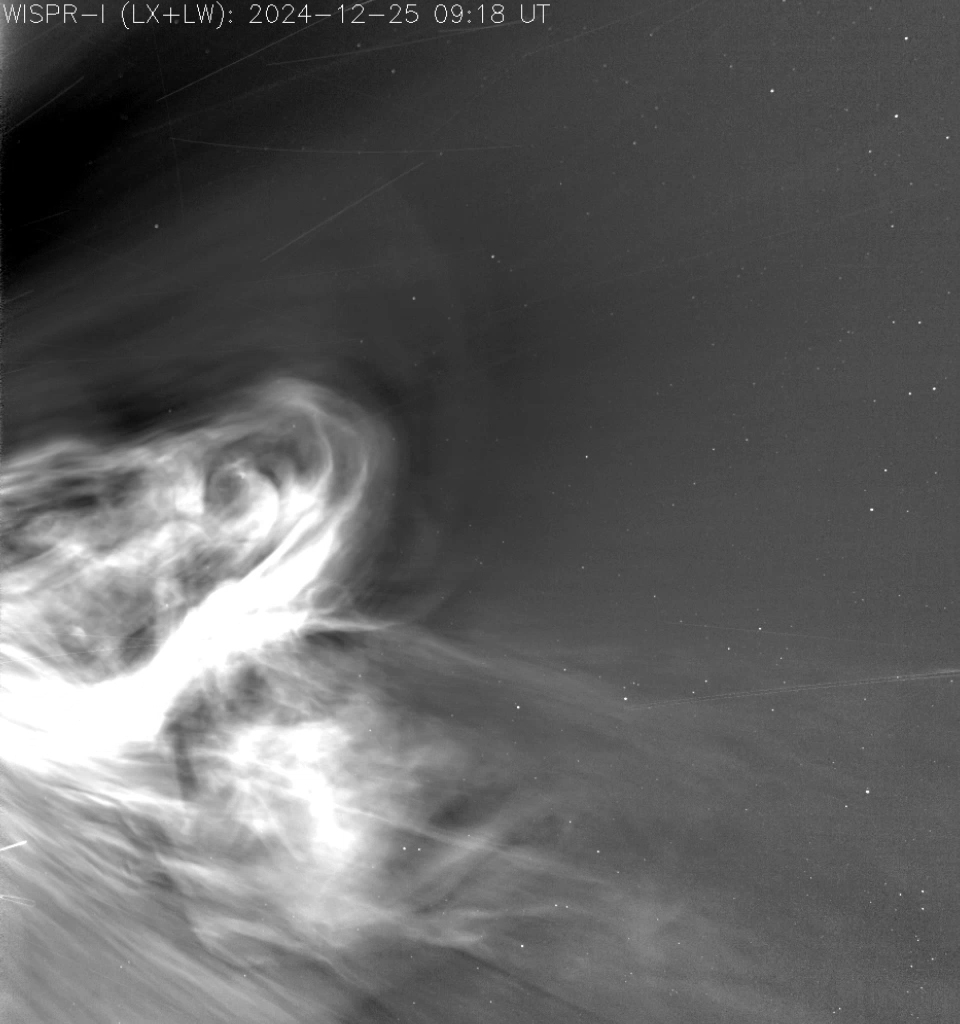
WISPR: The eye that sees the Sun’s secrets
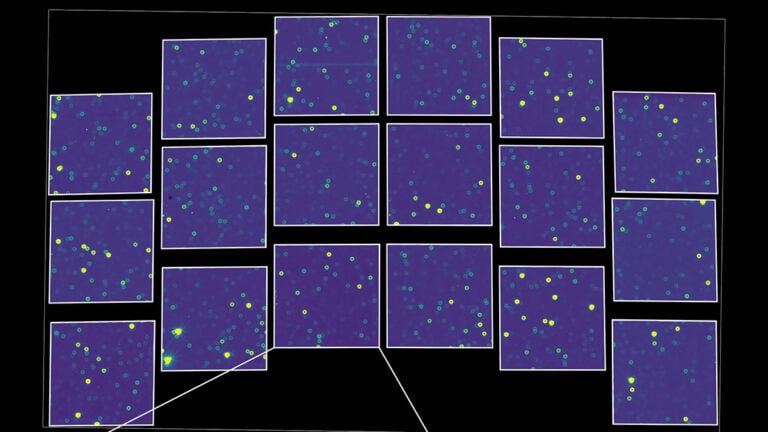
The Parker Solar Probe’s Wide-Field Imager for Solar Probe (WISPR) is its primary imaging tool. Built by the U.S. Naval Research Laboratory, WISPR consists of two overlapping cameras that capture a broad view of the corona. These cameras detect visible light scattered by electrons and dust, giving scientists a direct view of structures in the solar wind. During this perihelion, WISPR recorded images of bright streamers, plasma plumes, and the heliospheric current sheet, a massive surface where the Sun’s magnetic field flips polarity. It also captured several coronal mass ejections (CMEs) erupting from the Sun’s surface and colliding in space. These were not just still frames; the data included time-lapse movies showing these events in motion.
Unprecedented detail in the solar atmosphere
For the first time, humanity has seen the corona from within. The images show magnetic “switchbacks”, zigzag patterns in the solar wind where magnetic field lines suddenly reverse direction. Scientists had detected these before, but now they could see them near their origin. The WISPR images also revealed small-scale ripples in the solar wind, far more intricate than models had predicted. These features hint at complex processes that heat the corona and accelerate the solar wind. The probe also caught multiple CMEs interacting, a rare event so close to the Sun. Understanding such interactions is critical for improving space weather prediction.
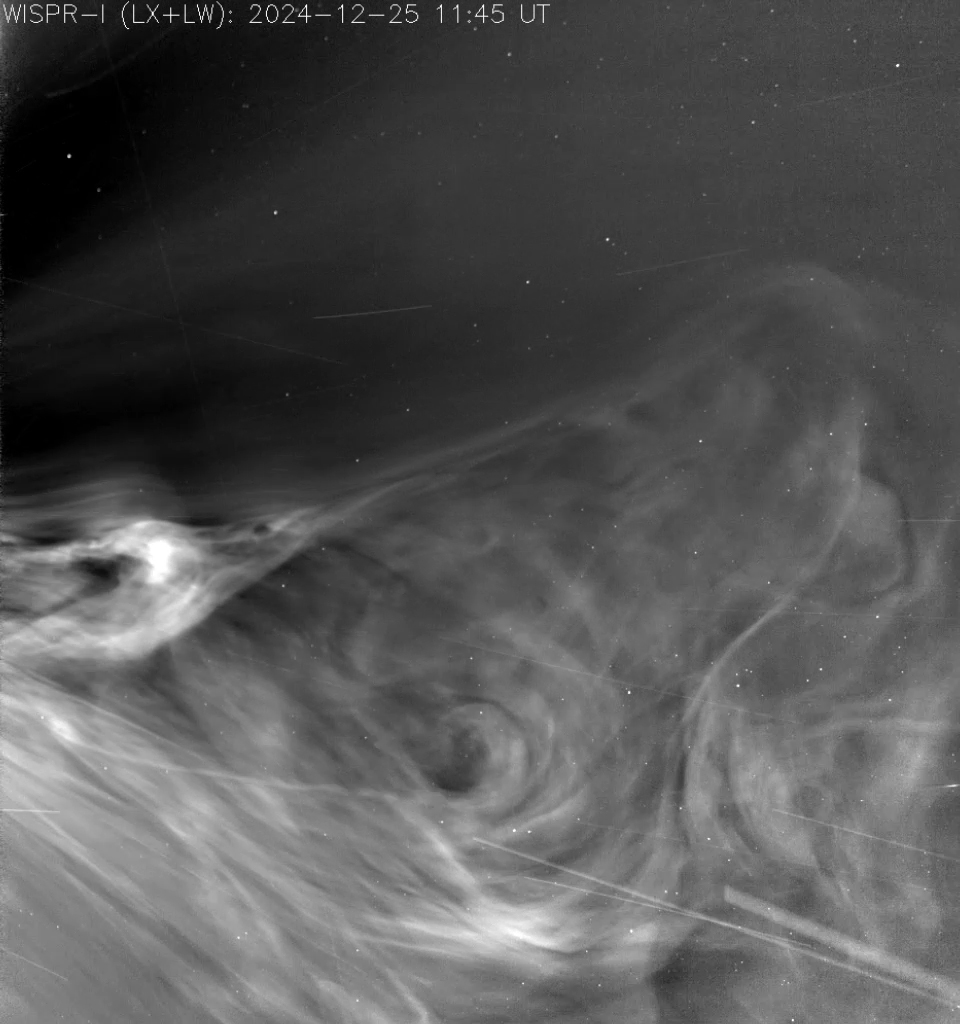
Studying the Sun
The Sun’s activity drives space weather. CMEs can unleash clouds of charged particles that can disrupt satellites, GPS signals, and even power grids on Earth. They also pose hazards to astronauts on space missions. By studying the corona directly, scientists can better understand how solar eruptions form and evolve. This knowledge is crucial for forecasting dangerous solar storms. With earlier and more accurate predictions, we can protect critical infrastructure and keep astronauts safe during deep space travel. Parker’s data also supports exoplanet science. The same physical processes shape the environments around other stars, affecting the habitability of distant worlds.
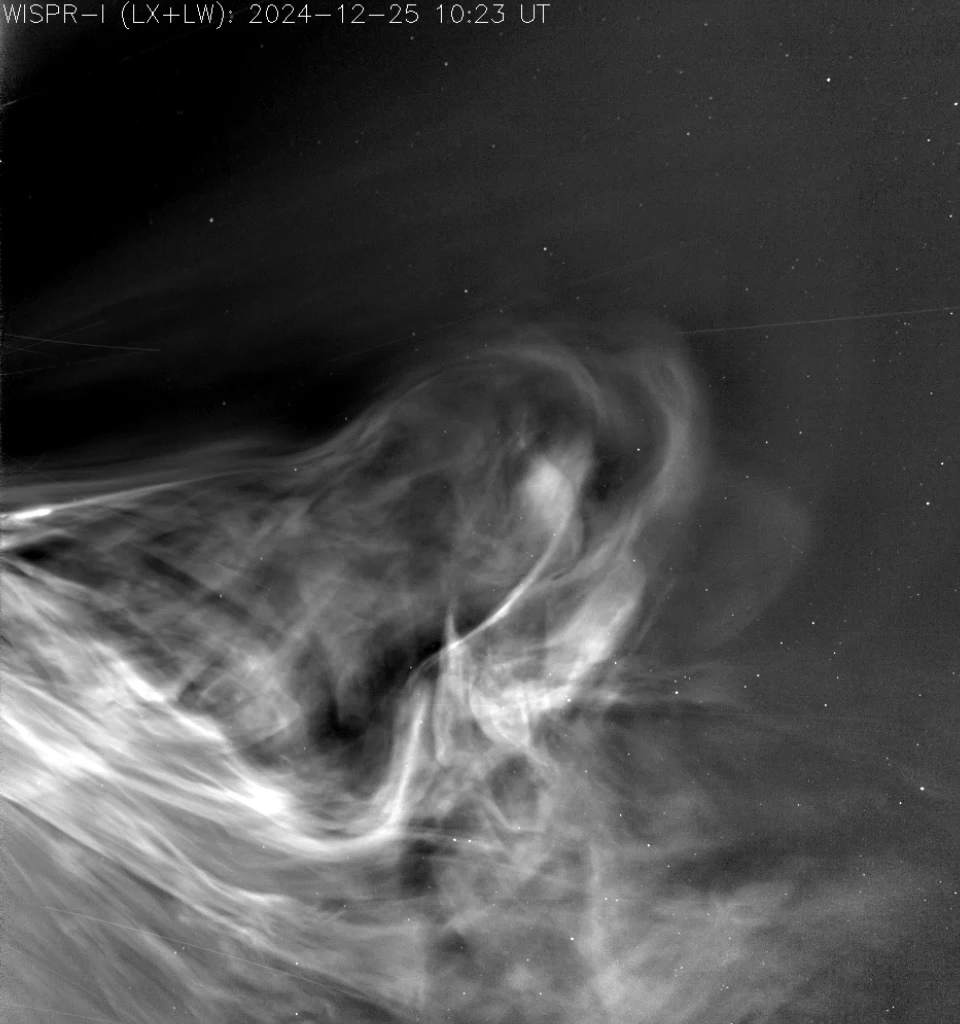
A mission to the Sun
The Parker Solar Probe is operated by Johns Hopkins University Applied Physics Laboratory for NASA. Its scientific instruments, including WISPR, FIELDS (electric and magnetic field sensors), SWEAP (Solar Wind Electrons Alphas and Protons investigation), and ISʘIS (Integrated Science Investigation of the Sun), work together to provide a complete picture of the Sun’s environment. WISPR gives the “big picture,” while the other instruments measure particles, fields, and waves as the probe flies through the features it images. This coordinated approach allows scientists to link what they see with what they measure directly, something never before possible so close to the Sun.
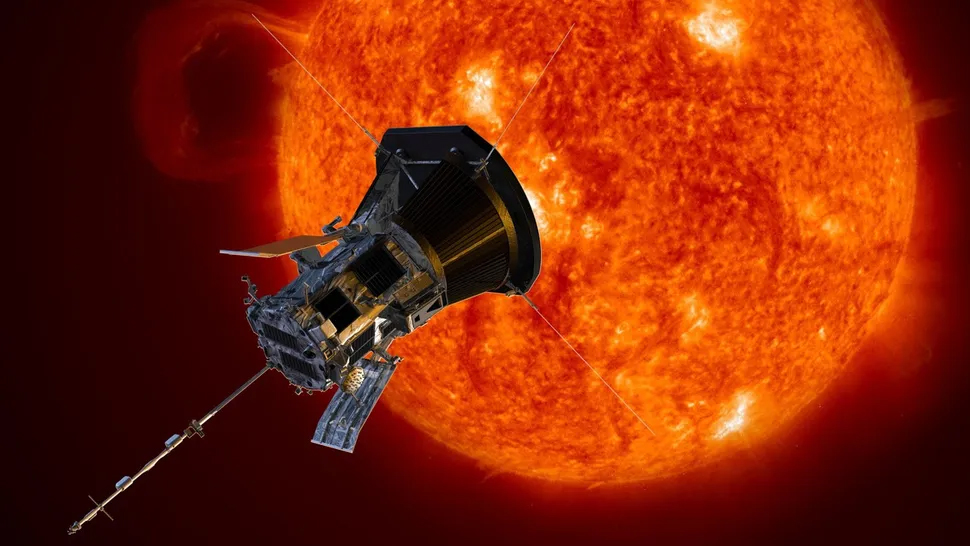
The Parker Solar Probe’s mission is far from over. Over the next few years, it will make even closer passes, eventually approaching within 3.8 million miles repeatedly. Each flyby will yield sharper images and richer data. As it continues to break records, the probe will help answer some of the Sun’s deepest mysteries, like why the corona is hotter than the surface, and how the solar wind gains its incredible speed.
Clear skies!
See more from DIYPhotography.net on Google
Add DIYPhotography.net as a trusted source. This makes
our stories more likely to appear in your Google Search results.
 Add as a preferred source on Google

Soumyadeep Mukherjee
Soumyadeep Mukherjee is an award-winning astrophotographer from India. He has a doctorate degree in Linguistics. His work extends to the sub-genres of nightscape, deep sky, solar, lunar and optical phenomenon photography. He is also a photography educator and has conducted numerous workshops. His works have appeared in over 40 books & magazines including Astronomy, BBC Sky at Night, Sky & Telescope among others, and in various websites including National Geographic, NASA, Forbes. He was the first Indian to win “Astronomy Photographer of the Year” award in a major category.
Related Posts
 NASA’s Parker Solar Probe sends back the first photos inside the Sun’s corona
 Parker Solar Probe Captures a Powerful Magnetic Explosion on the Sun
 Most detailed images ever of Mars’ moon captured by ‘Hopeful’ space probe
 The new AstrHori 28mm f/13 2x Probe macro lens is half the price of Laowa’s 24mm f/14 Macro Probe lens
Join the Discussion
DIYP Comment Policy
Be nice, be on-topic, no personal information or flames.