

























Hubble Photographs a Galaxy During a Transition in Evolution
May 15, 2026
Soumyadeep Mukherjee
Soumyadeep Mukherjee is an award-winning astrophotographer from India. He has a doctorate degree in Linguistics. His work extends to the sub-genres of nightscape, deep sky, solar, lunar and optical phenomenon photography. He is also a photography educator and has conducted numerous workshops. His works have appeared in over 40 books & magazines including Astronomy, BBC Sky at Night, Sky & Telescope among others, and in various websites including National Geographic, NASA, Forbes. He was the first Indian to win “Astronomy Photographer of the Year” award in a major category.
Share:
Galaxies evolve through long and complex physical processes that reshape their structure, gas content, and stellar populations over billions of years. Astronomers understand the broad stages of this evolution reasonably well, yet many transitional phases remain poorly observed. These stages often unfold over relatively short cosmic timescales, which makes them difficult to capture in detail.
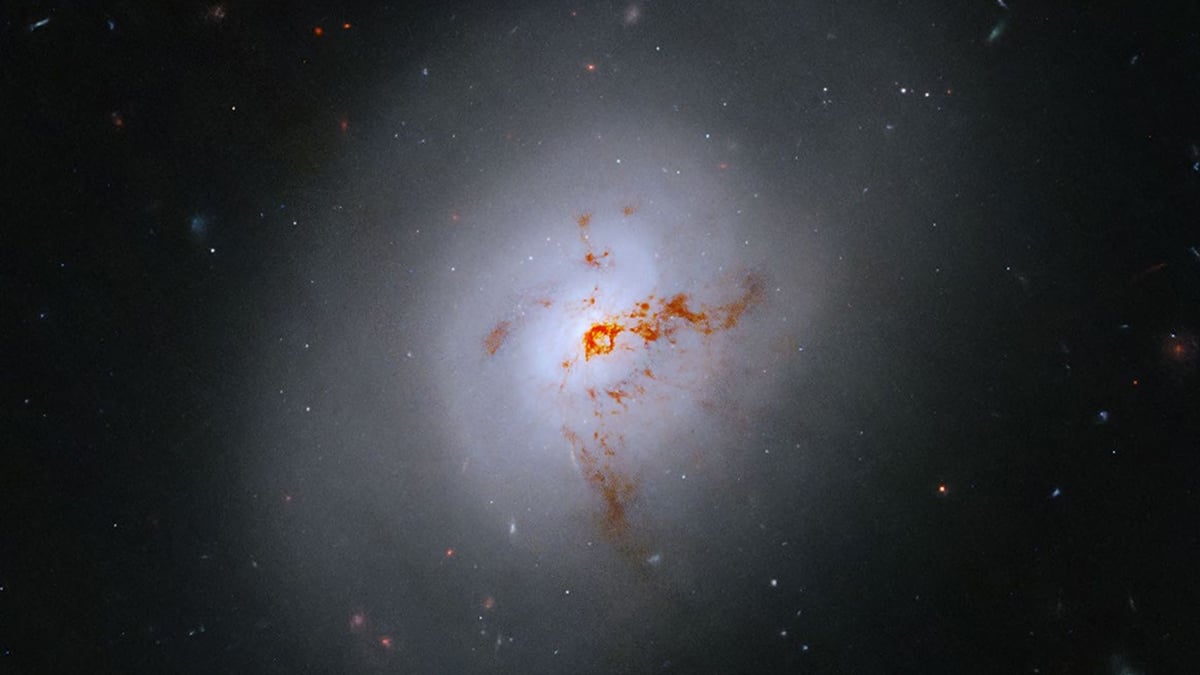
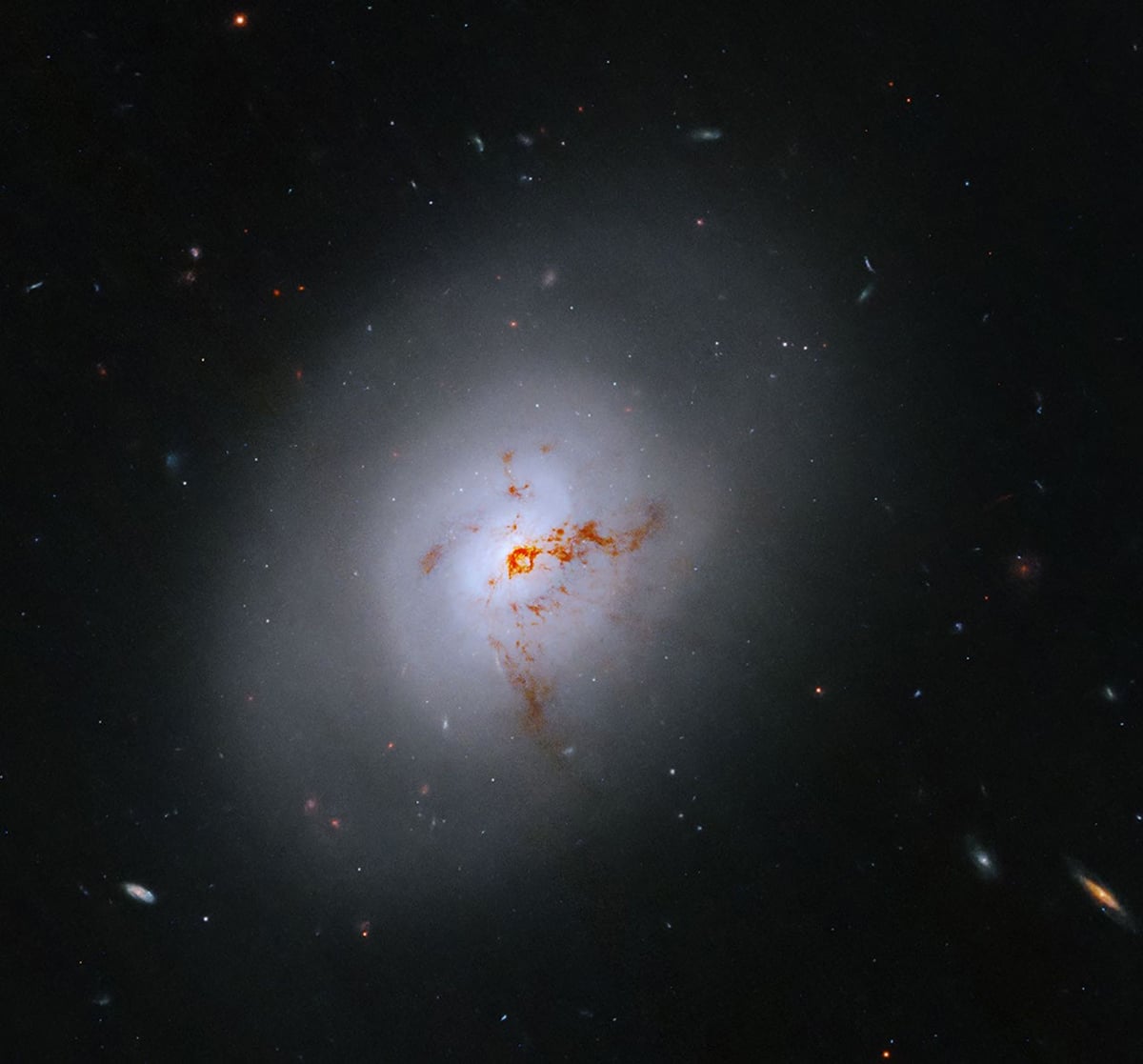
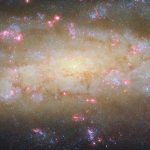
The Hubble Space Telescope recently produced a detailed image of NGC 1266, a lenticular galaxy located nearly 100 million light-years away in the constellation Eridanus. At first glance, the object resembles a faded spiral galaxy. It contains a bright central bulge, a flattened stellar disk, and large amounts of dark interstellar dust. Astronomers classify NGC 1266 as a post-starburst galaxy. Such galaxies experienced intense star formation in the recent past, but that activity has now declined.
A lenticular galaxy with traces of a spiral past
The structure of NGC 1266 draws attention because it appears incomplete. The galaxy still preserves the flattened disk associated with spiral systems, yet its spiral arms have largely disappeared. Instead of showing bright and organized stellar patterns, the disk appears smoother and more diffuse.
This appearance categorizes the galaxy as a lenticular galaxy, also known as an S0 galaxy. Lenticular galaxies occupy an intermediate position between spirals and ellipticals in galaxy classification schemes. They contain rotating stellar disks, similar to those found in spiral galaxies, but exhibit much weaker star formation and significantly less cold gas. In many cases, astronomers interpret lenticular galaxies as former spirals that lost the ability to produce new stars.
The central bulge dominates much of the visible light in the Hubble image. Older stars produce this yellowish glow, indicating an aging stellar population. Younger blue stars appear far less common throughout the disk. This contrast between stellar populations provides strong evidence that active star formation has slowed in recent times.
The orientation of NGC 1266 also helps astronomers study its structure more effectively. Because the galaxy appears nearly face-on, telescopes can trace dust lanes and stellar distributions across the disk without severe projection effects. The geometry allows researchers to examine how gas and dust interact within the system.
Evidence of a disturbed evolutionary history
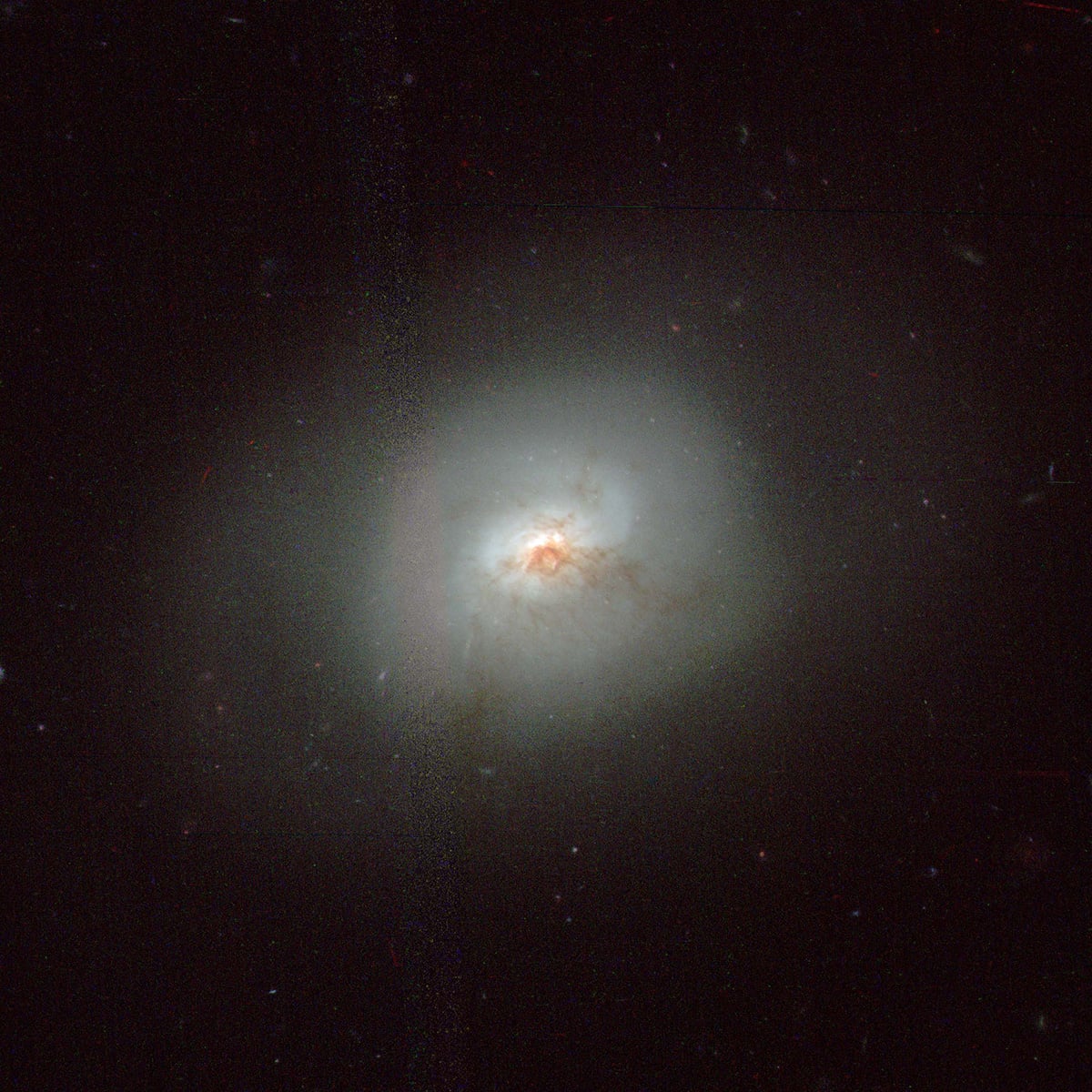
Astronomers believe NGC 1266 underwent a disruptive event several hundred million years ago. Studies suggest that a smaller galaxy may have interacted with or merged into the system. Even minor mergers can strongly disturb interstellar gas inside galaxies. Gravitational forces compress gas clouds and drive large amounts of material toward the galactic center.
This process often triggers intense bursts of star formation. Researchers suspect that NGC 1266 experienced exactly such an episode. Large quantities of gas likely accumulated near the nucleus, where dense molecular clouds rapidly formed stars. During this phase, the galaxy probably produced stars at a much higher rate than it does today.
At the same time, some of that inward-flowing gas likely fed the supermassive black hole hidden in the central region. As matter fell toward the black hole, the nucleus became increasingly active. Observations later revealed evidence for compact but powerful nuclear activity within the galaxy.
Star formation has slowed despite large gas reservoirs
One of the most puzzling aspects of NGC 1266 involves its gas content. In most galaxies, large reservoirs of cold molecular gas support active star formation. Molecular hydrogen acts as the primary raw material for building stars. When gas clouds cool and collapse, they form dense stellar nurseries.
NGC 1266 still contains a large supply of this material. However, observations show that the galaxy forms stars at an unusually low rate. Researchers believe the central outflow plays a major role in this suppression.
Studies estimate that star formation in NGC 1266 is suppressed by factors ranging from several dozen to more than one hundred compared with normal star-forming galaxies. This means the galaxy contains enough gas to support much stronger star formation, yet it fails to do so because the gas remains dynamically disturbed.
Some galaxies lose gas through galactic interactions or environmental stripping. Others consume their gas gradually over time. In some cases, black hole activity may disrupt star formation internally. NGC 1266 shows how AGN feedback can affect a galaxy even without a massive merger event.
Hubble reveals complex dust structures across the disk
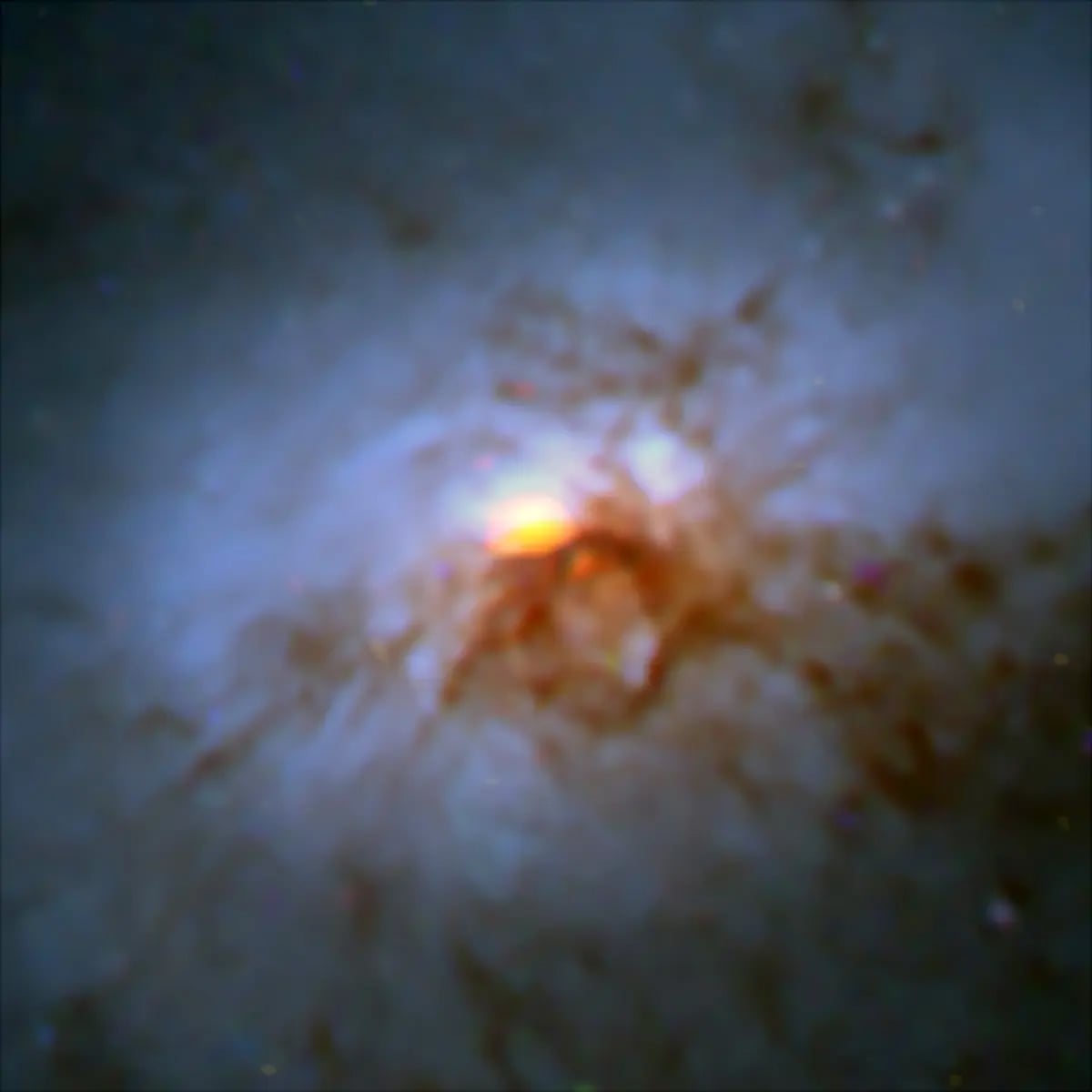
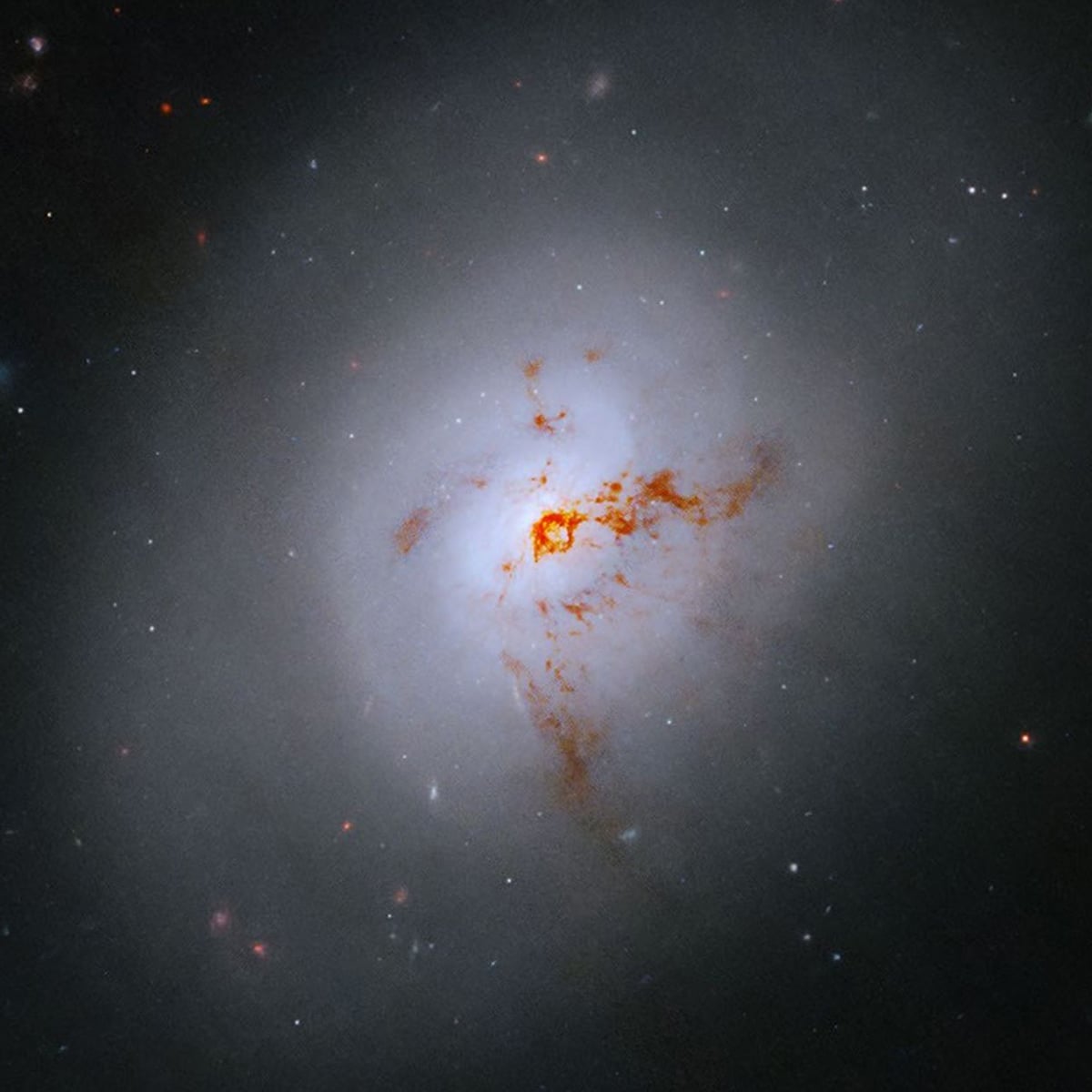
The Hubble image shows dark dust lanes spread across the central regions of the galaxy. These structures absorb and scatter starlight, producing the reddish-brown appearance visible in many parts of the disk. Interstellar dust consists of extremely small solid particles formed from heavier chemical elements such as carbon and silicon.
The nearly face-on orientation of NGC 1266 allows astronomers to trace these dust structures across large portions of the disk. Some lanes curve smoothly around the nucleus, while others appear fragmented and irregular. Their distribution suggests that the interstellar medium inside the galaxy remains dynamically disturbed.
The Hubble image also reveals several distant background galaxies scattered around NGC 1266. Some appear through the thinner outer regions of the foreground galaxy. These faint objects emphasize both Hubble’s resolution and the relative transparency of the outer disk.
The bright nucleus remains the dominant feature of the image. Older stars concentrated near the center produce much of this light. Meanwhile, the absence of widespread bright blue stellar regions supports the conclusion that recent star formation remains weak across most of the system.
Clear skies!
See more from DIYPhotography.net on Google
Add DIYPhotography.net as a trusted source. This makes
our stories more likely to appear in your Google Search results.
 Add as a preferred source on Google

Soumyadeep Mukherjee
Soumyadeep Mukherjee is an award-winning astrophotographer from India. He has a doctorate degree in Linguistics. His work extends to the sub-genres of nightscape, deep sky, solar, lunar and optical phenomenon photography. He is also a photography educator and has conducted numerous workshops. His works have appeared in over 40 books & magazines including Astronomy, BBC Sky at Night, Sky & Telescope among others, and in various websites including National Geographic, NASA, Forbes. He was the first Indian to win “Astronomy Photographer of the Year” award in a major category.


Join the Discussion
DIYP Comment Policy
Be nice, be on-topic, no personal information or flames.