




















ESO’s VLT Captures a Young and an Old Star in a Single Photo
Jan 26, 2026
Soumyadeep Mukherjee
Soumyadeep Mukherjee is an award-winning astrophotographer from India. He has a doctorate degree in Linguistics. His work extends to the sub-genres of nightscape, deep sky, solar, lunar and optical phenomenon photography. He is also a photography educator and has conducted numerous workshops. His works have appeared in over 40 books & magazines including Astronomy, BBC Sky at Night, Sky & Telescope among others, and in various websites including National Geographic, NASA, Forbes. He was the first Indian to win “Astronomy Photographer of the Year” award in a major category.
Share:
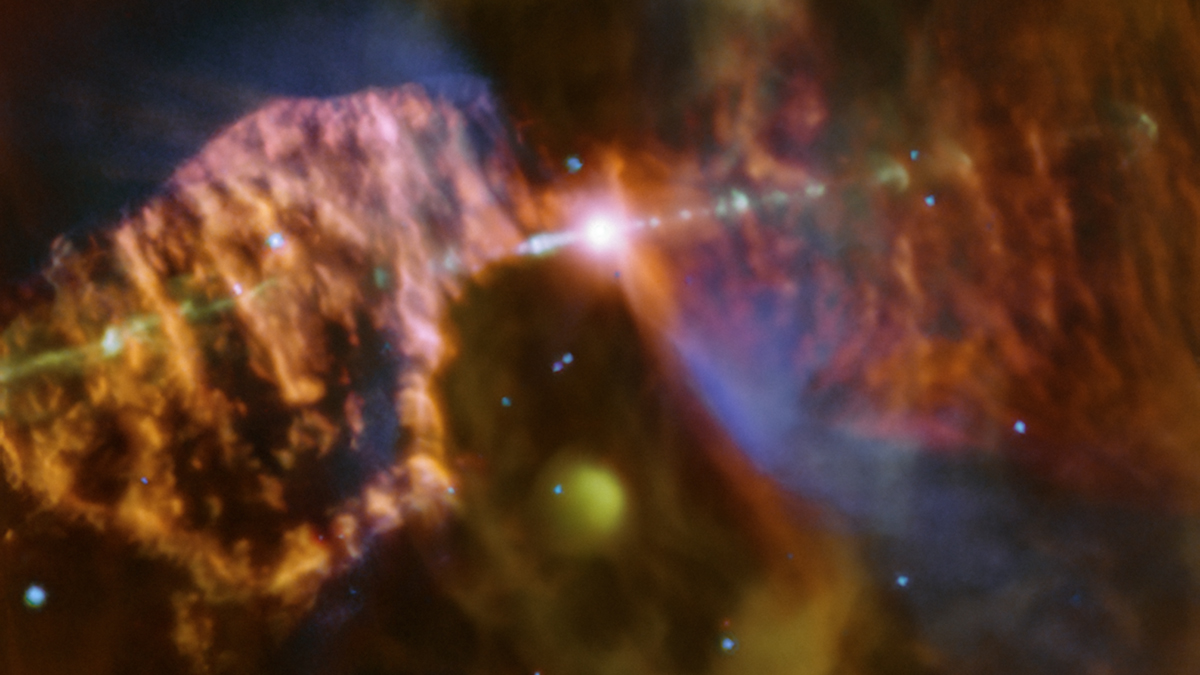
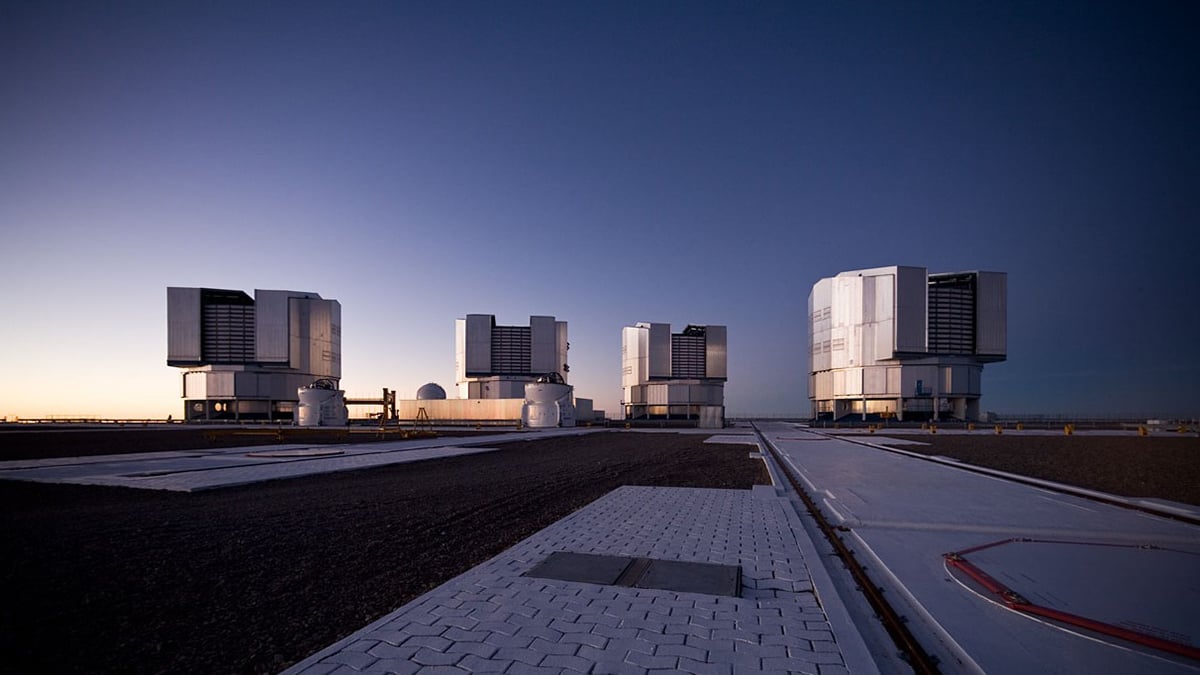
High-resolution integral-field spectroscopy has changed how astronomers study complex regions of the Milky Way. Instead of relying on isolated images or narrow spectral slices, scientists can now map velocity, chemistry, and structure at every point in a scene. ESO’s Multi Unit Spectroscopic Explorer (MUSE) on the Very Large Telescope (VLT) stands at the center of this transformation.
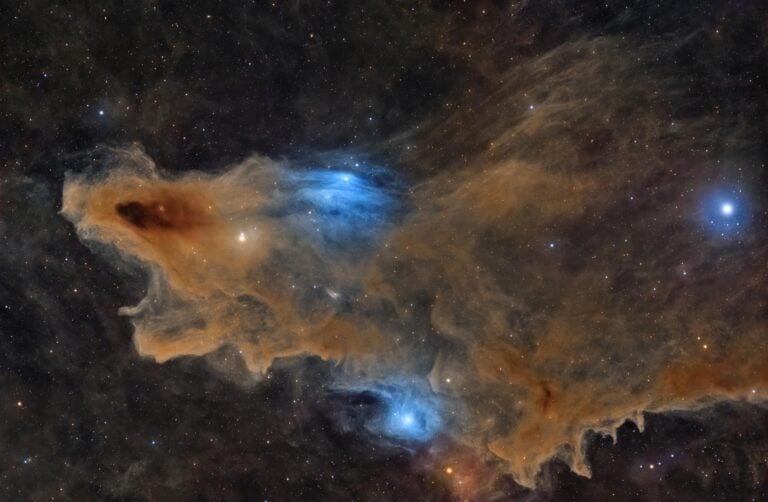
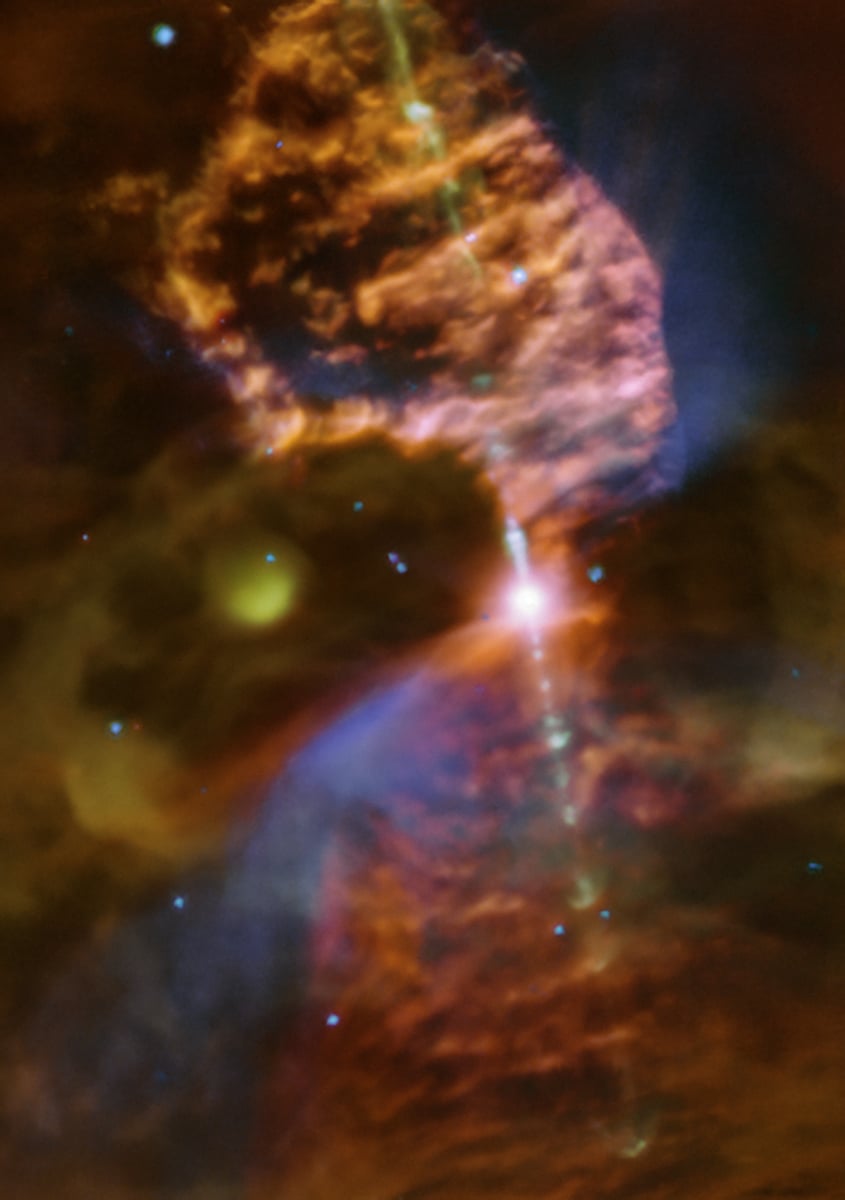
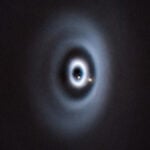
ESO’s latest image combines MUSE data to reveal a dense and active region of space that hosts both a newborn star and the debris of a recent supernova. The scene appears to be a simple nebula. However, detailed analysis shows something far richer. Astronomers now see stellar birth and stellar death unfolding side by side. This single field contains Ve 7–27, now identified as a young stellar object, and part of the Vela Junior supernova remnant. They offer a chance to study two extreme phases of stellar evolution within the same physical environment.
From planetary nebula to protostar
For many years, astronomers catalogued Ve 7–27 as a planetary nebula. That interpretation seemed reasonable. The object showed extended emission, and earlier data lacked the spatial and spectral detail needed for deeper classification. Planetary nebulae form when Sun-like stars shed their outer layers late in life. The exposed core then ionizes the surrounding gas.
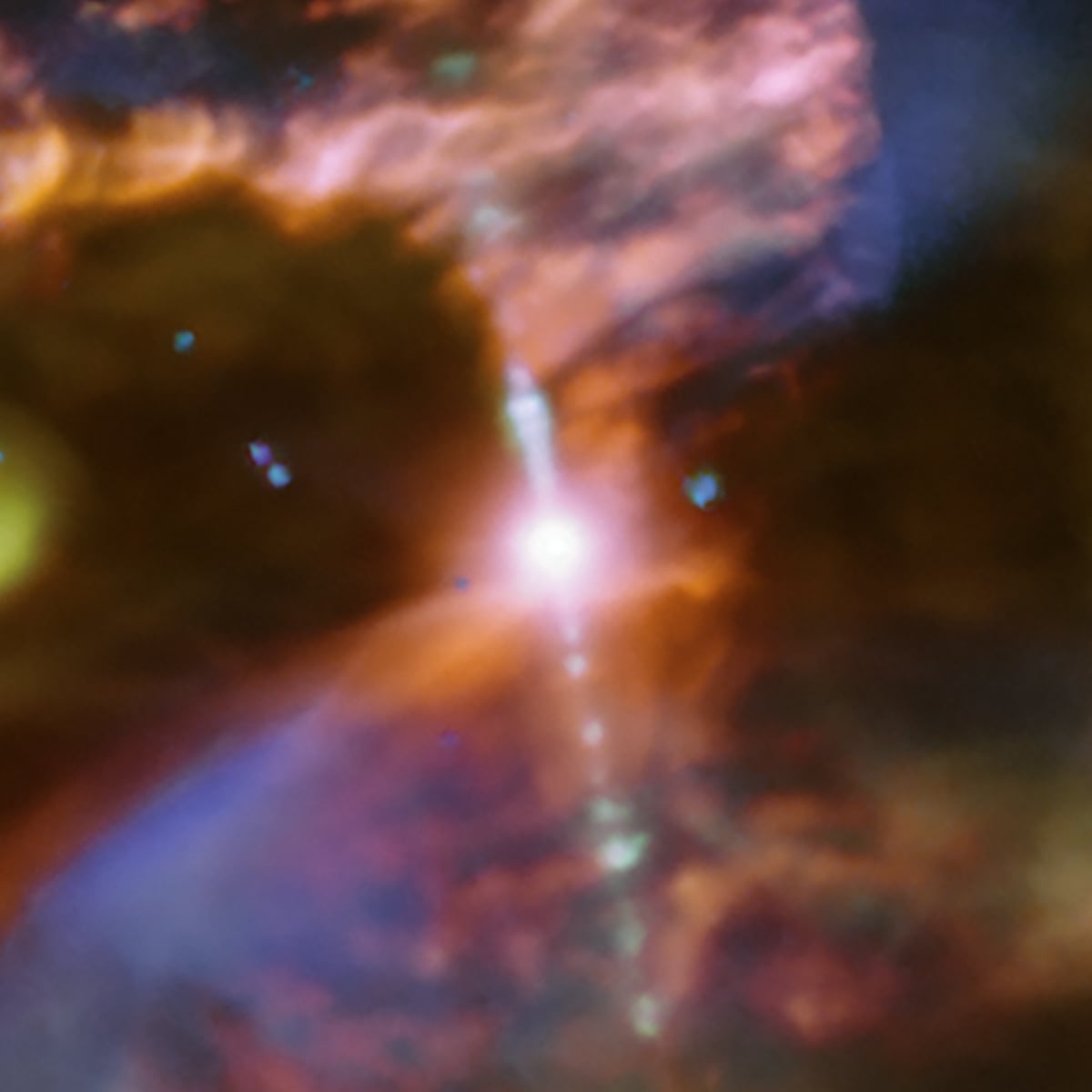
However, MUSE changed that perception. When researchers examined Ve 7–27 with the VLT, they detected features that planetary nebulae do not produce. Most notably, they observed collimated jets and compact emission knots extending away from the central source. These structures trace fast outflows that interact with nearby gas. Such patterns strongly indicate active accretion and ejection, which are hallmarks of very young stars.
This reclassification transforms how astronomers interpret the region. Rather than seeing a fading stellar remnant, they now observe a protostar still embedded in its natal cloud. Gas continues to fall onto the forming star through a circumstellar disc. At the same time, the system ejects excess angular momentum through jets. As these jets strike the surrounding medium, they generate shock fronts that glow in optical emission lines. These features resemble classic Herbig–Haro objects, which appear in many star-forming regions across the galaxy.
A supernova remnant in the same neighborhood
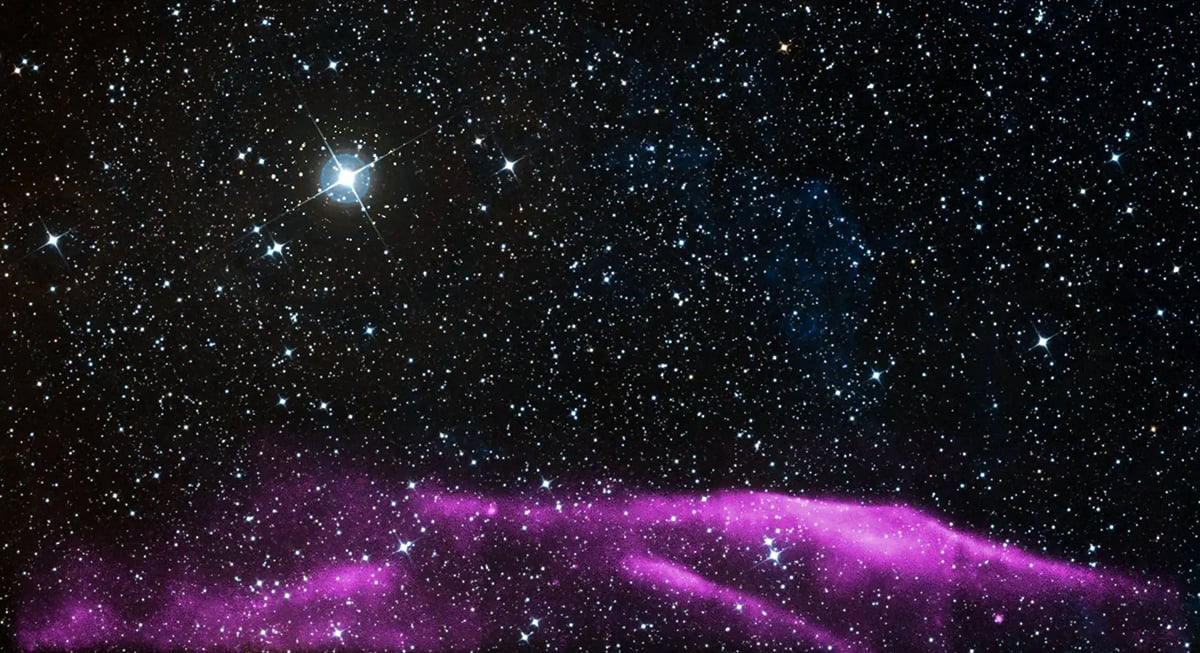
Just a short distance away in the same MUSE field lies a very different object. This is Vela Junior, also known as RX J0852.0-4622. It marks the expanding remains of a massive star that exploded thousands of years ago.
Supernova remnants evolve through violent interactions with their surroundings. After the initial explosion, shock waves race outward at thousands of kilometres per second. These shocks heat and compress interstellar gas. They also accelerate cosmic rays and redistribute heavy elements forged inside the progenitor star.
Vela Junior belongs to the broader Vela supernova complex. Astronomers have studied it extensively in X-rays and gamma rays. Yet despite decades of work, one key property remained uncertain: its distance. Without an accurate distance, scientists could not determine the remnant’s true size or expansion rate. This uncertainty limited models of its age and energy budget.
Linking two objects to measure distance
The breakthrough came when researchers compared the gas around Ve 7–27 with material associated with Vela Junior. They found consistent kinematic and chemical signatures. These similarities suggest that both objects interact with the same large-scale environment.
This connection allowed astronomers to use Gaia’s precise parallax measurement of Ve 7–27 to anchor the distance to Vela Junior. The result places the supernova remnant at about 1.4 kiloparsecs, or roughly 4,500 to 4,600 light-years, from Earth.
At this distance, Vela Junior spans about 23 parsecs in diameter. X-ray measurements of its shock velocity then translate into an estimated age between 1,600 and 3,300 years. These values confirm that Vela Junior ranks among the youngest known nearby supernova remnants. Moreover, the inferred shock speeds, which range from roughly 2,800 to 5,600 kilometres per second, reveal that the remnant still expands rapidly and continues to inject energy into its surroundings. Through this chain of reasoning, a young star helped astronomers constrain the properties of a stellar explosion that occurred millennia ago.
The compact remnant left behind
Every core-collapse supernova leaves something behind. In the case of Vela Junior, astronomers have identified a Central Compact Object (CCO) near the remnant’s center. This object likely represents a neutron star, formed when the progenitor’s core collapsed under gravity. Neutron stars pack more mass than the Sun into a sphere only about twenty kilometres wide. They rank among the densest objects in the universe.
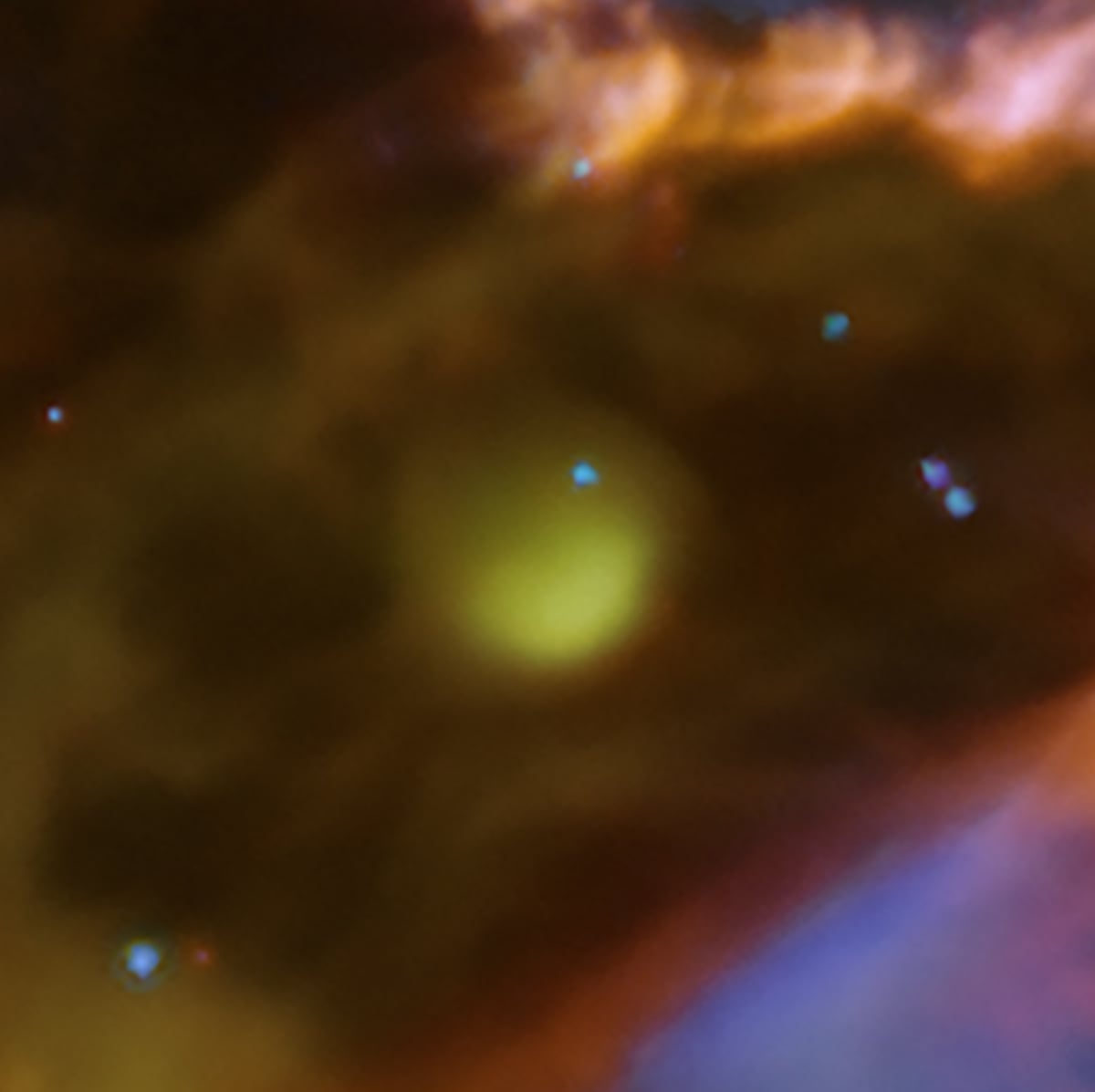
What makes Vela Junior’s CCO unusual is its optical counterpart. Most neutron stars reveal themselves mainly through X-ray or radio emission. Here, however, astronomers also observe a small optical nebula surrounding the compact object.
This nebula measures about eight arcseconds across and shows strong emission from ionized nitrogen. Its morphology appears roughly circular rather than comet-shaped. This geometry complicates interpretation. Some models suggest a bow shock created by the neutron star’s motion. Others propose ionized ejecta from the supernova itself. Regardless of its exact origin, this optical feature provides rare insight into how young neutron stars interact with their environments.
Jets, knots, and the mechanics of star formation
Meanwhile, Ve 7–27 continues to reveal its own story. The MUSE data show discrete knots embedded within narrow jets extending from the young star. These knots likely trace episodic bursts of mass ejection. Such variability occurs when accretion onto the protostar fluctuates. Each surge sends a new pulse of material outward.
These outflows play a crucial role in star formation. As gas spirals inward, angular momentum builds up. Without a release mechanism, the system would stall. Jets solve this problem by carrying angular momentum away, allowing the central object to grow. When these jets collide with ambient gas, they generate shock-excited emission. Astronomers detect this emission in specific spectral lines, which MUSE captures in exquisite detail. By mapping these lines, researchers can reconstruct flow velocities and identify interaction zones.
The Ve 7–27 and Vela Junior field shows that the Milky Way is not static. Gas flows. Stars ignite. Others explode. Shock waves propagate. New systems emerge from disturbed clouds. ESO’s VLT provides a front-row seat to these processes. With instruments like MUSE, astronomers now study stellar ecosystems in unprecedented detail. Each dataset adds another layer to our understanding of how galaxies evolve.
Clear skies!
See more from DIYPhotography.net on Google
Add DIYPhotography.net as a trusted source. This makes
our stories more likely to appear in your Google Search results.
 Add as a preferred source on Google

Soumyadeep Mukherjee
Soumyadeep Mukherjee is an award-winning astrophotographer from India. He has a doctorate degree in Linguistics. His work extends to the sub-genres of nightscape, deep sky, solar, lunar and optical phenomenon photography. He is also a photography educator and has conducted numerous workshops. His works have appeared in over 40 books & magazines including Astronomy, BBC Sky at Night, Sky & Telescope among others, and in various websites including National Geographic, NASA, Forbes. He was the first Indian to win “Astronomy Photographer of the Year” award in a major category.

Join the Discussion
DIYP Comment Policy
Be nice, be on-topic, no personal information or flames.