

















ESO’s VLT Captures a Thousand-Colour View of the Sculptor Galaxy
Jun 20, 2025
Soumyadeep Mukherjee
Soumyadeep Mukherjee is an award-winning astrophotographer from India. He has a doctorate degree in Linguistics. His work extends to the sub-genres of nightscape, deep sky, solar, lunar and optical phenomenon photography. He is also a photography educator and has conducted numerous workshops. His works have appeared in over 40 books & magazines including Astronomy, BBC Sky at Night, Sky & Telescope among others, and in various websites including National Geographic, NASA, Forbes. He was the first Indian to win “Astronomy Photographer of the Year” award in a major category.
Share:
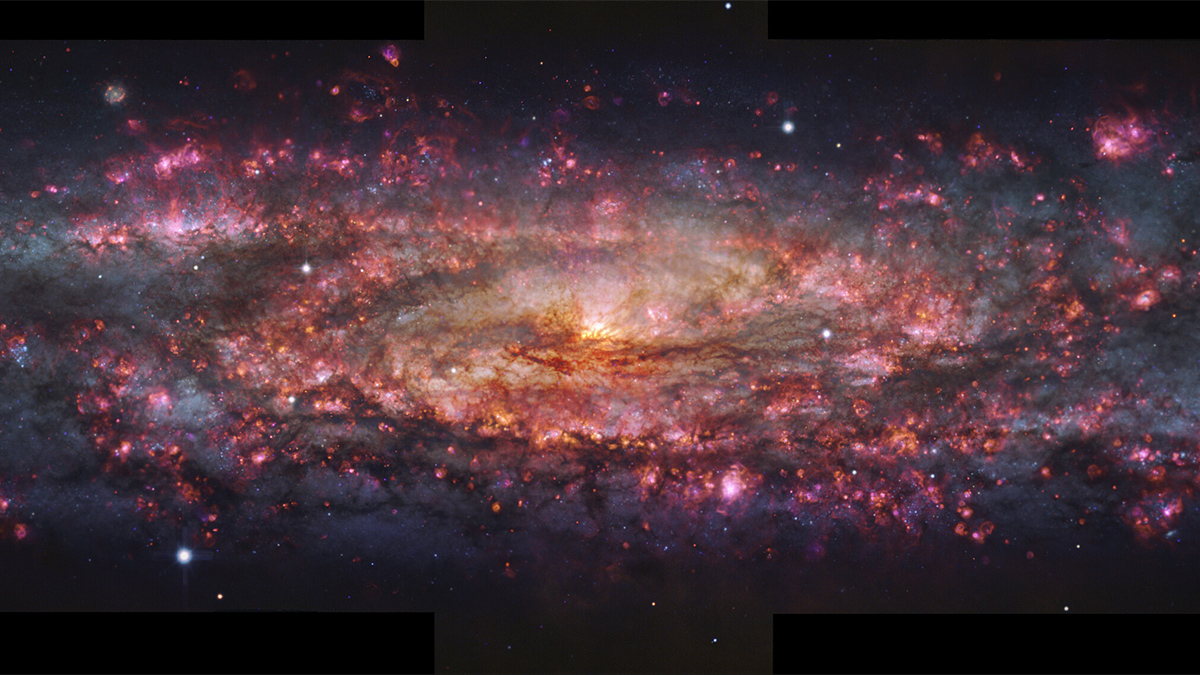
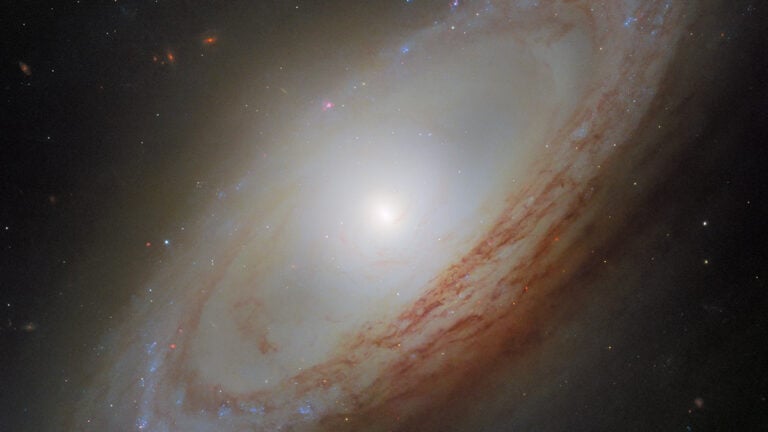
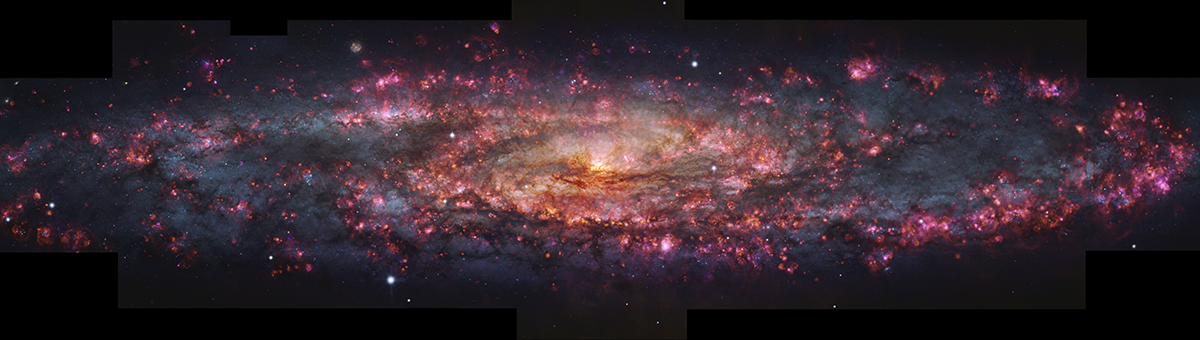
Astronomers have taken one of the most detailed views of a galaxy ever. The European Southern Observatory (ESO) released a new image of the Sculptor Galaxy (NGC 253). But this is no ordinary image. It is a “thousand-colour” map of an entire galaxy. It shows not only stars and dust but also the hidden gases and elements inside. This breakthrough is a huge step forward in understanding how galaxies form, evolve, and behave.
A galaxy in high definition
The Sculptor Galaxy is about 11 million light-years away. It sits in the constellation Sculptor. It’s one of the closest star-forming galaxies to Earth. This makes it an ideal target for astronomers. The galaxy is visible even with small telescopes from the Southern Hemisphere. But now, astronomers have used something far more powerful to see it in detail.
They used the Multi Unit Spectroscopic Explorer (MUSE) on ESO’s Very Large Telescope (VLT). MUSE can collect light in many different wavelengths at once. It doesn’t just take pictures. It records a spectrum for every point in its field of view. This means astronomers can see how the galaxy behaves in thousands of colours. Each “colour” reveals different elements and types of radiation. This helps them study the galaxy’s chemistry, gas movement, and star formation.
How the image was made
The new image took over 50 hours of observation. Scientists combined more than 100 separate observations. Together, these covered a field of view 15 times the area of the full Moon. This allowed them to map almost the entire galaxy in amazing detail. The final image shows structures as small as 50 light-years across.
The image includes over 1,500,000 spectra. These allow astronomers to look at thousands of emission lines. These lines come from elements like hydrogen, nitrogen, sulfur, and oxygen. Each emission line gives clues about temperature, speed, and composition of the gas. By combining all this data, scientists created an image that is both beautiful and extremely rich in science.
Star formation in action
One of the key areas of interest is star formation. The Sculptor Galaxy is bursting with activity. The MUSE data revealed huge star-forming regions. Some stretch over hundreds of light-years. Astronomers could identify where new stars are being born. They also saw how these young stars influence their surroundings. Stellar winds and radiation from these newborn stars blow gas into space. This creates bubbles and arcs of gas. Some of these can be seen clearly in the image. These structures help scientists understand how stars shape galaxies.
Gas movement and outflows
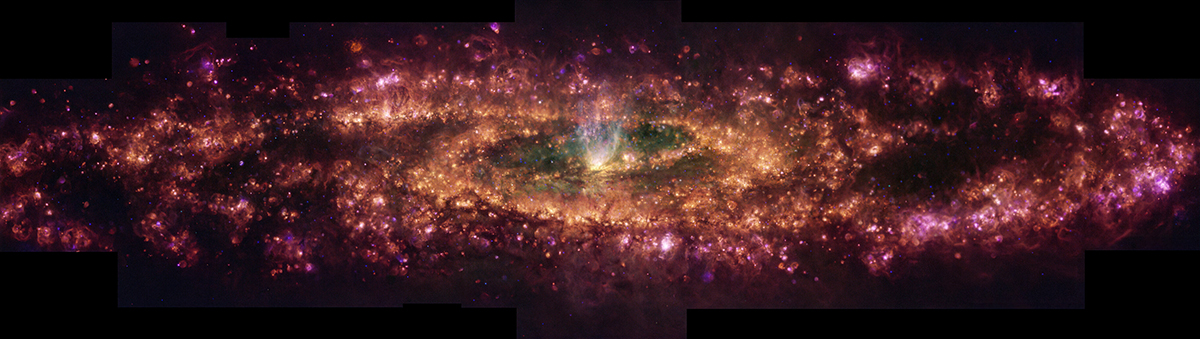
MUSE also showed how gas moves inside the galaxy. Scientists mapped the galaxy’s rotation. They saw how gas flows in spiral arms. They also spotted outflows of gas from the galaxy’s centre. This gas likely comes from regions of intense star formation. When stars explode as supernovae, they blast gas outward. These outflows help spread elements like carbon and oxygen across the galaxy. This process helps seed future generations of stars and planets. The image showed a large-scale outflow rising from the central region. This outflow stretches thousands of light-years. It may be carrying material into intergalactic space. Such features are important in understanding how galaxies regulate their growth.
What makes MUSE special
MUSE is unlike ordinary cameras or telescopes. It is an integral field spectrograph. This means it records a full spectrum for every pixel in its field of view. This allows scientists to do imaging and spectroscopy at the same time. MUSE works in the visible light range, covering 480 to 930 nanometres. It operates from the VLT’s Unit Telescope 4 at Paranal Observatory in Chile. It has already been used to study galaxies, star clusters, planetary nebulae, and even exoplanets.
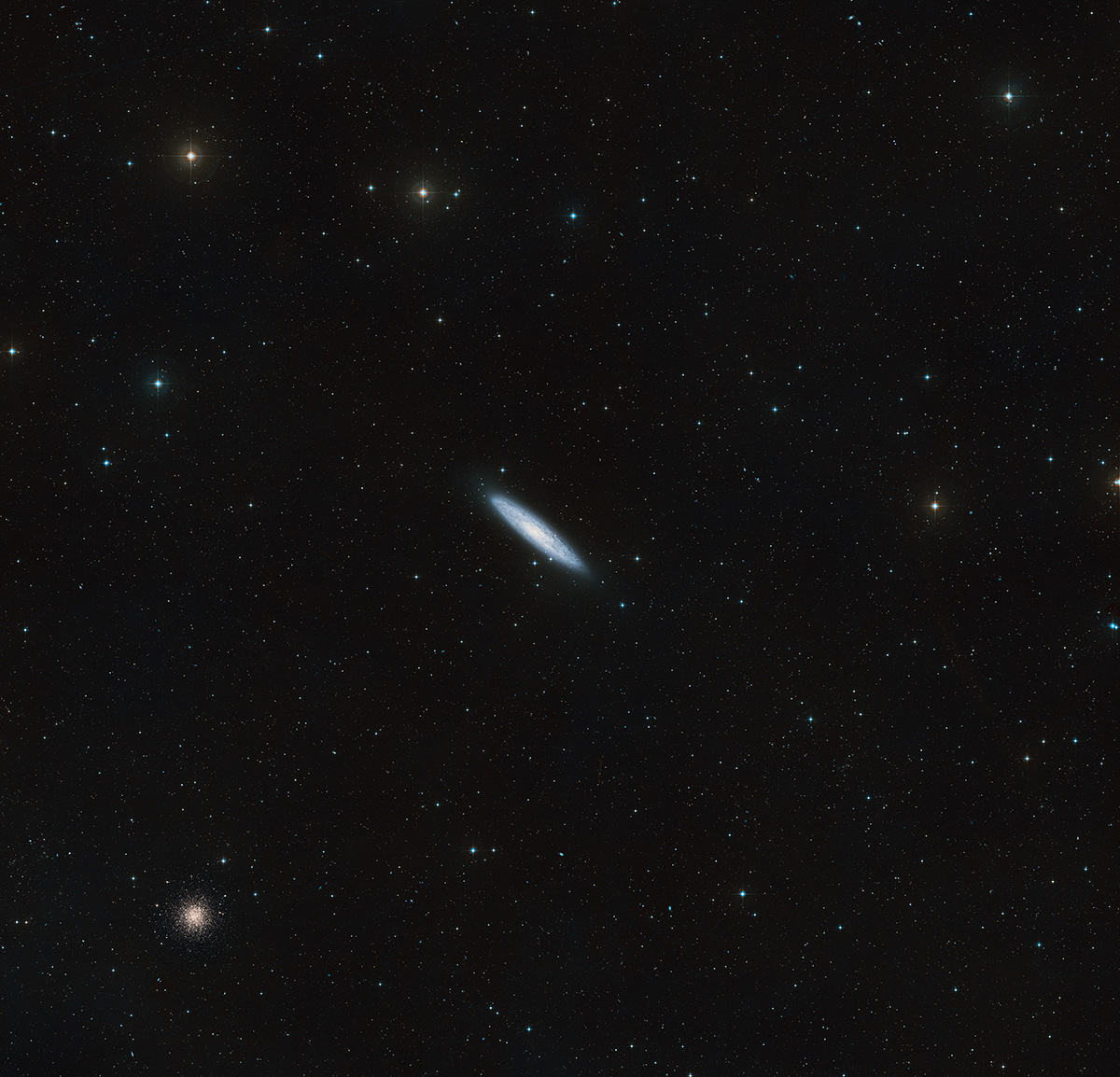
This image is a glimpse of the future of astronomy. As instruments grow more powerful, astronomers will continue to build multi-colour maps of the Universe. These maps will help answer big questions, including how galaxies form, how stars and gas shape one another, and many more. Thanks to ESO and MUSE, we now have a clearer view than ever before. The Sculptor Galaxy has revealed its secrets. And with data like this, astronomers are ready to unlock many more.
Clear skies!
See more from DIYPhotography.net on Google
Add DIYPhotography.net as a trusted source. This makes
our stories more likely to appear in your Google Search results.
 Add as a preferred source on Google

Soumyadeep Mukherjee
Soumyadeep Mukherjee is an award-winning astrophotographer from India. He has a doctorate degree in Linguistics. His work extends to the sub-genres of nightscape, deep sky, solar, lunar and optical phenomenon photography. He is also a photography educator and has conducted numerous workshops. His works have appeared in over 40 books & magazines including Astronomy, BBC Sky at Night, Sky & Telescope among others, and in various websites including National Geographic, NASA, Forbes. He was the first Indian to win “Astronomy Photographer of the Year” award in a major category.


Join the Discussion
DIYP Comment Policy
Be nice, be on-topic, no personal information or flames.