




















Hubble Photographs Massive Collisions around Fomalhaut Star
Dec 22, 2025
Soumyadeep Mukherjee
Soumyadeep Mukherjee is an award-winning astrophotographer from India. He has a doctorate degree in Linguistics. His work extends to the sub-genres of nightscape, deep sky, solar, lunar and optical phenomenon photography. He is also a photography educator and has conducted numerous workshops. His works have appeared in over 40 books & magazines including Astronomy, BBC Sky at Night, Sky & Telescope among others, and in various websites including National Geographic, NASA, Forbes. He was the first Indian to win “Astronomy Photographer of the Year” award in a major category.
Share:
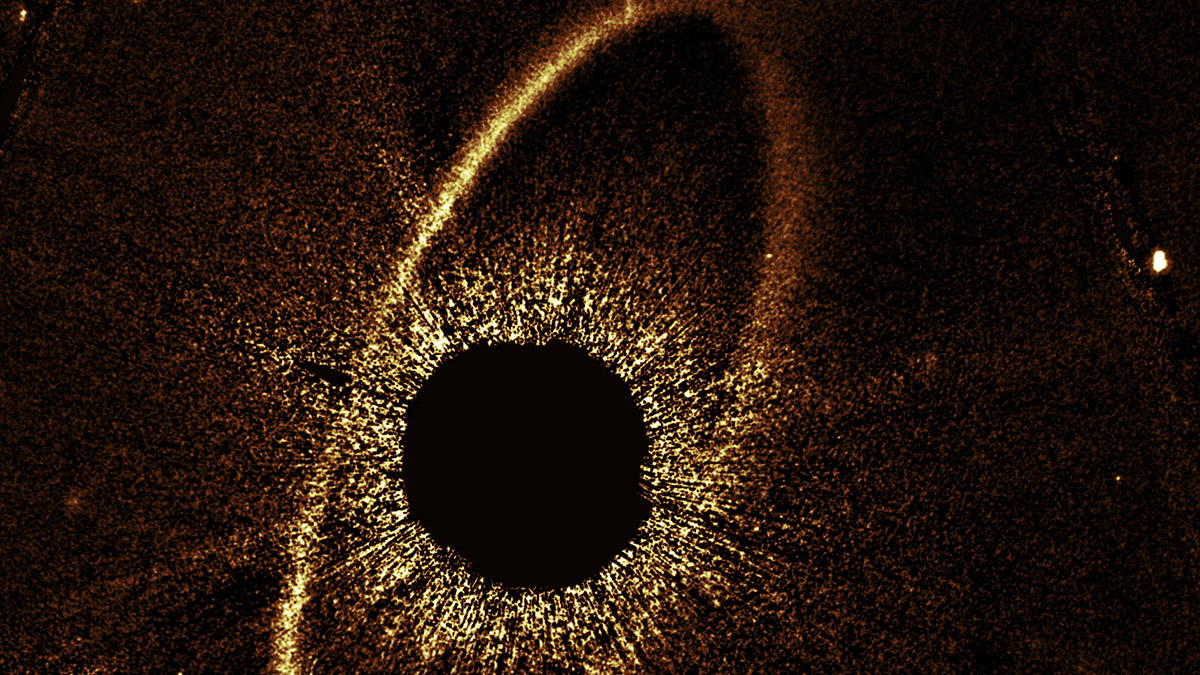
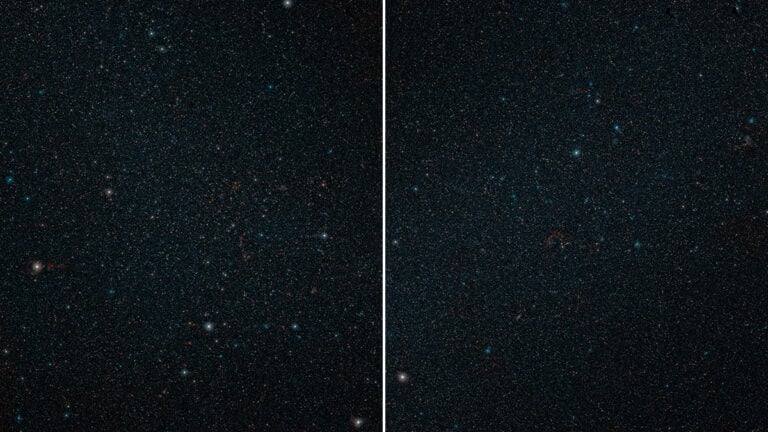
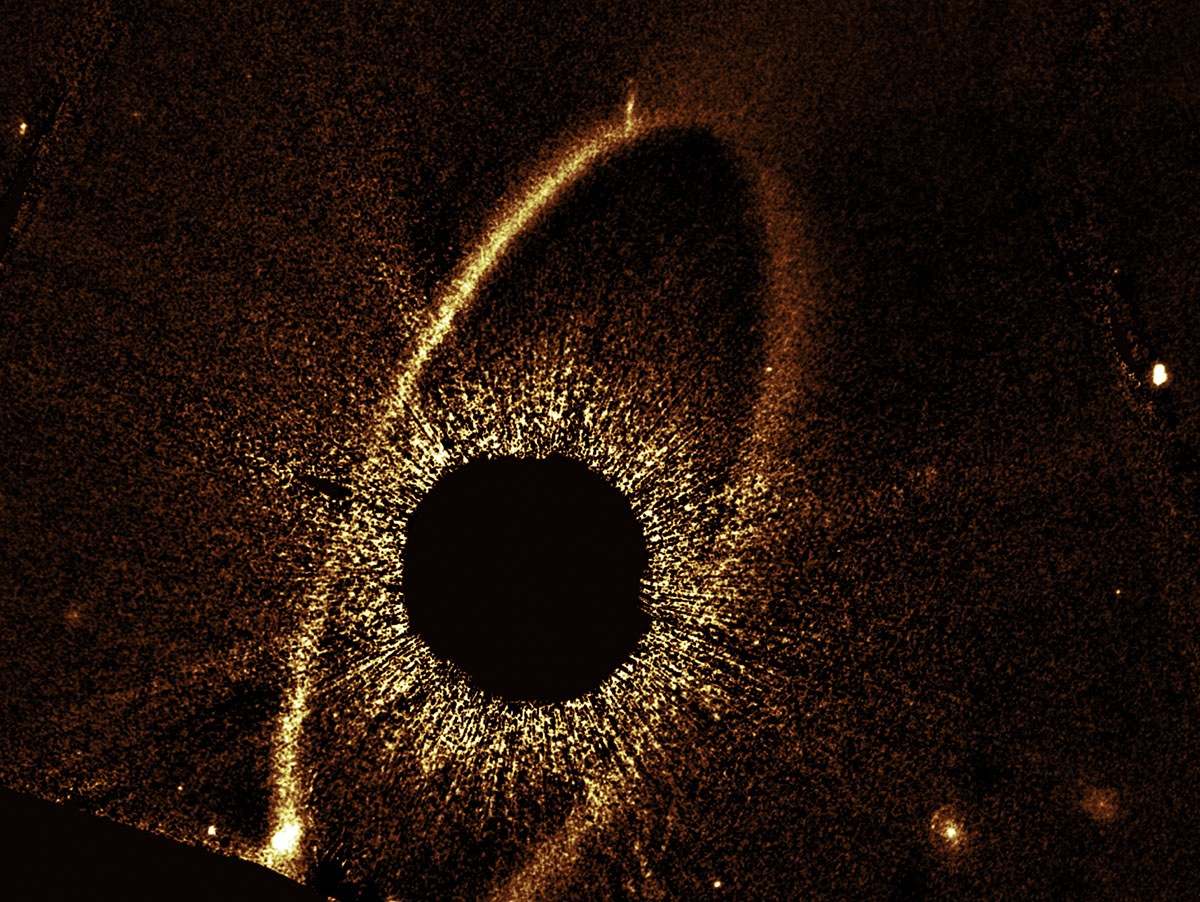
High-contrast imaging with the Hubble Space Telescope has revealed direct evidence of large-scale collisions in the Fomalhaut planetary system. Using multi-epoch optical data, astronomers identified expanding dust clouds consistent with catastrophic impacts between massive rocky bodies. The observations, released by ESA/Hubble in late 2025, mark the first time such events have been clearly resolved around another star. The findings challenge long-standing assumptions about debris disk evolution and exoplanet identification.
Fomalhaut lies about 25 light-years from Earth and hosts one of the most studied debris disks in the solar neighborhood. What appeared for years to be a directly imaged exoplanet has now been reinterpreted as collision debris. Even more striking, Hubble detected a second, newer impact in the same system. Together, these observations show that violent planetary processes remain active far longer than models once predicted.
A bright nearby star with a long observation record
Fomalhaut is an A-type star located in the constellation Piscis Austrinus. It is nearly twice as massive as the Sun and significantly more luminous. Astronomers have focused on it for decades because of its prominent debris disk. The disk spans hundreds of astronomical units and resembles an enlarged version of the Solar System’s Kuiper Belt.
Debris disks form from leftover material after planet formation. Over time, collisions between planetesimals grind larger bodies into dust. That dust reflects starlight and becomes visible to telescopes like Hubble. In Fomalhaut’s case, the disk appears sharply defined, suggesting gravitational sculpting by unseen massive bodies.
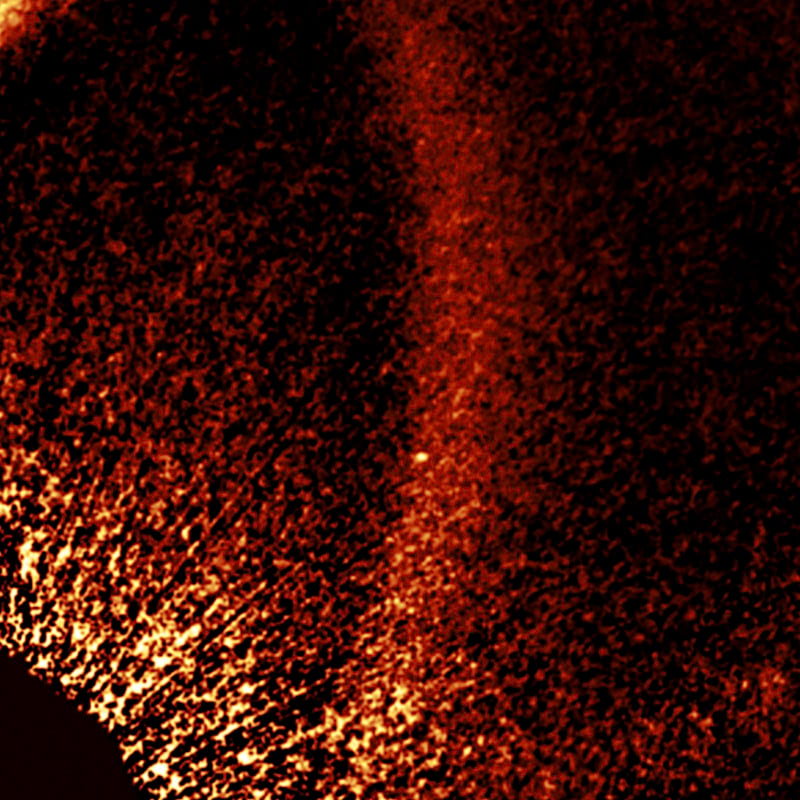
In 2008, Hubble detected a faint optical source near the disk’s inner edge. The object was named Fomalhaut b and interpreted as a planet. It was a landmark announcement. However, even early data hinted at inconsistencies. The object lacked the expected infrared emission. Its brightness changed over time. Its structure appeared extended rather than compact.
When a “planet” began to fall apart
As Hubble accumulated more data, the nature of Fomalhaut b grew increasingly uncertain. The source faded. It elongated. It did not behave like a self-gravitating planet. Astronomers began to suspect that they were not seeing a solid body at all.
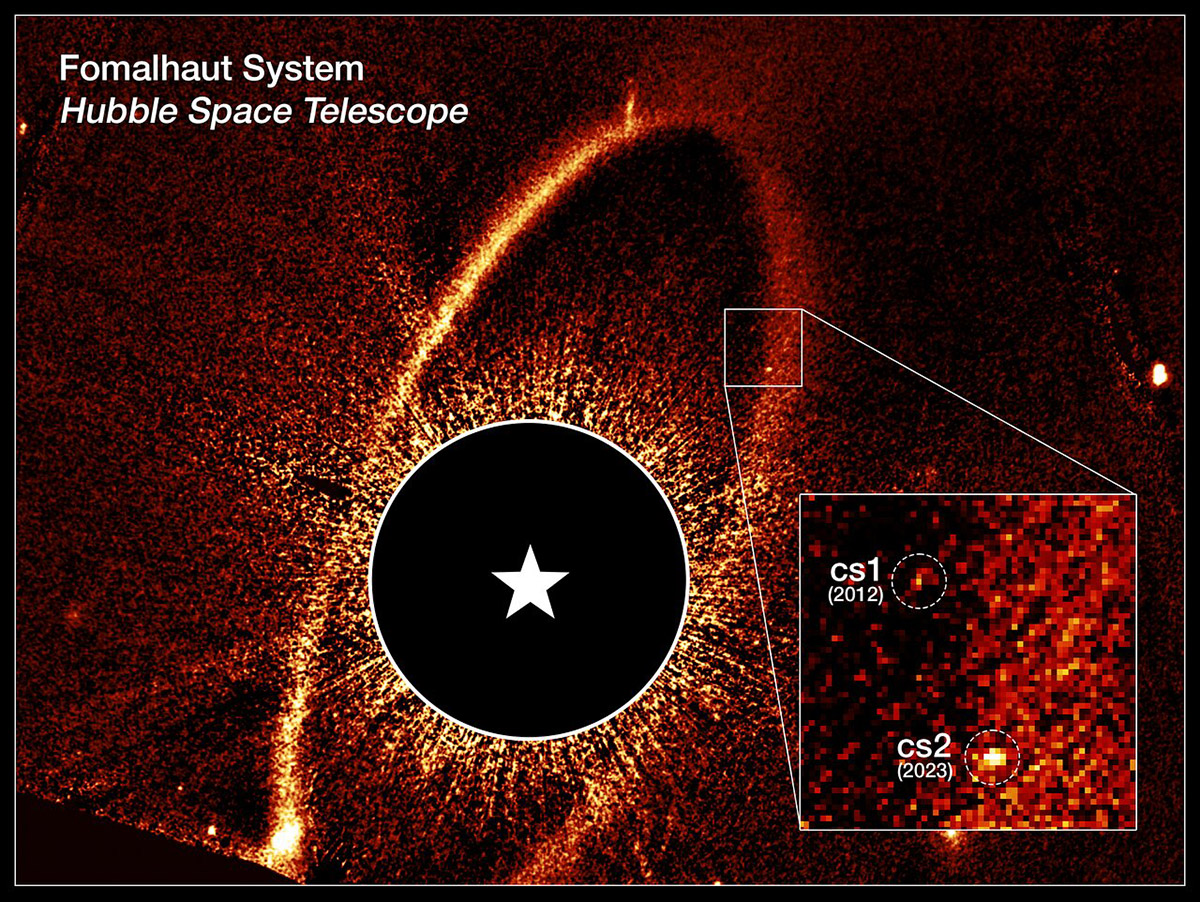
The object was eventually renamed cs1, short for circumstellar source one. Detailed analysis showed that its light came from dust reflecting starlight, not from a planetary atmosphere or surface. The dust cloud also expanded with time. That expansion matched models of collision debris released at high velocity.
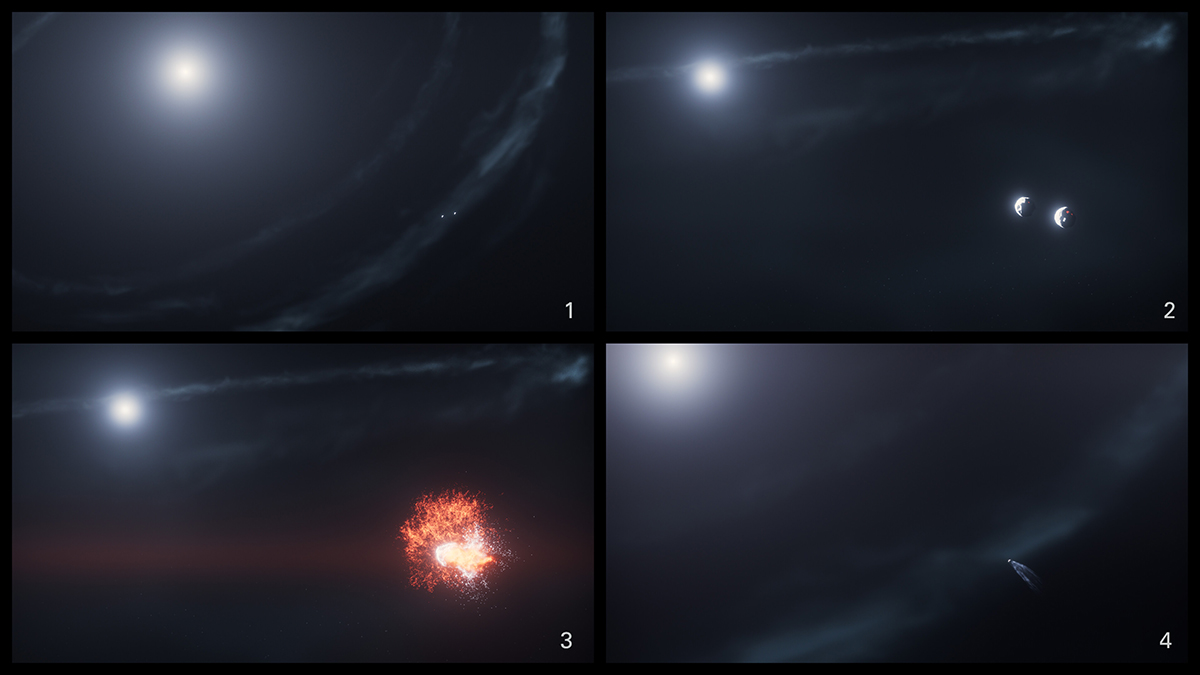
According to ESA and NASA researchers, cs1 likely formed from a collision between two large bodies roughly 30 to 60 kilometers across. The impact would have released enormous energy, producing a cloud of fine debris that remained visible for years. This reinterpretation alone was significant. But the story did not end there.
A second collision appears without warning
While studying later Hubble observations, astronomers noticed a second bright source. This object, named cs2, appeared in images where nothing had been seen before. It emerged suddenly and occupied a nearby region of the disk. The timing ruled out orbital motion from an older object. The brightness ruled out background contamination. The only plausible explanation was another collision.
Cs2 shares many characteristics with cs1. It reflects optical light efficiently. It shows signs of expansion. Its position aligns with the debris disk plane. Together, these properties point to a fresh impact between large planetesimals. The remarkable aspect is timing. Hubble observed two major collisions in the same system within roughly two decades. Models had predicted that such events should be exceedingly rare in mature debris disks.
The repeated collisions imply a dense and dynamically excited debris population. ESA and NASA scientists estimate that Fomalhaut’s disk may contain hundreds of millions of kilometer-scale bodies. Gravitational interactions likely push these objects onto crossing orbits. Radiation pressure from the star then disperses fine dust outward, creating the observed cloud expansion. Larger fragments remain bound and may collide again. This cycle sustains disk brightness and structure.
Such activity resembles the early Solar System, when frequent impacts shaped planets and moons. Earth’s own history includes giant collisions, crustal reprocessing, and long-term bombardment. Fomalhaut offers a rare external comparison. Importantly, the system is not young by stellar standards. This suggests that debris disks can remain unstable far longer than previously assumed.
How Hubble made the discovery possible
Hubble’s high spatial resolution and long operational life were essential. Its ability to suppress starlight allowed faint structures near Fomalhaut to emerge. By comparing images taken years apart, astronomers measured expansion rates and orbital motion. These measurements ruled out objects of planetary mass. They instead matched collision physics models developed from studies of the Solar System. ESA scientists emphasize that this discovery depended on continuity.
Astronomers plan follow-up observations with the James Webb Space Telescope. JWST’s infrared sensitivity will reveal dust properties invisible to Hubble. JWST can measure grain size distributions. It can detect warm debris. It may identify ice or complex materials within the clouds. These details will refine models of impact energy and composition. Combined Hubble and Webb data will provide the most complete picture yet of an active debris disk undergoing real-time change.
The Fomalhaut collisions show that planetary systems remain dynamic long after formation. They challenge assumptions about stability, collision frequency, and debris disk lifetimes.
Clear skies!
See more from DIYPhotography.net on Google
Add DIYPhotography.net as a trusted source. This makes
our stories more likely to appear in your Google Search results.
 Add as a preferred source on Google

Soumyadeep Mukherjee
Soumyadeep Mukherjee is an award-winning astrophotographer from India. He has a doctorate degree in Linguistics. His work extends to the sub-genres of nightscape, deep sky, solar, lunar and optical phenomenon photography. He is also a photography educator and has conducted numerous workshops. His works have appeared in over 40 books & magazines including Astronomy, BBC Sky at Night, Sky & Telescope among others, and in various websites including National Geographic, NASA, Forbes. He was the first Indian to win “Astronomy Photographer of the Year” award in a major category.

Join the Discussion
DIYP Comment Policy
Be nice, be on-topic, no personal information or flames.