



















JWST Photographs a Potential Planet around Alpha Centauri A
Aug 11, 2025
Soumyadeep Mukherjee
Soumyadeep Mukherjee is an award-winning astrophotographer from India. He has a doctorate degree in Linguistics. His work extends to the sub-genres of nightscape, deep sky, solar, lunar and optical phenomenon photography. He is also a photography educator and has conducted numerous workshops. His works have appeared in over 40 books & magazines including Astronomy, BBC Sky at Night, Sky & Telescope among others, and in various websites including National Geographic, NASA, Forbes. He was the first Indian to win “Astronomy Photographer of the Year” award in a major category.
Share:

Alpha Centauri A, our nearest Sun-like neighbor, just 4.37 light-years away, may be hiding a new world. In August 2024, the James Webb Space Telescope (JWST) captured a faint point of light near the star. This point, called S1, may be a gas giant orbiting right in the star’s habitable zone, a region where liquid water might exist on a rocky moon. If confirmed, it could become the closest directly imaged planet around a Sun-like star. But the discovery plays out like a cosmic mystery.
A faint signal in the infrared
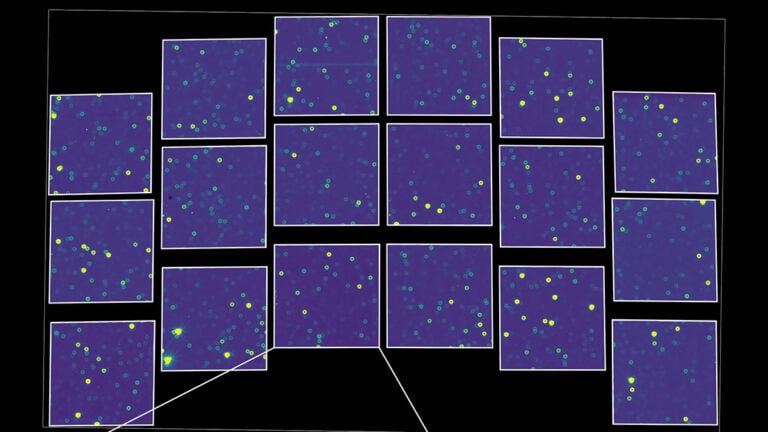
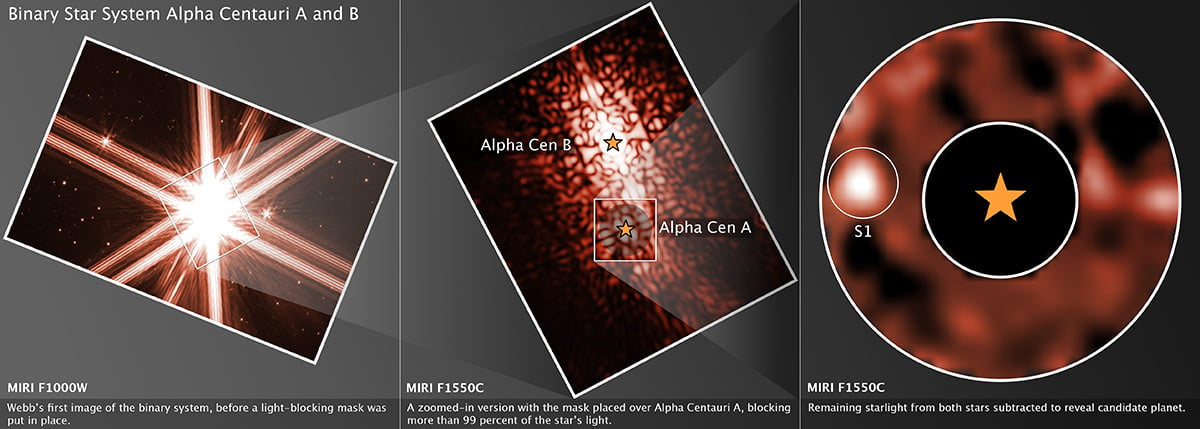
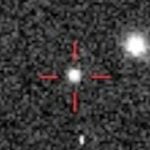
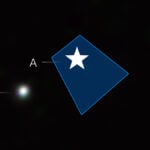
The discovery came through a specialized setup: JWST’s Mid-Infrared Instrument (MIRI) paired with a coronagraph, which blocks the star’s bright glare. In the August image, a tiny glow, S1, appeared at about 1.5 arcseconds from Alpha Centauri A, equivalent to roughly 1–2 astronomical units, within its habitable zone. Scientists estimate the candidate planet could be Saturn-mass, with a temperature around 225–250 K and a radius close to Jupiter’s. It’s not a small world, but its location sparks fascination.
The disappearance
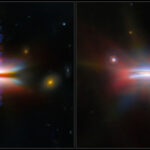
In August 2024, JWST’s Mid-Infrared Instrument (MIRI) imaged a faint, point-like source near Alpha Centauri A. The researchers named it “S1.” They used a coronagraph to block out the star’s intense glare. The image, though subtle, passed early checks and captured global attention. JWST tried to image S1 again in February and April 2025. Both attempts found nothing; the candidate had vanished. Rather than giving up, the team dug deeper. They ran orbital models using the August detection and a possible 2019 ground-based hint. Their findings returned a surprising result: there’s a 52% chance that S1’s orbit moved it behind the star’s glare during the follow-up attempts. In short, S1 may be playing hide and seek.
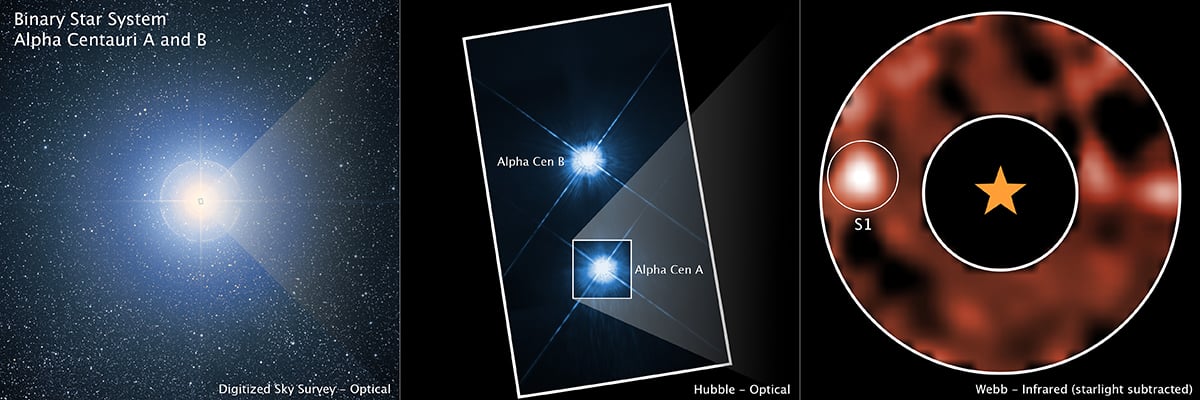
Those models sketch an intriguing trajectory. S1, if real, would follow an orbit of 2–3 years with significant eccentricity (~0.4) and a tilt of about 50° relative to the Alpha Centauri AB orbital plane. This tilt may explain why it disappears in some views. The models also align with existing radial-velocity (RV) constraints. S1 seems to fit within the parameters of a dynamic, stable orbit around Alpha Centauri A.
Processing the data
The team used reference-star differential imaging to subtract light from the companion star, Alpha Centauri B. They then applied PCA-KLIP, a data-processing algorithm that isolates faint signals in crowded fields. These methods helped reduce false positives and underline that S1 is unlikely to be an artifact. Furthermore, the absence of any warm exozodiacal dust around Alpha Centauri A enhances detection clarity. The dust level is just a few times that of our zodiacal cloud, remarkably low.
A possible planet
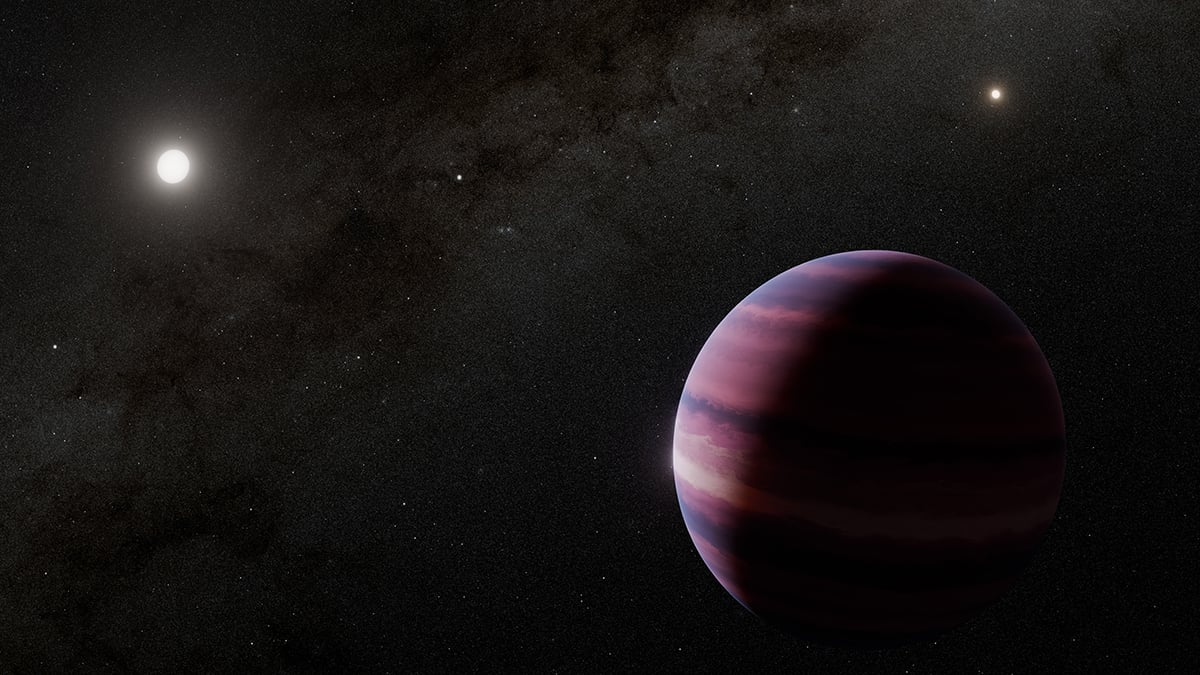
Based on its photometry and dynamics, S1 may be a cool gas giant, spanning 1–1.1 Jupiter radii and weighing 90–150 Earth masses, placing it in the Saturn-mass range. Temperatures hover near 225 K; cold, but still radiating in the infrared. Though this planet would be too massive and gaseous to harbor life in the style of Earth, its hypothetical moons, if they exist, could intrigue researchers and dreamers alike.
If confirmed, S1 would become the closest imaged exoplanet orbiting within a Sun-like star’s habitable zone. The proximity alone means it’s ripe for future study. Scientists could probe its atmosphere, study moon-forming processes, and test formation theories in binary systems. Publicly, a world this near would ignite wonder, blurring lines between science fiction and reality.
The hunt continues. JWST will revisit Alpha Centauri A in future observation cycles. Ground-based telescopes, the upcoming Nancy Grace Roman Space Telescope, and extremely large telescopes (ELTs) will weigh in as well. If S1 reappears around 2026 or 2027, excitement will surge. If it remains absent, models and assumptions will adjust. Regardless of the outcome, this candidate has expanded the frontier of direct imaging.
Clear skies!
See more from DIYPhotography.net on Google
Add DIYPhotography.net as a trusted source. This makes
our stories more likely to appear in your Google Search results.
 Add as a preferred source on Google

Soumyadeep Mukherjee
Soumyadeep Mukherjee is an award-winning astrophotographer from India. He has a doctorate degree in Linguistics. His work extends to the sub-genres of nightscape, deep sky, solar, lunar and optical phenomenon photography. He is also a photography educator and has conducted numerous workshops. His works have appeared in over 40 books & magazines including Astronomy, BBC Sky at Night, Sky & Telescope among others, and in various websites including National Geographic, NASA, Forbes. He was the first Indian to win “Astronomy Photographer of the Year” award in a major category.

Join the Discussion
DIYP Comment Policy
Be nice, be on-topic, no personal information or flames.