
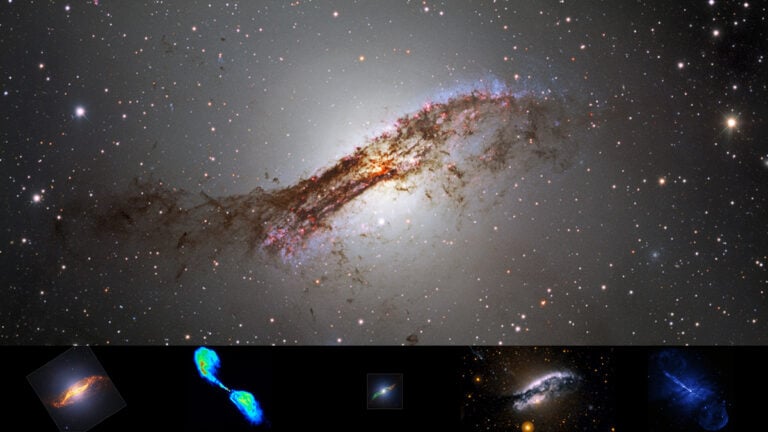



























Thick and Thin Discs: JWST Photographs a Collage of Galaxies
Jul 6, 2025
Soumyadeep Mukherjee
Soumyadeep Mukherjee is an award-winning astrophotographer from India. He has a doctorate degree in Linguistics. His work extends to the sub-genres of nightscape, deep sky, solar, lunar and optical phenomenon photography. He is also a photography educator and has conducted numerous workshops. His works have appeared in over 40 books & magazines including Astronomy, BBC Sky at Night, Sky & Telescope among others, and in various websites including National Geographic, NASA, Forbes. He was the first Indian to win “Astronomy Photographer of the Year” award in a major category.
Share:
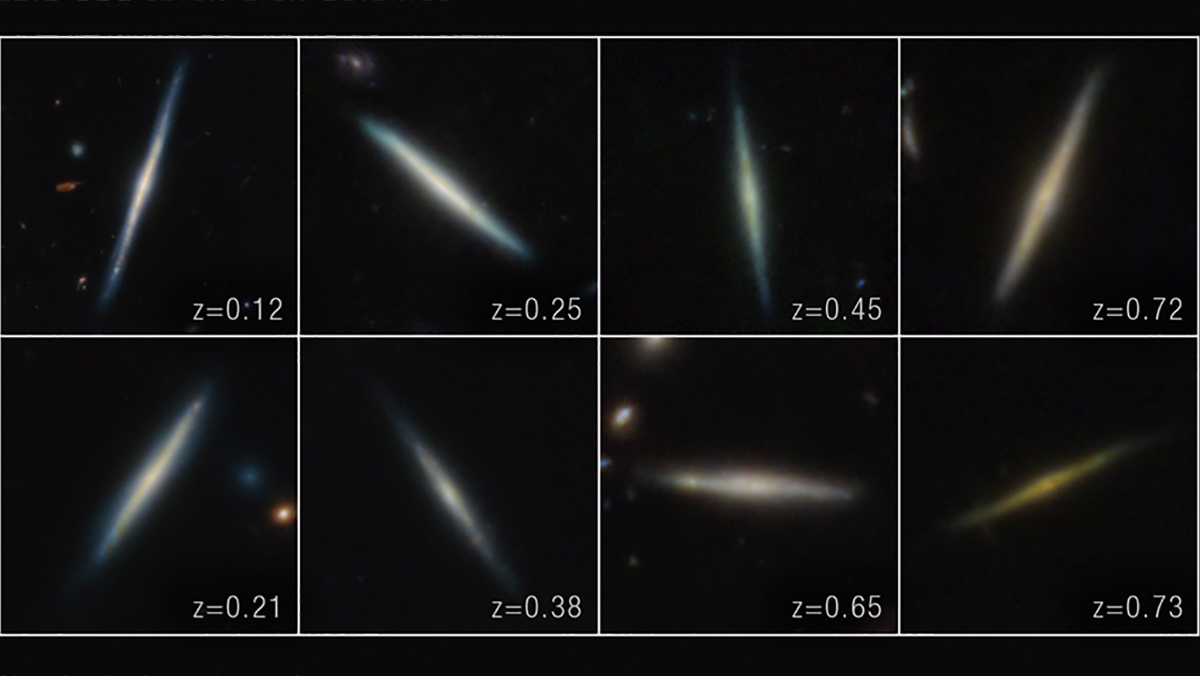
The James Webb Space Telescope (JWST) has photographed a stunning and crucial phase in the life of galaxies. For the first time, scientists have directly seen how galaxies started thick and later became thin. This major discovery confirms what astronomers long suspected. And it changes how we understand the early universe.
A look into the distant past
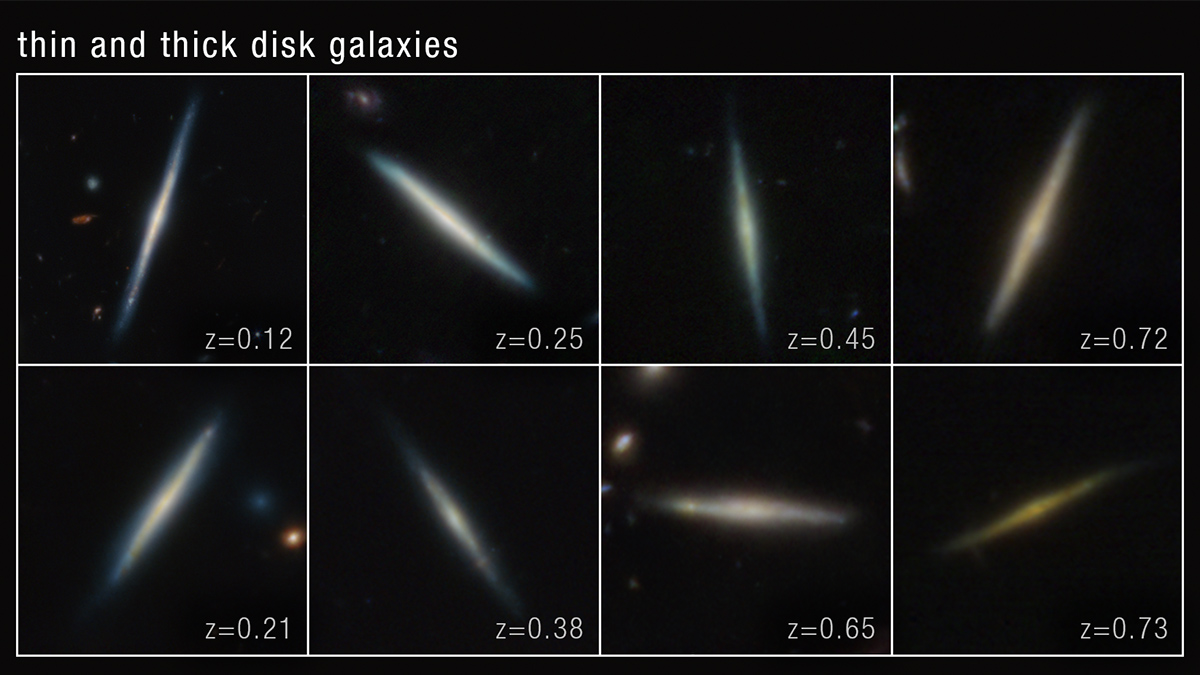
JWST’s images show multiple distant galaxies. These galaxies existed about 11 billion years ago. That’s just 2.8 billion years after the Big Bang. These galaxies appear edge-on in the images. That means we are looking at them from the side, not from the top. This view is perfect for studying the shape and thickness of their discs. The images were taken using JWST’s NIRCam instrument. It sees infrared light. That lets JWST look far back in time, through dust and gas. Astronomers used this data to study the vertical structure of the galaxies. And they found something remarkable. Most galaxies had two distinct parts, a thick disc and a thin disc.
What are Thick and Thin discs?
Many spiral galaxies have a layered structure. The Milky Way has it too. The thick disc is the older part. It is puffier and contains older, redder stars. These stars are metal-poor and formed early. The thin disc is younger and flatter. It contains younger, bluer stars. These stars are metal-rich and formed later. Until now, this structure was mostly studied in nearby galaxies like our own. But JWST has now captured these features in galaxies from the early universe.
How galaxies grew thinner
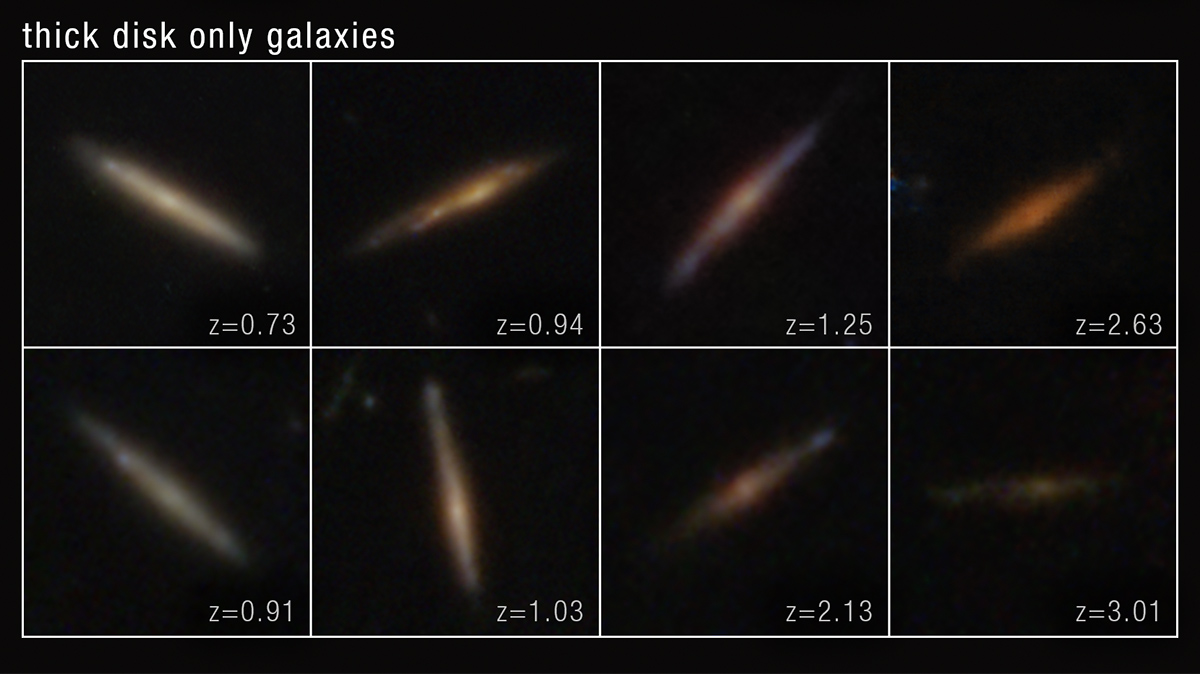
The thick discs formed during a violent and chaotic time. Early galaxies were full of turbulent gas. Star formation was intense and unstable. This led to stars being born in more vertical orbits, making the discs thick. Later, as the gas cooled and settled, galaxies entered a calmer phase. Star formation slowed down and became more orderly. New stars formed in flatter, circular orbits. This led to the formation of the thin discs. So, galaxies thinned out over time. JWST’s data supports this theory. It shows galaxies in various stages of this transformation.
Timing depends on galaxy mass
One of the most interesting findings is the role of galaxy mass. The data shows that bigger galaxies thinned out earlier than smaller ones. Massive galaxies already had both thick and thin discs around 8 billion years ago. That’s when the universe was about 5.8 billion years old. But smaller galaxies formed their thin discs much later. Some only did so around 4 billion years ago. This mass-dependent timeline gives new clues about galaxy evolution. It shows that bigger galaxies settled faster. They formed their stars earlier and used up their gas sooner.
How does this relate to the Milky Way
This research connects directly to our own galaxy. The Milky Way has a thick disc made of old, metal-poor stars. And it has a thin disc full of younger, metal-rich stars. This structure puzzled scientists for decades. Now we see that our galaxy is not special. It’s just one example of a cosmic pattern. The Milky Way followed the same path as other galaxies. It too started thick and became thin. JWST helps us place the Milky Way in context. It shows that our galaxy’s history is part of a broader cosmic story.
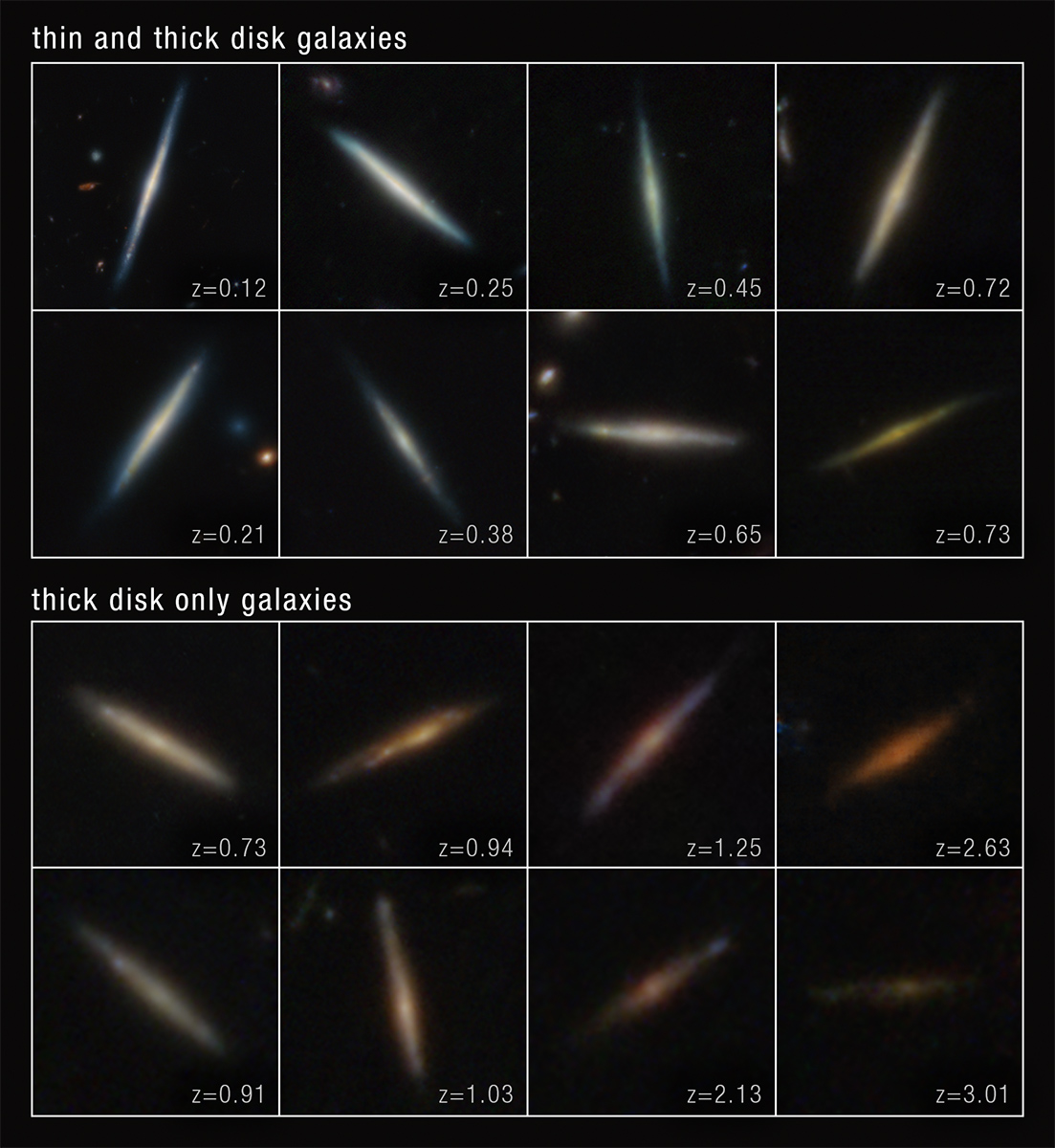
JWST has once again reshaped our view of the universe. Its latest images prove that galaxies had a thick phase. It shows how they slimmed down to form beautiful, flat spirals. This breakthrough connects deep space to our home galaxy. It confirms that the Milky Way’s shape is part of a universal trend.
Clear skies!
See more from DIYPhotography.net on Google
Add DIYPhotography.net as a trusted source. This makes
our stories more likely to appear in your Google Search results.
 Add as a preferred source on Google

Soumyadeep Mukherjee
Soumyadeep Mukherjee is an award-winning astrophotographer from India. He has a doctorate degree in Linguistics. His work extends to the sub-genres of nightscape, deep sky, solar, lunar and optical phenomenon photography. He is also a photography educator and has conducted numerous workshops. His works have appeared in over 40 books & magazines including Astronomy, BBC Sky at Night, Sky & Telescope among others, and in various websites including National Geographic, NASA, Forbes. He was the first Indian to win “Astronomy Photographer of the Year” award in a major category.




Join the Discussion
DIYP Comment Policy
Be nice, be on-topic, no personal information or flames.