























JWST photographs the stunning Planetary Nebula NGC 1514
Jun 30, 2025
Soumyadeep Mukherjee
Soumyadeep Mukherjee is an award-winning astrophotographer from India. He has a doctorate degree in Linguistics. His work extends to the sub-genres of nightscape, deep sky, solar, lunar and optical phenomenon photography. He is also a photography educator and has conducted numerous workshops. His works have appeared in over 40 books & magazines including Astronomy, BBC Sky at Night, Sky & Telescope among others, and in various websites including National Geographic, NASA, Forbes. He was the first Indian to win “Astronomy Photographer of the Year” award in a major category.
Share:

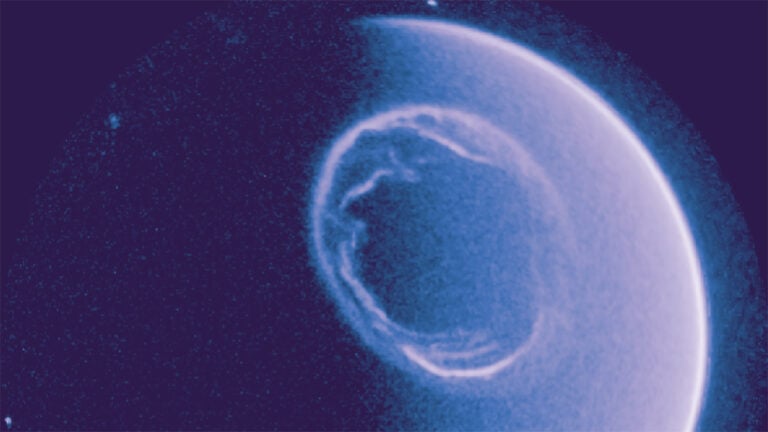
The James Webb Space Telescope has once again amazed astronomers and space lovers. This time, it photographed a mysterious cosmic object, NGC 1514. The result is a breathtaking image full of detail, color, and scientific importance. NGC 1514 is a planetary nebula in the constellation Taurus. It lies about 1,500 light-years from Earth. Though discovered in 1790 by William Herschel, it still holds secrets. JWST’s latest image reveals never-before-seen features. These include bright dusty rings, an hourglass structure, and new information about its central stars.
NGC 1514
NGC 1514 is a planetary nebula. But don’t let the name fool you. It has nothing to do with planets. The term “planetary nebula” came from early astronomers. Through small telescopes, these glowing shells looked like planets. In reality, planetary nebulae are clouds of gas and dust. They form when a dying star sheds its outer layers. What remains is a hot, dense core, a white dwarf. The ejected material glows due to strong radiation from this core. These glowing shells make planetary nebulae beautiful and useful to study. NGC 1514 has always been unique. It contains two central stars. This binary system plays a key role in shaping the nebula. But details remained unclear until now.

JWST’s observation
JWST used its MIRI instrument to study NGC 1514. MIRI is sensitive to wavelengths between 5 and 28 microns. This range is perfect for detecting cool dust and gas. JWST observed the nebula in three wavelengths: 7.7, 12.8, and 25.5 microns. These correspond to light emitted by different materials and temperatures. The result is a layered image rich in structure.
Here are the major features JWST discovered:
- Bright dusty rings: The most eye-catching discovery is the presence of two bright rings. They glow orange in the image. These rings wrap around the nebula at an angle of about 60 degrees. They are made of warm dust. The dust grains are extremely fine, smaller than one micron. These grains absorb radiation from the central stars and glow in the mid-infrared.
- Hourglass shape: The overall shape of the nebula looks like an hourglass. The structure has a pinched “waist” and extended lobes. This shape is common in planetary nebulae with binary stars. The rings lie around the waist of this hourglass. Scientists think the rings formed when gas and dust were funneled out along a plane.
- Double star at the center: At the heart of NGC 1514 lies a pair of stars. These stars orbit each other every nine years. In visible light, they appear as separate points. But in JWST’s image, they show up as a single bright source. This is due to MIRI’s infrared view and diffraction effects.
- Gaps and clumps: Closer to the center, JWST found something curious—holes in the dust. These appear as dark gaps in the glowing rings. The cause is not yet clear. One theory is that fast stellar winds blew through the dust. Another is that earlier jets from the stars carved these paths.

JWST’s mid-infrared image brings science and beauty together. The rings, lobes, and glowing dust tell a tale of stellar evolution. The universe continues to surprise us. With each JWST image, we come closer to unlocking its secrets.
Clear skies!
See more from DIYPhotography.net on Google
Add DIYPhotography.net as a trusted source. This makes
our stories more likely to appear in your Google Search results.
 Add as a preferred source on Google

Soumyadeep Mukherjee
Soumyadeep Mukherjee is an award-winning astrophotographer from India. He has a doctorate degree in Linguistics. His work extends to the sub-genres of nightscape, deep sky, solar, lunar and optical phenomenon photography. He is also a photography educator and has conducted numerous workshops. His works have appeared in over 40 books & magazines including Astronomy, BBC Sky at Night, Sky & Telescope among others, and in various websites including National Geographic, NASA, Forbes. He was the first Indian to win “Astronomy Photographer of the Year” award in a major category.


Join the Discussion
DIYP Comment Policy
Be nice, be on-topic, no personal information or flames.