























New Milestone in Exoplanet Discovery: JWST Images a Saturn-Mass World
Jun 26, 2025
Soumyadeep Mukherjee
Soumyadeep Mukherjee is an award-winning astrophotographer from India. He has a doctorate degree in Linguistics. His work extends to the sub-genres of nightscape, deep sky, solar, lunar and optical phenomenon photography. He is also a photography educator and has conducted numerous workshops. His works have appeared in over 40 books & magazines including Astronomy, BBC Sky at Night, Sky & Telescope among others, and in various websites including National Geographic, NASA, Forbes. He was the first Indian to win “Astronomy Photographer of the Year” award in a major category.
Share:
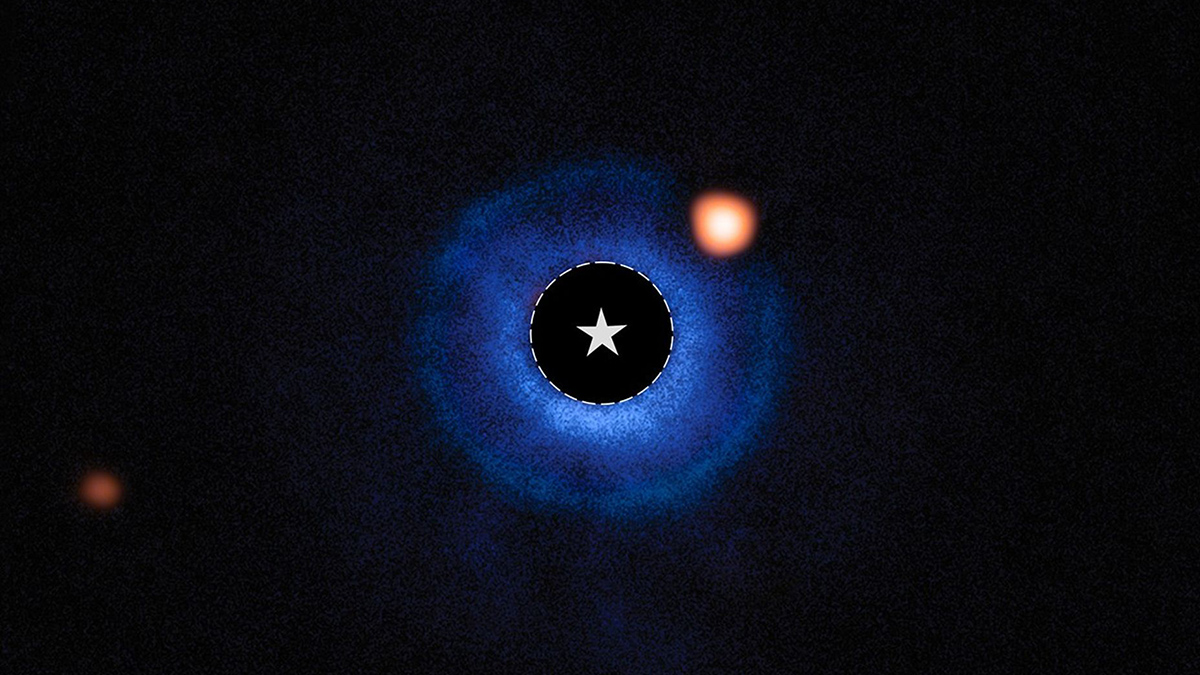
The James Webb Space Telescope (JWST) has made history by directly imaging an exoplanet that is roughly the same mass as Saturn. The planet, known as TWA 7b, is the lightest planet ever directly observed outside our solar system. This incredible achievement showcases the power of JWST’s instruments and opens a new chapter in exoplanet science.
What is TWA 7b?
TWA 7b is a gas giant planet located about 110 light-years away from Earth. It orbits a young red dwarf star named TWA 7. This star is part of a stellar group called the TW Hydrae Association, which is only about 10 million years old. TWA 7 itself is even younger, estimated to be just 6 million years old.
The planet orbits its star at a distance of about 50 astronomical units (AU). That is roughly 50 times the distance between Earth and the Sun. This is similar to how far Pluto is from our Sun. TWA 7b lies in the cold outer part of its system, inside a debris disc filled with dust and gas.
The lightest exoplanet ever imaged
Before this discovery, all directly imaged exoplanets were much larger than Saturn. Most were in the Jupiter-mass range or higher. TWA 7b changes that. It is only about the mass of Saturn. That makes it ten times less massive than the smallest exoplanet ever imaged before. This is a major leap forward in planetary imaging. It shows that JWST can now see smaller and lighter planets than any telescope before. Astronomers had long hoped for this capability, and now it has become a reality.
How the image was captured
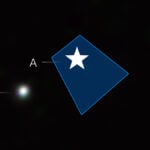
Imaging a planet like TWA 7b is no small task. The planet is faint. Its host star is much brighter. Normally, the star’s light would overwhelm the planet. But JWST used a clever tool called a coronagraph. This device blocks out the star’s light, like an artificial eclipse. That makes the dim planet visible.
The researchers used Webb’s Near-Infrared Camera (NIRCam) to take the image. They selected three infrared filters to improve their chances. Even then, it was difficult. The debris disc around TWA 7 added background noise. To overcome this, the team used advanced image processing to remove the disc’s effects. Finally, they spotted something moving in the data. That object was TWA 7b.
What makes TWA 7b special?
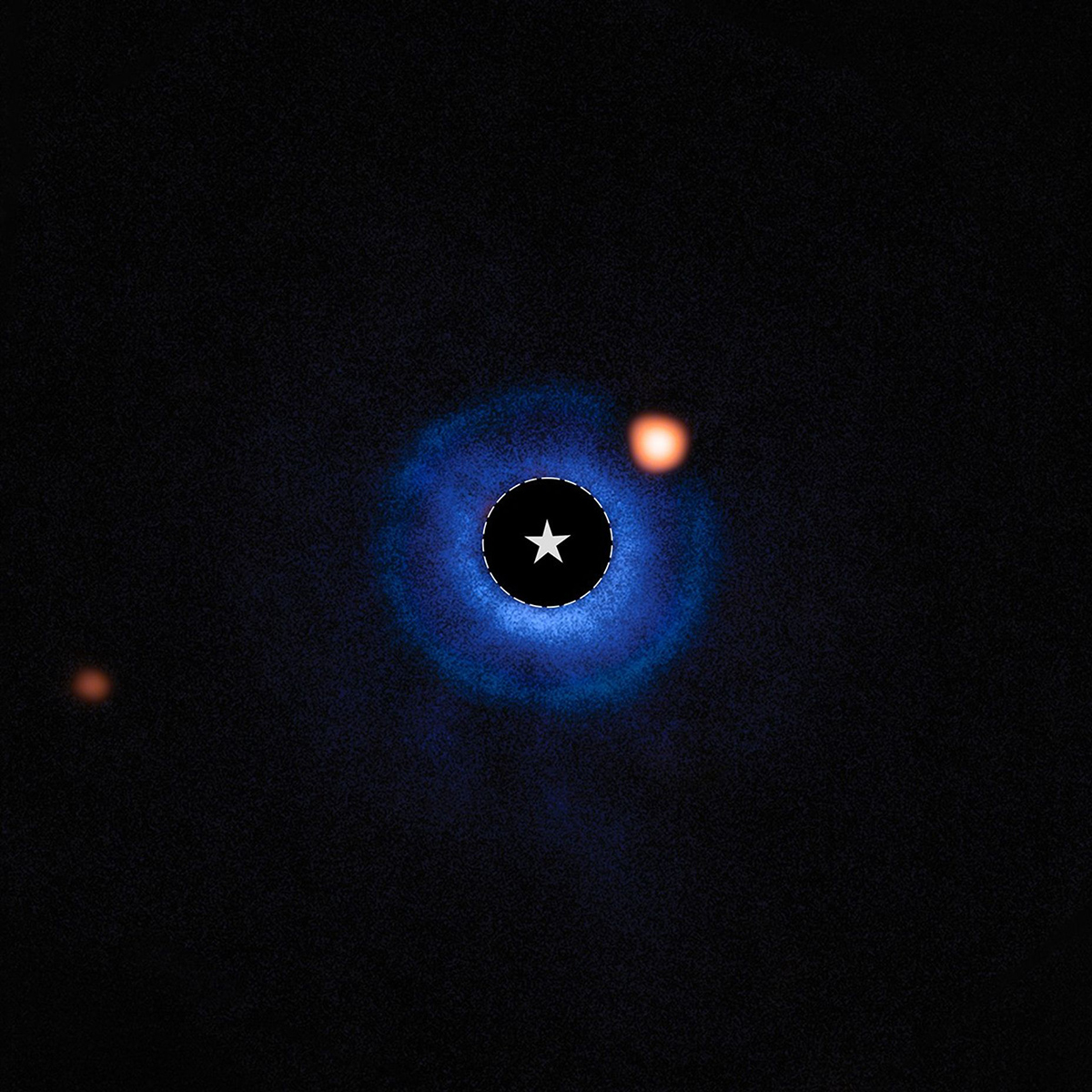
TWA 7b is not just small. It also lives in a very interesting place. Its star is young. The system is still forming. It contains a complex debris disc with at least three rings. These rings are shaped by gravitational forces, possibly from other unseen planets. The orbit of TWA 7b is also wide. At 50 AU, it moves slowly around its star. Its cold environment might influence its chemistry and development. This gives scientists a chance to learn about how gas giants form in the early stages of a planetary system. In other words, TWA 7b is a laboratory for studying young planets.
A historic moment is space photography
The image of TWA 7b is a symbol of progress. It shows how far technology has come. Just a decade ago, this discovery would have been impossible. Now, thanks to JWST, it is a reality. As techniques improve and more time is spent observing with JWST, astronomers expect to find even lighter and smaller exoplanets. One day, we may directly image an Earth-sized planet in the habitable zone of a nearby star. That dream now feels a little closer.
Clear skies!
See more from DIYPhotography.net on Google
Add DIYPhotography.net as a trusted source. This makes
our stories more likely to appear in your Google Search results.
 Add as a preferred source on Google

Soumyadeep Mukherjee
Soumyadeep Mukherjee is an award-winning astrophotographer from India. He has a doctorate degree in Linguistics. His work extends to the sub-genres of nightscape, deep sky, solar, lunar and optical phenomenon photography. He is also a photography educator and has conducted numerous workshops. His works have appeared in over 40 books & magazines including Astronomy, BBC Sky at Night, Sky & Telescope among others, and in various websites including National Geographic, NASA, Forbes. He was the first Indian to win “Astronomy Photographer of the Year” award in a major category.

Join the Discussion
DIYP Comment Policy
Be nice, be on-topic, no personal information or flames.