




















JWST Photographs Mysterious Bright Objects in the Early Universe
Aug 17, 2025
Soumyadeep Mukherjee
Soumyadeep Mukherjee is an award-winning astrophotographer from India. He has a doctorate degree in Linguistics. His work extends to the sub-genres of nightscape, deep sky, solar, lunar and optical phenomenon photography. He is also a photography educator and has conducted numerous workshops. His works have appeared in over 40 books & magazines including Astronomy, BBC Sky at Night, Sky & Telescope among others, and in various websites including National Geographic, NASA, Forbes. He was the first Indian to win “Astronomy Photographer of the Year” award in a major category.
Share:

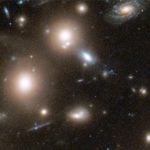
When astronomers turned the James Webb Space Telescope (JWST) toward the deep universe, they expected to see faint smudges from the earliest galaxies. Instead, they found something much brighter. A new analysis of JWST’s deep-field data has uncovered 300 unusually luminous objects. These sources appear far brighter than models predicted for galaxies that existed soon after the Big Bang. The discovery is raising questions about what they are and how they formed. The work was led by Liu Bangzheng “Tom” Sun and Haojing Yan of the University of Missouri. The team analyzed public JWST images and published their results in The Astrophysical Journal. Their study highlights that while many of the candidates may be nearer galaxies covered in dust, a subset may be genuine early galaxies at very high redshifts.
The tool behind the discovery
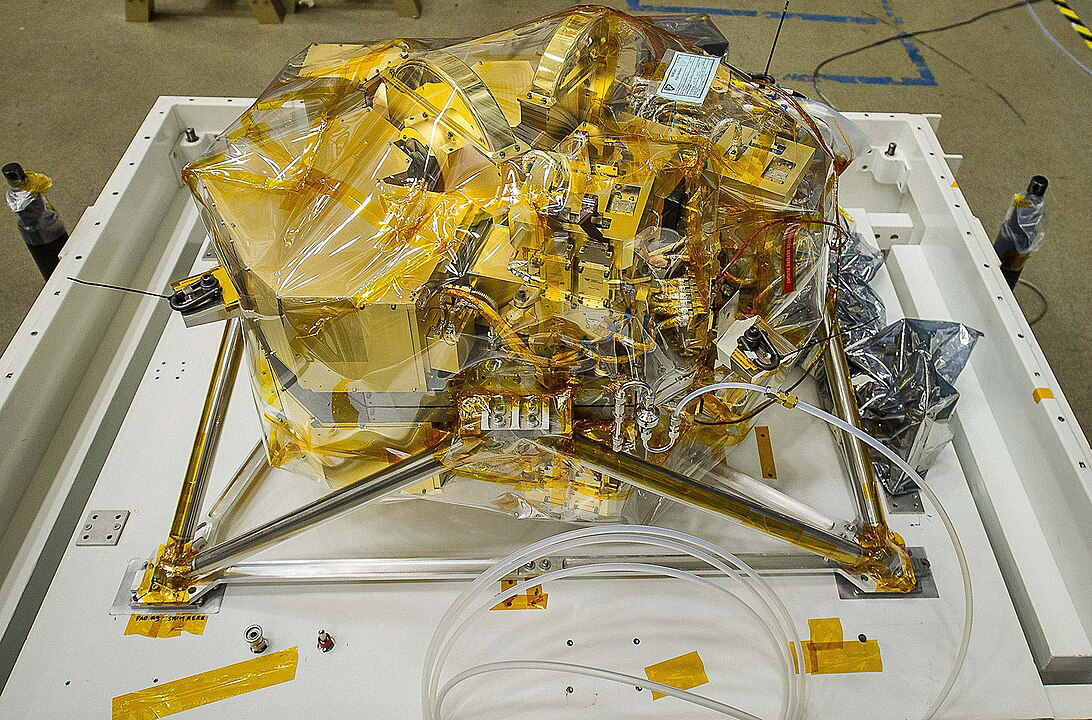
The James Webb Space Telescope has been operational since July 2022 and quickly established itself as the most powerful space observatory ever built. Its key advantage is its ability to see in the infrared, the part of the spectrum where light from the early universe now resides. Over billions of years, the expansion of the universe has stretched visible and ultraviolet light from early stars and galaxies into longer infrared wavelengths. Detecting this light requires instruments like JWST’s NIRCam. NIRCam captures light between 0.6 and 5 microns, a range ideal for studying galaxies across cosmic history. For this study, the team examined deep-field images that probe billions of light-years into the past. These images reveal faint and distant sources that no previous telescope could detect.
The scientists applied a technique known as the dropout method. Distant galaxies often disappear, or “drop out,” in bluer filters because their ultraviolet light is absorbed by neutral hydrogen in the intergalactic medium. At high redshifts, this absorption feature, called the Lyman break, shifts into the infrared. By identifying objects that vanish in bluer filters but reappear in redder NIRCam filters, astronomers can pick out strong candidates for very distant galaxies.
Sorting the candidates
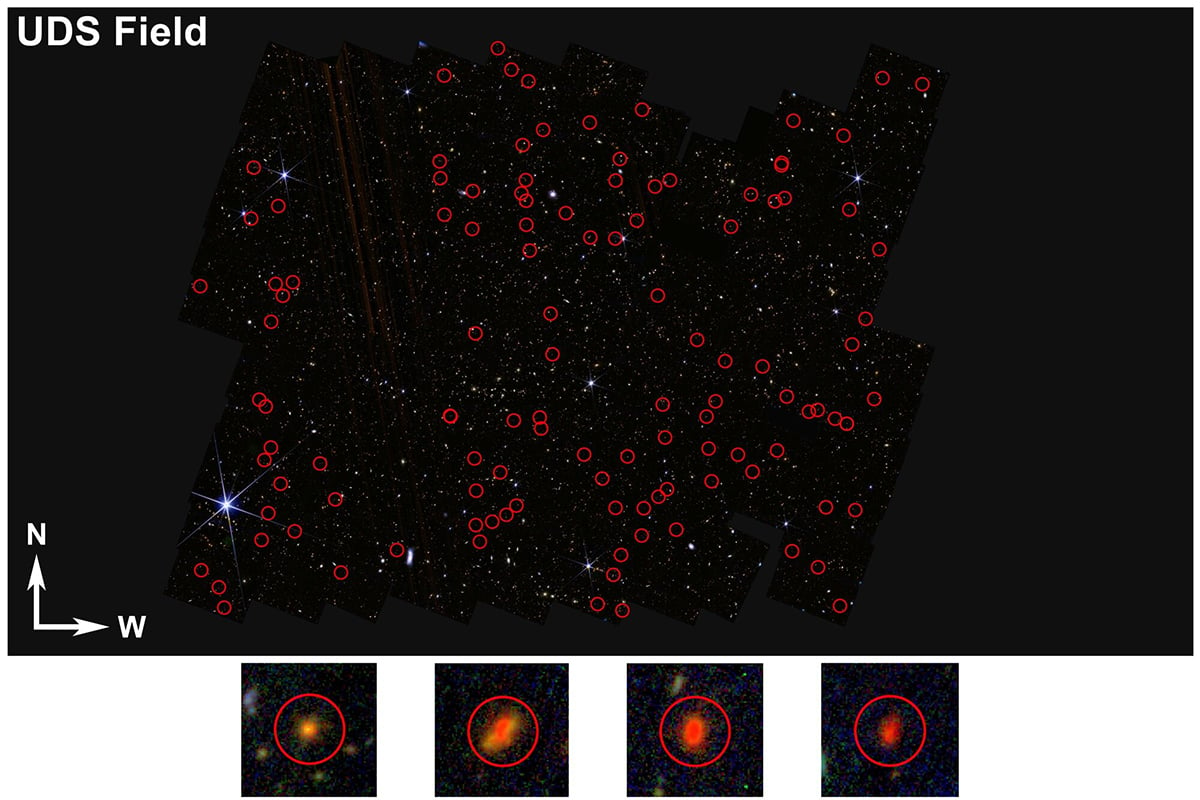
The survey produced 300 such dropouts, but not all of them are necessarily from the distant universe. To separate nearer galaxies from the truly ancient, the researchers used spectral energy distribution (SED) fitting. This method compares the brightness of objects in different filters to models of galaxy spectra at various redshifts. The analysis suggests that most of the objects, over two-thirds, are relatively closer, at redshifts between z ≈ 1 and 4. These galaxies may look red and bright because they are heavily shrouded in dust, which absorbs blue light and re-emits it in the infrared. But a meaningful fraction, around 7 percent, could indeed lie at redshifts greater than 6, making them genuine early-universe galaxies.
The need for spectroscopic confirmation
Photometric methods like the dropout technique are powerful, but they can also be misleading. Dusty, nearer galaxies can mimic the appearance of very distant ones. The only reliable way to confirm extreme distances is through spectroscopy, which splits the light into its component wavelengths. Spectroscopy can precisely measure the redshift and reveal the chemical composition and star-forming activity of these objects.

The research team emphasizes that spectroscopic follow-up is essential. Even if only a small fraction of the 300 candidates turn out to be true high-redshift galaxies, the implications would still be profound. Each confirmed object provides a direct window into the conditions of the early universe. Webb, together with powerful ground-based observatories like the Keck telescopes and the Very Large Telescope, will play a crucial role in verifying these results.
Clear skies!
See more from DIYPhotography.net on Google
Add DIYPhotography.net as a trusted source. This makes
our stories more likely to appear in your Google Search results.
 Add as a preferred source on Google

Soumyadeep Mukherjee
Soumyadeep Mukherjee is an award-winning astrophotographer from India. He has a doctorate degree in Linguistics. His work extends to the sub-genres of nightscape, deep sky, solar, lunar and optical phenomenon photography. He is also a photography educator and has conducted numerous workshops. His works have appeared in over 40 books & magazines including Astronomy, BBC Sky at Night, Sky & Telescope among others, and in various websites including National Geographic, NASA, Forbes. He was the first Indian to win “Astronomy Photographer of the Year” award in a major category.

Join the Discussion
DIYP Comment Policy
Be nice, be on-topic, no personal information or flames.