


















JWST’s Deepest Look at the Hubble Ultra Deep Field
Aug 1, 2025
Soumyadeep Mukherjee
Soumyadeep Mukherjee is an award-winning astrophotographer from India. He has a doctorate degree in Linguistics. His work extends to the sub-genres of nightscape, deep sky, solar, lunar and optical phenomenon photography. He is also a photography educator and has conducted numerous workshops. His works have appeared in over 40 books & magazines including Astronomy, BBC Sky at Night, Sky & Telescope among others, and in various websites including National Geographic, NASA, Forbes. He was the first Indian to win “Astronomy Photographer of the Year” award in a major category.
Share:
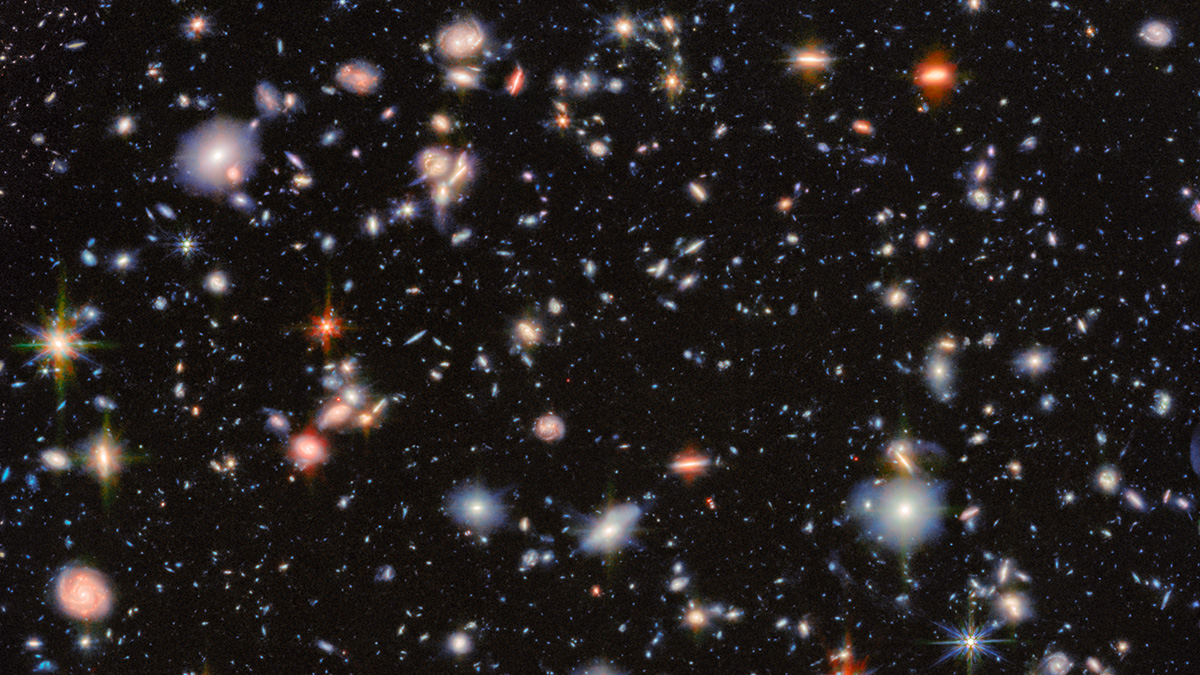
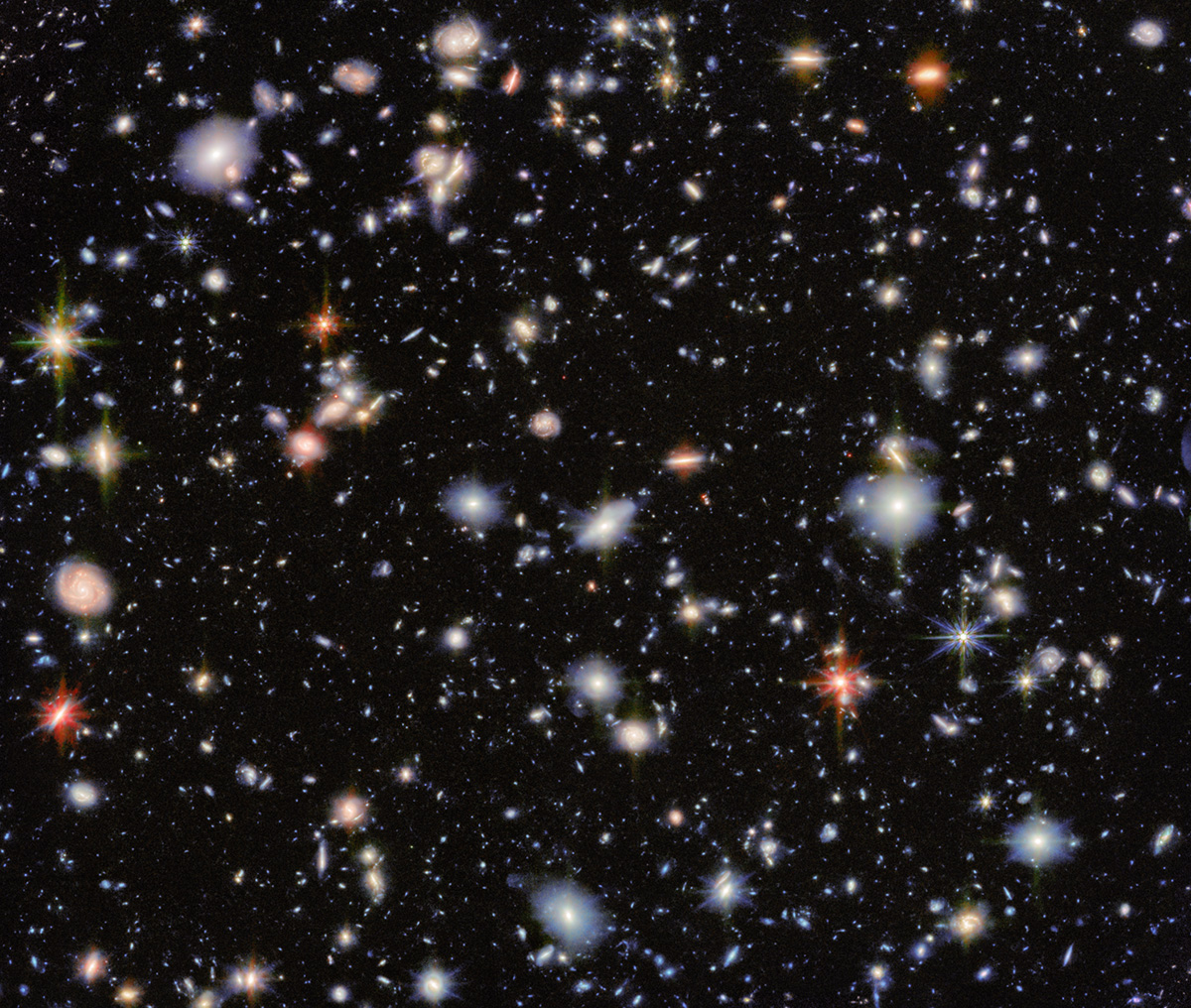
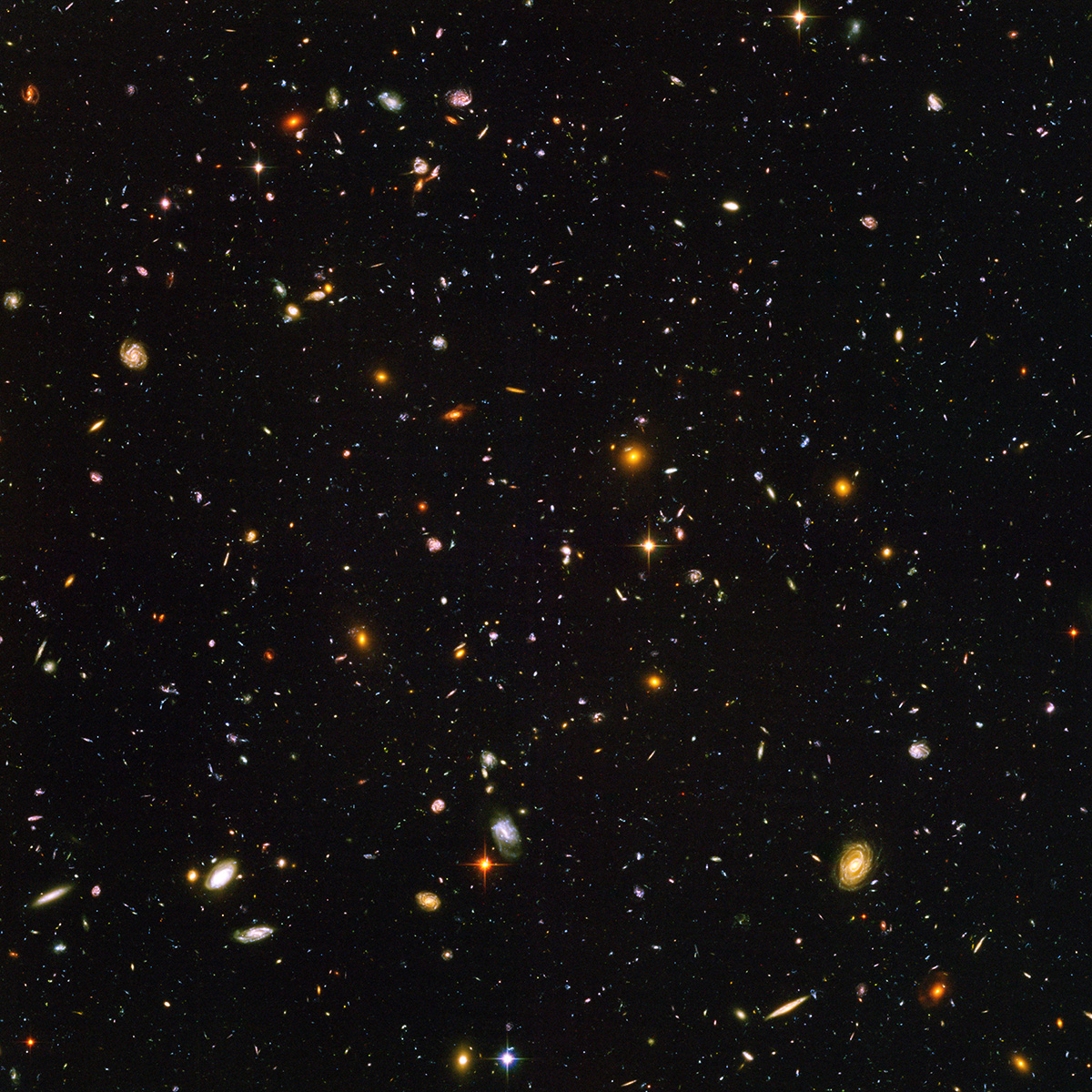
ESA has released a breathtaking new image from the James Webb Space Telescope (JWST). This image shows the famous Hubble Ultra Deep Field (HUDF) in astonishing new detail. It is the latest and deepest look ever at one of the most studied patches of the sky. The Hubble Ultra Deep Field has long fascinated astronomers. First imaged by the Hubble Space Telescope in 2003–2004, it captured thousands of galaxies in a tiny region of the sky. That small patch, just one-tenth the width of the Moon, revealed the early universe like never before. Now, JWST has returned to this iconic field. The result is a stunning new view that surpasses all previous observations in depth and clarity.
A new era of infrared vision
JWST’s new image of the HUDF was taken using two of its instruments, NIRCam and MIRI. NIRCam stands for Near-Infrared Camera. MIRI is the Mid-Infrared Instrument. Together, these tools allow JWST to see deeper and further than any telescope before it. NIRCam observed the field for 33 hours. MIRI collected data for over 98 hours. This deep exposure allowed JWST to pick up extremely faint and distant galaxies. In fact, this is one of the deepest mid-infrared views of the universe ever captured. The image shows more than 2,500 individual sources. These include galaxies, star-forming regions, and possibly active black holes. Many of these objects had never been seen before.
Going beyond Hubble
Hubble showed us the visible and ultraviolet light of the HUDF. JWST goes further by seeing infrared light. This is crucial when studying the early universe. As the universe expands, light from distant galaxies gets stretched. It moves from visible wavelengths into the infrared. Only infrared telescopes like JWST can detect it. Thanks to this, JWST sees galaxies that are over 13 billion years old. Some of these galaxies are red or orange. This coloring shows that they are dusty, massive, or very old. Others appear bluish or greenish. These tend to be closer to us or are made of younger stars. The new image reveals entire classes of galaxies that were hidden in Hubble’s view. Some are compact and faint. Others are bright and full of structure. We see spirals, clumps, and irregular shapes. JWST shows not just their light, but also their texture and detail.
A look back in time
Light travels at a constant speed. That means we see distant objects as they were in the past. Some galaxies in the JWST HUDF image are over 13 billion light-years away. We see them as they were just 400–500 million years after the Big Bang. This is a crucial time in cosmic history. It’s when the first galaxies were forming. JWST allows astronomers to watch the universe’s early days. They can now study how stars lit up the cosmos, how galaxies evolved, and how structure formed. The image also helps researchers test models of dark matter and dark energy. These mysterious forces shape the universe’s large-scale structure. JWST provides the data needed to refine our understanding of cosmic physics.
JWST’s new deep field image is a milestone in astronomy. It reveals thousands of galaxies. Many are invisible to Hubble or ground-based telescopes. Some are extremely old, dusty, and distant. This image shows the success of the JWST mission. In just three years of operation, JWST has transformed our view of the cosmos.
Clear skies!
See more from DIYPhotography.net on Google
Add DIYPhotography.net as a trusted source. This makes
our stories more likely to appear in your Google Search results.
 Add as a preferred source on Google

Soumyadeep Mukherjee
Soumyadeep Mukherjee is an award-winning astrophotographer from India. He has a doctorate degree in Linguistics. His work extends to the sub-genres of nightscape, deep sky, solar, lunar and optical phenomenon photography. He is also a photography educator and has conducted numerous workshops. His works have appeared in over 40 books & magazines including Astronomy, BBC Sky at Night, Sky & Telescope among others, and in various websites including National Geographic, NASA, Forbes. He was the first Indian to win “Astronomy Photographer of the Year” award in a major category.


Join the Discussion
DIYP Comment Policy
Be nice, be on-topic, no personal information or flames.