



















A Double Blast in Space: VLT photographs a Double-Detonation Supernova
Jul 3, 2025
Soumyadeep Mukherjee
Soumyadeep Mukherjee is an award-winning astrophotographer from India. He has a doctorate degree in Linguistics. His work extends to the sub-genres of nightscape, deep sky, solar, lunar and optical phenomenon photography. He is also a photography educator and has conducted numerous workshops. His works have appeared in over 40 books & magazines including Astronomy, BBC Sky at Night, Sky & Telescope among others, and in various websites including National Geographic, NASA, Forbes. He was the first Indian to win “Astronomy Photographer of the Year” award in a major category.
Share:

A quiet white dwarf. A sudden spark. Two massive explosions. That’s the story unfolding 160,000 light-years away. In a galaxy close to our own, astronomers have captured something spectacular. For the first time, they have seen direct evidence of a rare cosmic event, a double-detonation supernova. This discovery confirms a long-standing theory. It shows that white dwarfs can explode in two stages. It also explains a lot about a special kind of supernova. This is one of the most important astronomical finds of the year.
What did astronomers find?
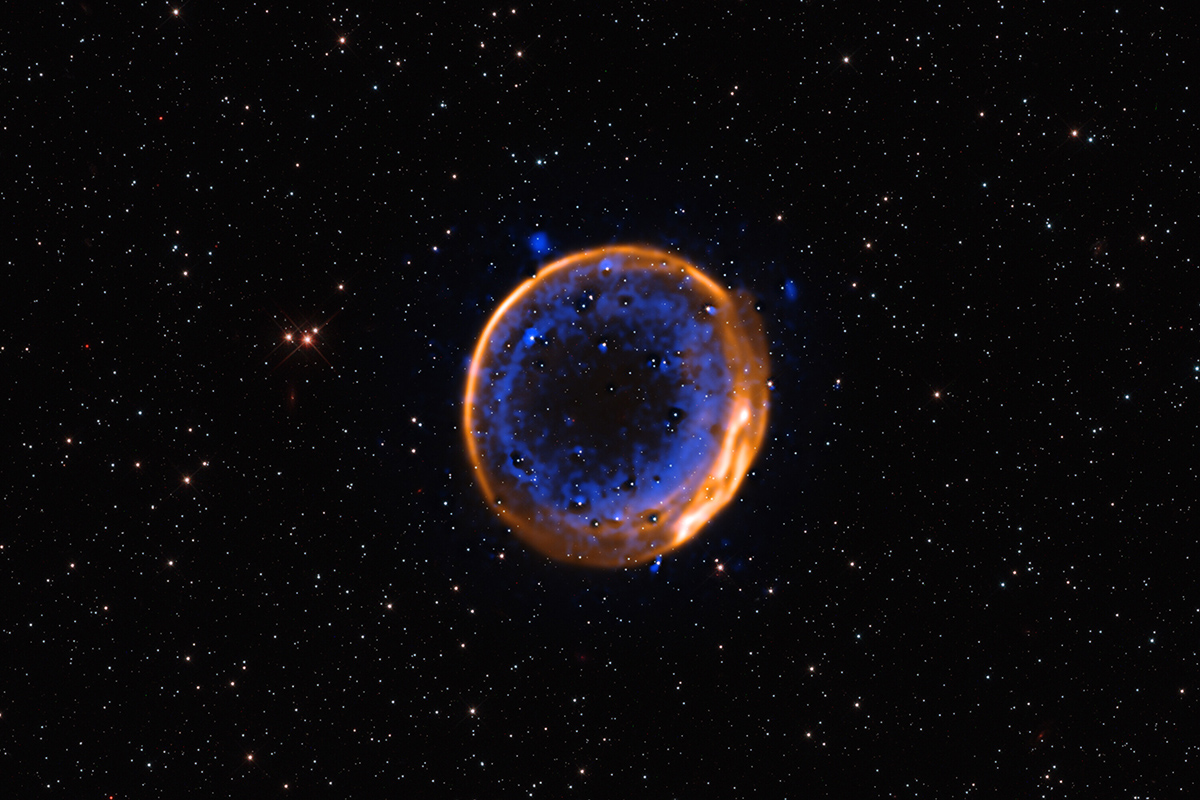
The discovery took place in the Large Magellanic Cloud (LMC). It’s a satellite galaxy of our Milky Way. The event happened inside a known supernova remnant, SNR 0509‑67.5. Astronomers used the MUSE instrument on the Very Large Telescope (VLT) in Chile. MUSE stands for Multi-Unit Spectroscopic Explorer. It collects both images and detailed spectra. That means it shows not just what’s out there, but what it’s made of.
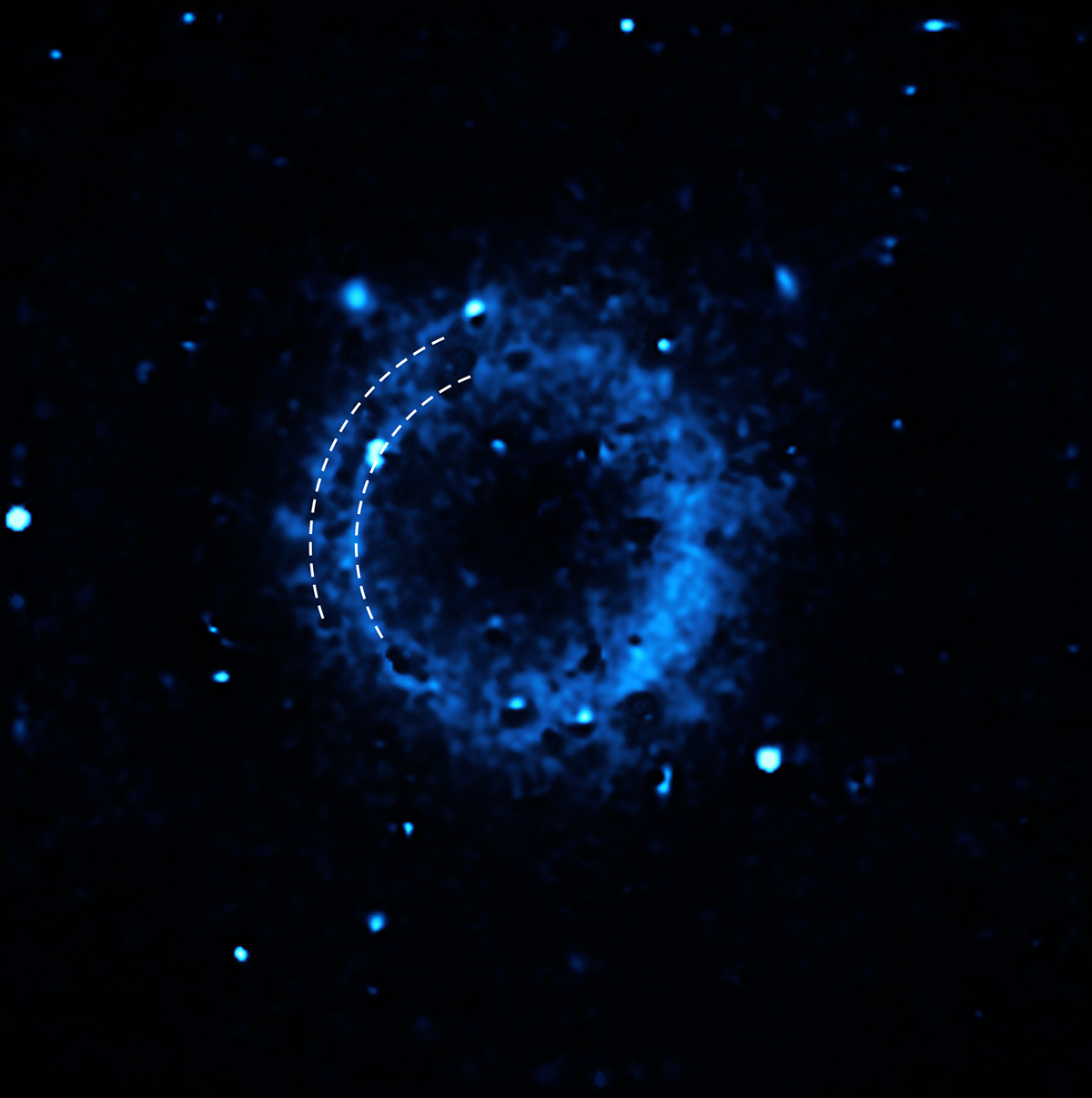
What they found was stunning: two distinct shells of calcium-rich gas. The outer shell shows fast-moving material. This material was ejected in an earlier, outer explosion. The inner shell is more compact. It was formed in the second, more central explosion. This double structure is exactly what the double-detonation theory predicts.
Double-detonation supernova
Most white dwarfs die a quiet death. But some explode as Type Ia supernovae. These explosions are among the brightest in the universe. They also help astronomers measure cosmic distances. That’s why they are called standard candles. For years, scientists thought a white dwarf had to reach a critical mass, about 1.4 times the Sun’s mass, called the Chandrasekhar limit. Once it crossed that limit, the pressure would trigger a runaway fusion reaction. That would destroy the star.
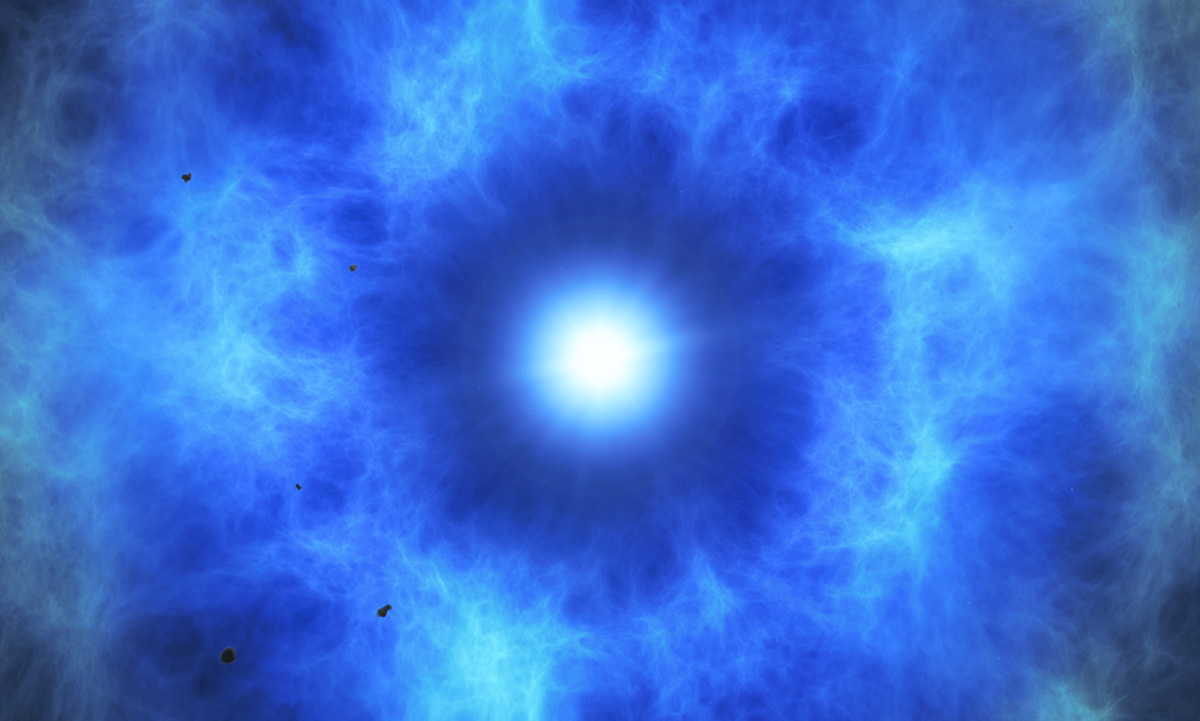
However, in the 1980s and 1990s, a new idea emerged. What if the explosion started earlier? In the double-detonation model, the white dwarf has a thin outer layer of helium. When this helium layer explodes, it sends a shockwave into the core. That shockwave triggers the main carbon-oxygen core to explode. This happens before the white dwarf reaches the Chandrasekhar limit. Until now, this idea was only theoretical. But this new observation makes it real.
A closer look at SNR 0509‑67.5
The supernova remnant SNR 0509‑67.5 is not new to science. In fact, NASA’s Hubble Space Telescope had already taken detailed images of it. Those images showed a bright ring of gas expanding outwards. But it was the MUSE instrument that revealed the real secret. MUSE mapped out the calcium distribution. The outer shell extended outwards like a balloon. The inner shell was smaller, denser, and more central. This double structure had never been seen before in such detail. Both shells were rich in calcium, a key element produced during explosive fusion. Calcium acts like a tracer. It helps astronomers see where the different parts of the explosion occurred.

MUSE instrument
The MUSE instrument is part of the ESO’s VLT, located in the Atacama Desert in Chile. This instrument is unique. It gives both high-resolution images and detailed chemical maps. MUSE allows astronomers to “slice” the light from each pixel into spectra. This lets them see what gases are present and how fast they are moving. It’s like having X-ray vision for space. Without MUSE, the double shell in SNR 0509‑67.5 would remain hidden.
Two explosions in the sky
Here’s an extra twist. This discovery comes just weeks after another nova, V572 Velorum, lit up the southern sky. At the same time, V462 Lupi, another bright nova, appeared nearby. We got two naked-eye novae in one season. And now, a double-detonation remnant confirmed. The sky is full of fireworks this year. But while novae are surface explosions, the event in SNR 0509‑67.5 was total destruction. The white dwarf no longer exists. Still, both types of explosions remind us, stars are not eternal. They die in flashes of brilliant light, leaving behind stunning remnants and deeper questions.
This discovery by ESO marks a turning point. For decades, astronomers wondered if double-detonation supernovae truly existed. Now we know they do. We’ve seen their fingerprint in the sky. Thanks to MUSE, we can now watch the story of stellar death unfold in layers of calcium gas. The stars may be silent, but with the right tools, we can still hear their last explosive words.
Clear skies!
See more from DIYPhotography.net on Google
Add DIYPhotography.net as a trusted source. This makes
our stories more likely to appear in your Google Search results.
 Add as a preferred source on Google

Soumyadeep Mukherjee
Soumyadeep Mukherjee is an award-winning astrophotographer from India. He has a doctorate degree in Linguistics. His work extends to the sub-genres of nightscape, deep sky, solar, lunar and optical phenomenon photography. He is also a photography educator and has conducted numerous workshops. His works have appeared in over 40 books & magazines including Astronomy, BBC Sky at Night, Sky & Telescope among others, and in various websites including National Geographic, NASA, Forbes. He was the first Indian to win “Astronomy Photographer of the Year” award in a major category.
Related Posts
 These photos of nuclear explosions were taken one ten-millionth of a second after detonation
 Time to Blast off! Hide a Timer Cam Inside a Saturn V Rocket and Watch Your Garden Grow
 ESO’s VLT Photographs a Rogue Planet Devouring Gas and Dust
 VLT Photographs the Faintest Exoplanet ever imaged from Earth
Join the Discussion
DIYP Comment Policy
Be nice, be on-topic, no personal information or flames.