






















Now you can Photograph Two Novae in the Sky: A Rare Event
Jul 3, 2025
Soumyadeep Mukherjee
Soumyadeep Mukherjee is an award-winning astrophotographer from India. He has a doctorate degree in Linguistics. His work extends to the sub-genres of nightscape, deep sky, solar, lunar and optical phenomenon photography. He is also a photography educator and has conducted numerous workshops. His works have appeared in over 40 books & magazines including Astronomy, BBC Sky at Night, Sky & Telescope among others, and in various websites including National Geographic, NASA, Forbes. He was the first Indian to win “Astronomy Photographer of the Year” award in a major category.
Share:
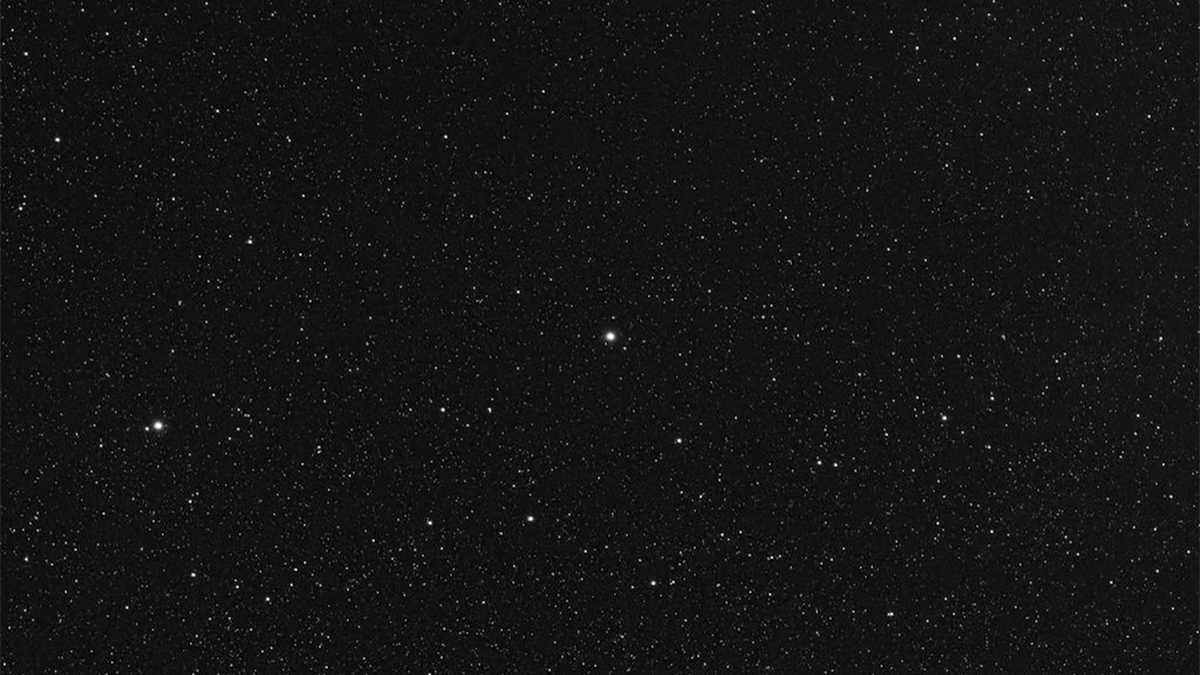
Skywatchers are now treated to a dazzling and historic sight. Two separate novae, V462 Lupi and V572 Velorum, flared up in the night sky, both reaching naked-eye visibility. This event is not only beautiful but also scientifically rare. This will be a rare opportunity for you to not only see two novae with your naked eyes, but also photograph them.
What is a nova?
A nova is a sudden, explosive brightening of a white dwarf star in a binary system. The white dwarf steals gas from its companion. As the gas accumulates, pressure builds. Eventually, a thermonuclear explosion erupts from the surface. This causes the star system to brighten dramatically, sometimes by more than 10,000 times. Though it looks like a new star has appeared, it’s really an old star undergoing a temporary outburst. The system survives the explosion and may repeat the cycle in the future.
V462 Lupi: The first to flare
The first nova of this remarkable pair, V462 Lupi, was discovered on June 12 by the ASAS-SN survey. At first, it glowed at magnitude +8.7. Within days, it brightened rapidly, reaching magnitude +5.5 by June 20. That’s just within the naked-eye visibility threshold under dark skies. It appeared in the constellation Lupus, glowing with a warm, yellow-pink hue. Its rapid brightening sparked excitement among astronomers and amateur skywatchers. V462 Lupi orbits every 1.8 hours. Though it didn’t emit detectable gamma rays, its brightness curve and color made it a textbook classical nova. Its light began to fade by the end of June but remained visible in binoculars into early July.
🔭 NASA Astronomy Picture of the Day
— ImmutableType.com (@Immutable_type) July 3, 2025
Nova V462 Lupi Now Visible pic.twitter.com/B1sN9HdI6y
V572 Velorum: A powerful surprise
Then, just days later, another nova burst into view. On June 25, veteran observers John Seach and Andrew Pearce independently discovered V572 Velorum. It was already shining at magnitude +5.7. Two days later, it peaked at +4.8, brighter than its sibling in Lupus. This nova appeared in the constellation Vela, northwest of the Eta Carinae Nebula. It glowed bluish-white at first, then shifted toward red as it cooled. V572 Velorum is a classical Fe II-type nova with a binary orbit of just under 3 hours. It’s also known to have exhibited dwarf nova behavior in the past, small, recurring outbursts. But nothing matched the brilliance of this eruption.
🌟 Nova V572 Vel was discovered just a few days ago on June 25th 2025 and is currently mag 4.9 making it easily visible to the naked eye from a dark sky site. The nova is located in the far southern constellation Vela so it is a southern hemisphere object. 🔭 🧪#stargazing #nova pic.twitter.com/dDMZmdGDlF
— Skymaps (@skymaps) June 28, 2025
How to photograph them
Capturing a nova with your camera is a rewarding experience, and surprisingly accessible.
1. Use the Right Gear: A DSLR or mirrorless camera with manual controls is ideal. A fast lens, say f/2.8 or wider, is best for gathering light. A tracking mount is helpful but not mandatory if you’re using wide lenses.
2. Plan Your Location and Timing: Find a dark sky site with a clear southern horizon. Shoot after twilight ends, and before the nova dips too low.
3. Dial in the Settings: Try an ISO of 800 to 1600, with exposure times between 5–30 seconds, depending on your lens. Use manual focus, preferably with live view zoomed in on a bright star.
4. Frame and Identify: Use a star chart to locate nearby stars and hop to the nova. Apps like Stellarium or the AAVSO finder charts can help.
5. Post-Processing: Stack your shots using software like DeepSkyStacker or Sequator. Then adjust levels, curves, and contrast to bring out the nova.
Астрономы зафиксировали, как почти одновременно на ночном небе появились две новые звезды. Как отметили специалисты, такое случается чрезвычайно редко. V462 Lupi — вспыхнула в созвездии Волк, V572 Velorum, возникла в созвездии Парусаhttps://t.co/J8xpCmbowu pic.twitter.com/oTUZMhsf77
— Слава (@st_slava) July 2, 2025
Novae like V462 Lupi and V572 Velorum remind us how dynamic the universe is. Stars change. They explode. They reappear. And sometimes, their outbursts reach us across thousands of light-years. Light from V572 Velorum began its journey more than 6,000 years ago. It arrived just in time for us to see it in 2025. In a sky full of ancient light, that brief twinkle felt like a direct message from the stars. The universe rarely sends two novae at once. When it does, we watch. We photograph. We learn. And we marvel.
Clear skies!
See more from DIYPhotography.net on Google
Add DIYPhotography.net as a trusted source. This makes
our stories more likely to appear in your Google Search results.
 Add as a preferred source on Google

Soumyadeep Mukherjee
Soumyadeep Mukherjee is an award-winning astrophotographer from India. He has a doctorate degree in Linguistics. His work extends to the sub-genres of nightscape, deep sky, solar, lunar and optical phenomenon photography. He is also a photography educator and has conducted numerous workshops. His works have appeared in over 40 books & magazines including Astronomy, BBC Sky at Night, Sky & Telescope among others, and in various websites including National Geographic, NASA, Forbes. He was the first Indian to win “Astronomy Photographer of the Year” award in a major category.
Related Posts
 Drone plummets from the sky, crashes into woman’s head at 25mph during event in Canada
 A Rare ‘Little Planet’ Photograph Featuring The Aurora and The Milky Way
 Photographer Given Rare Access To Photograph Japanese Crime Syndicates The Yakuza
 ON1 Sky Swap AI 2023 versus Adobe Photoshop Sky replacement
Join the Discussion
DIYP Comment Policy
Be nice, be on-topic, no personal information or flames.