























A Star has brightened up 4 Million Times, You can photograph it too
Jun 26, 2025
Soumyadeep Mukherjee
Soumyadeep Mukherjee is an award-winning astrophotographer from India. He has a doctorate degree in Linguistics. His work extends to the sub-genres of nightscape, deep sky, solar, lunar and optical phenomenon photography. He is also a photography educator and has conducted numerous workshops. His works have appeared in over 40 books & magazines including Astronomy, BBC Sky at Night, Sky & Telescope among others, and in various websites including National Geographic, NASA, Forbes. He was the first Indian to win “Astronomy Photographer of the Year” award in a major category.
Share:

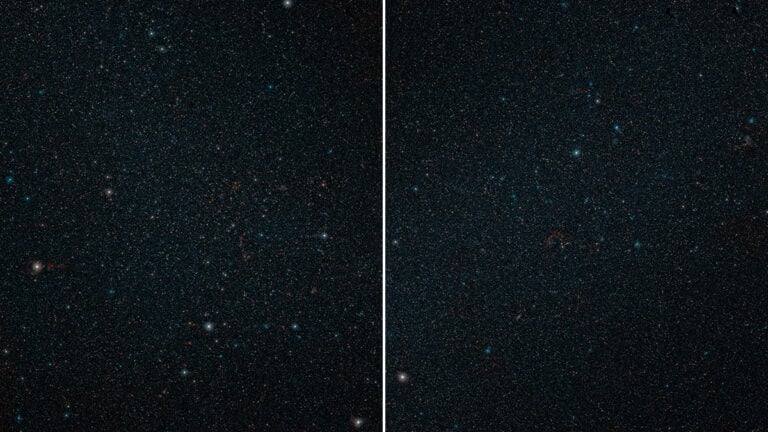
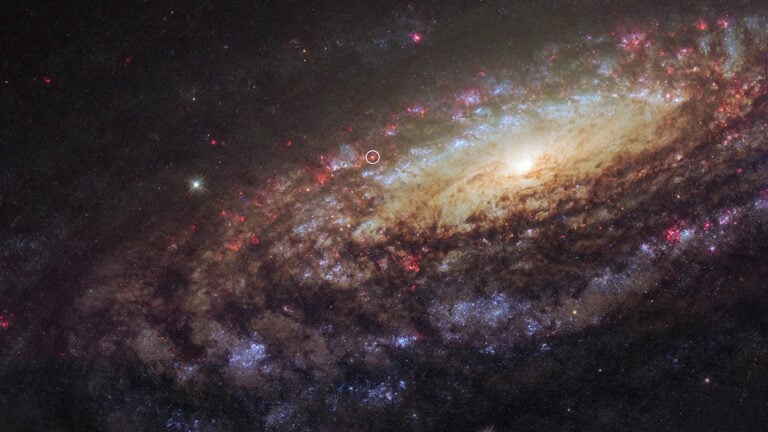
In mid-June 2025, a quiet patch of sky in the constellation Lupus burst into life. A star that had once been invisible to even the most powerful backyard telescopes suddenly became visible to the naked eye. The cause? A dramatic stellar eruption known as a classical nova. The object, now officially named V462 Lupi, was first spotted on June 12, 2025, by the ASAS-SN (All-Sky Automated Survey for Supernovae) team. It shone at about magnitude 8.7, too faint to see without binoculars. But in just a few days, it brightened by a factor of nearly four million, an incredible transformation. By June 21, the nova reached its peak brightness at around magnitude 5.6, making it barely visible to the naked eye under dark skies. For skywatchers across the globe, especially in the southern hemisphere, this was a rare and beautiful sight.
What is a nova?
To understand V462 Lupi, we need to dive into some stellar science. A nova is not a star being born, but rather a white dwarf in a binary system flaring up in a violent thermonuclear event. A white dwarf, an extremely dense stellar remnant, steals gas from its nearby companion. As this gas collects on the surface, pressure builds. Eventually, the gas ignites in a powerful fusion reaction. This blast ejects material into space and causes the star’s brightness to increase dramatically.
Unlike a supernova, the white dwarf isn’t destroyed. It survives, ready to repeat the cycle again, sometimes after centuries or even millennia.
Sei que parece um assunto muito específico, mas observei hoje uma Nova, a V462 Lupi pic.twitter.com/sRxXfRoeHc
— Alexandre Trentini (@Ale_Psycho) June 26, 2025
Tracking V462 Lupi’s brightening
V462 Lupi’s sudden appearance was anything but subtle. Before its eruption, the star was hiding at magnitude 22.3, completely invisible without professional equipment. On June 12, it brightened to 8.7, and by June 18, it reached magnitude 5.7. By June 21, it peaked at 5.6. Astronomers estimate the nova brightened by over 17 magnitudes, which translates to a four–million–fold increase in brightness. That’s like turning a matchstick into a floodlight overnight. Spectroscopic observations confirmed its identity as a classical nova. For astronomers, both professional and amateur, this is the kind of event that comes along only once every few years.
Where and when to see it
V462 Lupi is located in the southern constellation Lupus, not far from Centaurus and Scorpius. The nova is best viewed from the southern hemisphere. Observers in Australia, South Africa, and South America have an excellent view of the object high in the sky. If you’re in the Northern Hemisphere or anywhere south of 40°N, you can still catch it low on the southern horizon just after sunset.
🌟 ESPLOSIONE STELLARE NEL CIELO! 🌟
— Manuele overnext Cesarini (@maloxplay) June 22, 2025
Una nuova stella, V462 Lupi, è apparsa nella costellazione del Lupo! Dal 12 giugno, questa nova è diventata 4 milioni di volte più luminosa, visibile a occhio nudo nell’emisfero australe e in alcune zone boreali (con binocolo e orizzonte sud… pic.twitter.com/zmHhuxLUTd
How to photograph the nova
Capturing a nova with your camera is a rewarding experience, and surprisingly accessible.
1. Use the Right Gear
A DSLR or mirrorless camera with manual controls is ideal. A fast lens, say f/2.8 or wider, is best for gathering light. A tracking mount is helpful but not mandatory if you’re using wide lenses.
2. Plan Your Location and Timing
Find a dark sky site with a clear southern horizon. Shoot after twilight ends, and before the nova dips too low.
3. Dial in the Settings
Try an ISO of 800 to 1600, with exposure times between 5–30 seconds, depending on your lens. Use manual focus, preferably with live view zoomed in on a bright star.
4. Frame and Identify
Use a star chart to locate nearby stars like Delta or Beta Lupi, and hop to the nova. Apps like Stellarium or the AAVSO finder charts can help.
5. Post-Processing
Stack your shots using software like DeepSkyStacker or Sequator. Then adjust levels, curves, and contrast to bring out the nova.
Nova Lup 2025 (V462 Lupi) via @TelescopeLiveHQ
— Ernesto Guido (@comets77) June 22, 2025
(imaged on June 20, 2025. Unfiltered mag. about 5.5; animation with a POSS archive image via Tycho software )
Obs. E. Guido; M. Rocchetto; A. Valvasori#astronomy #novaLup2025 #astronomia pic.twitter.com/ve4JpvO0U8
Classical novae like V462 Lupi don’t appear often. On average, the world sees one bright enough for the naked eye only once per year. And very few reach magnitude 5.6 like this one did. That’s what makes this event special. It’s a fleeting chance to witness the raw energy of the cosmos in real-time. For a few short weeks, a dead star in a forgotten corner of the sky is reborn in brilliant light. If you haven’t seen it yet, now is the time. Step outside. Look south. Let the light of V462 Lupi, born from a stellar eruption 1,000 light-years away, remind you how dynamic our universe really is.
Clear skies!
See more from DIYPhotography.net on Google
Add DIYPhotography.net as a trusted source. This makes
our stories more likely to appear in your Google Search results.
 Add as a preferred source on Google

Soumyadeep Mukherjee
Soumyadeep Mukherjee is an award-winning astrophotographer from India. He has a doctorate degree in Linguistics. His work extends to the sub-genres of nightscape, deep sky, solar, lunar and optical phenomenon photography. He is also a photography educator and has conducted numerous workshops. His works have appeared in over 40 books & magazines including Astronomy, BBC Sky at Night, Sky & Telescope among others, and in various websites including National Geographic, NASA, Forbes. He was the first Indian to win “Astronomy Photographer of the Year” award in a major category.
Related Posts
 Google is using AI to digitise over 5 million historical photos for the New York Times
 This record-breaking camera can zoom in 100 million times
 How to photograph under moonlight and calculate long exposure times
 An Astonishing Photograph of 110 Million Year Old Footprint Tiptoes into the 21st Century
Join the Discussion
DIYP Comment Policy
Be nice, be on-topic, no personal information or flames.