




















NASA Astronaut Photographs a Rare Red Sprite from Space
Jul 8, 2025
Soumyadeep Mukherjee
Soumyadeep Mukherjee is an award-winning astrophotographer from India. He has a doctorate degree in Linguistics. His work extends to the sub-genres of nightscape, deep sky, solar, lunar and optical phenomenon photography. He is also a photography educator and has conducted numerous workshops. His works have appeared in over 40 books & magazines including Astronomy, BBC Sky at Night, Sky & Telescope among others, and in various websites including National Geographic, NASA, Forbes. He was the first Indian to win “Astronomy Photographer of the Year” award in a major category.
Share:

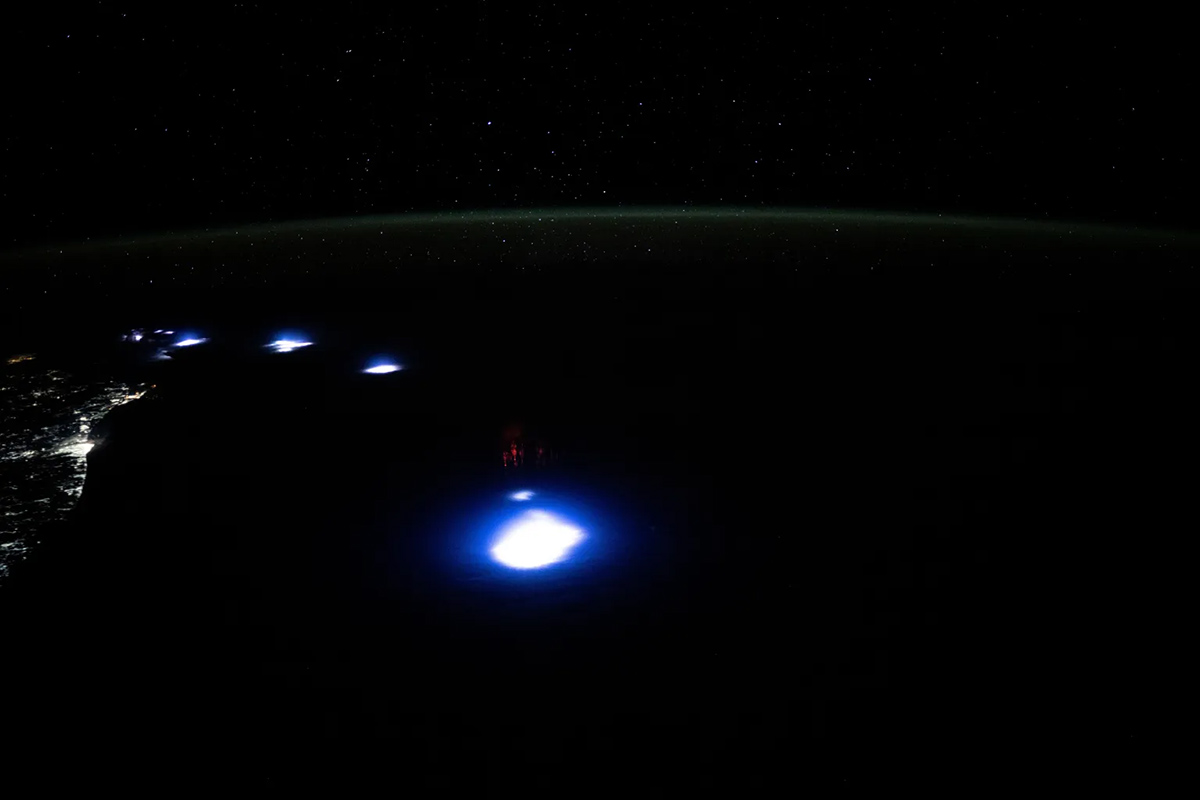
On July 3, 2025, NASA astronaut Nichole “Vapor” Ayers captured something rare and spectacular. While orbiting Earth aboard the International Space Station (ISS), she clicked an image of a massive red sprite flashing high above a thunderstorm over North America. The photo shows a glowing red formation, shaped like a jellyfish, stretching above the clouds into space. It stunned both scientists and the public.
What is a Red Sprite?
A red sprite is a type of Transient Luminous Event (TLE). These are short bursts of light that happen high above thunderstorms. Unlike regular lightning, they happen between 50 and 90 kilometers above Earth, far into the mesosphere. Sprites were first photographed by scientists in 1989. Before that, pilots and observers had reported seeing strange red flashes, but they were not confirmed. Red sprites look like jellyfish, carrots, or pillars. They can rise 80 kilometers tall in just milliseconds. The red color comes from excited nitrogen molecules in the upper atmosphere. They are not hot like lightning. Instead, they are cold plasma discharges, more like a fluorescent light than a bolt of fire. They are triggered by powerful positive lightning strikes from storms below.
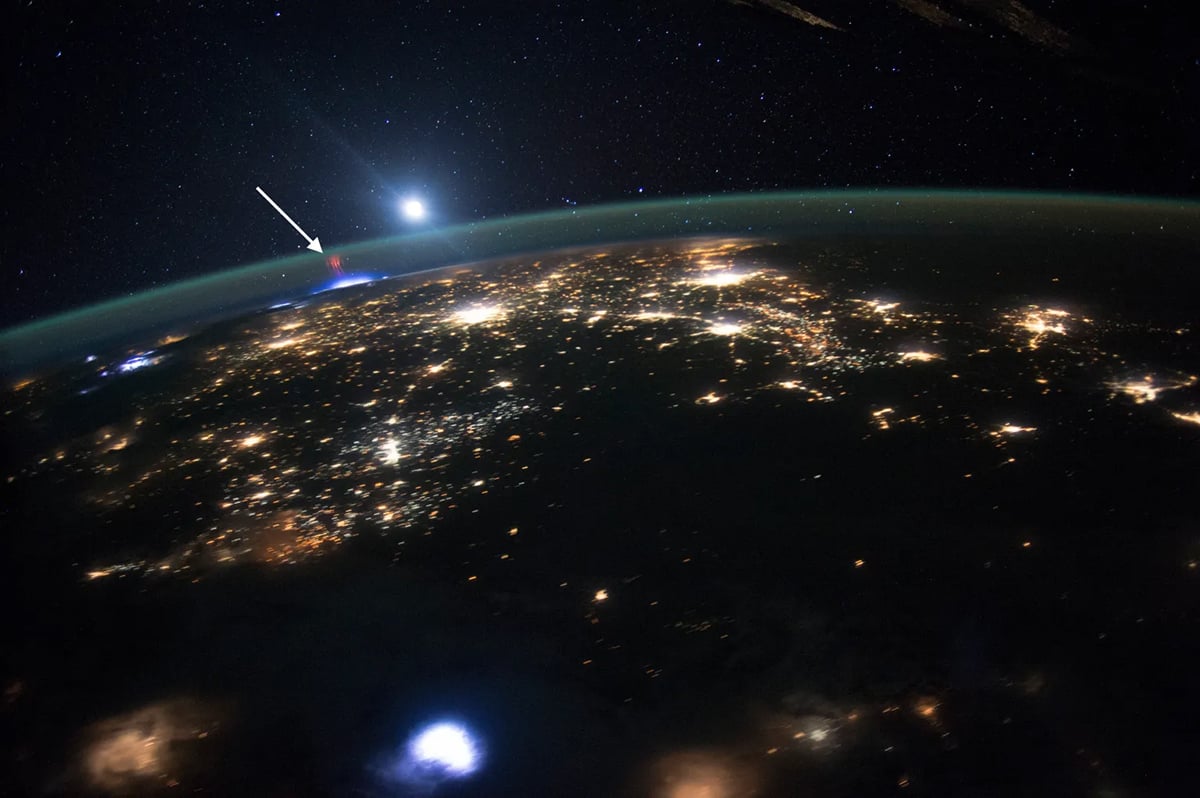
Ayers’ photo of the red sprite
Nichole Ayers photographed the sprite while flying about 400 kilometers above Earth. From the ISS, she had a clear view of the upper storm layers. Her camera caught the sprite’s glowing red tendrils and bluish halo. This view is extremely rare. Sprites are hard to see from the ground. They last only a few milliseconds. And they often occur above thick storm clouds. Astronaut photos offer something special. They give a direct, unobstructed view of the entire event. Ayers’ shot is one of the clearest sprite images ever taken from space by a human.
Just. Wow. As we went over Mexico and the U.S. this morning, I caught this sprite.
— Nichole “Vapor” Ayers (@Astro_Ayers) July 3, 2025
Sprites are TLEs or Transient Luminous Events, that happen above the clouds and are triggered by intense electrical activity in the thunderstorms below. We have a great view above the clouds, so… pic.twitter.com/dCqIrn3vrA
Can you see a sprite?
Yes, but it’s tricky. Sprites are faint, fast, and distant. But if you’re patient and lucky, you can spot them under the right conditions. Here’s how to increase your chances:
- Choose the right storms: Look for large, high-energy thunderstorms. The best storms are those that produce positive cloud-to-ground lightning.
- Go to a dark sky location: Light pollution will wash out faint sprites. Go to remote locations with a clear view of the horizon.
- Face the right direction: You want to be 100–300 kilometers away from the storm, not directly underneath it. Look above the tops of the storm clouds.
- Wait for moonless nights: The darker the sky, the better your chances. Avoid full moons.
How to photograph red sprites
Capturing sprites requires patience, timing, and some technical setup. Here’s a step-by-step guide:
1. Use a fast, sensitive camera: DSLRs or mirrorless cameras with high ISO capability work best.
2. Use long exposures: Use shutter speeds between 1 and 30 seconds.
3. Focus on the stars: Use manual focus, and test beforehand.
4. Point at the Right Spot: Aim your camera at the top of distant storm clouds.
5. Use a tripod and intervalometer: A sturdy tripod is essential. An intervalometer or external shutter remote helps take continuous exposures.
6. Take lots of shots: Sprites are rare. You might take hundreds of frames before capturing one. Leave your camera running and watch the storm with your eyes or binoculars.
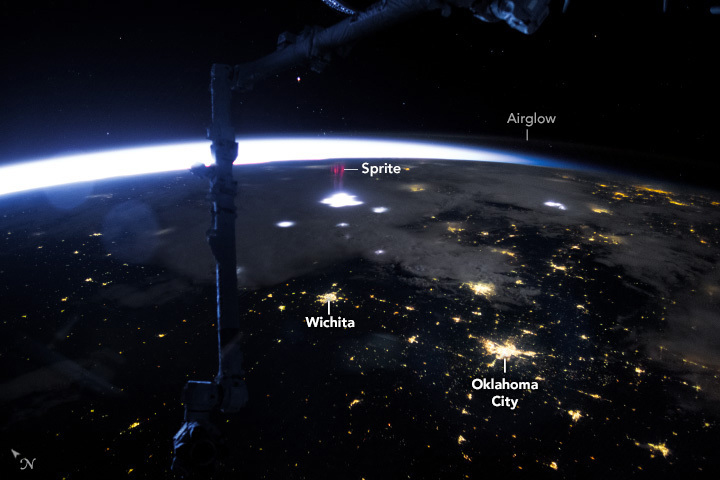
Red sprites are one of the most mysterious and beautiful phenomena in our skies. They are fast, faint, and high above storms. Thanks to modern cameras and space missions, we can now see them clearly. Nichole Ayers’ photo from space gave us a rare and perfect view. But you don’t need to be an astronaut to see a sprite. With the right tools and some patience, you might capture one too.
Clear skies!
See more from DIYPhotography.net on Google
Add DIYPhotography.net as a trusted source. This makes
our stories more likely to appear in your Google Search results.
 Add as a preferred source on Google

Soumyadeep Mukherjee
Soumyadeep Mukherjee is an award-winning astrophotographer from India. He has a doctorate degree in Linguistics. His work extends to the sub-genres of nightscape, deep sky, solar, lunar and optical phenomenon photography. He is also a photography educator and has conducted numerous workshops. His works have appeared in over 40 books & magazines including Astronomy, BBC Sky at Night, Sky & Telescope among others, and in various websites including National Geographic, NASA, Forbes. He was the first Indian to win “Astronomy Photographer of the Year” award in a major category.
Related Posts
 ISS astronaut captures dazzling aurora photo and timelapse from space
 Astronaut captures incredible photos of blue Aurora Australis from space
 Astronaut shares how he shot iconic selfie with Milky Way inside the Internation Space Station
 This NASA astronaut brought her 4 year old son to her spacesuit photo shoot
Join the Discussion
DIYP Comment Policy
Be nice, be on-topic, no personal information or flames.