






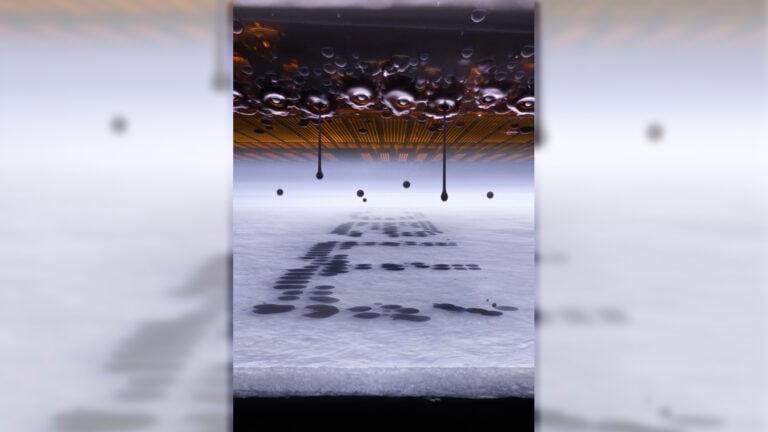












Eclipse on Demand: ESA creates Artificial Solar Eclipse in Space
Jun 16, 2025
Soumyadeep Mukherjee
Soumyadeep Mukherjee is an award-winning astrophotographer from India. He has a doctorate degree in Linguistics. His work extends to the sub-genres of nightscape, deep sky, solar, lunar and optical phenomenon photography. He is also a photography educator and has conducted numerous workshops. His works have appeared in over 40 books & magazines including Astronomy, BBC Sky at Night, Sky & Telescope among others, and in various websites including National Geographic, NASA, Forbes. He was the first Indian to win “Astronomy Photographer of the Year” award in a major category.
Share:
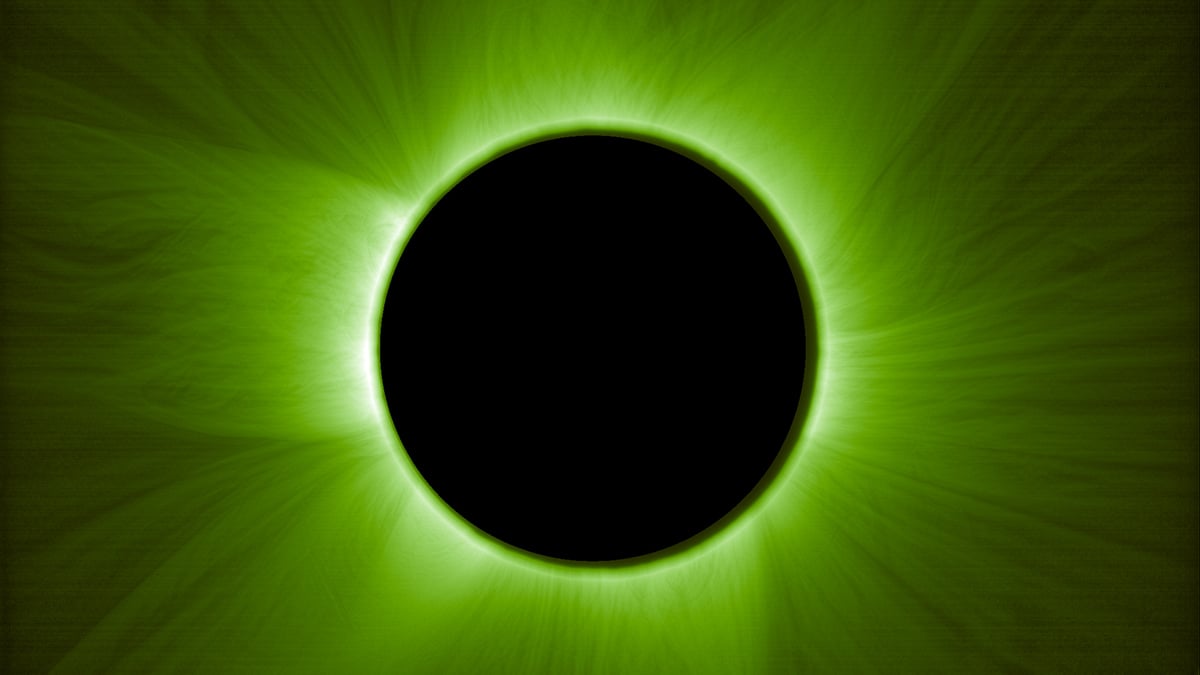
In a groundbreaking achievement, the European Space Agency (ESA) has created the first artificial solar eclipse in space. This was made possible by the Proba-3 mission, a pair of satellites flying in perfect formation. They simulate solar eclipses on demand. The mission unlocks new potential for solar science, spacecraft technology, and space weather research.
The problem: Seeing the hidden Sun
The Sun is incredibly bright. Its central disk, or photosphere, overwhelms all other features. One of the most fascinating parts of the Sun, its outer atmosphere, or corona, remains hidden in plain sight. The solar corona is faint. It glows with plasma at millions of degrees. It holds answers to several mysteries. Why is it hotter than the surface? What drives the solar wind? How do coronal mass ejections form? Normally, astronomers see the corona only during total solar eclipses. These events are rare and short-lived. Proba-3 changes that completely.

The mission: Proba-3
ESA launched Proba-3 on 5 December 2024. The mission flew onboard an Indian PSLV-XL rocket from Sriharikota. The pair of satellites entered a highly elliptical orbit—their goal: to create repeated, scheduled, and long-duration eclipses in space.
Proba-3 is a formation-flying mission. It consists of two separate spacecraft: the Coronagraph spacecraft and the Occulter spacecraft. They fly around 150 meters apart. The Occulter blocks the sunlight. The Coronagraph studies the corona behind that shadow.
The Proba-3 Occulter spacecraft
This spacecraft carries no telescope or camera. Its job is to act like the Moon during a solar eclipse. It precisely positions itself in front of the Sun as seen from the Coronagraph spacecraft. It casts a shadow that lets the other satellite see the solar corona.
The Occulter must maintain millimeter-level alignment. Even tiny errors can ruin the eclipse. The spacecraft uses sensors, star trackers, GPS, inter-satellite radio links, and laser metrology for positioning. Its flat, disk-shaped shield blocks sunlight effectively. This artificial eclipse lasts much longer than a natural one, up to five hours per orbit.

The Proba-3 Coronagraph spacecraft
The second spacecraft is the scientific eye of the mission. It holds the ASPIICS instrument (Association of Spacecraft for Polarimetric and Imaging Investigation of the Corona of the Sun). This advanced coronagraph captures high-resolution images of the solar corona.
ASPIICS sees the Sun only when the Occulter is in the perfect position. It works like a telescope during an eclipse. It observes the faint structures of the outer atmosphere and also captures polarised light to study magnetic fields. The data helps understand coronal heating and solar eruptions. The Coronagraph also hosts supporting instruments for alignment and diagnostics. Together, these two satellites work as a single telescope stretched across 150 meters.
Formation flying: A breakthrough in space tech
Proba-3’s real innovation lies in its formation flying. Never before have two spacecraft flown in such tight and precise alignment. The satellites fly in a carefully choreographed dance. They separate and reunite automatically every orbit. They rely on cutting-edge guidance, navigation, and control systems. The Coronagraph spacecraft is the master. It directs the formation. The Occulter is the follower. It adjusts its position using cold gas thrusters and control algorithms. Their orbit is elliptical, reaching about 60,000 km at apogee. At this point, the spacecraft slows down. This allows time for eclipse observations. Every orbit provides a new opportunity for scientific imaging.

The artificial Solar Eclipse
Since March 2025, Proba-3 has created more than 10 successful artificial eclipses. Each lasted up to five hours. ESA reported that the first high-quality images exceeded expectations. The corona was revealed in stunning detail. Scientists were thrilled. For the first time, they could watch the corona evolve in near real-time. Structures moved, twisted, and changed shape. These long-duration views are impossible from Earth. The images also showed features never seen before. Scientists spotted new loops and streamers. They tracked the movement of solar plasma with unprecedented clarity. These early results confirm that Proba-3 is already delivering world-class science.

The scientific goals
Proba-3 was designed to solve specific problems. Here are the main objectives:
- Study Coronal Heating: The corona is mysteriously hotter than the Sun’s surface. Proba-3 helps measure this thermal structure more accurately.
- Track Solar Wind Origins: Solar wind starts in the corona. By imaging this region, scientists can understand where and how the flow begins.
- Observe CMEs: Coronal mass ejections are huge explosions from the Sun. They can damage satellites and power grids on Earth. Proba-3 helps study their roots.
- Develop New Spaceflight Techniques: Formation flying is a key technology for future missions. Proba-3 proves it works in space.

Proba-3 shows how innovation and collaboration can expand human vision. It brings eclipses from rare earthly events to scheduled, high-precision tools in orbit. The mission not only advances solar science but also opens new paths in spacecraft design. By building an eclipse machine in space, Europe has achieved something extraordinary. With each orbit, Proba-3 brings us closer to the heart of our star and the future of space technology.
Clear skies!
See more from DIYPhotography.net on Google
Add DIYPhotography.net as a trusted source. This makes
our stories more likely to appear in your Google Search results.
 Add as a preferred source on Google

Soumyadeep Mukherjee
Soumyadeep Mukherjee is an award-winning astrophotographer from India. He has a doctorate degree in Linguistics. His work extends to the sub-genres of nightscape, deep sky, solar, lunar and optical phenomenon photography. He is also a photography educator and has conducted numerous workshops. His works have appeared in over 40 books & magazines including Astronomy, BBC Sky at Night, Sky & Telescope among others, and in various websites including National Geographic, NASA, Forbes. He was the first Indian to win “Astronomy Photographer of the Year” award in a major category.


Join the Discussion
DIYP Comment Policy
Be nice, be on-topic, no personal information or flames.